DD
MM
YYYY

PAGES

DD
MM
YYYY

spot_img

PAGES

Home Blog Page 872

Knowledge: A Factor of Production [Podcast]

0

This video podcast passionately argues for the reclassification of knowledge as a primary factor of production, alongside land, entrepreneurship, labor, and capital. The speaker underscores this point by highlighting the intense competition among leading technology companies like Meta and Google in the AI era. These companies are not merely acquiring technology or code but are strategically recruiting top talent and integrating knowledge systems, recognizing that the true asset lies within the minds of individuals and the collective intelligence they bring.

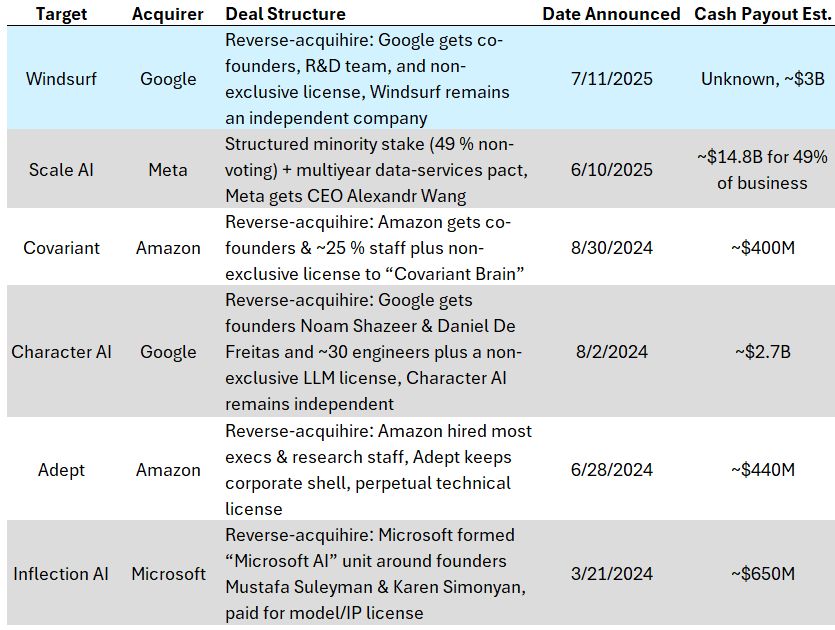
The podcast illustrates this with concrete examples: Meta’s aggressive hiring from Apple and its integration of talent from Scale AI and Safe Super Intelligence (co-founded by OpenAI team members), and Google’s swift acquisition of the CEO and R&D team from Windsurf. These actions demonstrate a clear focus on securing “people with the knowledge,” emphasizing that new code can always be built, but the underlying intellectual capital is irreplaceable.
A key characteristic of knowledge highlighted is its unique scalability – it “grows when shared,” making it the most scalable factor of production. This contrasts with the finite nature of traditional factors. Knowledge is presented as a catalytic force that will “change the trajectory of the 21st century,” driving productivity more effectively than physical resources. It is deeply “embedded in people, systems, institution,” manifesting as applied intelligence through innovation. Furthermore, knowledge is the “fuel” for the digital economy, with AI at its core, as algorithms (codified knowledge) drive modern economic activities.

The lecture also clarifies the “duality” of knowledge: it serves both as a “tool” that facilitates new creation and innovation, and as a “product” that can be bought and sold, becoming a valuable commodity in itself. This dual role makes it a central element in the production process.

The broader implications of knowledge as a factor of production are far-reaching. It is seen as a creator of “abundance” and “multiplicity,” opening diverse paths for growth. It generates “leverages” that can fundamentally “shape the destinies of nations,” with firms that prioritize knowledge consistently outperforming their peers. The lecture concludes by asserting that wealth now accumulates where knowledge is best applied, making its acquisition a crucial pursuit for individuals and nations alike in the 21st century.

Download the podcast summary here.

Watch the podcast at Blucera.com.

How To Listen to Tekedia Daily

At Blucera, home of Blucera WinGPT (AI personal educator and coach), eVault Legal Custodial services (store vital personal, family and business documents securely), business tools to grow enterprises, and global archives of Tekedia courses and libraries, Ndubuisi Ekekwe podcasts every week day. Some Tekedia Institute programs offer bonus access to Tekedia Daily or one can register at Blucera for the podcast.

Microsoft Reaps $500M Saving Through AI Amid Significant Layoffs

0

Microsoft is reaping massive financial rewards from its investment in artificial intelligence, after the company revealed that last year it saved over $500 million in its call center operations alone.

This milestone, highlighted by the company’s Chief Commercial Officer Judson Althoff, underscores how AI tools drive major productivity gains across departments from customer service to software engineering.

However, the announcement has stirred reactions, coming just days after Microsoft laid off more than 9,000 employees in its third round of job cuts this year. For some, it appeared as though the company was celebrating financial gains while thousands of workers faced job loss.

For laid-off employees, hearing about massive AI-driven savings shortly after losing their jobs felt like a stark reminder that their roles might have been replaced by automation. Also, with nearly 15,000 workers affected so far in 2025 and the company posting record profits, many are questioning the cost of innovation and who ultimately bears it.

A post on X reads,

“Microsoft’s $500M ‘savings” from AI-driven layoffs expose a brutal truth: Corporations slash jobs for profit”.

The tension intensified after a now-deleted LinkedIn post by Xbox Game Studios producer Matt Turnbull, who suggested that those “overwhelmed” by Microsoft’s layoffs could turn to AI tools like ChatGPT and Copilot to manage the emotional toll.

While Microsoft frames its actions as necessary for innovation and competitiveness in the AI race, critics argue that the company’s approach prioritizes profits over people, raising ethical questions about the future of work in an AI-driven economy.

Meanwhile, Microsoft’s President Brad Smith has stated that AI was “not a predominant factor” in the layoffs, the significant role of AI in achieving cost savings led to speculation that automation directly contributed to job cuts. AI tools, such as Microsoft’s Copilot and ChatGPT, are being used extensively in sales, customer support, and software development, with AI generating 35% of code for new products and handling interactions with smaller customers.

This has fueled concerns that AI is quietly replacing human labor, particularly in technical roles like software engineering, where over 40% of layoffs in Washington state affected engineers.

It remains unclear whether these job cuts are part of broader cost-cutting measures, post-pandemic restructuring, or a direct result of AI-driven automation. What is clear is the uneasy optics of mass layoffs during one of Microsoft’s most profitable quarters ever. The company reported $70 billion in revenue and $26 billion in profit for the quarter, with its market valuation reaching $3.74 trillion, surpassing Apple and trailing only Nvidia.

Microsoft has made clear where its future investments lie. In January, the company announced plans to spend $80 billion on AI infrastructure in 2025 alone. While hiring in AI-related roles continues, there’s a growing perception that Microsoft is more willing to invest heavily in elite AI talent than in retaining broader segments of its workforce.

The controversy surrounding Microsoft’s AI-driven savings and layoffs is rooted in the stark contrast between its financial success and workforce reductions, the perceived insensitivity of executive remarks, and broader anxieties about AI’s impact on jobs.

As Microsoft doubles down on AI innovation, the company faces a difficult balancing act: celebrating technological progress and profitability without alienating employees and the public in the process.

“We Are Not In The Top 10 Semiconductor Companies Anymore:” Intel’s CEO Lip-Bu Tan Acknowledges It’s “Too Late” To Catch Up With AI Competition

0

Once the undisputed king of semiconductors, Intel now finds itself in a moment of crisis—one marked by stagnant innovation, lost market share, and internal reckonings.

In a leaked internal Q&A with employees this week, new CEO Lip-Bu Tan offered a rare, sobering assessment: “We are not in the top 10 semiconductor companies anymore.”

That candid statement, first reported by OregonTech, puts into sharp relief what many in the industry have already suspected: Intel is no longer a leader, but a legacy player struggling to find its footing in a hyper-competitive chip ecosystem dominated by rivals like Nvidia, AMD, Apple, TSMC, and Samsung.

Tan’s admission underscores a multi-year unraveling of Intel’s dominance across virtually every sector it once controlled—desktop CPUs, data center processors, GPUs, fabrication, and even AI hardware.

From Monopoly to Marginalized

Two decades ago, Intel commanded the computing world with x86 CPUs that left little room for competitors. But the company’s rigid reliance on in-house manufacturing and a slow response to emerging technologies allowed competitors like AMD to surge ahead. AMD’s Ryzen and EPYC architectures not only restored competition in consumer PCs and servers—but they also dethroned Intel in key markets.

Today, AMD powers flagship gaming consoles (PlayStation 5 and Xbox Series X), handheld devices like the Steam Deck, and has grabbed a meaningful chunk of the server CPU market once monopolized by Intel. Meanwhile, Apple’s transition to ARM-based silicon and the rise of AI-focused chipmakers like Nvidia further squeezed Intel’s once-dominant position.

Intel tried to modernize its CPUs with the big.LITTLE hybrid architecture in its recent Arrow Lake chips, mirroring ARM’s design philosophy, but the launch underwhelmed. The architecture failed to reverse AMD’s momentum and barely impacted the market. On the GPU front, the company’s Arc graphics cards came late and lacked the punch to challenge Nvidia or AMD’s dominance.

Manufacturing Missteps and the TSMC Lifeline

Intel’s internal foundries, once a cornerstone of its success, have turned into a liability. Years of delays and poor yields across its advanced nodes—10nm and 7nm especially—forced Intel to outsource key parts of its chip production to TSMC, the same company enabling its rivals’ success.

By 2025, Intel has reportedly outsourced 30% of its chip fabrication to TSMC, including the GPU tiles on Meteor Lake and the compute tiles for Lunar Lake. This strategic pivot—unthinkable for Intel just a few years ago—is an overdue acknowledgment that its foundry division is no longer world-class.

Now, rumors are swirling about Intel splitting its foundry operations into a separate entity, essentially transitioning into a fabless model like AMD, Apple, and Nvidia. If it happens, it would mark one of the most dramatic reversals in the company’s century-long history.

AI Revolution Leaves Intel Behind

While AI has emerged as the defining trend of this generation—supercharged by the global embrace of ChatGPT and large language models—Intel has watched from the sidelines. It failed to capitalize on the early AI wave, ceding virtually the entire training market to Nvidia, whose data center GPUs now power the AI backbone of the modern internet.

“On training, I think it is too late for us,” Tan admitted during the employee meeting.

Instead, he’s pinning Intel’s AI hopes on edge computing and agentic AI—AI systems embedded in consumer and industrial devices capable of acting autonomously without constant cloud access. While these fields are still developing, Tan sees them as Intel’s chance to re-enter the game from a different angle. He promised more AI-focused hires were coming, saying: “Stay tuned. A few more people are coming on board.”

Cuts, Culture Shift, and a Fight for Survival

Intel has already begun aggressive cost-cutting, including thousands of layoffs worldwide. The company reported a $16 billion loss in Q3 2024, largely due to ballooning R&D costs tied to its lagging manufacturing roadmap.

Tan, who replaced Pat Gelsinger last year amid boardroom frustrations, is said to be pursuing a leaner, more focused Intel, ditching the shotgun approach of trying to be everywhere at once.

“Intel’s resurrection has to be a marathon,” Tan reportedly told employees. “We have to be humble. We need to listen to what the market is telling us.”

Perhaps no example better captures Intel’s fall than the fact that it once considered acquiring Nvidia for $20 billion. That was before Nvidia’s meteoric rise. Today, Nvidia’s market capitalization has surpassed $4 trillion, becoming the most valuable publicly traded company in the world—and a titan that defines the AI era.

In contrast, Intel is stuck cleaning up after billions of dollars wasted on refineries, flawed CPU architectures, and missed AI opportunities. Even its once-proud server dominance is gone—EPYC now leads the conversation.

What Does The Future Hold?

With its 18A node still at least a year away and uncertain prospects in AI and servers, Intel’s road to recovery looks steep. The company is no longer the North Star of semiconductors—it’s a challenger in the industry it once built.

Lip-Bu Tan’s honesty may be a refreshing change from years of denial, but rebuilding Intel’s credibility will take more than humility. It will require bold restructuring, laser-focused execution, and a willingness to shed legacy burdens.

Currently, Intel finds itself on the defensive, while its rivals dictate the future of computing. Whether it can reinvent itself as a nimble, AI-focused powerhouse or continue to drift into irrelevance is a question only time—and Tan’s strategy—will answer.

CBN Raises Alarm Over 45% Surge in Financial Fraud, Blames Crypto Platforms and Digital Channels

0

The Central Bank of Nigeria (CBN) has warned of a significant surge in financial fraud across the country, revealing that reported fraud cases rose by 45% within one year, with over 70% of the losses traced to digital financial channels, particularly unregulated virtual asset platforms.

CBN Governor Olayemi Cardoso, represented by Deputy Governor for Economic Policy Muhammad Sani Abdullahi, disclosed this on Thursday, July 10, 2025, during a public lecture organized by the Economic and Financial Crimes Commission (EFCC) in Abuja. The event focused on the growing threat of financial crimes and the role of national institutions in responding to them.

Quoting findings from the CBN Financial Stability Report 2024, Cardoso said the data showed not only a disturbing rise in fraud but also the vulnerability of Nigeria’s digital financial space to manipulation by bad actors.

“The CBN Financial Stability Report 2024 reveals a 45% surge in financial fraud cases, with 70% of losses linked to digital channels, including unregulated virtual asset platforms. Furthermore, over 30 Ponzi-style investment schemes exploiting digital currency narratives have been flagged by the SEC and other agencies,” he said.

Cardoso added that these incidents are eroding consumer trust, damaging Nigeria’s financial reputation globally, and threatening the stability of the financial system.

“These developments pose major risks, including loss of consumer confidence, weakening of financial integrity, and reputational challenges for Nigeria in the global financial system.”

According to the CBN, Nigeria recorded over $56 billion in crypto-related transactions between July 2022 and June 2023, solidifying its place as Africa’s leading digital transaction hub. However, Cardoso said this rapid growth in digital financial activity has not come without consequences.

While digital innovation has improved financial access, it has also introduced regulatory and security challenges, particularly in monitoring transactions involving cryptocurrencies and tokenized investments.

“The surge in digital innovation has brought benefits, such as greater financial inclusion and also given rise to complex challenges, such as fraud and money laundering,” Cardoso said.

SEC Blames Crypto Fraud for Waning Investor Confidence

The Director General of the Securities and Exchange Commission (SEC), Emomotiti Agama, also weighed in, highlighting how virtual asset fraud and investment scams are undermining investor trust and damaging financial market credibility.

“Today, as digital innovation transforms financial systems, we face new challenges, particularly the rise of virtual asset fraud and sophisticated investment scams, exploiting unsuspecting investors,” Agama said.

He emphasized that corruption and financial fraud are siphoning resources needed for long-term development and deterring both domestic and international investment.

Agama stressed that the SEC is stepping up efforts to revise its regulatory frameworks to reflect the evolving risks posed by digital investment channels. He also said the Commission is working on educating the public, particularly vulnerable groups, on how to identify and avoid fraudulent schemes.

National Orientation Agency Calls for Cultural Shift

Director General of the National Orientation Agency (NOA), Lanre Issa-Onilu, said the consequences of financial fraud are not just fiscal, but deeply human. He argued that the ripple effects of fraud can be seen in ruined livelihoods and the collapse of small businesses.

“Every Naira lost to fraud causes far-reaching effects. It is about a child pulled out of school, a livelihood ruined, and an enterprise destroyed. These crimes are not abstract. They affect people, and our country pays dearly for it.”

He linked the fraud epidemic to a cultural problem, where the pursuit of sudden wealth has become normalized.

“We launched a nationwide campaign against the spread of the get-rich-quick syndrome. The initiative is helping all Nigerians, especially young people, to understand that lasting success comes from honesty and hard work, and it takes time.”

CAC Urges Stronger Governance

Also speaking at the event, Registrar General of the Corporate Affairs Commission (CAC), Hussaini Ishaq Magaji, warned that the proliferation of fraud, money laundering, and financial manipulation demands proactive regulatory vigilance.

He disclosed that the CAC is in active collaboration with the SEC and other regulatory bodies to tighten corporate governance and improve enforcement across sectors. According to Magaji, transparency and accountability must be enforced at all levels of Nigeria’s financial ecosystem to shield it from criminal exploitation.

“We are aligning with sector-specific regulators to strengthen governance frameworks and ensure that all institutions within the ecosystem operate within the boundaries of legality and integrity.”

The CBN’s latest warning comes as Nigeria grapples with the dual realities of becoming a digital finance leader on the continent while also facing unprecedented exposure to online financial crime. The surge in crypto activity, unregulated platforms, and fraudulent investment schemes has complicated the regulatory environment, raising questions about how to foster innovation without sacrificing security.

The alarm from the CBN and other institutions suggests that Nigeria’s economic future hinges not just on policy reforms or market access, but on winning back public confidence in the financial system—a task that will require strong regulation, public education, and a national value reorientation away from financial opportunism and towards ethical growth.

Remixpoint Raises $215M To Expand Its Bitcoin Treasury

0

Remixpoint, a Tokyo-listed energy and fintech company, raised ¥31.5 billion ($215 million) to expand its Bitcoin treasury, aiming to acquire 3,000 BTC. The funds were secured through stock acquisition rights and unsecured bonds, with a 39.9% share dilution. The company currently holds 1,051 BTC, valued at over $113.8 million, and other cryptocurrencies like ETH, SOL, XRP, and DOGE to hedge against a weakening yen.

The decision, made after extensive board discussions, reflects Remixpoint’s belief in Bitcoin’s long-term value and aligns with a trend among Japanese firms like Metaplanet, which holds 15,555 BTC. The target may adjust based on Bitcoin’s price and Remixpoint’s stock performance. The firm also made headlines by paying its CEO entirely in Bitcoin, a first for a Tokyo Stock Exchange-listed company.

Remixpoint’s move to allocate a substantial portion of its treasury to Bitcoin (aiming for 3,000 BTC) signals a growing trend among corporations, particularly in Japan, to treat Bitcoin as a store of value and a hedge against economic uncertainties, such as a weakening yen. This mirrors strategies adopted by firms like MicroStrategy and Metaplanet, which have integrated Bitcoin into their balance sheets.

By holding other cryptocurrencies like ETH, SOL, XRP, and DOGE, Remixpoint is diversifying its exposure to digital assets, potentially mitigating risks associated with Bitcoin’s volatility while capitalizing on the growth of the broader crypto market. A publicly listed company raising significant capital to acquire Bitcoin reinforces confidence in its long-term value, potentially driving further institutional interest and price appreciation. This could contribute to Bitcoin’s mainstream acceptance as an asset class.

Japan has a crypto-friendly regulatory environment, and Remixpoint’s move, alongside Metaplanet’s 15,555 BTC holdings, may encourage other Japanese firms to follow suit, further integrating cryptocurrencies into corporate finance strategies. The 39.9% share dilution caused by issuing stock acquisition rights could pressure Remixpoint’s stock price in the short term, potentially upsetting shareholders who may not fully understand or support the pivot to Bitcoin.

Bitcoin’s volatility introduces financial risk to Remixpoint’s balance sheet. While the company views it as a long-term investment, short-term price drops could impact its financial stability and investor confidence. Paying its CEO entirely in Bitcoin sets a bold precedent, signaling strong internal belief in cryptocurrency’s future. This could attract attention from both crypto enthusiasts and traditional investors, positioning Remixpoint as a forward-thinking company.

As a Tokyo Stock Exchange-listed firm, Remixpoint’s actions could inspire other public companies globally to explore similar strategies, bridging traditional finance and the crypto economy. Companies like Remixpoint, Metaplanet, and MicroStrategy view Bitcoin as a strategic asset, leveraging their financial resources to accumulate significant holdings. This contrasts with retail investors, who often face higher barriers to entry due to limited capital and market access.

Institutional players like Remixpoint benefit from sophisticated financial strategies and board-level discussions, enabling calculated bets on Bitcoin. Retail investors may lack the same level of insight or risk tolerance, creating a knowledge and opportunity gap. Japan’s progressive regulations and cultural openness to technology have fostered corporate adoption of cryptocurrencies. Remixpoint’s move aligns with this, while in other regions, stricter regulations or skepticism (e.g., in parts of the EU or China’s crypto ban) limit similar strategies.

Remixpoint’s decision to hedge against a weakening yen through Bitcoin highlights a regional economic concern not as prevalent in countries with stronger currencies, like the US dollar or euro, creating a divide in the rationale for crypto adoption. Traditional investors and financial institutions may view Remixpoint’s heavy allocation to Bitcoin as speculative and risky, especially given the share dilution and Bitcoin’s price volatility. In contrast, crypto advocates see it as a visionary move, validating Bitcoin’s role in corporate finance.

The divide in risk tolerance is stark—traditional finance prioritizes stability and predictable returns, while crypto proponents accept volatility for potential long-term gains. Remixpoint’s decision to pay its CEO in Bitcoin further polarizes these perspectives. Remixpoint’s ability to raise $215 million through bonds and stock rights highlights the divide between well-capitalized firms and smaller entities or individuals who cannot afford large-scale crypto investments.

Remixpoint’s $215 million Bitcoin purchase is a bold move with far-reaching implications, from strengthening its treasury to signaling broader institutional confidence in cryptocurrencies. However, it also highlights a divide between institutional and retail investors, crypto-friendly and restrictive regions, and traditional finance versus crypto advocates.