DD
MM
YYYY

PAGES

DD
MM
YYYY

spot_img

PAGES

Home Blog Page 873

DeBridge Officially Adds Support For HyperEVM To Strengthen Cross-chain Performance

0

deBridge has integrated support for HyperEVM, enabling seamless cross-chain and same-chain asset transfers to Hyperliquid’s high-performance Layer 1 blockchain. This allows users to trade any token on HyperEVM, including native $HYPE, across supported chains like Ethereum and Arbitrum with minimal friction. deBridge’s support for HyperEVM enables fast, secure, and low-cost transfers of assets between HyperEVM and other major blockchains like Ethereum, Solana, Arbitrum, and more.

This is facilitated by deBridge’s dePort solution, which ensures 1:1 collateral backing for tokens, minimizing risks associated with traditional bridging methods like liquidity pools. By connecting HyperEVM to a wide range of EVM and non-EVM chains, deBridge allows users and developers to tap into Hyperliquid’s high-performance Layer 1 blockchain without being restricted to a single ecosystem.

This fosters a more interconnected DeFi landscape, enabling users to move assets like USDC or $HYPE to HyperEVM for trading or dApp interactions. Developers can now build cross-chain applications that leverage HyperEVM’s high-throughput environment and Hyperliquid’s deep liquidity. This opens up opportunities for innovative DeFi protocols, NFT platforms, and AI-driven financial applications, as HyperEVM supports Ethereum-compatible smart contracts.

HyperEVM’s integration with deBridge channels liquidity from other chains into Hyperliquid’s ecosystem, enhancing its role as a leading decentralized exchange (DEX) for perpetual futures and spot trading. With Hyperliquid already capturing significant on-chain trading volume (e.g., $14.58B in 24-hour volume), this move could further solidify its market position. HyperEVM’s seamless integration with HyperCore (Hyperliquid’s trading engine).

This unified state design allows tokens like $HYPE to move effortlessly between HyperCore and HyperEVM, enhancing user experience and developer efficiency. The HyperEVM ecosystem’s growth, supported by deBridge, may increase opportunities for airdrops and community rewards. With 38.88% of $HYPE’s supply reserved for future releases, users bridging assets to HyperEVM could benefit from potential incentives, driving further adoption.

HyperEVM’s dual-block architecture (small blocks for fast transactions and large blocks for compute-intensive tasks) combined with deBridge’s low-latency bridging enables sub-second transaction finality and high throughput (up to 200,000 orders per second). This makes HyperEVM a compelling choice for high-frequency trading and real-time DeFi applications.  Hyperliquid’s gasless trading on HyperCore and low gas fees on HyperEVM (using $HYPE as the gas token) reduce barriers for users.

deBridge’s Lock-and-Mint mechanism ensures secure asset transfers by maintaining a 1:1 ratio between locked assets on the source chain and minted assets on HyperEVM. Its decentralized validator network and slashing mechanics further enhance security, reducing risks associated with bridge exploits, which have caused over $2.8B in losses historically. Hyperliquid’s unified state design and deBridge’s trustless protocol minimize reliance on centralized bridges, addressing a key pain point in DeFi where third-party intermediaries have been vulnerable to hacks.

The integration of HyperEVM support by deBridge also underscores the persistent divide between blockchain ecosystems, which can be categorized by technical architecture, ecosystem priorities, and user experience. This divide is both a challenge and an opportunity, and deBridge’s role in bridging these gaps highlights the following tensions. Many blockchains, like Solana or Hyperliquid, operate outside the Ethereum Virtual Machine (EVM) standard, creating silos that hinder interoperability.

HyperEVM bridges this gap by offering EVM compatibility within Hyperliquid’s high-performance Layer 1, but its unique HIP-1 and HIP-2 token standards (distinct from ERC-20) create a learning curve for developers migrating from Ethereum-based ecosystems. deBridge’s support for both EVM and non-EVM chains (e.g., Solana to HyperEVM) mitigates this divide but doesn’t fully eliminate it due to differing consensus mechanisms and programming models.

Ethereum’s Layer 2 solutions (e.g., Arbitrum, Optimism) prioritize scalability but often face fragmentation when interacting with high-performance Layer 1 blockchains like Hyperliquid. deBridge’s ability to bridge assets from Layer 2s to HyperEVM reduces friction, but the cost disparity (e.g., $5–$10 on Ethereum mainnet vs. under $1 on Base) highlights the ongoing divide in scalability and cost efficiency.

Hyperliquid’s focus on high-frequency trading and derivatives (via HyperCore) contrasts with general-purpose blockchains like Ethereum, which prioritize broad dApp ecosystems. HyperEVM’s integration with deBridge allows it to tap into Ethereum’s DeFi ecosystem (e.g., Aave, Uniswap) while maintaining its trading-centric architecture, but this creates a divide between trading-optimized platforms and those focused on diverse applications like NFTs or GameFi.

Hyperliquid’s on-chain order book and gasless trading mimic centralized exchange (CEX) performance, challenging platforms like Binance. However, its closed-source components and limited validator count raise decentralization concerns, creating a divide between fully decentralized ecosystems (e.g., Ethereum) and performance-driven platforms like Hyperliquid. deBridge’s decentralized validator network helps bridge this gap by ensuring trustless transfers, but the divide persists in governance and transparency.

Bridging assets across chains remains complex for non-technical users, despite deBridge’s user-friendly interface. HyperEVM’s integration simplifies access to Hyperliquid’s ecosystem, but users must navigate wallet setups, network configurations (e.g., adding HyperEVM to MetaMask), and bridge fees, which vary by source chain. This contrasts with CEXs, where users face fewer technical barriers but sacrifice self-custody.

Liquidity fragmentation across blockchains remains a challenge. While deBridge’s Lock-and-Mint mechanism ensures secure transfers, the need to bridge assets to HyperEVM to access its liquidity highlights the divide between ecosystems with deep liquidity (e.g., Ethereum) and emerging platforms like Hyperliquid. Hyperliquid’s 67% share of Arbitrum’s USDC supply underscores its growing liquidity, but it still competes with established ecosystems.

While deBridge’s integration with HyperEVM is a step toward unifying blockchain ecosystems, it also exposes the persistent fragmentation in the blockchain space. The reliance on bridges like deBridge highlights the lack of native interoperability between chains, as each operates with distinct consensus mechanisms, token standards, and priorities.

This creates a fragmented user experience, where users must navigate multiple platforms, wallets, and fees to access different ecosystems. Moreover, Hyperliquid’s closed-source components and focus on trading performance raise questions about its long-term decentralization, a core tenet of blockchain ideology. The divide between performance-driven platforms (e.g., Hyperliquid, Solana) and decentralization-focused ecosystems.

Bitcoin Reaches New ATH of $118,000 Amid Bolstered Institutional Adoptions

0

Bitcoin’s latest surge past $118,000 aligns with a massive influx into crypto ETFs, with U.S. spot Bitcoin ETFs recording $1.17 billion in daily inflows, led by BlackRock’s iShares Bitcoin Trust ($448 million) and Fidelity’s Wise Origin Bitcoin Fund ($324 million). Ethereum ETFs also saw strong demand, pulling in $383.1 million, their second-highest daily inflow ever, with BlackRock’s iShares Ethereum Trust leading at $300.9 million.

This marks the second-largest combined daily inflow for Bitcoin and Ethereum ETFs, only surpassed by November 7, 2024, post-Trump election. The rally triggered over $1.1 billion in short liquidations across the crypto market in 24 hours, the largest in four years, with $678 million from Bitcoin shorts and $258 million from Ethereum.

Bitcoin’s price hit a high of $118,872.85, driven by institutional buying, tightening supply (BTC on exchanges at a 3-year low of 1.8 million), and bullish sentiment, with analysts eyeing $130,000 as the next resistance. Ethereum, trading above $3,000, benefits from regulatory clarity and DeFi growth. However, some traditional financial platforms like Vanguard still limit ETF access, potentially capping broader adoption.

The record ETF inflows, led by giants like BlackRock and Fidelity, reflect growing institutional confidence in crypto as a legitimate asset class. This mainstreaming drives price momentum but also ties crypto more closely to traditional finance, potentially reducing its “decentralized” ethos. The $1.1B short liquidation, the largest in four years, underscores the high-stakes game for leveraged traders.

Bitcoin’s 3-year low exchange supply (1.8M BTC) suggests holders are hoarding, which, combined with institutional buying, could fuel further rallies toward $130,000. However, such rapid gains increase the risk of sharp corrections, especially if macroeconomic conditions (e.g., interest rate hikes) shift. The liquidation of shorts transfers wealth from bearish speculators to long-position holders, amplifying inequality within the crypto market.

Early adopters and institutional players benefit most, while retail traders caught in liquidations face significant losses. Platforms like Vanguard restricting ETF access highlight uneven adoption across traditional finance. This could slow retail participation, concentrating gains among institutions and high-net-worth individuals. Meanwhile, Ethereum’s ETF success, bolstered by regulatory clarity, strengthens its DeFi ecosystem, potentially challenging Bitcoin’s dominance long-term.

Rising crypto prices boost investor confidence but also fuel debates about speculative bubbles and energy consumption (Bitcoin mining’s environmental toll remains contentious). The wealth effect from crypto gains could drive spending in related sectors, but it also risks widening the gap between crypto “haves” and “have-nots.”

Institutions with deep pockets dominate ETF inflows and benefit from sophisticated trading strategies, while retail investors face barriers like limited platform access or high-risk leverage traps (evident in the $1.1B liquidations). This entrenches a divide where institutions capture outsized gains. The rally reinforces the conviction of crypto advocates, who see Bitcoin as a hedge against inflation and fiat devaluation.

Skeptics, including some traditional finance players, view it as a speculative bubble, creating a cultural and ideological rift. Wealthier investors with access to ETFs and secure storage benefit most, while those in restrictive jurisdictions or without financial literacy are left behind. This exacerbates global wealth inequality, as crypto’s promise of financial inclusion remains unevenly realized.

Bitcoin’s store-of-value narrative contrasts with Ethereum’s utility-driven DeFi and smart contract ecosystem. Ethereum’s ETF inflows and price stability above $3,000 suggest it could narrow the gap with Bitcoin, but Bitcoin’s first-mover advantage and scarcity narrative keep it dominant.

Bitcoin’s surge and ETF inflows mark a pivotal moment for crypto’s integration into mainstream finance, but they also highlight growing divides—between institutional and retail investors, believers and skeptics, and competing cryptocurrencies. The trajectory toward $130,000 will depend on sustained institutional demand and macroeconomic stability, but the risks of volatility and exclusion loom large.

Business Vision, Mission, Strategy & Model – Ndubuisi Ekekwe

0
Every successful company, whether in Oriendu Market Ovim or Wall Street trading floors in New York, begins with a compelling vision – a future-focused picture of what the company aspires to become. This vision inspires internal teams and shapes long-term planning. Without a clear vision, businesses may lose direction and relevance over time.
 
The mission then defines the present purpose of the company – what it does, for whom, and why. It gives meaning to day-to-day operations and aligns stakeholders around common goals. A strong mission helps communicate a company’s value to customers and partners.
 
With vision and mission in place, a company crafts its strategy – a roadmap of actions and choices that position the firm to win in its market. Strategy involves resource allocation, competitive analysis, and the pursuit of distinctive capabilities.
 
Finally, the business model explains how the company creates, delivers, and captures value. It defines how revenues are earned, and costs are managed. A coherent model ensures sustainability and scalability as the company grows.
 
 
Join me tomorrow as I teach on the most important topics in business – the vision, mission, strategy and model. Sat, July 12 | 7pm-8.30pm WAT | Business Vision, Mission, Strategy & Model – Ndubuisi Ekekwe .
 
Register for the next edition of Tekedia Mini-MBA here 

Top Features That Make Little Pepe (LILPEPE) a Game-Changer in the Meme Coin Market

0

Little Pepe (LILPEPE) has quickly become one of the most talked-about meme coins in the crypto community. Now in Stage 4 of its presale, priced at just $0.0013, it offers early buyers a rare opportunity to invest before any potential breakout. With strong fundamentals and forward-thinking infrastructure, LILPEPE could well be on its way to a 95x return by the close of 2025. This article explores the top features why this low-cap meme coin could turn out to be the next Ethereum of the meme space.

Little Pepe (LILPEPE): The Ethereum Equivalent for Memes

Where most meme tokens ride pure hype, LILPEPE pairs that fun energy with real utility. Built on its own Layer 2 chain, it sidesteps the slow and taxed processing that haunts Dogecoin and Shiba Inu. That design curbs sniper bots, slashes costs, and still pushes transactions through in a heartbeat. Because of these protective and speedy layers, LILPEPE feels both playful and polished for serious DeFi fans. At $0.0013, its supporters openly draw parallels to Ethereum’s giant leap way back in 2017.

Why LILPEPE Could Become a Game-Changer in the Meme Coin Market

Among its key strengths, LILPEPE’s foundation on a Layer-2 blockchain provides a clear advantage. With quick blocks and tiny fees, the network also clears a path for everyday users, NFT art drops, and larger DeFi pools. That sort of adaptable foundation helped fuel Ethereum’s rise through the use of smart contracts and the booming dApp scene. LILPEPE is designed to support similar functionality, giving it the potential to establish a comparable legacy within the meme coin niche.

Sniper-Bot Resistance and Zero Trading Tax

Another standout feature is Little Pepe’s defense against automated sniper bots. By restricting these bots from manipulating trades, the platform ensures a fairer trading environment. Add to that the absence of buy and sell taxes, and you have a frictionless trading experience that enhances investor confidence. These technical safeguards set LILPEPE apart in a space often marked by volatility and manipulation.

Massive Upside Potential

With a presale entry point of only $0.0013, LILPEPE remains one of the most affordable tokens with high-return prospects. Its well-structured technology and growing investor base suggest the token could experience exponential growth. Assuming it mirrors Ethereum’s trajectory from 2017, at least a 90x increase isn’t just a dream; it’s a reachable milestone for early adopters.

Real Utility and Tangible Use Cases

Little Pepe offers real functionality through its Pepe Pump Pad. This feature enables developers to launch their meme tokens, complete with safeguards such as liquidity locking and anti-rug mechanisms. It’s this layer of utility that distinguishes LILPEPE from the pack, providing a legitimate value proposition beyond memes and social buzz.

FOMO and Viral Appeal

LILPEPE is riding the viral meme wave, creating a real Fear of Missing Out with fun marketing and a presale that consistently sells out. The buzz around the 777,000 giveaway only adds fuel, nudging potential buyers to join now instead of waiting. As new investors flood in, the token price rises, fueling the “must-buy” attitude and sustaining the entire rally. With the presale curtain nearly down, people are saying LILPEPE’s big moment is just around the corner.

How to Buy LILPEPE in the Presale.

Snagging a spot in the presale is straightforward, even for newcomers. Follow this simple guide:

  1. Head to a trusted platform that supports ERC-20 wallets, then grab either MetaMask or Trust Wallet.
  2. Head to littlepepe.com and connect your wallet to the platform.
  3. Select the number of tokens you want and proceed with your purchase directly on the site.

Please note that a price increase accompanies each stage of the presale. The earlier you invest, the greater your potential profit once LILPEPE hits public exchanges.

Conclusion: Is LILPEPE the Next Big Opportunity?

For early investors seeking the next big win, LILPEPE presents a compelling case. It brings real-world utility, strategic foresight, and viral marketing energy—all packaged within a Layer-2 infrastructure. With a low entry price and a community that continues to expand, the token could easily join the ranks of the most transformative meme coins. Don’t let this opportunity pass. Visit littlepepe.com and take part in what could be one of the biggest crypto stories of this cycle.

For more information about Little Pepe (LILPEPE) visit the links below:

Website: https://littlepepe.com

Whitepaper: https://littlepepe.com/whitepaper.pdf

Telegram: https://t.me/littlepepetoken

 Twitter/X: https://x.com/littlepepetoken


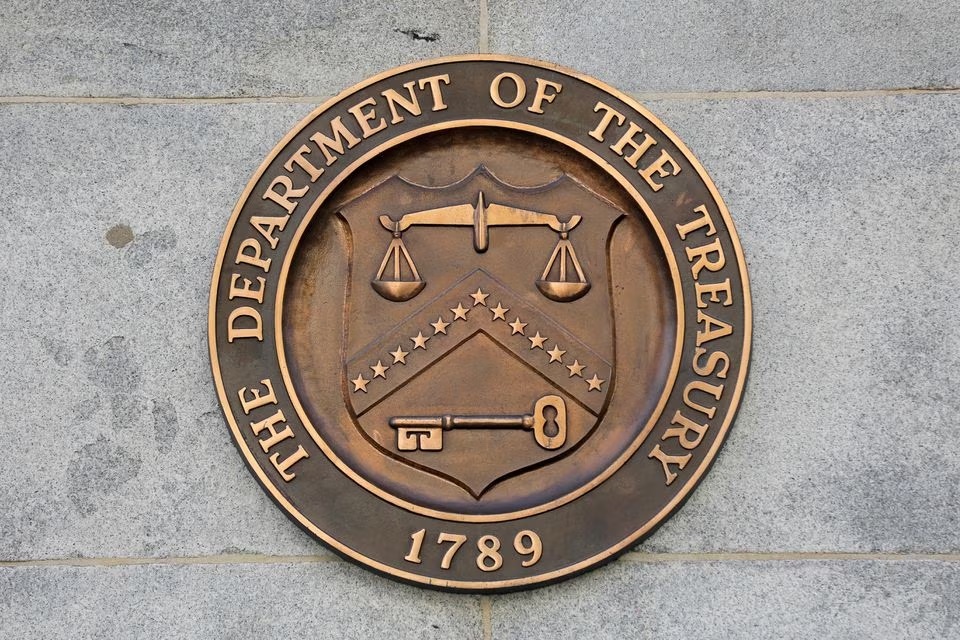
U.S. Treasury’s Decision To Remove DeFi Broker Reporting Rules Is A Landmark Win For The Crypto Industry

0

According to Bloomberg, the U.S. Treasury Department has officially scrapped crypto broker reporting rules (TD 10021, RIN 1545-BR39) that would have required decentralized finance (DeFi) platforms to report customer transaction data to the IRS. These rules, initially set to take effect in 2027, were repealed by Congress under the Congressional Review Act, with President Trump signing the resolution in April 2025.

The decision is seen as a significant win for the crypto industry, particularly for DeFi, as it reduces compliance burdens and supports innovation by excluding decentralized platforms from broker reporting requirements. Custodial exchanges like Coinbase remain subject to reporting, but DeFi protocols and front-end developers are now exempt.

Exempting DeFi platforms from IRS reporting requirements reduces operational and compliance costs, allowing developers to focus on innovation. This could accelerate growth in DeFi, which relies on decentralized protocols and smart contracts, fostering new financial products and services. DeFi platforms can now operate with less fear of regulatory overreach, potentially attracting more developers and users to the ecosystem.

The decision creates a clear distinction between custodial platforms (e.g., Coinbase, Binance), which must still comply with IRS reporting, and non-custodial DeFi platforms, which are exempt. This reinforces a regulatory divide where centralized entities face stricter oversight, while decentralized ones gain more freedom. Custodial exchanges may face competitive disadvantages due to higher compliance costs, potentially pushing some users toward DeFi alternatives.

The IRS loses visibility into DeFi transactions, complicating efforts to track taxable events like capital gains. This could lead to increased tax evasion risks, prompting future regulatory efforts to address gaps in enforcement without stifling innovation. The Treasury may need to explore alternative methods, such as wallet-level reporting or blockchain analytics, to monitor DeFi activity.

The repeal, signed by President Trump in April 2025, signals a pro-crypto stance, aligning with industry advocacy from groups like the Blockchain Association. This could embolden further lobbying for crypto-friendly policies. However, it may deepen tensions with regulators and lawmakers who prioritize consumer protection and anti-money laundering (AML) measures, as DeFi’s pseudonymity raises concerns about illicit activity.

The U.S. move could pressure other jurisdictions to relax DeFi regulations to remain competitive, potentially leading to a global race for crypto-friendly policies. Conversely, stricter regimes (e.g., EU’s MiCA framework) may contrast with the U.S. approach, creating a fragmented regulatory landscape for global crypto businesses. Custodial platforms like Coinbase remain subject to broker reporting rules, requiring them to collect and report user data (e.g., Form 1099).

This creates a compliance burden, potentially alienating privacy-focused users. Non-custodial DeFi protocols, lacking a central entity, are now exempt, reinforcing their appeal as privacy-centric alternatives. This could drive user migration from centralized to decentralized platforms, intensifying competition. Crypto advocates celebrate the repeal as a victory for innovation and individual freedom, arguing that DeFi’s decentralized nature makes traditional broker rules inapplicable.

Regulators and critics, however, worry about reduced oversight, citing risks of tax evasion, money laundering, and investor harm in DeFi’s largely unregulated space. This divide may fuel ongoing debates over how to regulate decentralized systems. The repeal, backed by a Republican-led Congress and President Trump, reflects a pro-business, deregulation agenda. Democrats and consumer protection advocates may push back, arguing for stronger safeguards, highlighting a partisan split on crypto policy.

This political divide could shape future legislation, with crypto becoming a wedge issue in U.S. politics. Retail users benefit from DeFi’s lower barriers and privacy but face risks from scams and volatile markets without regulatory protections. Institutional investors may prefer centralized platforms for compliance and security, deepening the divide between retail-driven DeFi and institutional crypto adoption.

The Treasury’s decision to remove DeFi broker reporting rules is a landmark win for the crypto industry, particularly DeFi, fostering innovation and user privacy. However, it widens the regulatory gap between centralized and decentralized platforms, complicates tax enforcement, and fuels debates over balancing innovation with oversight. The divide between pro-crypto advocates and regulatory hawks will likely intensify, shaping the future of U.S. crypto policy and its global influence.