DD
MM
YYYY

PAGES

DD
MM
YYYY

spot_img

PAGES

Home Blog Page 881

Phantom-Hyperliquid Integration Is A Bold Step Toward Making DeFi Trading Mainstream

0

Phantom Wallet has integrated with Hyperliquid, enabling perpetual futures trading directly within the wallet. This partnership allows users to access over 100 crypto markets, including Bitcoin, Solana, Ethereum, and meme tokens like Dogecoin and PEPE, with up to 40x leverage. The integration leverages Hyperliquid’s infrastructure for high liquidity, fast transaction settlements, and a mobile-first, non-custodial trading experience.

The integration leverages Hyperliquid’s high-performance infrastructure for deep liquidity, sub-second transaction finality, and zero gas fees, providing a streamlined, mobile-first, non-custodial trading experience. Users can fund positions with SOL, which is automatically converted to USDC for trading, simplifying the process to just a few taps within the wallet’s Home tab. The feature is initially rolling out to select EU users, with plans for broader expansion, though it’s not available in all jurisdictions, including the UK.

Phantom emphasizes that leveraged trading carries significant risks, such as potential liquidation and fluctuating funding rates. This move reflects Phantom’s belief that wallets, not exchanges, will become the primary gateway for on-chain activity, positioning it as a leader in mobile-first DeFi trading., which is automatically converted to USDC for trading. The interface is designed for both new and experienced traders, offering tools like stop-loss, take-profit, and leverage sliders for position management.

This integration, initially rolled out for select EU users, simplifies trading by eliminating the need for separate apps or complex setups, though it’s not available in all regions, including the UK. Phantom emphasizes the high risks of leveraged trading, such as potential liquidation. This move positions Phantom as a leader in mobile-first, non-custodial DeFi trading.

By embedding perpetual futures trading with up to 40x leverage in a user-friendly wallet, Phantom lowers the barrier to entry for DeFi trading. Users no longer need to navigate complex decentralized exchange (DEX) interfaces or separate platforms, making advanced trading accessible to a broader audience. The mobile-first, non-custodial approach aligns with the growing trend of on-the-go crypto management, potentially driving adoption among younger or less tech-savvy users who prefer seamless, app-based solutions.

Phantom’s move reinforces the idea that wallets will evolve into all-in-one hubs for crypto activities, reducing reliance on centralized exchanges (CEXs) and positioning wallets as the primary interface for DeFi. Hyperliquid’s infrastructure, known for deep liquidity and fast settlements, could attract more traders to its markets, boosting trading volume for assets like Bitcoin, Solana, Ethereum, and meme tokens.

By offering leveraged trading with zero gas fees and non-custodial security, Phantom-Hyperliquid challenges centralized platforms like Binance or Coinbase, potentially shifting market share toward DeFi. The inclusion of volatile assets like Dogecoin and PEPE could amplify speculative trading, driving price volatility and interest in these markets.

The integration simplifies funding (using SOL, auto-converted to USDC) and offers tools like stop-loss and leverage sliders, making sophisticated trading intuitive. This could set a new standard for DeFi UX, pushing competitors to innovate. Non-custodial trading ensures users retain control of their funds, aligning with DeFi’s ethos and appealing to privacy-conscious users.

Phantom’s emphasis on the risks of leveraged trading (e.g., liquidation, funding rate fluctuations) highlights the need for user education. This could spur demand for in-wallet educational tools or risk management features. The initial rollout to select EU users, with exclusions like the UK, underscores regulatory fragmentation.

Users in unsupported regions (e.g., the US or UK) may feel left out, potentially turning to VPNs or alternative platforms, which could introduce legal or security risks. Differing global regulations on leveraged trading and crypto derivatives may limit Phantom’s ability to expand this feature universally, creating a two-tiered user experience based on jurisdiction.

While the interface is designed for all skill levels, the high leverage (up to 40x) and volatile assets like meme tokens could overwhelm novice traders, leading to significant losses. Experienced traders may benefit disproportionately due to their ability to navigate risks, widening the gap between skilled and inexperienced users.

Users without a strong understanding of perpetual futures or leverage may face financial ruin, highlighting the need for accessible education. Phantom’s risk warnings are a start, but the divide between informed and uninformed users could grow without robust resources. The integration may accelerate the shift from centralized to decentralized platforms, but users loyal to CEXs (due to familiarity or perceived reliability) may resist moving to a wallet-based solution.

While Phantom’s UX simplifies trading, the DeFi ecosystem still requires some technical knowledge (e.g., wallet management, seed phrases). This could alienate mainstream users, reinforcing a divide between early adopters and latecomers. Leveraged trading is inherently risky, and users with limited capital may face greater relative losses compared to wealthier traders who can absorb volatility. This could exacerbate wealth disparities within the crypto community.

The inclusion of speculative assets like PEPE may attract retail investors chasing quick gains, while institutional or cautious investors focus on major assets, creating a divide in investment strategies and outcomes. The Phantom-Hyperliquid integration is a bold step toward making DeFi trading mainstream, leveraging Hyperliquid’s high-performance infrastructure and Phantom’s user-friendly wallet to challenge centralized exchanges. It positions Phantom as a leader in the wallet-centric future of crypto, with potential to drive liquidity and adoption.

However, it also widens divides based on geography, user expertise, adoption preferences, and economic capacity. To bridge these gaps, Phantom could prioritize broader regional rollouts, enhanced user education, and tools to mitigate risks for less experienced traders. For now, this integration marks a pivotal moment for DeFi, but its success will depend on balancing accessibility with responsibility.

There’s Significant Interest From Private Companies For Tokenization of Equities, Robinhood’s CEO Says

0

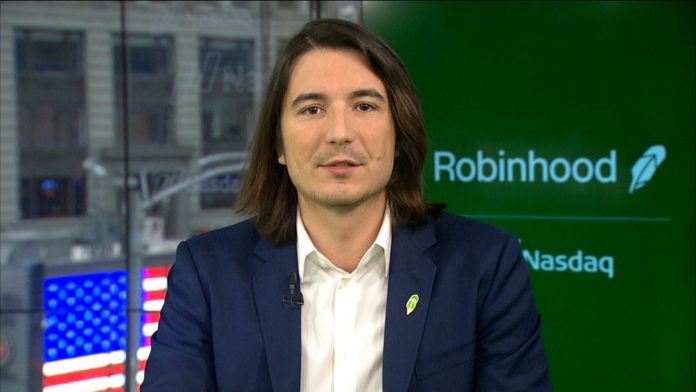
Robinhood CEO Vlad Tenev has highlighted significant interest from private companies in tokenizing their equity following the launch of Robinhood’s stock token platform in the European Union. In a Bloomberg interview, Tenev noted a “deluge of inquiries” from private firms eager to make their shares accessible to retail investors through blockchain-based tokens. This platform, currently EU-exclusive, offers over 200 tokenized U.S. equities and aims to democratize access to private markets, addressing the issue of large companies staying private longer.

Tenev emphasized the potential of tokenization to resolve inequities in capital markets by enabling broader investor participation. However, the initiative has faced scrutiny, with regulators like the Bank of Lithuania seeking clarification on token structures, and companies like OpenAI clarifying that these tokens do not represent actual equity. Tenev remains confident that the offerings comply with EU regulations and could expand to markets like the U.S. pending regulatory approval.

Tokenization allows retail investors to access private company equity, traditionally reserved for institutional or high-net-worth investors. By fractionalizing shares via blockchain, platforms like Robinhood enable smaller investors to participate in high-growth private firms. Tokenized equities can be traded on secondary markets, increasing liquidity for private company shares, which are typically illiquid.

This could attract more investors and potentially lower the cost of capital for companies. Blockchain-based platforms operate across borders, potentially allowing investors from diverse regions, like the EU, to invest in U.S.-based private companies, broadening the investor base. Tokenization leverages blockchain for transparency, security, and reduced transaction costs.

Smart contracts can automate processes like dividend payments or shareholder voting, streamlining operations. Traditional barriers, such as high minimum investment thresholds or complex brokerage processes, are reduced, making investing more accessible. Tokenization could lead to innovative financial instruments, such as tokenized derivatives or fractional ownership models, fostering competition among platforms.

Established financial institutions may need to adapt to compete with platforms like Robinhood, potentially accelerating the adoption of blockchain in traditional markets. As seen with the Bank of Lithuania’s inquiries, tokenized equities face regulatory challenges. Platforms must navigate complex securities laws, which vary by jurisdiction, to ensure compliance. Widespread adoption could push regulators to create standardized frameworks for tokenized assets, fostering trust and scalability.

Tokenization relies on digital platforms and blockchain literacy, which may exclude individuals without access to reliable internet, smartphones, or technical knowledge. This could widen the gap between tech-savvy investors and those less familiar with digital tools. Understanding tokenized assets requires knowledge of blockchain and financial markets. Without adequate education, less-informed investors risk making poor decisions or falling prey to scams, deepening financial inequality.

While tokenization aims to democratize access, wealthier investors with greater resources and risk tolerance may still dominate high-growth opportunities, as they can afford to invest larger sums or absorb potential losses. Although tokenization lowers barriers, private companies may still prioritize institutional investors or set high token prices, limiting true retail participation. Robinhood’s platform is currently EU-only, and regulatory hurdles (e.g., SEC approval in the U.S.) could delay or restrict access in other regions, creating disparities in who can participate.

Countries with less developed regulatory frameworks may struggle to integrate tokenized assets, potentially excluding investors from emerging markets. Tokenized equities, especially in private companies, can be highly speculative. Less experienced retail investors may face significant losses compared to institutional investors with better risk management. Missteps in compliance or unclear token structures (e.g., tokens not representing actual equity, as noted with OpenAI) could erode trust, disproportionately affecting retail investors.

Despite blockchain’s decentralized nature, platforms like Robinhood control access, pricing, and token offerings. This centralization could lead to gatekeeping or favoritism, limiting the inclusivity of tokenization. Platform fees for trading tokenized assets could disproportionately impact smaller investors, reinforcing financial divides. Platforms and regulators could invest in public education campaigns to boost financial and blockchain literacy, ensuring broader participation.

Platforms should prioritize user-friendly interfaces and low-cost access to cater to diverse demographics. Harmonized global standards for tokenized assets could reduce jurisdictional disparities and build trust. Platforms must clearly communicate token structures (e.g., whether tokens represent true equity) to protect retail investors. Lowering fees and minimum investment thresholds can make tokenization more inclusive.

Equity tokenization has the potential to reshape capital markets by broadening access and enhancing liquidity, but it also risks exacerbating existing divides if not implemented thoughtfully. The digital, economic, and regulatory gaps could deepen inequalities unless proactive measures ensure inclusivity, transparency, and education. As platforms like Robinhood expand, balancing innovation with equity will be critical to realizing the full potential of tokenized markets.

South Korea To Integrate Crypto Firms Into Ots Official Startup Ecosystem

0

South Korea is set to integrate cryptocurrency firms into its official startup ecosystem, granting them access to significant tax incentives and supportive regulatory frameworks. This move, announced by the Ministry of SMEs and Startups, reverses a 2018 decision and aims to foster innovation in the digital asset sector by providing financial relief and encouraging sustainable growth.

By classifying crypto enterprises as venture businesses, the government seeks to enhance South Korea’s position as a competitive hub for crypto innovation in Asia, promoting increased investment and technological development. However, specific details on the tax breaks, such as the exact percentage or types of incentives, are not fully outlined in available information.

On the other hand, South Korea’s plan to impose a 20% capital gains tax on crypto profits has been repeatedly delayed, with the latest postponement pushing implementation to January 2027. Initially proposed in 2021, the tax would apply to gains exceeding 2.5 million won ($1,800), though there were discussions to raise this threshold to 50 million won ($36,000) to align with stock market tax policies and protect smaller investors.

The delay stems from concerns over market stability, inadequate regulatory infrastructure, and the risk of driving investors to offshore platforms. Critics argue that the low threshold could disproportionately affect retail traders, while supporters of the delay believe it provides time to establish a robust framework for crypto taxation.

This dual approach—offering tax breaks to crypto firms while delaying individual crypto gains taxation—reflects South Korea’s attempt to balance fostering innovation with regulatory caution. The tax breaks could attract more crypto businesses, but the postponed capital gains tax may create uncertainty for investors planning long-term strategies. Tax breaks and venture business status will reduce financial burdens, allowing crypto startups to allocate more resources to innovation, research, and expansion.

This could attract both domestic and international crypto firms to South Korea, boosting the country’s status as a crypto hub in Asia. Inclusion in the startup ecosystem grants access to government-backed programs, such as funding, incubators, and regulatory guidance, fostering sustainable business models and reducing operational risks. With tax incentives, South Korean crypto firms may gain a competitive advantage over counterparts in jurisdictions with less favorable policies, potentially drawing talent and capital from abroad.

The postponement of the 20% capital gains tax to January 2027 provides investors with a longer window to realize profits without immediate tax liabilities. This could encourage more trading and investment in crypto assets, particularly among retail investors. The repeated delays and debates over the tax threshold (2.5 million won vs. 50 million won) create uncertainty, making it harder for investors to plan long-term strategies.

Some may seek offshore platforms to avoid future taxation, potentially draining capital from South Korea’s crypto market. If the lower tax threshold (2.5 million won) is retained, smaller retail investors could face significant tax burdens, potentially discouraging participation. A higher threshold (50 million won) would protect smaller traders but may face political pushback from those advocating for equity with stock market taxation.

Supporting crypto startups could drive technological innovation, create jobs, and position South Korea as a leader in blockchain and digital asset development, aligning with global trends toward decentralized finance (DeFi) and Web3. The government’s cautious approach—offering incentives while delaying taxation—reflects an attempt to balance innovation with financial oversight. However, inadequate regulatory infrastructure could lead to risks like market manipulation or fraud if not addressed by 2027.

The tax delay may stabilize the crypto market in the short term by avoiding sudden capital outflows, but prolonged uncertainty could deter institutional investors seeking clear regulatory frameworks. By fostering a crypto-friendly environment, South Korea could compete with jurisdictions like Singapore or Dubai, which also offer favorable crypto policies. However, failure to implement a robust tax and regulatory system could undermine long-term credibility.

Investors and firms may move to jurisdictions with no or lower crypto taxes if South Korea’s tax policies become too restrictive, reducing domestic market liquidity. Tax breaks and delayed taxation could fuel speculative trading, increasing market volatility if not paired with strong oversight. Without a clear framework by 2027, the crypto sector could face challenges like insufficient investor protections or inconsistent enforcement, potentially harming public trust.

South Korea’s policies could catalyze growth in its crypto sector and enhance its global standing, but the success of these measures depends on clear, timely regulatory frameworks and balanced taxation policies to avoid unintended consequences like capital flight or market instability.

Dogecoin Price Eyes Recovery as Spot DOGE ETF Nears Approval, While Little Pepe (LILPEPE) is Positioned to Skyrocket 16702%

0

Dogecoin has been dragging its paws for weeks, but there’s fresh air in the room. With a potential Spot DOGE ETF now making headlines, traders are beginning to stir. Dogecoin might just be lining up for a sharp bounce, as recent price action shows. At the same time, a newer name is shaking the meme market. Little Pepe (LILPEPE) isn’t playing dress-up. It’s a meme coin with a working backbone: utility, roadmap, and real devs. While DOGE eyes its comeback, LILPEPE is already turning heads with an attention grabbing presale so far, with a prospect of surging by a mouthwatering 16702%.

DOGE ETF Rumors Fuel Comeback Hopes for Dogecoin

On-chain data shows that candles have stuck between $0.15 and $0.18 since early June. Each rally attempt hit a wall. But here’s the thing: the sell pressure didn’t deepen. With volume picking up and red days shrinking, we believe DOGE could be bracing for a bullish momentum. If the DOGE token gets its own spot ETF, it wouldn’t just mean attention from investors—it would open doors to institutions sniffing around for meme exposure with a safety net. Call it unlikely, but if it happens.

LILPEPE Brings Utility to Meme Tokens

While DOGE waits, Little Pepe (LILPEPE) is already making headlines. This isn’t some slap-a-frog-on-a-coin play. It’s a Layer 2 blockchain designed specifically for meme coins—fast, low-fee, and actually thought out. Think of it as a meme hub that works. At $0.0013 in its fourth presale stage, LILPEPE has already raised over $3.80 million, selling 3.23 billion out of the 3.75 billion tokens allocated for this round. The next stage will see the price increase to $0.0014. This isn’t just hype—it’s real momentum. What sets it apart? A zero-tax, EVM-compatible Layer 2 blockchain, sniper bot protection, plans for staking, NFTs, DAO voting, and a meme-focused launchpad. These features are rarely seen in the meme coin space. Additionally, Little Pepe is running a $777,000 giveaway during its presale. Ten participants will each win $77,000 worth of LILPEPE tokens. To qualify, participants must contribute a minimum of $100 in the presale. There are no complicated tasks or gimmicks—just a straightforward reward for early supporters. This kind of incentive demonstrates the team’s genuine commitment and helps build strong community loyalty from the start.

Different Speeds, Same Race

Dogecoin is riding sentiment, while LILPEPE promises utility. One has a legacy; the other has a clear plan. If DOGE clears that ETF hurdle, expect fireworks. But LILPEPE? It’s already stacking bricks, phase by phase. What happens next depends on timing. But if the market starts moving again, these two projects deserve investors’ attention for very different reasons.

For More Details About Little PEPE, Visit The Below Link:

Website: https://littlepepe.com

Rummy Cash vs. Free Games: Which One Should You Play?

0

There’s no denying that rummy has steadily become one of the most popular online games in recent years. The combination of excitement, fun, and mental stimulation has worked wonders in terms of attracting people across all generations to this wonderful game, as you may already know. However, there are two forms of the game that you will come across these days, namely rummy cash and free rummy games. Which one should you play? That’s what we aim to help you decide in this article.

Rummy Cash vs. Free Games- What Floats Your Boat?

Most popular rummy app offer both free and cash versions of the popular game, as you’ll find. Now, what suits you depends on the level you are at. Let us look at a comparison below.

Free Rummy Games

These games are more suitable for beginners. By this, we mean those who are just learning the game or starting to play it. If you fall in this category, they will enable you to get a feel of how the game works in a real environment. You can get a sense of playing against rivals, observing their hands, arranging sets and sequences swiftly, and learning how to reason and strategise from start to finish. The benefits thus include being able to practice and hone your skills without competing for real money, which comes with its own set of challenges.

Casual gamers should also embrace free rummy games, with or without proper experience. If you are not as experienced, these games are right for you. They will give you the right platform to practice before things get serious. Even if you’re experienced and just want a casual and fun time every now and then, this is the format to opt for. You don’t have to put in any money to play these games as well.

Real Money Rummy

Most leading rummy apps have real-money games available. You can compete with players from across the country for prize money and various rewards. These games follow the same rules as free rummy, but the competition is more intense, featuring seasoned opponents. You’ll need sharp observation, reasoning, and strategy to complete your sets and sequences swiftly and win. Hence, if you’re looking for a serious rummy experience and have the necessary skills, this is the format to opt for.

If you are already experienced as a player and want a more mentally stimulating and intense game, this is the one you should choose. Of course, the benefits also don’t stop there; you can actually win handsome rewards and take part in tournaments to win prize money. Yet, you need to pay entry fees to play at this level. Additionally, note that some Indian states prohibit real-money rummy. So, it all depends on your budget and local regulations as well.

Which One Should You Choose?

It all depends on your preferences, gaming intentions, budget, and experience or skill levels. Take a look at the comparison above and make a decision accordingly. Happy gaming!