DD
MM
YYYY

PAGES

DD
MM
YYYY

spot_img

PAGES

Home Blog Page 885

Trump Tariff Rollback Hits Detroit Axle as Court Denies Relief Over De Minimis Import Ban

0

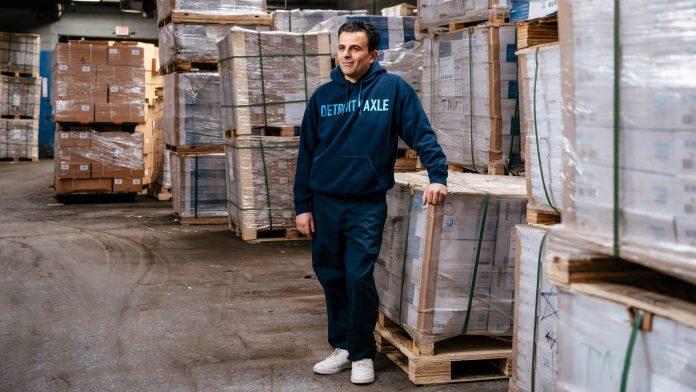
A federal trade court on Monday declined to halt President Donald Trump’s order ending tariff exemptions for low-value goods imported into the U.S., a blow to auto parts retailer Detroit Axle, which had warned the move could cripple its business and force mass layoffs.

The U.S. Court of International Trade ruled that Detroit Axle’s lawsuit, filed in May, overlaps with a broader, ongoing case already challenging Trump’s sweeping trade measures, including his now-paused “reciprocal” tariffs. That case, V.O.S. Selections v. Trump, is already awaiting resolution in a federal appeals court.

In a brief but pointed opinion, the three-judge panel said it would not issue what it called “redundant, contingent relief,” effectively shelving Detroit Axle’s plea for emergency protection from the new import restrictions.

“This court has already granted, and the Federal Circuit subsequently stayed, all relief Axle requests,” the panel said, referring to the earlier V.O.S. case, where a ruling in May struck down Trump’s tariff authority before it was quickly stayed on appeal. The court has now stayed Detroit Axle’s case pending the outcome of that larger legal battle, which is scheduled for oral arguments this Thursday.

Detroit Axle, based in Michigan, had asked the court for a preliminary injunction against Trump’s April 3 executive order that revoked the de minimis exemption. This rule allowed goods valued below $800 to enter the country without tariffs. The exemption, long criticized by domestic manufacturers but widely used by e-commerce platforms like Shein and Temu, had become a lifeline for Detroit Axle amid the pressure of earlier tariffs imposed during Trump’s first term.

The company claimed that by routing orders through a distribution facility in Juarez, Mexico, and keeping shipment values under the $800 cap, it was able to maintain competitive prices and expand its U.S. customer base without incurring heavy import duties. That strategy has now collapsed under Trump’s latest action, which bans de minimis treatment specifically for Chinese-origin goods, citing a crackdown on “deceptive shipping practices” and hidden contraband such as synthetic opioids.

In court filings, Detroit Axle described the impact of Trump’s order as “swift and catastrophic,” saying the tariffs — now reaching as high as 72.5% on some Chinese parts — had made its operations financially untenable.

“Its frugal buyers will not bear the increased prices, and Detroit Axle cannot absorb them,” the company wrote, warning that without relief it would deplete its inventory by June and be forced to shutter facilities and lay off workers.

That scenario is now unfolding. In a June state filing, Detroit Axle confirmed plans to close its Ferndale, Michigan, warehouse and lay off 102 employees by August 25, citing “unforeseen circumstances” triggered by Trump’s trade actions. The company said the sudden tariff hike had severely disrupted its supply chain and left it with no viable way to sustain operations under the new cost burden.

While the company’s legal options now hinge on the fate of the broader appeal in the V.O.S. case, the immediate consequences are already hitting home. Trump’s move to aggressively curtail de minimis imports has stirred fears of collateral damage beyond Chinese online retailers, affecting small and mid-sized American firms like Detroit Axle that have built business models around low-cost international sourcing.

The broader fallout from Trump’s trade policies is being felt not only in domestic manufacturing but also across the globe, with U.S. allies and companies that had once benefited from the very global trade practices his administration is now seeking to shut down on the receiving end.

Dangote Urges Tinubu to Ban Fuel Imports Under ‘Nigeria First’ Policy, Sparks Fresh Monopoly Allegations, Pushback from Marketers, Experts

0

Aliko Dangote, President of the Dangote Group, is calling on President Bola Tinubu to include refined petroleum products in the list of items banned under the Federal Government’s ‘Nigeria First’ policy.

Dangote made the request last week while addressing industry stakeholders at the Global Commodity Insights Conference on West African Refined Fuel Markets, organized by the Nigerian Midstream and Downstream Petroleum Regulatory Authority (NMDPRA) in partnership with S&P Global Insights.

Speaking at the conference, Dangote urged the Tinubu administration to apply the ‘Nigeria First’ policy—originally intended to bar public institutions from importing goods or services that can be sourced locally—to the petroleum sector. He insisted that the continued importation of petrol, diesel, and other refined products into Nigeria is discouraging local refining and driving away critical investment.

“The Nigeria First policy announced by His Excellency, President Bola Tinubu, should apply to the petroleum product sector and all other sectors,” Dangote said.

He argued that domestic refiners, including his $20 billion refinery in Lagos, are being undercut by the dumping of cheap, often toxic, fuel into the Nigerian market. Some of these imported fuels, according to him, would never be allowed into Europe or North America due to their substandard nature.

“We are now facing increased dumping of cheap, often toxic petroleum products… some of which are blended to substandard levels,” he said. “Due to the price caps on Russian petroleum products, discounted products produced in Russia or with discounted Russian crude find their way to Africa, severely undercutting our local production.”

Dangote went further to argue that Nigeria has already become a net exporter of refined fuel, revealing that between June and July 2025, his refinery exported approximately 1.35 billion liters of petrol.

Monopoly Concerns Resurface

But the demand has triggered immediate backlash from marketers, energy experts, and sections of the public, who accuse the billionaire of seeking to monopolize the oil sector, echoing similar accusations made against him in the cement industry.

Despite his assertion that the ban would protect local investment, many believe that the proposal reeks of monopolistic ambition. The request has revived longstanding concerns that Dangote is again attempting to control a critical sector of Nigeria’s economy, just as he is believed to have done in the cement industry, where his company has dominated market share for years amid allegations of regulatory capture and market manipulation.

“No, we cannot have a ban on petroleum imports. It’s not a legal ban. That would not be acceptable because we don’t have diverse sources for petroleum products. We can’t rely solely on the Dangote refineries. That would give a monopoly to a private individual,” an energy expert at the University of Lagos, Professor Dayo Ayoade, said, warning that it would promote monopolistic tendencies.

Many Nigerians, including oil marketers, have expressed concern that such a move would entrench Dangote’s dominance at the expense of competition and consumer welfare.

There is also concern that banning the importation of petroleum products contradicts the deregulation framework enshrined in the Petroleum Industry Act (PIA), which mandates a liberalized downstream sector where marketers are free to source and sell products without price controls or import restrictions.

Marketers and Experts Push Back

Against this backdrop, independent marketers and downstream operators who spoke to The Punch swiftly rejected Dangote’s proposal, reiterating that it would kill competition, spike fuel prices, and destabilize the sector.

“We independent marketers will depart from that request. If the government does that, that means we will not be able to check inflation and monopoly, since it is the only refinery operating in the country now. We should continue to import even as we buy locally,” said Chinedu Ukadike, Publicity Secretary of the Independent Petroleum Marketers Association of Nigeria (IPMAN).

“I heard that the NMDPRA stated clearly that Dangote cannot produce all the fuel that the country needs. We will appreciate it if the country allows importation to continue since we are not paying subsidy,” he added.

Ukadike also dismissed Dangote’s claim that importation would kill businesses and local refineries. He noted that although the country is no longer paying subsidies on fuel, allowing imports ensures price discovery and market checks.

“Importation won’t kill local businesses or refineries; it will strengthen them. It will ensure local refineries step up their game. I don’t agree with Dangote on this,” he said.

Billy Gillis-Harry, National President of the Petroleum Products Retail Outlet Owners Association of Nigeria (PETROAN), also opposed the idea.

“I don’t agree with Dangote. We are running a free economy. There’s no reason why any one company should have an overarching value on the entire industry,” he said.

He added that while the importation of locally available products like toothpicks or food items could be banned, refined petroleum products should remain open to market forces to ensure stability.

Protectionism vs. Deregulation

President Tinubu’s ‘Nigeria First’ policy, which restricts public procurement of foreign goods and services already available in Nigeria, is seen as a protectionist move to boost domestic industries. But experts argue that applying it to the petroleum sector—especially in a country that just exited fuel subsidy and enacted sweeping deregulation laws—would be illegal and economically self-defeating.

The Petroleum Industry Act (PIA), passed in 2021, legally supports deregulation of the downstream sector and emphasizes market-driven pricing. A fuel import ban would contradict both the letter and the spirit of the PIA, potentially triggering investor flight.

While Dangote’s monopoly concerns have been widely criticized, his call for regulators to revoke inactive refinery licenses has received some support.

“On that side, I agree with him,” Ukadike said. “You can’t obtain a refinery license and use it to decorate your house. The nation needs more refineries to export more.”

Dangote, for his part, insists his refinery has the capacity to meet Nigeria’s needs and produce for export. He recently said the facility, currently operating at 650,000 barrels per day (bpd), will scale up to 700,000 bpd by December.

He explained that his request was not to monopolize the sector but to produce local investments. Africa’s richest man noted that those who have the resources to invest in Nigeria keep taking their resources outside the country while they criticize local investors.

“Let me take this opportunity to address concerns around monopoly and dominance. The reality is that too many people who have the means and the opportunity to contribute meaningfully to our nation’s growth choose instead to criticize from the sidelines while investing their wealth abroad,” Dangote said.

His request to ban fuel imports comes just days after he stepped down as Chairman of Dangote Cement Plc to focus more on his $20 billion refinery and its supporting businesses in petrochemicals, fertilizer, and energy.

However, industry players say unless more refineries come onstream and market conditions become liberalized, any attempt to shut out fuel importation will be viewed not as patriotic but as an audacious play for market control.

54Tables Launches African Meal Delivery Service In LA, California; to Expand to Other Cities

0

Hello Los Angeles, our African meal delivery service is now ready and fully launched.  Visit 54tables.com and place your order for the jollof (Nigeria, Kenya, Ghana, etc flavours available! Lol), snails and all the good stuff in the native land. DoorDash will deliver to you. We’re also looking for interns who can work in the food kitchens. More cities across the United States are coming.

Tekedia Capital >> funding African prosperity


From Keys to KPIs: What a Lawrenceville Locksmith Teaches About Real-World Security and Service Innovation

0

Tekedia readers love frameworks, metrics, and execution stories. Look closely at a neighborhood locksmith and you will find a living case study in customer-centric innovation, logistics efficiency, and risk management. Physical security is not just hardware in a door. It is a stack of processes, tools, and human decisions that must work together like any disciplined tech startup.

Physical Security = A Systems Problem

A door lock is only one node. The rest of the system includes who holds the keys, how quickly help arrives during a lockout, whether a landlord can revoke access without replacing every cylinder, and how pricing is communicated before the technician starts drilling. Each touchpoint influences trust. In tech, we talk about uptime, latency, and user experience. In the locksmith world, those translate to response time, non-destructive entry, and transparent billing.

Data-Driven Dispatch Without Fancy Buzzwords

Many small service companies lean on intuition. The locksmith who wins in 2025 uses lightweight software to map demand spikes by ZIP code, auto-assigns jobs based on technician skill sets, and tracks inventory so the right blank key or latch plate is always on the truck. No need to label it with trendy acronyms. What matters is measurable improvement: fewer return trips, shorter wait windows, higher review scores.

Reducing Friction at Every Step

  1. Clear pricing before arrival
  2. SMS updates when the van is en route
  3. A technician who can rekey four doors swiftly instead of fumbling for parts
  4. A receipt that documents every component changed for insurance records

Remove friction and you get repeat business plus organic search visibility from happy customer reviews.

The Human Firewall

Cybersecurity pros often say users are the weakest link. In neighborhoods, poorly managed keys and worn-out locks are the weakest links. Tenants move out and still have copies. Employees leave and retain back door access. A simple rekey or master-key plan tightens the perimeter. It is not glamorous tech, but it is effective threat reduction with a strong ROI.

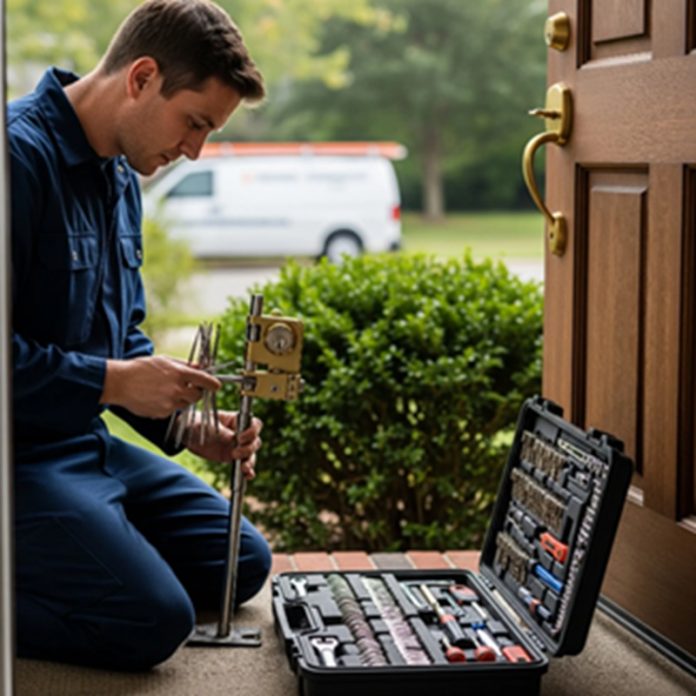
Midway through any improvement plan, you need someone who lives and breathes this craft. That is where a seasoned locksmith lawrenceville ga provider steps in. They evaluate the entire entry ecosystem, not just the cylinder you can see.

Lessons Any Startup Can Borrow

  • Local knowledge beats generic templates: Understanding HOA rules, county regulations, and common door materials saves time and prevents callbacks.
  • Speed is a feature: A 20-minute faster arrival can be the difference between a glowing review and a refund request.
  • Inventory discipline matters: The right pin kit or latch saves a second visit. That is pure margin.
  • Reputation compounds: Physical service businesses grow through word of mouth and SERP dominance. Consistency and clarity drive both.

Why Lawrenceville Needs This Mindset

Gwinnett County combines historic homes, new builds, micro retail, and light industrial spaces. Security problems are diverse: antique mortise locks on older streets, hollow-core doors in starter homes, heavy-gauge steel roll-up doors in small warehouses. One-size-fits-all advice fails. Tailored recommendations based on field data, crime trends, and material durability keep people safer without overspending.

The Cost of Waiting

Delaying a rekey after a roommate moves out is like ignoring a known vulnerability in code. Sooner or later, someone will exploit it. A corroded latch that sticks every third pull is a failure-in-waiting. Preventive maintenance is cheaper than emergency service at 2 a.m. The smartest customers treat locksmith visits like semi-annual audits: quick, proactive, and documented.

Final Move: Execute

Security is solved the way puzzles are solved: piece by piece. Start with the obvious weak spots, layer improvements, and call in experts for the tricky parts. Do that and you build resilience, not just resistance.


Locksmith Lawrenceville GA
485 S Perry St, Lawrenceville, GA 30046
470-338-5962
locksmithlawrenceville-ga.com

Alibaba Unveils Quark AI Glasses in Strategic Push to Rival Meta and Expand AI Ecosystem

0

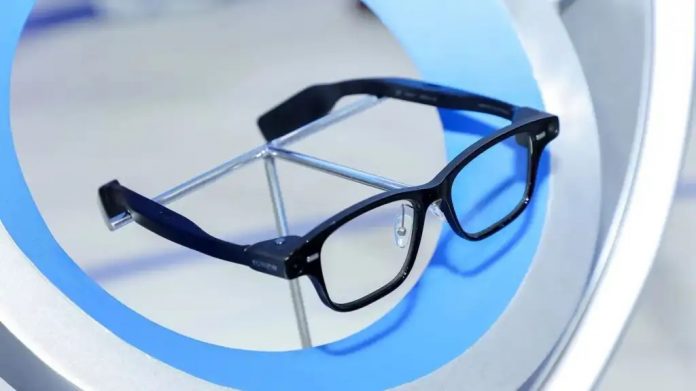
Alibaba has taken a major step into the consumer hardware market with the launch of its first AI-powered smart glasses, called Quark, at the World Artificial Intelligence Conference (WAIC) in Shanghai.

The product, powered by the company’s Quark AI assistant and its proprietary Qwen large language model, positions Alibaba as a serious challenger to Meta, Xiaomi, and other players in the emerging smart wearables market.

The announcement marks Alibaba’s most aggressive move yet to bring its generative AI capabilities directly to consumers. Beyond software dominance, the Quark AI Glasses are designed to fuse Alibaba’s core businesses—ecommerce, navigation, and digital payments—into a wearable, intelligent product that interacts with the world in real time.

What the Quark AI Glasses Offer

The glasses are tailored for both everyday and business use. Key features include:

  • Real-time translation of spoken languages
  • Instant payment via QR codes using Alipay and integration with Taobao for on-the-spot price comparisons
  • Turn-by-turn navigation through Alibaba’s Amap app
  • Hands-free calling, voice control, and music playback
  • Meeting transcription using Quark AI’s advanced speech-to-text functions

They also come with a Sony 12MP camera, with an advanced version featuring MicroLED waveguide lenses for augmented reality (AR) projections. The hardware runs on a dual-chip system—Qualcomm’s Snapdragon AR1 for performance-heavy tasks and Bestechnic’s BES2800 chip for power-efficient operation (MLQ.ai).

A Strategic Leap Beyond the Cloud

With this release, Alibaba is attempting to shift from being primarily a cloud services and ecommerce company into a fully integrated AI-powered tech ecosystem. The Quark glasses are a physical gateway into that ecosystem, designed to be always-on, voice-driven, and contextually aware, leveraging the full capabilities of Alibaba’s AI model family.

The company recently unveiled multiple upgrades to its LLM offerings, including Qwen2.5-VL, the multimodal Omni-7B, and the advanced Qwen3 series. These models offer strong reasoning capabilities and are optimized for devices like the Quark glasses. The glasses are scheduled to go on sale in China by late 2025, with no pricing or global launch information announced yet.

Part of a Broader AI Arms Race

Alibaba’s foray into smart eyewear comes as Chinese technology firms intensify their efforts to develop self-reliant AI ecosystems, especially under the pressure of U.S. export controls that have limited access to high-end semiconductors. According to Reuters, two new AI alliances were also announced during WAIC—one for chipmakers and another for model developers—to deepen integration across China’s tech stack, from chips to deployment.

Analysts say this domestic push is vital, not only to counterbalance U.S. restrictions but also to reduce reliance on foreign software and hardware. Alibaba’s vertically integrated approach—pairing AI, payments, ecommerce, navigation, and now wearables—positions it to thrive in a closed-loop ecosystem.

Challenges Ahead

Despite its strong entrance, Alibaba faces stiff competition. Meta’s Ray-Ban smart glasses continue to lead globally, and in China, companies like Xiaomi, Rokid, and Xreal have already launched their own AR wearables. Industry analysts caution that battery life, privacy, price point, and global usability could limit adoption unless Alibaba addresses these issues from the outset.

However, by leveraging its extensive ecosystem and AI expertise, Alibaba is uniquely positioned to create a differentiated offering that merges daily life, commerce, and computing.

But the Quark AI Glasses represent more than a new product. They are seen as a strategic hardware manifestation of Alibaba’s AI ambitions, aimed at transforming how people interact with the physical and digital worlds. They are also seen as part of China’s efforts to accelerate a self-sufficient AI and semiconductor ecosystem.