DD
MM
YYYY

PAGES

DD
MM
YYYY

spot_img

PAGES

Home Blog Page 887

Top Cryptos to Buy Now: BlockDAG, Pi Network, AAVE, & HYPE Deliver Real Growth in 2025

0

This year isn’t about guessing games anymore. In 2025, the questions people are asking have changed. Who is actually building? Who is delivering products? Who’s doing work that matters to users? The noise is still out there, but it’s easier now to identify projects that are showing real momentum. That’s where the top cryptos to buy now begin to stand out, not because they’re trending, but because they’re gaining real traction.

Names like BlockDAG, Pi Network, Hyperliquid, and Aave aren’t waiting to be noticed. They’re taking action and showing results. Here’s a closer look at what sets each of them apart and why they’re gaining attention for the next breakout cycle.

1. BlockDAG: Live Demo Confirms Real-Time Dual Mining System

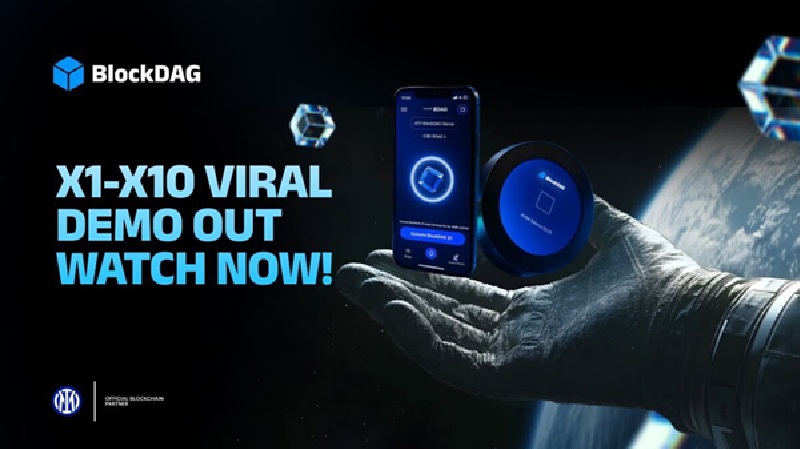
BlockDAG’s recently launched live demo has shifted attention from hype to working products. Instead of teasers or announcements, the demo provided exactly what many in the market wanted to see: mining devices running and earning BDAG live. The mobile-based X1 miner and the X10 hardware unit worked together smoothly, showing BlockDAG’s setup is no longer theoretical; it’s operational.

More than 2 million people have already installed the X1 app, which delivers up to 20 BDAG per day through an easy-to-use interface. The demo highlighted how output scales with the X10 hardware, which boosts earnings to 200 BDAG daily when connected via Bluetooth.

BlockDAG (BDAG) has raised $354 million and is priced at $0.0016 in Batch 29 of crypto presale. A scheduled post-launch price of $0.05 by August 11 points to a projected return of 3025%.
But this isn’t just about numbers. BlockDAG’s architecture uses a Block-DAG model based on directed acyclic graphs (DAGs), which improves scalability by enabling simultaneous transaction processing. Combined with referral campaigns, bonuses, and ongoing promotions, BlockDAG makes a strong case as one of the top cryptos to buy now.

2. Hyperliquid (HYPE): Big Swings with Breakout Opportunity

Hyperliquid (HYPE) is showing serious price movement. It fell 7.40% over the past week but still gained 23.81% this month and 101.73% over six months. The price now ranges from $42.73 to $49.58. A move past resistance at $53.15 could open the door to $60.00. Support sits at $39.45 and $32.60, indicating a possible 24% downside risk.

An RSI of 45.29 reflects neutral conditions, and a Stochastic of 11.73 points to potential overselling. Meanwhile, the MACD is slightly negative, adding some caution. Among the top cryptos to buy now, HYPE’s direction depends on whether it holds above key support or breaks past resistance.

3. Pi Network (PI): Short-Term Strength After Prolonged Drop

After a lengthy downtrend, Pi Network (PI) rose 4.48% this week. It is still down 7.33% over the past month and 33.36% over six months, but currently trades between $0.42 and $0.47. This range hints at some short-term stability. The 10-day SMA sits at $0.47, slightly above the 100-day SMA of $0.46, a setup that indicates near-term support.

The Relative Strength Index (RSI) at 42.37 suggests PI may be undervalued, while the low Stochastic reading of 7.72 points toward possible overselling. For PI to climb, it needs to push past resistance at $0.50 and then $0.55. As one of the top cryptos to buy now, its next move likely hinges on whether it can clear these resistance levels or hold above key support zones.

4. Aave (AAVE): Watching Resistance for the Next Move

Aave (AAVE) slipped 7.35% this week but is still up 32.99% over the last month. It has dropped 10.17% in six months. The current price sits between $307.48 and $340.26. Its 10-day SMA is $305.62, and the 100-day SMA is $318.53. With an RSI of 40.30 and a Stochastic of 19.90, AAVE is showing oversold signs.

The MACD reading of -2.626 confirms pressure to the downside. If AAVE breaks above $355.60, it could rise to $388, representing a potential 15% to 20% gain. On the other hand, falling below $290.05 or $257.27 could lead to deeper losses. For anyone monitoring the top cryptos to buy now, AAVE is worth tracking due to its volatility and technical indicators.
These 4 Projects Are Gaining Real Ground

There’s no shortage of new projects in 2025, but only a few are building things that people actually use. Pi Network is starting to find short-term support after a tough stretch. Hyperliquid is volatile but still showing momentum. Aave’s current drop hasn’t erased its strong monthly performance and is nearing an important resistance level.

Still, BlockDAG is leading the way among the top cryptos to buy now. Its live demo proved that real mining output, up to 200 BDAG daily, is already happening through the X10 hardware. With a DAG-based structure built for scalability, referral-based incentives, and a $0.0016 entry point alongside a 3025% projected return, BlockDAG isn’t preparing to launch; it’s already moving forward.
Sun King Secures $156 Million Securitisation to Expand Affordable Solar Access in Kenya

0

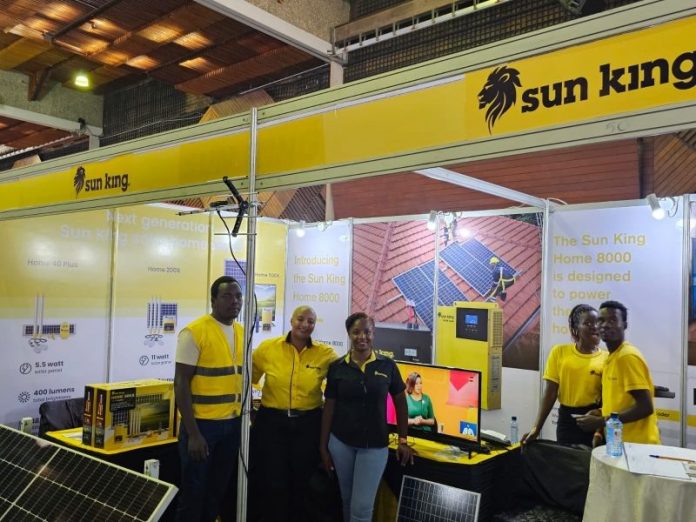
Sun King, Kenya’s largest provider of off-grid solar energy solutions, has successfully closed a landmark $156 million (KES 20.1 billion) securitisation to accelerate access to affordable solar power across Kenya.

The deal is reportedly the largest in sub-Saharan Africa, outside South Africa, and the first to be majority-backed by commercial banks.

The deal is backed by five commercial banks which include, Absa Bank Kenya Ltd, Citi, The Co-operative Bank of Kenya, KCB Bank Kenya Limited, and Stanbic Bank Kenya Ltd and three development finance institutions—British International Investment, Dutch development bank FMO, and Norfund (Norwegian Investment Fund for Developing Countries).

The funding will enable 1.4 million low-income households and businesses to gain electricity access, many for the first time, reducing dependence on costly and polluting fuels like kerosene and diesel.

The securitisation is built on the Sun King’s award-winning $130 million transaction completed in 2023. Through its pay-as-you-go model, Sun King allows households to access solar products with small, flexible payments starting from $0.19 (KES 25) per day via mobile money. To date, the company has extended $1.3 billion in solar loans to nearly 10 million customers across Africa.

Speaking on the funds raised, Anish Thakkar, co-founder of Sun King said,

This deal signals a major turning point for green energy finance in Africa. It shows that African commercial banks believe in the power of pay-as-you-go solar and are ready to back it with serious capital. Local currency capital is essential to unlocking the scale and speed needed to achieve universal energy access.”

Also commenting, Jorge Rubio Nava, Citi’s Global Head of Social Finance, noted that the securitisation underscores the impact of innovative financing models.

In his words, It demonstrates the effectiveness of pay-as-you-go business models to reach underserved communities at scale and the role of development finance institutions in mobilising private capital.”

Founded in 2007, Sun King designs, distributes, installs, and finances solar energy solutions for the 1.8 billion people without reliable access to electricity. From cost-effective solar lanterns and home systems that provide entry-level access to electricity to powerful, multi-kilowatt-scale solar systems that offer power equity with the traditional electrical grid, Sun King’s products meet diverse power and light needs across Africa and Asia.

Through innovative product design, affordable pay-as-you-go financing, and a grassroots field team of 15,000 agents providing installation and service, Sun King has powered the lives of over 82 million people.

The company currently operates one of the world’s largest direct-to-consumer, pay-as-you-go (PAYG) solar distribution networks, growing by 150,000 new clients per month across seven countries. In Kenya, one in five people use Sun King, with 18 million Kenyans benefiting from its operations over a decade.

According to GOGLA, the global association for the off-grid solar energy industry, Sun King now accounts for 38% of industry-wide PAYG solar revenue. This growth has eliminated 22 million tons of carbon dioxide emissions and saved consumers $4.4 billion in energy costs.

Continuing its mission to provide energy independence, the company recently expanded its solar inverter line with the launch of the PowerPlay Pro. This new product is designed to offer an uninterrupted power supply to homes and businesses, further solidifying Sun King’s leadership in the off-grid solar industry.

With this new funding, Sun King already powering 30% of Kenyan homes, plans to finance approximately 1.4 million solar products and smartphones in Kenya. Combined with its 2023 securitisation, the two transactions will support the delivery of around 3.7 million solar products and smartphones.

Looking ahead, the company plans to expand its presence in existing markets and explore new regions where solar energy can make a significant impact.

Samsung Inks $16.5bn Semiconductor Deal With Tesla to Build Next-Gen AI Chips

0

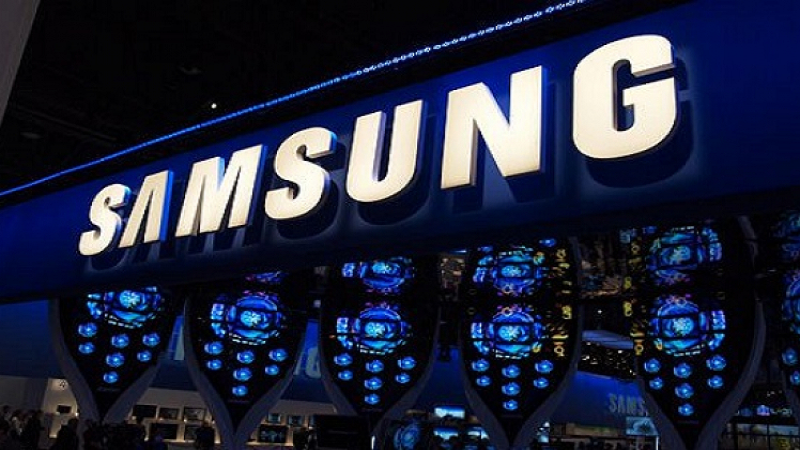
Samsung Electronics has secured a landmark $16.5 billion contract to supply semiconductors to Tesla, marking one of the largest chip deals in the electric vehicle and AI sectors.

The agreement, effective from July 26, 2025, will run through December 31, 2033, according to a regulatory filing by Samsung and a confirmation post by Tesla CEO Elon Musk on X.

Although Samsung initially withheld the counterparty’s name, citing a confidentiality request “to protect trade secrets,” Musk later confirmed on X that Tesla is the customer.

“Samsung’s giant new Texas fab will be dedicated to making Tesla’s next-generation AI6 chip,” Musk wrote. “The strategic importance of this is hard to overstate. Samsung currently makes AI4. TSMC will make AI5, which just finished design, initially in Taiwan and then Arizona.”

Musk added that Tesla will actively participate in optimizing Samsung’s chip production.

“Samsung agreed to allow Tesla to assist in maximizing manufacturing efficiency. This is a critical point, as I will walk the line personally to accelerate the pace of progress,” he said.

He also suggested the actual value of the agreement could exceed $16.5 billion.

A Strategic Bet on AI and EV Hardware

The new deal gives Tesla a critical hardware edge in its race to dominate the AI-driven electric vehicle space. The AI6 chip is believed to power Tesla’s next-generation Full Self-Driving (FSD) and AI inference systems, potentially transforming the company’s vehicles into more autonomous, intelligent machines. Samsung, in turn, gains a marquee client and a fresh opportunity to regain ground in the AI semiconductor race — an area where it has recently fallen behind rivals like SK Hynix and Micron.

The agreement is a boost to Samsung’s foundry business, which has seen sluggish orders in recent quarters and has struggled to match AI demand for memory chips. As recently as April, the company had set a goal to start mass production of 2-nanometer chips, the most advanced manufacturing node currently in development. These chips feature smaller, more compact transistors, delivering greater processing power and energy efficiency — key requirements for high-performance AI workloads.

South Korean media have also speculated that Qualcomm may soon join Tesla in placing orders for chips manufactured on Samsung’s 2nm technology.

Samsung Rallies on News Despite Tough Earnings Outlook

Investors cheered the Tesla news, sending Samsung’s shares soaring more than 6% on Monday, their highest level since September 2024. The deal comes just days ahead of Samsung’s scheduled earnings release on Thursday, where the company is expected to report a more than 50% drop in second-quarter profit. Analysts attribute the sharp decline to underwhelming foundry orders and weak memory chip sales, particularly in high-bandwidth memory (HBM), where Samsung trails rivals.

While SK Hynix has emerged as the lead supplier of HBM chips to AI giant Nvidia, Samsung has reportedly struggled to get its latest HBM offerings certified. A recent report indicates that Nvidia’s validation of Samsung’s new HBM chips has been postponed until at least September, further delaying its attempt to regain footing in a fiercely competitive market.

Foundry Wars and AI Chip Race Intensify

Samsung’s renewed push in the foundry space — particularly with U.S.-based manufacturing — appears to be a calculated move to gain ground against Taiwan Semiconductor Manufacturing Company (TSMC), the dominant force in global chip fabrication. TSMC is currently building out major operations in Arizona and has already secured Tesla’s AI5 chip production.

Samsung now ensures it will remain integral to Tesla’s long-term roadmap by securing the AI6 chip order, especially as competition in AI hardware intensifies. With governments and corporations increasingly seeking supply chain resilience and geographic diversification, Samsung’s U.S. fab in Texas is positioned to play a central role.

But the company isn’t out of the woods yet. Despite the Tesla deal, Samsung warned in its filing that investors should exercise caution, noting that “main contents of the contract have not been disclosed… and there remains a possibility of changes or termination.”

Nevertheless, the strategic value of the partnership cannot be overstated. It is expected to secure the chip supply for Tesla’s future vehicles and AI systems. For Samsung, it’s a chance to reassert itself as a top-tier player in both the foundry and AI semiconductor race, at a time when tech giants are scrambling for silicon.

MAN to CBN: High Interest Rate Crippling Manufacturing in Nigeria, Cut to Spur Growth

0

The Manufacturers Association of Nigeria (MAN) is urging the Central Bank of Nigeria (CBN) to immediately review its monetary policy stance and slash interest rates, warning that the prevailing tight monetary policy is crippling Nigeria’s real sector, especially manufacturing and agriculture.

The call came in reaction to the CBN’s Monetary Policy Committee (MPC) decision at its 301st meeting held July 21–22, 2025, where it voted unanimously to retain the Monetary Policy Rate (MPR) at a record-high 27.5% for the second consecutive time this year.

While the CBN argues that the rate retention is part of a broader plan to sustain the disinflationary momentum, MAN contends the policy has yielded little benefit for producers. In a statement, the association described the CBN’s contractionary stance as a chokehold on manufacturing and real-sector productivity.

Lending rates to manufacturers now exceed 35%, MAN revealed, noting that many operators are now either closing shop, cutting production, or relocating. The association said the consequences are evident in surging production costs, lower capacity utilization, reduced output, widespread layoffs, and rising prices of finished goods.

In 2024, the average capacity utilization of the manufacturing sector fell to 57%, down from 59% the previous year. Worse still, unsold finished goods more than doubled year-on-year, jumping to N2.14 trillion in 2024 from N1.14 trillion in 2023.

MAN said this drastic surge is driven by declining consumer purchasing power, high interest on working capital, and the surging cost of imported inputs, all exacerbated by the steep naira depreciation and forex volatility.

“The expectation of MAN is to have a rate cut that is supported by a robust fiscal policy framework capable of facilitating improved access to long-term loans, enhanced productivity, and sustained economic growth,” the group said. It added that the present policy mix is skewed against production and investment.

Although Nigeria’s inflation rate fell marginally to 22.22% in June 2025 from 22.97% in May, food inflation remains stubbornly high and continues to climb. Experts say inflationary pressures have become structural, with major drivers such as insecurity, high logistics costs, naira volatility, and multiple taxes far beyond the reach of interest rate adjustments.

While manufacturers are the loudest voices, they are not alone. Agribusiness operators, particularly in food processing and commodity value chains, are equally suffocated by high borrowing costs and insecurity in production zones. With bank lending shrinking and microfinance institutions offering loans at 45% and above, many small businesses now rely on cooperative societies or shut down altogether.

MAN’s Policy Prescription

To reverse the trend, MAN rolled out a number of policy recommendations:

  • Interest Rate Cut: MAN says the CBN must urgently slash the MPR to reduce the cost of credit, especially to critical sectors like manufacturing, agriculture, and energy.
  • Nigeria First Policy: The group wants the government to adopt protectionist industrial policies that prioritize local content, encourage backward integration, and promote local patronage of Nigerian-made goods.
  • Boost Agricultural Output: It urged the federal government to tackle insecurity in farming regions and fix logistics bottlenecks in agricultural supply chains. These, it said, will help reduce food inflation and raw material costs for agro-allied industries.
  • Stimulate Consumption Through Income Redistribution: MAN emphasized that raising minimum wages, removing excessive taxes, and funding social protection programs could enhance consumer demand, which would in turn stimulate industrial output.

Backstory: MPC Standing Firm

At the last MPC meeting, CBN Governor Olayemi Cardoso said the decision to hold the rate steady was to maintain the momentum of disinflation, noting that the bank’s policies were beginning to show results. The slowdown in the inflation rate is an encouraging sign, he said.

However, analysts believe the marginal drop in headline inflation is not enough reason to maintain a policy that is clearly stifling production, discouraging investment, and worsening unemployment.

All 12 members of the committee voted to retain the rate, signaling a firm consensus in the apex bank to prioritize inflation control over growth stimulation—a move that MAN and other stakeholders fear could prolong Nigeria’s economic stagnation.

Some economists, including those at the Lagos-based Financial Derivatives Company, argue that the CBN should have started easing by now, especially after six months of aggressive hikes earlier in the year. They warn that keeping rates high could deepen the recession risk, especially with GDP growth at a slow pace and business confidence at a historic low.

Others support the CBN’s cautious approach, noting that a premature rate cut could weaken the naira further and reverse recent gains in foreign capital inflows.

Here’s How BlockDAG’s X1, X10, X30 & X100 Miners Are Reshaping Crypto for the Masses

0

Mining crypto is usually seen as expensive, technical, and out of reach for most users. But BlockDAG is changing that approach in 2025. With its X1 mobile app and scalable ASIC miners, X10, X30, and X100, the project is opening up mining to the masses, not just large-scale operations.

Now, users with just a smartphone or a small hardware device can mine BDAG coins every day. And this isn’t just theory; the system is already live, with users participating well ahead of launch or exchange listings. Let’s explore how each device works, how they support the network, and why BlockDAG is being recognized among the best-performing cryptos of the year.

X1 App Turns Everyday Phones Into BDAG Mining Devices

The X1 mobile miner is BlockDAG’s core innovation. Over two million users are already using the app to earn BDAG daily, without needing specialized hardware. The app follows a “proof-of-engagement” model, where regular use, referrals, and in-app activity can earn users up to 20 BDAG per day.

This system offers a low-entry route into mining, especially in areas where electricity is limited or mining rigs are too expensive. While many projects make promises, BlockDAG is already delivering an inclusive, working platform. That’s a key reason it’s being recognized as one of the best-performing cryptos as 2025 progresses.

ASIC Hardware Adds Scalable Mining Power for Every Level

For users who want to scale up beyond mobile mining, BlockDAG offers three ASIC devices: X10, X30, and X100. These plug-and-play miners are designed for efficiency and ease of use. The X10 is a compact device that connects via Bluetooth to the X1 app, boosting daily mining output by up to 10x, up to 200 BDAG daily.

Next is the X30, which delivers as much as 600 BDAG per day. At the top of the range, the X100 delivers around 2,000 BDAG per day with 2?TH/s hash power and energy usage of 1,800?W. Each model fits a different user level, creating a tiered system where both casual and dedicated miners can participate actively.

A Network Built on Broad User Involvement & Early Adoption

By combining mobile app mining with ASIC hardware, BlockDAG is forming a wide network of early users and operators. The X1 app builds community engagement, while ASIC miners contribute real computing power and help secure the network.

Over 18,650 hardware miners have already been sold, and millions of users are interacting with the system ahead of its public launch. This distribution helps ensure decentralization by avoiding central control by a few large entities. It’s this widespread participation that helps solidify BlockDAG’s position as one of the best-performing cryptos on the market today.

Public Demonstrations & Presale Growth Highlight Progress

Skepticism often surrounds presale projects that overpromise and underdeliver. But BlockDAG is showing results. Its X1 app is fully functional and rewarding users now. The X10 hardware miner is set to ship by mid-August 2025, while the X30 and X100 units have already begun deliveries in early July 2025.

A public mining demo on July 23, 2025, showed the X1 and X10 running live together in a home setup. These real-world tests prove that BlockDAG’s system is not just being built, it’s already working across various levels of complexity and scale.

The crypto presale figures are equally impressive. So far, BlockDAG has raised more than $354?million and sold over 24.3?billion BDAG at a current price of $0.0016. With a listing price set at $0.05, early buyers could see a 3025% ROI. This active participation, combined with strong presale support, is what places BlockDAG firmly among today’s best-performing cryptos.

BlockDAG Makes Crypto Mining Simple, Scalable, & Fair

BlockDAG’s mining model proves that crypto mining doesn’t need to be complicated or exclusive. With the X1 mobile app and its X10, X30, and X100 hardware range, users can mine BDAG right now and help build the network before the mainnet even goes live.

This two-tiered system offers both accessibility and scalability, giving users the ability to grow with the network. It also encourages decentralization and early contribution, traits that are essential for long-term success.

While other projects wait for future updates, BlockDAG already has users mining, hardware shipping, and a network expanding every day. That’s why it’s gaining attention as one of the best-performing cryptos of this cycle. BlockDAG isn’t just promising access, it’s already providing it.

Presale: https://purchase.blockdag.network

Website: https://blockdag.network

Telegram: https://t.me/blockDAGnetworkOfficial

Discord: https://discord.gg/Q7BxghMVyu