DD
MM
YYYY

PAGES

DD
MM
YYYY

spot_img

PAGES

Home Blog Page 9

OpenAI Releases GPT 5.5, Its Smartest And Most Intuitive Model

0

Artificial Intelligence company OpenAI, has once again pushed beyond the boundaries of AI with the release of GPT-5.5, its most advanced and intuitive model to date.

Building on the capabilities of its predecessors, GPT-5.5 represents a significant leap forward in reasoning, contextual understanding, and human-like interaction.

Designed to better interpret nuance, adapt to complex tasks, and deliver more accurate, reliable responses, the new model signals a major step toward more seamless human-AI collaboration.

Announcing the release of the model OpenAI wrote via a blogpost,

“We’re releasing GPT-5.5, our smartest and most intuitive to use model yet, and the next step toward a new way of getting work done on a computer. We are releasing GPT-5.5 with our strongest set of safeguards to date, designed to reduce misuse while preserving access for beneficial work.

“We evaluated this model across our full suite of safety and preparedness frameworks, worked with internal and external redteamers, added targeted testing for advanced cybersecurity and biology capabilities, and collected feedback on real use cases from nearly 200 trusted early-access partners before release.”

According to OpenAI, GPT-5.5 demonstrates a markedly improved ability to understand user intent more quickly and take on a greater share of complex work independently.

The model shows strong performance across a wide range of tasks, including writing and debugging code, conducting online research, analyzing data, generating documents and spreadsheets, operating software, and seamlessly navigating multiple tools to complete objectives.

Rather than requiring step-by-step guidance, it is capable of handling messy, multi-layered tasks—planning workflows, leveraging tools, verifying outputs, and progressing through ambiguity with minimal intervention.

These advancements are particularly evident in areas such as agentic coding, computer use, knowledge work, and early-stage scientific research, where success depends on sustained reasoning and the ability to act across extended contexts.

Despite these gains in intelligence, GPT-5.5 maintains efficiency and speed. While more capable models often come with increased latency, it matches the per-token response time of GPT-5.4 in real-world deployment, all while delivering significantly higher performance.

Additionally, it requires fewer tokens to complete comparable Codex tasks, making it not only more powerful but also more efficient.

GPT-5.5 is rolling out to Plus, Pro, Business, and Enterprise users in ChatGPT and Codex, and GPT-5.5 Pro is rolling out to Pro, Business, and Enterprise users in ChatGPT.

In ChatGPT, GPT-5.5 Thinking is available to Plus, Pro, Business, and Enterprise users. GPT-5.5 Pro, designed for even harder questions and higher-accuracy work, is available to Pro, Business, and Enterprise users.

OpenAI Intensifying The AI ChatBot Space

OpenAI is building the global infrastructure for agentic AI, making it possible for people and businesses around the world to get work done with AI. Over the past year, we’ve seen AI dramatically accelerate software engineering.

With GPT-5.5 in Codex and ChatGPT, that same transformation is beginning to extend into scientific research and the broader work people do on computers.

As competition intensifies across the AI landscape, this latest release not only reinforces OpenAI’s leadership but also sets a new benchmark for what users can expect from next-generation intelligent systems.

Meta Announces Plans to Cut 8,000 Jobs as it Doubles Down on AI

0

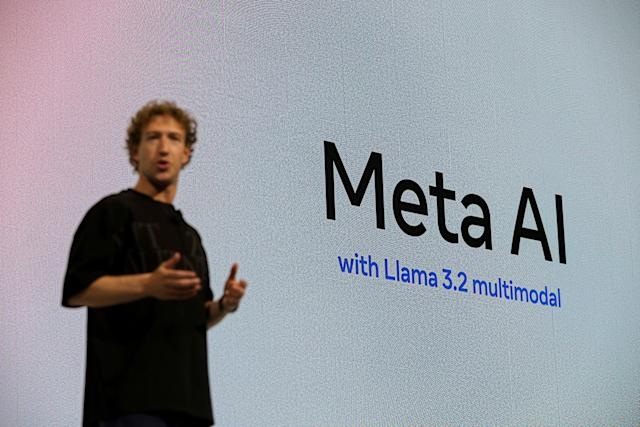
Meta, Facebook parent company, has announced plans to layoff approximately 8,000 of its workers, roughly about 10% of its global workforce.

The first wave of layoffs is scheduled to begin on May 20, 2026, as the tech giant will also freeze around 6,000 open roles, according to an internal memo sent to employees and report from Bloomberg.

In an internal memo, Meta’s leadership described the move as part of a broader “efficiency” drive to reallocate resources toward AI development.

Part of the memo reads,

Over the last few weeks we have been working on some changes to our organization that will result in us laying off around 10% of the company on May 20, and closing about 6,000 open roles. We’re doing this as part of our continued effort to run the company more efficiently and to allow us to offset the other investments we’re making. This is not an easy tradeoff and it will mean letting go of people who have made meaningful contributions to Meta during their time here.”

The layoffs will affect teams across the company, though specific departments have not been publicly detailed. Additional rounds of cuts are reportedly planned for the second half of 2026, potentially bringing the total reduction closer to 20% of the workforce in some estimates.

Affected employees will reportedly receive severance package which include 16 weeks base pay plus additional weeks based on tenure for U.S. staff along with notification.

Meta’s Previous Layoffs

Meta is no stranger to large-scale workforce reductions. The company carried out significant layoffs in 2022 and 2023, trimming over 20,000 roles during its earlier efficiency drive. Those cuts helped streamline operations and boost profitability.

However, the current round is more directly tied to the AI pivot, as the company moves resources away from slower-growth areas (such as certain metaverse-related projects) toward generative AI and infrastructure.

Industry observers see this as part of a larger transformation in tech employment, traditional software engineering and operational roles are being supplemented or in some cases replaced by AI tools that boost individual productivity.

Meta’s upcoming job cuts mark the latest phase of the company’s aggressive push toward artificial intelligence, even as it continues to generate massive profits from its core advertising business.

This restructuring comes despite Meta posting strong financial results. The company generated over $200 billion in revenue and approximately $60 billion in profit last year. However, the tech giant noted that the job cuts are necessitated to run the company more efficiently.

Recall that CEO Mark Zuckerberg has repeatedly emphasized that the company is shifting from the “Year of Efficiency” (2023) to a heavy investment phase in AI infrastructure and models.

In recent years, the tech giant has been increasing its spending to build the foundation for advanced AI. The company has guided capital expenditures for 2026 between $115 billion and $135 billion, nearly double the amount spent in 2025.

A large portion of this budget will go toward:

  Constructing and expanding AI data centers

  Acquiring high-performance chips and GPUs

  Developing next-generation AI models, including improvements to the Llama family

Meta’s strategy is clear: smaller, more AI-augmented teams will be expected to deliver greater output, allowing the company to reduce headcount while scaling its AI ambitions.

This mirrors a growing trend across Big Tech, where companies like Amazon, Google, and Microsoft are also reshaping workforces to prioritize AI, even amid record profitability.

Looking Ahead

As the race for AI supremacy intensifies, Meta’s moves highlight a clear message from Silicon Valley. Heavy investments in artificial intelligence is now the top priority even if it means fewer human jobs in the short term.

Nike Cuts 1,400 Jobs as Turnaround Plan Shifts Focus to Automation, Supply Chain Integration

0
Nike shoe

Nike is accelerating its restructuring with another round of layoffs affecting about 1,400 roles, as the world’s largest sportswear brand recalibrates its operating model to cope with slowing sales, rising competition, and a faster, more technology-driven retail cycle.

The cuts, announced Thursday, are concentrated largely in the company’s technology division and span North America, Asia, and Europe. They account for less than 2% of Nike’s global workforce but signal a deeper shift in how the company is deploying technology and managing costs under its “Win Now” turnaround strategy.

In a memo to staff, Chief Operating Officer Venkatesh Alagirisamy described the layoffs as part of a broader overhaul that includes modernizing Air manufacturing, repositioning parts of its Converse footwear operations, and integrating materials sourcing directly into footwear and apparel supply chains.

“Collectively, these changes will result in a reduction of approximately 1,400 roles in global operations, with the majority in technology,” he wrote. “These reductions are very hard for the teammates directly affected and for the teams around them, too.”

He stressed continuity in the strategy. “This is not a new direction. It is the next phase of the work already underway.”

The language points to a multi-year restructuring rather than a one-off cost-cutting exercise. Under Chief Executive Elliott Hill, Nike is attempting to streamline operations, sharpen execution, and rebuild growth after a period of uneven performance marked by inventory imbalances, slower innovation cycles, and declining sales in key regions.

The latest layoffs follow 775 job cuts announced in January, largely tied to automation in U.S. distribution centers, as well as a smaller round of corporate reductions last summer. The cumulative effect points to a company systematically reducing labor intensity while reallocating resources toward automation, data, and supply chain efficiency.

The restructuring is centered on a redefinition of Nike’s technology function. The company is consolidating roles and focusing on systems that directly improve speed, cost control, and product delivery rather than expanding broadly. This suggests a transition from a build-out phase, where digital capabilities were rapidly expanded, to an optimization phase aimed at extracting measurable returns.

That shift mirrors a wider trend in global retail and manufacturing. Companies that invested heavily in digital transformation over the past decade are now rationalizing those investments, prioritizing integration and efficiency over headcount growth. In Nike’s case, the integration of materials sourcing into core product teams is designed to reduce fragmentation across the value chain, enabling faster design-to-shelf timelines and better demand alignment.

The move also indicates that the company is undergoing competitive pressure. Rivals have shortened product cycles and increased responsiveness to consumer trends, forcing Nike to rethink its internal processes. By collapsing silos between sourcing, design, and manufacturing, the company is aiming to regain agility in a market where speed is increasingly a differentiator.

Automation is another key pillar. The earlier cuts in distribution centers highlight how logistics is becoming less labor-intensive, with robotics and advanced inventory systems replacing manual processes. Over time, similar dynamics are likely to extend into other parts of the organization, including elements of product development and planning.

However, the restructuring is unfolding against a challenging demand backdrop. In its most recent quarterly report, Nike warned that sales are expected to decline for the rest of the fiscal year, driven largely by weakness in China — a market that has historically been central to its growth strategy. The company projected a roughly 20% drop in that region in the current quarter, reflecting softer consumer demand and intensifying competition from local brands.

That external pressure is forcing Nike to pursue a dual strategy: cutting costs and improving efficiency while attempting to reignite demand through product innovation and brand positioning. The risk is that operational changes alone may not be sufficient if consumer demand remains subdued.

A company spokesperson said the layoffs are intended to better position Nike for the “current pace of sports,” a phrase that encapsulates faster product turnover, more digital engagement, and a growing reliance on data-driven decision-making.

The restructuring also carries implications for margins. By reducing headcount and increasing automation, Nike is aiming to lower operating costs and improve profitability, even in a slower growth environment. But experts say the benefits will depend on execution — particularly the company’s ability to maintain innovation and brand strength while streamlining its workforce.

The broader context is an industry in transition. As growth in traditional athletic footwear and apparel moderates, leading players are focusing more on operational excellence, direct-to-consumer channels, and technology integration to sustain performance.

NCC Orders Airtime Compensation as MTN Moves to Reimburse Subscribers for Network Failures

0

MTN Nigeria has confirmed it will begin compensating customers affected by poor network quality following a directive from the Nigerian Communications Commission (NCC), marking a notable shift in regulatory enforcement toward direct consumer restitution in Nigeria’s telecom sector.

The compensation covers service disruptions recorded in November, December, and January, with affected subscribers in identified locations set to receive airtime credits rather than cash payments. While MTN did not specify the exact rollout date, the timeline was clarified by the regulator.

Executive Vice Chairman of the NCC, Dr. Aminu Maida, said during an interactive session with the media that disbursement would begin immediately.

“Subscribers will start receiving the compensation from Friday, April 24, 2026,” he said, setting a firm start date for implementation across operators.

MTN stated that it is aligning with the regulator’s framework, saying, “All consumers within the affected areas where service shortfalls were recorded will receive compensation for the operating periods of November, December, and January, in accordance with the applicable framework.”

Although the telecom operator did not detail the compensation mechanism, the NCC has indicated that the relief will take the form of airtime credits distributed to impacted users.

Beyond the immediate reimbursement exercise, MTN framed the move as part of a broader operational response to chronic network challenges. The company said it is intensifying capital investment to strengthen infrastructure capacity, improve service stability, and reduce disruptions across its network footprint.

It also pointed to systemic constraints affecting performance, including environmental disruptions and external damage to infrastructure. In its statement, MTN said, “While calling on consumers to understand that we are operating within the larger ecosystem, fraught with challenges that are mostly outside our control, we remain steadfast and fully committed to working closely with our tower providers, NCC and other stakeholders including law enforcement agencies.”

The compensation directive follows a regulatory shift by the NCC aimed at making operators more directly accountable to consumers. The commission has, in recent months, moved from a model largely focused on sanctions and fines toward one that also requires restitution to subscribers affected by service lapses.

According to the regulator, the change reflects the centrality of telecommunications to Nigeria’s economy and daily life. Poor service quality, it noted, has direct consequences for productivity, commerce, and trust in digital infrastructure. The NCC said the compensation framework is intended to reinforce existing quality-of-service enforcement mechanisms rather than replace them.

Last year, the regulator approved a price hike for call and data services on the basis that telcos must improve the quality of their services. Following the implementation of the hike, Nigerians continue to lament over the poor quality of telecom services. This move by the NCC is to force network providers to fulfil their side of the deal.

The policy also highlights persistent structural challenges in Nigeria’s telecom network. Industry data cited by the regulator indicates operators have been contending with an average of 1,100 fiber cuts per week, a figure that underscores the scale of physical infrastructure vulnerability. These disruptions, driven by construction activity, vandalism, and environmental factors, continue to affect network uptime and service reliability across major operators.

The decision to compensate users directly marks a departure from previous regulatory practice, where penalties were primarily directed at operators without corresponding relief for end users. The new framework effectively shifts part of the regulatory focus toward consumer outcomes, rather than compliance metrics alone.

For operators such as MTN, the directive adds financial and operational pressure at a time when capital expenditure requirements are already rising due to network expansion demands, inflationary costs, and infrastructure security challenges. It also increases scrutiny on service delivery metrics, particularly in urban centers where congestion and quality degradation have become more visible.

The broader implication is a tightening regulatory environment in one of Africa’s largest telecom markets, where demand for data and digital services continues to outpace infrastructure resilience. While the compensation scheme is expected to provide short-term relief for affected users, there is concern that it will not yield longer-term improvements. Experts have noted that it will depend on sustained investment in fiber security, network redundancy, and power stability across base station infrastructure.

Gold Price Fluctuating Amid Oil Prices Spiking Toward High Zone

0

Gold prices have been fluctuating between roughly $4,690 and $4,750+ per ounce with various sources showing it around $4,700–$4,730 in recent hours. It’s pulled back a bit from recent peaks but remains elevated overall, reflecting ongoing safe-haven demand.

WTI has been trading around $92–$97 per barrel; spiking toward the higher end today amid volatility, while Brent has pushed above $100–$106. The jitteriness stems from the fragile U.S.-Iran ceasefire situation. President Trump extended the truce; originally two weeks, now open-ended and indefinite in some descriptions to give Iran time for a unified proposal, but peace talks remain stalled or on hold.

Iran has seized ships in the Strait of Hormuz, the U.S. maintains a naval blockade on Iranian ports, and there’s no clear timeline or breakthrough. This keeps supply disruption fears alive for oil while supporting gold as a hedge against geopolitical and inflation risks.

In short: Gold benefits from uncertainty even as some ceasefire relief causes occasional dips. Oil gets a premium from Hormuz tensions and stalled diplomacy, with potential for more upside if escalation risks rise again. Markets are watching closely for any progress in talks, plus broader factors like the stronger dollar and Fed signals.

The Strait of Hormuz is a narrow waterway located between Iran to the north and Oman and the United Arab Emirates to the south. It connects the Persian Gulf to the Gulf of Oman and the Arabian Sea, serving as the only sea route for oil and natural gas exports from major producers like Saudi Arabia, Iraq, the UAE, Kuwait, and Qatar.

Roughly 20% of the world’s traded oil around 20–21 million barrels per day in normal times and a significant share of liquefied natural gas (LNG) pass through this chokepoint. Even minor disruptions here can spike global energy prices, raise shipping costs, and cause supply chain ripple effects worldwide.

Tensions escalated sharply after the broader U.S.-Israel conflict with Iran began on February 28, 2026. Iran responded to initial strikes by declaring the strait closed or heavily restricted starting in early March, attacking or threatening vessels, and laying mines in some areas. This caused shipping traffic to collapse dramatically—from hundreds of vessels per day to single digits in many periods.

A temporary ceasefire was announced around April 7–8, 2026; brokered with involvement from Pakistan and China, which was supposed to include reopening the strait. However, Iran has maintained control over traffic, imposed high tolls reportedly over $1 million per ship in some cases, sometimes demanded in Chinese yuan, and continued restrictions. Iran accuses the U.S. of violating the ceasefire by keeping its naval blockade in place on Iranian ports.

Iran’s Islamic Revolutionary Guard Corps (IRGC) fired on at least three commercial ships attempting to transit the strait and seized two of them including the Liberian-flagged Epaminondas and Panamanian-flagged MSC Francesca. The ships were reportedly brought to Iranian waters. Iran claims the vessels violated its maritime rules or endangered safety.

The U.S. has maintained a naval blockade preventing ships from entering or leaving Iranian ports. President Trump extended the ceasefire indefinitely with no fixed deadline but kept the blockade active until Iran presents a unified proposal acceptable to all its factions. Trump has also ordered the U.S. Navy to shoot and kill any Iranian boats deploying mines in the strait and to increase mine-sweeping operations.

Both sides accuse each other of piracy or ceasefire violations. Iran says the U.S. blockade makes full reopening impossible; the U.S. views Iran’s ship seizures and attacks as escalatory but has downplayed some incidents. Shipping companies remain extremely cautious due to risks from mines, attacks, and unclear rules. Some vessels have tested the waters, but overall traffic stays severely disrupted.

War risk insurance premiums have soared, and rerouting around Africa via the Cape of Good Hope is costly and time-consuming. This standoff is part of a larger conflict that began with U.S./Israeli strikes on Iranian targets. Iran has used the strait as leverage, historically threatening to close it during crises. Clearing any mines or fully securing the area could take weeks to months, according to some assessments.

Crude oil prices remain elevated while gold benefits from the uncertainty as a safe-haven asset.In short, the tensions boil down to a classic chokepoint power play: Iran leverages its geographic position for bargaining power and retaliation, while the U.S. uses naval superiority to pressure Iran economically and enforce free navigation. Peace talks are stalled, and any miscalculation risks wider escalation.