DD
MM
YYYY

PAGES

DD
MM
YYYY

spot_img

PAGES

Home Blog Page 9

Exploring the Fivefold Growth of Tokenized Stock Markets

0

The tokenized stock market is rapidly emerging as one of the most transformative developments in modern finance.

What once seemed like a niche experiment within blockchain circles has now evolved into a multi-billion-dollar industry, signaling a profound shift in how investors access and trade traditional financial assets.

According to data from a16zcrypto, on-chain equities reached a market value of approximately $1.7 billion by the end of June 2026, a remarkable increase from just $329 million a year earlier.

This nearly fivefold expansion highlights not only growing interest in tokenized assets but also a broader movement toward the integration of traditional finance and decentralized technologies.

The majority of this growth was driven by fresh issuance rather than price appreciation. This distinction matters because it indicates genuine investor demand instead of speculative market repricing. Investors are actively allocating capital into tokenized equities, viewing them as a practical and attractive alternative to conventional stock ownership.

Tokenized stocks are digital representations of publicly traded equities issued and traded on blockchain networks. These assets mirror the value of underlying shares while enabling investors to benefit from blockchain features such as instant settlement, fractional ownership, and 24/7 market accessibility.

Unlike traditional stock markets, which operate during limited trading hours and often involve multiple intermediaries, tokenized markets can function continuously and with significantly reduced friction.

The rapid adoption of tokenized equities reflects a broader trend in financial innovation. Investors around the world increasingly seek borderless and more efficient investment opportunities.

Access to U.S. and global equities remains constrained by high fees, regulatory hurdles, and limited brokerage infrastructure. Tokenized stocks address these challenges by lowering entry barriers and enabling participation through digital wallets and decentralized platforms.

Institutional interest is also accelerating the growth of the sector. Financial firms, exchanges, and blockchain infrastructure providers are increasingly recognizing tokenization as a foundational technology for future capital markets.

The tokenization of stocks follows the earlier success of stablecoins and tokenized money market funds, both of which demonstrated that blockchain-based representations of traditional assets could achieve substantial scale.

Advancements in blockchain infrastructure have improved investor confidence. Networks such as Ethereum, Solana, and emerging financial blockchains now offer higher transaction speeds, lower costs, and enhanced security mechanisms.

Regulatory developments are another important factor supporting the industry’s expansion. Governments and financial regulators are gradually establishing clearer frameworks for digital assets, reducing uncertainty that previously discouraged institutional participation.

Jurisdictions in Asia, Europe, and parts of the Middle East are actively positioning themselves as hubs for tokenized finance, recognizing its potential to modernize capital markets and attract global investment.

Despite its impressive growth, the tokenized stock market still represents a relatively small portion of global equity markets, which are valued in the tens of trillions of dollars. The pace of expansion suggests that tokenization may be approaching an inflection point similar to the early growth stages of exchange-traded funds and cryptocurrencies.

The rise from $329 million to $1.7 billion within a single year demonstrates that tokenized equities are no longer merely an experimental concept. Instead, they are becoming a legitimate financial product with real-world demand and increasing institutional relevance.

As infrastructure matures, regulations become clearer, and investor awareness grows, tokenized stocks could fundamentally reshape how global capital markets operate.

The next phase of financial innovation may not involve replacing traditional markets entirely but rather rebuilding them on blockchain rails. If current growth trends continue, tokenized equities may become one of the defining investment narratives of the coming decade.
AI Boom Creates New Revenue Opportunities for Bitcoin Mining Companies

0

Bitcoin miners are increasingly redefining their business models as the convergence of artificial intelligence and high-performance computing creates new opportunities beyond traditional cryptocurrency mining.

Two major players, Hut 8 and Iren, have emerged at the forefront of this transition, pivoting significant portions of their infrastructure toward AI-related contracts and data center services.

For years, Bitcoin mining companies relied primarily on the profitability of mining rewards and transaction fees. However, the industry has become increasingly challenging due to Bitcoin’s periodic halving events, rising energy costs, and intensified competition among miners.

The latest halving significantly reduced block rewards, forcing mining firms to seek alternative revenue streams that can provide more stable and predictable cash flows.

Artificial intelligence has presented a timely solution. The rapid expansion of generative AI applications, large language models, and advanced computing workloads has created an unprecedented demand for data centers and computational infrastructure.

Companies developing AI technologies require enormous processing power, access to reliable electricity, and scalable facilities capable of hosting thousands of high-performance graphics processing units (GPUs). Interestingly, Bitcoin miners already possess many of these critical resources.

Hut 8, one of North America’s leading Bitcoin mining companies, has increasingly positioned itself as a provider of AI infrastructure and high-performance computing services. The company’s extensive energy assets, large-scale data centers, and expertise in managing power-intensive operations make it well suited to cater to AI clients.

By signing AI and cloud-computing contracts, Hut 8 aims to diversify its earnings and reduce its dependence on the highly volatile cryptocurrency market.

Similarly, Iren, formerly known as Iris Energy, has accelerated its strategic transition toward AI computing services.

The company has emphasized the value of its renewable energy-powered facilities and large electrical capacities, both of which are highly attractive to AI firms seeking sustainable and scalable computing environments. Iren’s management believes that the long-term demand for AI infrastructure could eventually rival or even surpass the opportunities available in Bitcoin mining.

The pivot toward AI reflects a broader trend across the digital infrastructure sector. Investors increasingly value predictable, long-duration contracts associated with AI hosting services over the cyclical revenues generated by cryptocurrency mining.

As a result, mining firms that successfully integrate AI services into their operations may enjoy higher valuations and greater financial stability. This transformation highlights the growing intersection between blockchain and artificial intelligence technologies.

While Bitcoin mining and AI computing serve different purposes, both industries require massive computational resources and energy consumption. Mining companies are therefore uniquely positioned to leverage their existing infrastructure for dual purposes, switching between mining and AI workloads depending on market conditions and profitability.

The transition is not without challenges. AI infrastructure requires significant capital expenditures, specialized hardware, and long-term partnerships with technology companies. Competition is also intensifying as traditional data center operators, cloud providers, and energy companies rush to capitalize on the AI boom.

Success will depend on the ability of firms like Hut 8 and Iren to secure lucrative contracts and continuously upgrade their facilities to meet evolving technological requirements.

The strategic shift by Hut 8 and Iren represents a pivotal moment for the Bitcoin mining industry. Miners are evolving into broader digital infrastructure providers. This diversification could help stabilize revenues, attract institutional investors, and position these companies at the center of two transformative technologies: blockchain and artificial intelligence.

As the global race for AI computing capacity accelerates, Bitcoin miners may find that their greatest opportunity no longer lies exclusively in producing digital currencies, but in powering the next generation of intelligent systems that will shape the future economy.

Hyperliquid Positions Itself at the Center of DeFi and Information Markets

0

Hyperliquid has taken another significant step toward expanding decentralized financial infrastructure by introducing support for HIP-4 prediction market creation for users staking at least 500,000 HYPE tokens.

The move signals the protocol’s ambition to become more than just a decentralized perpetual trading platform and positions it as an emerging hub for on-chain information markets.

Prediction markets have gained substantial attention in recent years due to their ability to aggregate collective intelligence and provide real-time insights into future events. From elections and macroeconomic developments to sports outcomes and cryptocurrency price movements.

These markets allow participants to trade on probabilities rather than simply speculate through traditional financial instruments. Hyperliquid’s HIP-4 proposal now enables highly committed ecosystem participants to create such markets directly on the network.

The requirement of staking 500,000 HYPE tokens establishes a high barrier to entry, ensuring that market creators possess significant economic exposure to the ecosystem. This mechanism is designed to discourage spam, malicious market creation, and low-quality listings while incentivizing responsible governance and platform stewardship.

By requiring creators to have substantial skin in the game, Hyperliquid aligns incentives between market operators and the broader community. The timing of this development is particularly noteworthy.

Prediction markets have become one of the fastest-growing sectors within decentralized finance. Platforms such as Polymarket have demonstrated the increasing demand for decentralized forecasting tools, especially during periods of political uncertainty, economic transitions, and major technological developments.

The growing popularity of these markets has highlighted the value of crowd-sourced intelligence, where market pricing often provides more dynamic and timely information than traditional polling methods.

Hyperliquid’s entry into this space could create a powerful synergy between derivatives trading and information markets.

The platform already commands significant liquidity and user engagement within decentralized perpetual futures trading. Integrating prediction markets allows existing traders to diversify their activities while attracting a new category of participants interested in event-based speculation and forecasting.

The introduction of HIP-4 could strengthen the utility of the HYPE token itself. Beyond serving as a governance asset, HYPE now becomes increasingly important as an access mechanism for premium ecosystem functions. Such utility expansion may enhance token demand and encourage long-term staking behavior, potentially reducing circulating supply and reinforcing ecosystem stability.

From a broader perspective, Hyperliquid’s move reflects an ongoing trend in blockchain innovation: the convergence of financial markets, governance mechanisms, and collective intelligence systems.

Prediction markets are increasingly viewed as a foundational component of decentralized societies because they can efficiently process information and create market-driven signals regarding future events. In the long run, these systems may extend beyond speculative activities into areas such as policy forecasting, scientific research outcomes, insurance modeling, and decentralized governance decisions.

Prediction markets continue to attract regulatory scrutiny in several jurisdictions due to concerns surrounding gambling classifications and financial oversight. Hyperliquid will likely need to carefully navigate the evolving legal landscape while maintaining its decentralized ethos.

Additionally, ensuring market integrity, reliable oracle mechanisms, and dispute resolution processes will be essential for long-term success.

HIP-4 represents an important milestone for Hyperliquid’s evolution. By enabling prediction market creation for major HYPE stakeholders, the platform is positioning itself at the intersection of decentralized finance and information economies.

If successful, this initiative could further solidify Hyperliquid’s reputation as one of the most innovative ecosystems in the blockchain industry and contribute to the broader adoption of decentralized prediction markets as a mainstream financial and analytical tool.

Andrew Cuomo Joins OKX as NYSE Explores Stock Tokenization

0

Former New York Governor Andrew Cuomo’s appointment to the board of cryptocurrency exchange OKX, alongside reports of a partnership between the New York Stock Exchange (NYSE) and OKX to advance stock tokenization initiatives, marks a significant convergence between traditional finance and digital assets.

These developments signal that the boundaries separating Wall Street and blockchain-based finance are rapidly disappearing. Andrew Cuomo’s entry into the crypto industry is particularly noteworthy given his long-standing political influence and deep connections within financial and regulatory circles.

During his tenure as governor of New York, Cuomo oversaw one of the world’s most important financial hubs, where discussions surrounding cryptocurrency regulation, fintech innovation, and financial market modernization became increasingly prominent.

His move to join OKX’s board reflects a broader trend of established political and financial figures embracing digital assets, recognizing that blockchain technology is becoming an integral component of future financial infrastructure.

For OKX, securing a figure like Cuomo represents more than a symbolic victory. It provides the exchange with valuable expertise in navigating complex regulatory environments, particularly in the United States, where crypto companies continue to face evolving legal frameworks.

Regulatory compliance remains one of the largest challenges for cryptocurrency platforms seeking broader institutional adoption. Cuomo’s experience could help OKX strengthen its relationships with policymakers and position itself as a more credible player in the global financial ecosystem.

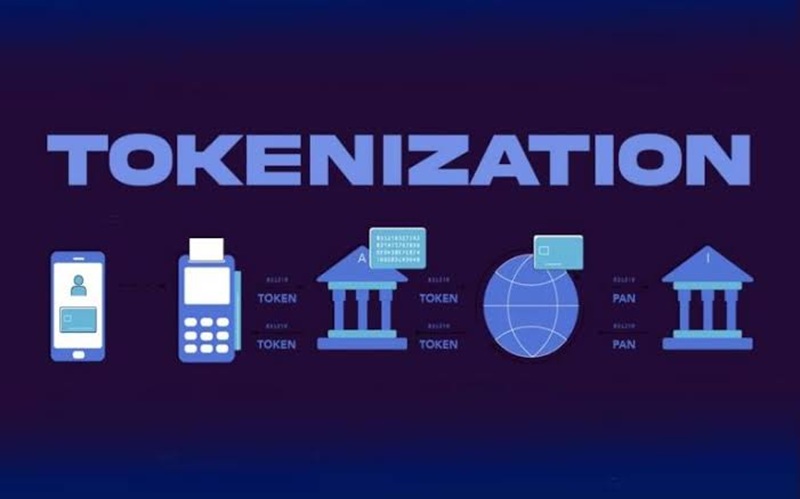
The reported collaboration between the New York Stock Exchange and OKX on stock tokenization could become a transformative milestone for global capital markets. Tokenization refers to the process of representing real-world assets, such as stocks, bonds, or commodities, as digital tokens on blockchain networks.

By converting traditional equities into blockchain-based assets, markets could become significantly more efficient, accessible, and liquid. Tokenized stocks offer several potential advantages over conventional securities trading.

First, blockchain infrastructure enables near-instant settlement, reducing the lengthy clearing periods that currently exist in traditional markets. Second, tokenized equities can facilitate fractional ownership, allowing retail investors worldwide to purchase small portions of high-value stocks with minimal barriers to entry.

Third, blockchain networks operate continuously, potentially enabling 24/7 trading and opening financial markets to participants across different time zones. The involvement of the NYSE in such initiatives would represent a major endorsement of blockchain technology from one of the world’s most influential financial institutions.

For decades, the NYSE has been a symbol of traditional finance and capital formation. Its willingness to explore tokenization demonstrates growing institutional confidence that blockchain technology can enhance market efficiency rather than disrupt it entirely.

The broader implications for global finance are substantial. If stock tokenization gains mainstream acceptance, it could fundamentally reshape how investors access financial markets. Exchanges may evolve from centralized trading venues into hybrid platforms where traditional and blockchain-based assets coexist seamlessly.

Financial intermediaries, including brokers, custodians, and clearing houses, may also need to adapt to new technological models. These developments reinforce the narrative that crypto is maturing beyond speculative trading and increasingly becoming an infrastructure layer for global finance.

Major institutions are no longer simply experimenting with blockchain; they are actively integrating it into their long-term strategies. The combination of Andrew Cuomo’s political and regulatory expertise with NYSE’s exploration of tokenized securities through partnerships such as OKX highlights a new phase in financial evolution.

As institutional adoption accelerates, the convergence of traditional finance and digital assets may ultimately create a more efficient, inclusive, and globally interconnected financial system, potentially ushering in the next era of capital markets innovation.

Good luck if you’ve picked the Entrepreneurship Lane

0

Every year, thousands of people announce that they are starting a company. Social media celebrates entrepreneurs as heroes, venture capital rounds become headlines, unicorns become legends, and successful founders are presented as symbols of freedom, wealth, and influence. The narrative is attractive: identify an idea, build a product, raise money, scale rapidly, ring the bell on a stock exchange, and retire wealthy.

Unfortunately, that is not how entrepreneurship works for most people. Entrepreneurship is not a vacation job. It is one of the most demanding professions in the world, and before anyone decides to enter it, the person must understand one simple reality: building a company is a commitment to solving problems every day for many years!

There will be difficult days. There will be disappointments, uncertainty, rejection, and sacrifice. But when a company genuinely reduces a market friction and consistently creates value for customers, the market can reward it. The entrepreneur’s mission is not merely to launch a business. It is to redesign a market by making a friction disappear.

And if you get it wrong, there will be wahala. Many people venture into entrepreneurship because they dislike their jobs, desire more freedom, or believe owning a business will give them greater control over their time. The reality, however, is very different. Running a company is almost always harder than working for one.

If you remember your Integrated Science classes in junior secondary school, you will recall the concept of optical illusion where what appears to be true is not actually true. Entrepreneurship has its own version of that illusion.

From a distance, owning a business looks like freedom. You become your own boss, set your own schedule, and answer to no one. But look more closely, and the picture changes. Instead of working for an employer, you now work for your customers, your employees, your investors, your suppliers, your regulators, and your mission. The business begins to dictate your priorities, consume your time, and demand your attention.

In other words, you gain the freedom to build a company, only to become accountable to that company and everything it represents. The freedom is real, but so is the responsibility. And for many entrepreneurs, that responsibility is far more demanding than the job they left behind.

In summary, entrepreneurship is not a vacation job. It is one of the hardest jobs in the world. Yet for those who are prepared to endure, learn, build, and serve, it can also be one of the most meaningful. Good luck if you’ve picked that lane!