DD
MM
YYYY

PAGES

DD
MM
YYYY

spot_img

PAGES

Home Blog Page 9

Hyperliquid Wraps EOY with $844M in Annual Revenue Amid Low Revenue During Christmas Holiday

0

Hyperliquid, a leading decentralized perpetuals exchange, wrapped up 2025 strongly with ~$844 million in annual revenue primarily from perps trading fees and ~$2.95 trillion in cumulative trading volume, per data from sources like DefiLlama, Hyperscreener, and ASXN.

However, activity cooled in late December amid broader market consolidation and rising competition from platforms like Lighter and Aster. Weekly revenue for Dec 22–28 hit $9.16 million — the lowest since May 2025 and a ~70% drop from its 2025 peak of $31.1 million according to DefiLlama data reported across Phemex, KuCoin, PANews.

This reflects declining volumes— 7-day perps volume down ~35% and user engagement as points-farming hype faded.

Upcoming Team Token UnlockOn January 6, 2026

Hyperliquid will distribute 1.2 million HYPE tokens ~$31–32 million at current prices of ~$25–26 to team members/core contributors. This is part of the scheduled vesting for the 23.8% team allocation, 238 million HYPE total following a 1-year cliff that ended in late 2025.

Future distributions (if any) will occur monthly on the 6th for predictability, as announced by co-founder Iliensinc on Discord. Some reports note this is 30% less than an earlier expected amount (1.7M), potentially easing pressure.

HYPE currently trades around $25–26 with market cap ~$8.7 billion, ranking top 15, down ~57% from its September 2025 ATH of ~$59 but up significantly from launch levels. The unlock adds ~0.12% to circulating supply monthly, offset partly by protocol buybacks— 99% of fees go to an Assistance Fund for HYPE repurchases and recent burns.

Community sentiment is mixed: transparency reduces FUD, but short-term selling pressure is possible in a low-volume holiday period. While near-term volatility looms, Hyperliquid’s real revenue flywheel and dominance in on-chain perps ~80% market share earlier in 2025 provide strong fundamentals heading into 2026.

The combination of declining revenue and the upcoming 1.2 million HYPE token unlock valued at ~$30–32 million at current prices of ~$25–26 creates a challenging near-term setup for Hyperliquid and $HYPE.

Potential Price Pressure from Unlock

This distribution to team/core contributors represents ~0.3–0.4% of total supply but adds new circulating tokens in a low-volume holiday period. Historical unlocks in November 2025, caused temporary dips due to perceived selling.

Analysts forecast possible 10–15% corrections if team members sell portions, especially amid broader market consolidation. Community sentiment is mixed—transparency reduces FUD, but short-term volatility is expected, with crowded longs risking liquidations below $24–25 support.

Weekly revenue hitting $9.16 million, lowest since May signals cooling trader activity, fading points-farming hype, and rising competition like Lighter, Aster eroding market share from ~80% earlier in 2025 to ~30–40%.

Lower fees mean reduced buybacks via the Assistance Fund which absorbs ~99% of revenue for HYPE repurchases, potentially failing to fully offset unlock supply. This could extend downward pressure on $HYPE, already down ~57% from its $59 ATH.

Holiday lows in volume exacerbate risks. If selling materializes post-Jan 6, $HYPE could test $20–22 levels. However, predictability monthly unlocks on the 6th allows planning, and reductions from initial estimates ~1.7M to 1.2M ease some concerns.

Despite near-term headwinds, Hyperliquid’s fundamentals remain robust, positioning it well for 2026 recovery and growth. Closed the year with $844 million revenue, $2.95 trillion cumulative volume, and dominance in on-chain perps.

Real revenue flywheel; fees ? buybacks and burns, e.g., recent 37–37.5 million token burn creates deflationary pressure over time, offsetting monthly unlocks, $30M supply vs. higher buyback potential in active markets.

Team’s 23.8% allocation vests gradually over 24 months, aligning incentives without VC/overhang dumps seen in rivals. No VC funding preserves “people’s token” narrative. Roadmap includes equity perps expansion, Airdrop Season 2, and protocol upgrades. Competition is healthy—drives innovation while Hyperliquid retains top-3 status and high open interest.

Rebounds in volume common post-holidays could quickly restore revenue/buybacks. Short-term risks of volatility and downside but long-term outlook bullish due to proven revenue, transparent vesting, and perps leadership.

$HYPE’s resilience up massively from launch despite dips suggests dips as accumulation opportunities for believers in on-chain derivatives dominance.

Key Drivers of Silver’s Industrial Demand in 2025

0

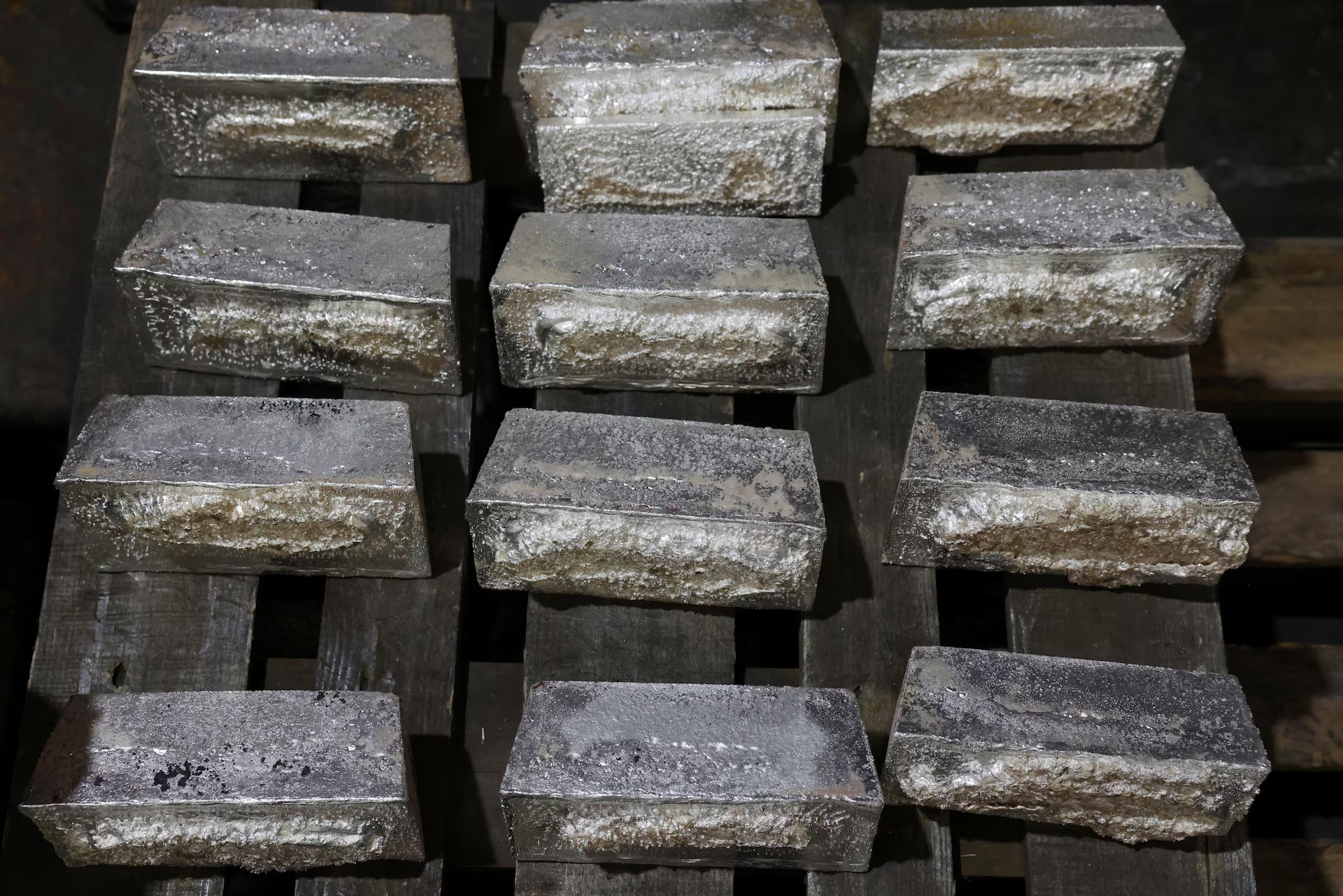
Silver has surpassed Nvidia to become the world’s second most valuable asset by total estimated market value, trailing only gold. This remarkable shift occurred amid a historic rally in silver prices, which surged over 150-170% year-to-date, pushing spot prices to record highs around $80–$84 per ounce.

The total value of all above-ground silver estimated at ~1.75 billion ounces mined historically reached approximately $4.65–$4.7 trillion, briefly exceeding Nvidia’s market capitalization of around $4.6 trillion. Gold remains firmly in first place with a valuation of ~$31–$32 trillion.

Silver’s rally was driven by strong industrial demand like solar panels, EVs, electronics, supply deficits, geopolitical tensions, safe-haven buying, and potential export restrictions from major producers like China.

Nvidia, the AI chip leader, held the #2 spot among investable assets/companies for much of 2025 but was overtaken in this broader “asset” ranking that includes commodities. Note that commodity “market caps” are estimates based on current prices × historical mined supply adjusted for losses, while company values fluctuate with stock prices.

Silver’s lead was brief and volatile, with profit-taking causing pullbacks, but the crossover did happen. This highlights a rare rotation from tech/AI dominance back toward hard assets in 2025’s market environment.

Silver’s industrial demand remains a dominant force in the global market, accounting for approximately 55-60% of total silver consumption.

In 2024, industrial fabrication reached a record 680.5 million ounces (Moz), and forecasts for 2025 indicate it will stay near record levels around 680-700 Moz despite some thrifting efforts and economic headwinds. This resilience stems from silver’s unmatched electrical and thermal conductivity, making it irreplaceable in high-performance applications.

The primary drivers are tied to the global push for green energy, electrification, and digitalization. Unlike gold, silver’s demand is largely inelastic—industries continue buying even at higher prices because substitutes are limited or inferior.

The fastest-growing segment, consuming ~19-30% of industrial silver up from ~5% a decade ago. Silver paste is essential for conductive layers in photovoltaic cells, capturing and transporting electrons efficiently. Global solar installations are booming— China’s massive additions, EU’s 700 GW target by 2030.

Demand surged in recent years, with projections for continued growth despite efforts to reduce silver per panel (thrifting).
In 2024-2025, solar alone drove significant uptake, often cited as passing jewelry as the top single use.silverinstitute.org

Electric Vehicles (EVs) and Automotive Electrification

EVs use 25-50 grams of silver per vehicle vs. 15-28g in traditional cars, mainly in wiring, sensors, battery management, power electronics, and charging infrastructure. Rapid EV adoption especially in China and Europe is boosting demand at a ~3-4% CAGR through 2030.

By 2027-2031, EVs could dominate automotive silver use up to 59% of the sector. Silver is critical in printed circuit boards, connectors, switches, semiconductors, 5G infrastructure, and AI-related hardware (e.g., power-hungry data centers needing efficient conductivity).

AI and digitalization have exploded electricity/IT power needs, indirectly driving silver in grids and devices. This sector including consumer electronics has grown ~51% since 2016 and remains a steady, broad-based driver.

Other notable uses Ethylene Oxide (EO) production: Chemical catalysts for plastics and detergents. Antimicrobial properties in coatings and devices (stable demand). Upgrades for electrification and renewables.
These drivers contributed to persistent supply deficits, like 117-149 Moz in 2025, fueling the metal’s rally.

Long-term, silver’s role in the energy transition and tech revolution positions industrial demand as the core structural support for prices.

The Most Valuable Moat in Crypto is Privacy

2

A16z crypto general partner Ali Yahya explicitly called privacy “the most important moat in crypto” in December 2025 posts and reports. He argued that while high-performance blockchains are commoditized with easy bridging of tokens and mercenary capital flowing freely, privacy creates genuine lock-in.

Secrets and private states are hard to migrate across chains without leaking metadata like timing, and sizes, leading to stronger network effects and a winner-take-most dynamic for privacy-focused chains.

This view echoes in a16z’s broader 2026 predictions and industry commentary: Privacy enables real-world finance to move on-chain like institutional RWAs, payroll, compliant stablecoins without exposing sensitive data.

Indicators of momentum include surging Google searches for crypto privacy, Zcash’s shielded pool growing to ~4M ZEC, Railgun’s monthly flows exceeding $200M, and developments like the Ethereum Foundation’s privacy team.

Market performance backs the narrative: Privacy coins surged in 2025, with Zcash up over 700% at peaks outperforming BTC/ETH, Monero up ~100%, and others like Dash and Railgun posting triple-digit gains.

Emerging markets drove much of the volume due to capital controls, and VCs listed privacy as a top focus.Counterpoints exist: Some argue speed, scalability, reliability, or programmability remain bigger moats, and the privacy hype could be narrative-driven after recent price runs.

Regulatory pressures like delistings, MiCA bans on certain privacy coins in Europe pose risks, though compliant privacy tools like selective disclosure in Zcash are gaining traction.

As crypto matures and surveillance/forensics advance, privacy is increasingly seen as essential for mass adoption—not just a niche feature, but a defensive moat that protects users and differentiates ecosystems in a multi-chain world. 2026 could prove whether this thesis holds as institutions demand confidentiality.

Why Privacy Matters in DeFi

DeFi has revolutionized finance by offering permissionless access to lending, borrowing, trading, and yield farming on public blockchains like Ethereum. However, this transparency comes at a cost: every transaction, balance, and interaction is publicly visible forever.

This exposes users to risks like front-running (MEV attacks), targeted hacks, financial surveillance, and loss of personal data sovereignty. For institutions, public exposure of strategies or positions can lead to competitive disadvantages or regulatory scrutiny.

As of late 2025, privacy is increasingly viewed as a critical enabler for DeFi’s mainstream adoption—especially for real-world assets (RWAs), institutional participation, and compliant finance. Without it, sensitive use cases like private lending, payroll, or credit scoring remain limited.

Public ledgers enable auditability but leak metadata like wallet links, transaction patterns.Tools enabling full anonymity face scrutiny like delistings of certain privacy coins, while compliant privacy— selective disclosure is gaining traction.

Early privacy solutions were slow, expensive, or fragmented liquidity. Bots exploit visible mempools, costing users billions annually. Zero-knowledge proofs (ZKPs), particularly zk-SNARKs and zk-STARKs, dominate as the core tech—allowing proof of transaction validity without revealing details.

Aztec Network: Programmable privacy L2 on Ethereum; hybrid public/private execution; bridges to major chains like Wormhole. Adds privacy to existing Defi such as Uniswap, Aave, Yearn without fragmenting liquidity; private OTC trading and voting.

Ignition Chain live; cross-chain privacy tunnels; institutional pilots showing 300% user growth in private lending. Still scaling full decentralization.

RAILGUN: On-chain ZK privacy system for Ethereum/EVM chains; shielded transactions and DeFi interactions. Private swaps, lending, staking; compliance screening; no separate chain. TVL ~$113M (near ATH); monthly volume $150M+; endorsed by Vitalik Buterin; multi-sig privacy prototype. Relies on underlying chain security.

Oasis Network: Confidential smart contracts via TEEs; privacy at scale for DeFi/data apps. High throughput; institutional focus on RWAs, confidential computations. Partnerships growing; positioned for large-scale finance. Less DeFi-native than ZK-focused rivals.

Secret Network: Privacy-preserving smart contracts; encrypted data computation. Private DeFi (e.g., SecretSwap), NFTs, governance. Established for confidential dApps; often compared to Oasis. Slower adoption in broader EVM ecosystem.

StarkNet/StarkWare: STARK-based scalability + privacy; high TPS. Institutional trading; DeFi Spring initiatives. TVL surged 550% in prior years; low fees. Privacy features evolving alongside scalability.

Privacy infrastructure saw explosive interest in 2025, with platforms like Aztec enabling 300%+ user growth in private lending. Tools balancing privacy with compliance like selective disclosure via ZKPs are key for RWAs and tokenized assets.

Projects incorporate KYC/AML proofs without exposing data (e.g., zkPass for verifiable credentials in lending). Innovations like Miden emphasize local proofs for true device sovereignty—privacy by default, cheaper than public transactions.

Privacy-focused assets like Zcash shielded pool growth, Railgun TVL spikes outperformed in 2025 amid surveillance concerns. Privacy in DeFi is no longer niche—it’s evolving into a defensive moat and growth engine.

As regulations tighten and institutions demand confidentiality, 2026 could see widespread adoption of these tools, unlocking trillions in on-chain capital while preserving user sovereignty.

Subber Shutdown Reflects a Closing Chapter on Raffle Meta Rather than End of NFTs

0

Subber.xyz, a popular multichain platform for managing NFT collaborations, whitelist allocations, presales, raffles, giveaways, and community growth tools especially prominent on Solana and other chains, has officially announced its shutdown.

Subber is officially shutting down. We kept the service running for as long as we could, hoping the NFT market would rebound and that web3 communities would regain the momentum and strength they once had. But despite our best efforts, we’ve reached the end of our journey. Thank you for everything. GN “

The site’s homepage now displays a simple shutdown notice: “Thank you to everyone who supported and built with us. We’re grateful for the journey.” Subber was widely used during the 2022–2023 NFT boom for running collabs and rewarding communities.

The team cited the prolonged NFT market downturn and lack of rebound as key reasons. Community reactions on X are mixed: nostalgia for the “good old days” of Solana NFTs, acknowledgment that better alternatives like Alphabot emerged, and some criticism that Subber failed to innovate or pivot amid competition.

This comes amid other recent web3 tool/project closures, signaling a tough period for NFT-focused infrastructure as activity remains low heading into 2026. Many in the space see it as a sign of the ongoing NFT winter rather than the end of NFTs entirely—tools evolve, and communities adapt to new platforms.

Subber’s closure marks a poignant moment for the NFT and web3 community ecosystem, particularly on Solana where it was a cornerstone tool during the 2022–2023 boom. The team explicitly cited the lack of a meaningful rebound in the NFT market as the primary reason, after keeping operations running in hopes of recovery.

This aligns with broader trends: NFT trading volumes have remained suppressed post-2022 peak, with occasional flickers like memecoin-driven activity but no sustained revival. It’s part of a pattern of NFT-focused infrastructure closures like Solsniper marketplace in mid-2025, other tools fading earlier, reflecting reduced demand for whitelist/raffle management as fewer high-volume mints and collabs occur.

Many users note that superior alternatives have emerged, reducing Subber’s relevance:Alphabot — Frequently praised as more advanced and dominant now. Blocksmith’s Atlas, LuckyGo, and others for raffles/allowlists.

The space is maturing—users “vote with their feet,” and weaker or less innovative models fade. Better tools win out, forcing consolidation. Short-term disruption for ongoing or legacy projects relying on Subber for active raffles, presales, or token-gated access though most had likely migrated.

Holders of Subber-related NFTs, any project-specific passes may see them become worthless, with criticism from some that the shutdown was abrupt without handover or pivot options. Nostalgia is strong: Many former collab managers and community builders reminisce about Subber’s role in fueling explosive growth during Solana’s NFT heyday.

Its hghlights the challenges of building sustainable business models tied heavily to speculative hype cycles like NFT mints. Not a death knell for NFTs—community members emphasize adaptation, with calls for more sustainable models e.g., utility beyond raffles, integration with memecoins or DeFi.

Reinforces bear market realities: Tools and projects without diversification or strong product-market fit struggle when activity dips. Positive spin from some: This clears space for innovation in community tools amid AI/bot challenges in web3 engagement.

Overall, Subber’s end feels like closing a chapter on the “raffle meta” era rather than the end of NFTs entirely. The ecosystem evolves—communities are migrating to newer platforms, and any 2026 revival could spark fresh tools. Sad for veterans, but a natural part of web3’s fast-paced cycle.

China’s SMIC moves to consolidate domestic chipmaking as it buys out SMNC minority stake.

0
????????????????????????????????????????????????????????

China’s largest contract chipmaker, Semiconductor Manufacturing International Corp (SMIC), is taking a decisive step to tighten its grip on a key manufacturing arm as Beijing pushes for deeper self-reliance in semiconductors amid sustained U.S. technology curbs.

SMIC said on Monday it plans to acquire the remaining 49% stake in its subsidiary SMIC Ningbo (SMNC) for 40.6 billion yuan ($5.79 billion), a move that will give the Hong Kong- and Shanghai-listed foundry full ownership of the unit. The transaction will be settled through the issuance of about 547.2 million A-shares to five existing SMNC shareholders, including the powerful China National Integrated Circuit Industry Investment Fund, widely known as the “Big Fund.”

SMNC is a strategic asset within SMIC’s manufacturing network, focusing on 12-inch wafer fabrication across a range of process technologies. These larger wafers are the industry standard for more advanced and cost-efficient chip production, making the unit central to SMIC’s medium- and long-term capacity expansion plans. In its filing to the Shanghai Stock Exchange, SMIC said the acquisition would improve asset quality, streamline governance, and strengthen support for its long-term development strategy.

The deal also fits squarely into China’s broader industrial policy goals. By consolidating ownership of critical fabs, SMIC reduces internal complexity and gains greater operational flexibility at a time when access to foreign equipment and advanced manufacturing tools remains constrained by U.S. and allied export controls. Full control of SMNC could make it easier for SMIC to coordinate capital spending, technology deployment, and customer allocation without minority shareholder considerations.

The involvement of the state-backed Big Fund is notable. While the fund has been a cornerstone investor across China’s semiconductor ecosystem, its gradual exit from certain holdings has been interpreted by analysts as part of a portfolio rebalancing, rather than a retreat from the sector. The share-based structure of the deal also allows SMIC to preserve cash, which remains critical as chipmaking requires sustained, capital-intensive investment.

In a separate regulatory filing, SMIC said changes in another subsidiary, SMSC, will significantly lift its financial firepower. Exiting shareholders and new investors will raise SMSC’s registered capital to $10.1 billion from $6.5 billion, underscoring continued investor and policy support for domestic chip manufacturing projects, even as profitability across the global foundry industry remains uneven.

The consolidation push comes as SMIC continues to benefit from strong domestic demand. The company reported a 9.7% increase in third-quarter revenue from a year earlier to $2.38 billion, driven largely by Chinese customers seeking local alternatives to foreign chip suppliers. Profit rose 28.9% to $191.75 million, comfortably beating analysts’ expectations, according to LSEG data.

That performance highlights a growing divergence in the global semiconductor market. While many international foundries are grappling with inventory corrections and softer consumer electronics demand, SMIC has been buoyed by localization efforts across China’s automotive, industrial, and consumer sectors. Still, margins remain under pressure due to higher depreciation costs and ongoing investment in capacity that may not immediately translate into high-end output.

Taken together, the SMNC acquisition and the capital expansion at SMSC point to a clear strategy: deepen control over core assets, align more closely with state-backed investors, and reinforce SMIC’s role as the backbone of China’s chipmaking ambitions. The company appears to be betting that scale, consolidation, and domestic demand will help offset the technological barriers it still faces as geopolitical tensions continue to shape the semiconductor industry.