DD
MM
YYYY

PAGES

DD
MM
YYYY

spot_img

PAGES

Home Blog Page 9

NBA Moves Toward AI Refereeing as Adam Silver Targets Faster Games and Fewer Replay Disputes

0

The National Basketball Association is preparing for one of the most significant officiating changes in modern professional sports, with Commissioner Adam Silver confirming that artificial intelligence will soon automate a category of referee decisions currently responsible for some of the league’s most disruptive stoppages.

Speaking on ESPN’s The Pat McAfee Show, Silver said the NBA plans to introduce an AI-powered camera system capable of instantly determining possession calls such as out-of-bounds rulings, removing those judgments from on-court referees and sharply reducing replay reviews.

The shift mirrors the adoption of Hawk-Eye technology in professional tennis, where electronic line-calling has largely replaced human judges in determining whether balls land in or out. Silver suggested the NBA envisions a similar model for objective calls.

“We’re going to move to a system like that where that whole category of calls will be automatic,” Silver said. “It’s going to be Laker ball, Knick ball, whatever it is.”

The planned system would rely on cameras positioned throughout arenas to track player movement and ball contact in real time. Instead of referees huddling around replay monitors for several minutes while fans wait, possession rulings could be delivered almost instantly by the automated system.

The NBA has spent years trying to balance officiating accuracy with entertainment flow. Expanded replay review and coach’s challenges have improved precision in some areas, but they have also lengthened games and generated mounting frustration among viewers, broadcasters, and teams over repeated interruptions.

Silver’s comments indicate that the league now sees AI not merely as a support tool, but as a direct replacement for human judgment in narrowly defined categories where machine vision can outperform referees in speed and consistency.

The league appears to be drawing a sharp distinction between objective and subjective officiating. Out-of-bounds calls, goaltending reviews, and timing determinations can be measured through tracking systems and visual analysis. Fouls, however, remain more complicated because they involve context, intent, positioning, and varying levels of contact.

Silver emphasized that referees would still be essential for interpreting physical play.

“There’s often contact on every play, but that doesn’t mean there’s a foul on every play,” he said. “That’s something that can’t just be done on camera.”

That distinction is important because officiating crews remain central to how the NBA manages game flow, player conduct, and competitive balance. Fully automating foul decisions would likely trigger major resistance from players, coaches, and fans who already debate the consistency of officiating standards across games and playoff series.

A broader transformation is going on across global sports, where AI and computer vision are increasingly being integrated into officiating and performance analysis.

Professional tennis has already normalized automated line calling. Soccer has introduced semi-automated offside technology. Baseball continues experimenting with automated strike zones in the minor leagues. Cricket, Formula One, and the NFL have all expanded their use of real-time tracking and replay systems.

For the NBA, the technology push comes at a time when the league is also investing heavily in data analytics, player tracking, and media innovation as it competes for younger audiences accustomed to faster digital experiences.

But reducing replay interruptions carries commercial implications as well. Faster games improve broadcast pacing, reduce viewer fatigue, and help streaming partners retain audiences in an increasingly fragmented media environment.

Silver did not provide a launch date, but his comments suggest implementation may come sooner rather than later.

“It will be fairly quickly,” he said.

The challenge for the NBA will be ensuring that the technology is trusted by teams and fans during high-pressure moments, particularly in playoff games where possession rulings can decide outcomes.

Even if AI removes some of the league’s most controversial replay reviews, it is unlikely to eliminate debates over officiating entirely. In basketball, the most contentious decisions are often not whether the ball touched a player’s fingertip, but whether contact warranted a whistle in the first place.

That means the next era of NBA officiating may involve a hybrid model: machines handling precision, humans handling interpretation.

U.S. CFTC Seeks to Erase Crypto Exchange, Gemini’s $5m Penalty

0

The U.S. Commodity Futures Trading Commission has moved to scrap a $5 million enforcement penalty against crypto exchange Gemini, marking one of the clearest signs yet of how dramatically Washington’s approach to digital assets has shifted under President Donald Trump.

In a filing submitted Wednesday, the CFTC asked a federal judge to vacate the settlement it reached with Gemini Trust Company earlier this year, arguing that the agency should never have pursued the case in the first place. The regulator now says the lawsuit against the exchange founded by twin brothers Tyler Winklevoss and Cameron Winklevoss relied on a flawed whistleblower account and reflected what it described as “inappropriate tactics” by the previous administration.

The reversal is striking because the case had already been settled in January 2025, during the final stretch of former President Joe Biden’s administration. Under that agreement, Gemini paid a $5 million fine and accepted restrictions barring it from making false or misleading statements to the regulator regarding its bitcoin futures operations.

Now, both Gemini and the CFTC are jointly asking the court to unwind the entire arrangement.

The development underscores the extent to which federal crypto oversight is being rewritten as Trump’s administration moves away from the aggressive enforcement posture that defined the Biden years. It also highlights the growing political influence of crypto executives who backed Trump’s return to office.

The Winklevoss brothers each donated $1 million worth of bitcoin to Trump’s 2024 campaign, making them among the most visible crypto-industry supporters of the president. Since returning to the White House, Trump has increasingly positioned himself as an ally of the digital asset sector, promising lighter-touch regulation and criticizing what his allies describe as politically motivated enforcement actions against crypto firms.

The court filing goes beyond merely requesting that the penalty be removed. It effectively accuses the previous CFTC leadership of weaponizing enforcement powers against Gemini.

According to the filing, the agency pursued the exchange instead of focusing on what Gemini says was the real misconduct: an alleged fraud scheme involving the company’s former chief operating officer and two customers who reportedly received improper rebates. The document claims regulators relied on unreliable testimony while ignoring evidence that Gemini itself had been harmed.

The filing also alleges that regulators used leverage unrelated to the enforcement case by delaying approval for Gemini’s prediction-market platform while litigation was ongoing. Gemini eventually received approval for the platform, called Gemini Titan, in December 2025.

The case comes as a part of reordering inside Washington’s financial regulatory structure as agencies recalibrate crypto oversight under new political leadership.

Trump’s initial choice to lead the CFTC, Brian Quintenz, became entangled in a dispute involving Tyler Winklevoss. Quintenz accused the Gemini co-founder last year of lobbying the White House to block his nomination because of the ongoing enforcement action. Trump later withdrew Quintenz’s nomination and instead selected Michael Selig to lead the agency.

For the broader crypto industry, the Gemini reversal is likely to be viewed as a signal that firms targeted during the Biden-era crackdown may seek to revisit past settlements or challenge ongoing investigations. It may also embolden exchanges and token issuers, arguing that prior enforcement actions exceeded regulatory authority or relied on ambiguous rules.

However, the decision is expected to further intensify criticism from lawmakers and consumer advocates who warn that regulators are retreating too far from oversight just as crypto markets regain momentum. Bitcoin prices and trading activity have rebounded sharply in recent months, while firms across the industry are pushing deeper into products tied to derivatives, prediction markets, and tokenized finance.

The unresolved question is whether courts will accept the government’s unusual request to undo a finalized settlement. Legal experts say such reversals are rare because settlements are generally designed to bring permanent closure to disputes. Another point of uncertainty is whether Gemini would recover the $5 million already paid to the government. The joint filing did not specify whether the penalty would be refunded.

Gemini’s founders first entered the public spotlight through their legal battle with Mark Zuckerberg over the origins of Facebook. They later became major players in the cryptocurrency industry, building Gemini into one of the most recognizable U.S.-based digital asset exchanges.

Now, their company is at the center of what may become a defining test of how far the Trump administration is willing to go in dismantling the previous administration’s crypto enforcement legacy.

Anthropic Raises $65 Billion in Series H Funding, Reaches $965 Billion Valuation

0

Artificial intelligence company Anthropic has secured $65 billion in Series H funding, reaching a post-money valuation of $965 billion.

The funding round was led by Altimeter Capital, Dragoneer, Greenoaks, and Sequoia Capital, underscoring growing investor confidence in the company’s rapid expansion and enterprise adoption of its AI assistant, Claude.

The AI company also disclosed that the round includes $15 billion in previously committed investments from hyperscalers, including $5 billion from Amazon.

The newly raised capital is expected to strengthen Anthropic’s safety and interpretability research, expand compute infrastructure to meet rising demand for Claude, and scale the company’s products and strategic partnerships.

According to the company, global enterprises across multiple industries are increasingly deploying Claude in their core operations, while millions of users worldwide now rely on the platform for daily productivity tasks.

Krishna Rao, Chief Financial Officer of Anthropic, stated that Claude has become increasingly indispensable for the company’s growing global customer base.

In his words,

“Claude is increasingly indispensable to our growing global community of customers, and we work tirelessly to make tools like Claude Code and Cowork more helpful, more powerful, and more adaptable to their needs. This funding will help us serve the historic demand we are experiencing, stay at the research frontier, and bring Claude to more of the places where work happens.”

Also commenting,

Philippe Laffont, Founder & Portfolio Manager of Coatue said,

“Since our initial investment in 2025, Anthropic’s focus on agentic coding and enterprise-grade AI systems has accelerated its progress toward large-scale adoption. The team’s ability to rapidly scale its offerings further positions Anthropic as a leader in a highly competitive AI market.”

Anthropic series H funding comes after its Series G funding round in February 2026. Recall that when it raised the funding earlier this year, the company stated that the investment will fuel the frontier research, product development, and infrastructure expansions that have made Anthropic the market leader in enterprise AI and coding.

Recently, Anthropic said adoption has accelerated significantly, with annualized revenue reportedly surpassing $47 billion earlier this month.

In recent weeks, the company has significantly expanded its compute capacity through agreements with Amazon for up to five gigawatts of new capacity, as well as collaborations with Google and Broadcom for five gigawatts of next-generation TPU capacity.

The company also secured access to GPU capacity through SpaceX’s Colossus 1 and Colossus 2 infrastructure. Notably, Anthropic noted that Claude is now the first frontier AI model available across the world’s three largest cloud platforms: Amazon Web Services, Google Cloud, and Microsoft Azure, with AWS remaining its primary cloud provider and training partner.

Business subscriptions to Claude Code have quadrupled since the start of 2026, and enterprise use has grown to represent over half of all Claude Code revenue.

Anthropic also highlighted that it trains and operates Claude using a diversified mix of AI hardware, including AWS Trainium chips, Google TPUs, and NVIDIA GPUs.

According to the company, this approach allows workloads to be matched with the most suitable hardware, resulting in improved performance and greater resilience for enterprise customers relying on Claude for mission-critical operations.

The company further stated that the growing demand from enterprises and developers reflects increasing trust in Claude for important business tasks.

As artificial intelligence moves toward large-scale implementation, Anthropic said it plans to continue investing in models, products, infrastructure, and strategic partnerships to strengthen its position in the evolving AI industry.

ByteDance Reportedly Moves to Develop CPUs to Support Its AI Infrastructure Needs

0

Chinese technology giant ByteDance is moving deeper into the global artificial intelligence infrastructure race with plans to develop its own central processing units, Reuters reports, citing people familiar with the matter.

The parent company of TikTok is developing proprietary CPUs to support its expanding AI infrastructure needs, according to people familiar with the matter, as soaring chip prices, tightening supply, and geopolitical uncertainty force major technology companies to seek greater control over their computing stacks.

The shift highlights how the AI boom is rapidly evolving beyond Nvidia’s graphics processors and into a broader battle over the foundational chips powering next-generation computing.

For the past several years, the AI surge has largely revolved around graphics processing units, or GPUs, particularly those made by Nvidia, which dominate the training of large AI models. But as companies increasingly deploy AI systems into commercial products and services, attention is shifting toward “inference” computing, where trained AI models perform real-time tasks for users.

That shift is dramatically increasing demand for CPUs, which manage memory allocation, networking, workload orchestration, and data processing inside AI data centers.

Industry executives say the demand surge has created an emerging supply crunch.

The move by ByteDance places it alongside global hyperscalers such as Amazon, Microsoft, and Google, all of which are aggressively developing custom processors to reduce dependence on external suppliers and lower the enormous cost of scaling AI infrastructure.

Sources familiar with ByteDance’s plans said the Beijing-based company intends to deploy the CPUs across its own servers and data centers as it prepares a large-scale expansion of agent-based AI products, including its Coze platform and other internal artificial intelligence systems.

The company is reportedly evaluating two chip architecture paths simultaneously. One design is based on technology from Arm Holdings, while another uses the open-source RISC-V instruction set architecture.

The dual-track approach is borne out of the uncertainty facing many technology companies attempting to build custom silicon. Arm-based chips benefit from a mature software ecosystem and widespread adoption across cloud infrastructure, while RISC-V offers greater flexibility and lower licensing costs, making it increasingly attractive to Chinese technology firms seeking technological independence.

People familiar with the matter said ByteDance has approached several external partners to assist with both chip design and manufacturing coordination. Securing foundry capacity has become a critical challenge as semiconductor manufacturers struggle to meet exploding demand from AI companies worldwide.

ByteDance is making its move as the global AI infrastructure market is entering a new phase where the economics of inference computing are beginning to rival, and in some cases exceed, the importance of model training. While training frontier AI systems requires immense bursts of GPU power, inference workloads require sustained, large-scale deployment across millions of users and devices.

That creates enormous demand for CPUs capable of coordinating AI systems efficiently and cheaply.

The market dynamics are already reshaping the semiconductor industry. Intel and AMD, whose dominance had appeared threatened by Nvidia’s rise, are now benefiting from renewed investor interest as CPUs regain importance inside AI data centers. Intel warned earlier this year that Chinese customers faced server CPU lead times stretching up to six months, while AMD CEO Lisa Su recently described the global CPU market as “tight,” with demand significantly exceeding expectations.

Sources said ByteDance has experienced substantial increases in server CPU pricing in recent months, with some products rising between 10% and 35% quarter-on-quarter. Those cost pressures are said to have accelerated the company’s internal chip efforts.

The development also points to China’s broader push toward semiconductor self-sufficiency. As Washington continues tightening restrictions on advanced semiconductor exports to China, major Chinese technology firms are increasingly seeking to reduce dependence on U.S. suppliers. Export controls introduced since 2022 have already restricted Chinese access to Nvidia’s most advanced AI chips due to concerns about potential military applications.

Although ByteDance’s CPU project is primarily commercially driven, it aligns with Beijing’s wider objective of strengthening domestic semiconductor capabilities amid escalating technology tensions with the United States.

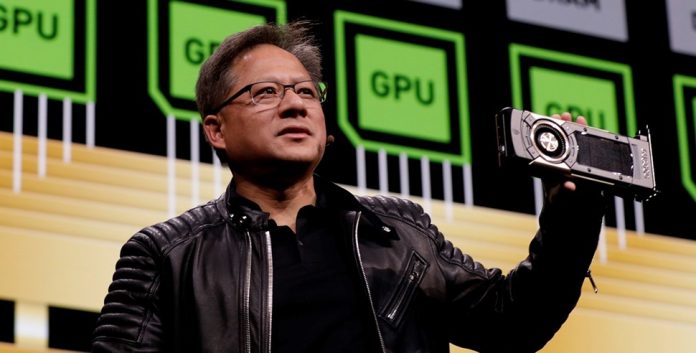
The move comes as Nvidia itself attempts to expand beyond GPUs. Nvidia CEO Jensen Huang recently said the company’s new “Vera” CPU platform could give the chipmaker access to a $200 billion market, highlighting how central processors are becoming increasingly important in the next phase of AI development.

Nvidia has also begun integrating CPUs more deeply into its AI systems to create vertically integrated computing platforms capable of handling both training and inference workloads.

Custom chip development allows companies to optimize performance for specific workloads, reduce long-term procurement costs, and lessen dependence on external suppliers during periods of shortage or geopolitical disruption.

But building advanced processors remains a high-risk undertaking. Even for well-funded technology giants, designing competitive chips requires deep engineering expertise, sophisticated software integration, and reliable access to advanced manufacturing nodes.

Many custom silicon projects fail to achieve broad deployment because of technical complexity, escalating development costs, and software compatibility challenges.

NIO CEO Declares End of China’s Auto “Golden Era” as Fierce Competition and Market Saturation Reshape the EV Industry

0

NIO CEO William Li has declared that China’s auto industry has moved past its “golden era,” citing prolonged weakness in domestic car sales, slowing EV growth, and intensifying competition as key challenges facing the world’s largest auto market.

Speaking to reporters in Beijing on Thursday, Li emphasized that NIO’s primary focus remains firmly on its home market, where a wave of new entrants and aggressive pricing have created an extremely crowded and competitive environment.

“We’re focused primarily on China,” Li said when asked about overseas expansion plans.

The company began exporting in 2021, starting with Norway, but overseas shipments have remained negligible compared to its overall volume. Li noted that China still offers the most efficient environment for investing in pure electric vehicles, while replicating similar scale and returns abroad would be far more challenging and time-consuming.

Plug-in hybrids and internal combustion engine vehicles, he added, are better suited for global markets at this stage.

NIO, known for its innovative battery-swapping technology, currently sells only pure EVs. The company is betting that advanced driver-assistance systems (ADAS), proprietary software, and an expanded model lineup will help it stand out in a hyper-competitive domestic market.

As part of this push, NIO plans to increase spending on computing resources for smart-driving development fivefold this year compared with 2025, according to Li. This heavy investment underscores the growing importance of software-defined vehicles and autonomous capabilities as hardware features become increasingly commoditized.

Although Chinese EV makers have long enjoyed strong government backing through subsidies, infrastructure development, and industrial policies, competition has intensified dramatically in recent years. A surge of new EV companies, many backed by local governments, tech giants, or traditional automakers, has flooded the market with a lot of new models, leading to severe oversupply and aggressive price wars.

This saturation has made the market far more challenging than during the rapid growth phase of the early 2020s. Analysts note that many newer entrants are burning cash to gain market share, putting pressure on established players like NIO to defend margins while maintaining innovation.

The result is a more fragmented and Darwinian environment where only the strongest brands with clear technological or customer experience differentiation are likely to thrive long-term.

Industry data shows China’s overall car sales are expected to stagnate in 2026, while growth in electric and plug-in hybrid vehicles, the engine of recent expansion, is forecast to slow considerably after years of explosive double-digit increases. In April, domestic car sales fell for the seventh consecutive month, although exports continued to show resilience as Chinese makers seek relief in overseas markets.

Li pointed to China’s vehicle ownership reaching 370 million units as clear evidence of saturation.

“It’s no longer a growth market, but rather a saturated market,” he said.

In this tougher environment, high-profile model launches are becoming increasingly important for defending market share and protecting profitability. NIO’s new luxury flagship ES9 SUV, unveiled this week, is a prime example of the company’s efforts to move upmarket and capture higher-margin segments.

NIO’s Hong Kong-listed shares jumped 10.5% to HK$46.08 on Thursday, on track for their biggest one-day percentage gain since March 11. The positive reaction suggests investors viewed Li’s remarks as realistic and strategic rather than overly pessimistic, especially given the company’s clear focus on technology differentiation and premium positioning.

The broader Chinese auto sector continues to face headwinds from high inventory levels, relentless price competition, and shifting consumer preferences toward value and features. While exports have provided a vital buffer, the persistent weakness in domestic demand remains the core challenge for most manufacturers.

Li’s assessment, as one of China’s most prominent EV executives, also signals that even leading players are adjusting expectations downward and preparing for a more mature, competitive, and consolidation-prone phase in China’s auto market. This new era is likely to be defined by slower overall growth, greater emphasis on profitability and technology differentiation, and a Darwinian shakeout among weaker entrants.

Analysts expect the coming years to test whether its heavy investments in battery swapping, advanced driver assistance, and premium customer experience can deliver sustainable growth and stronger margins in a maturing market. Success in these areas is expected to position the company as one of the survivors and leaders in China’s next phase of automotive development.