

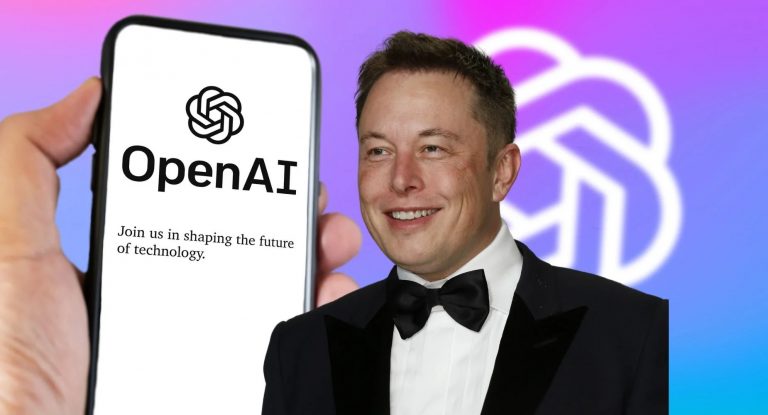
A California jury has handed a sweeping legal victory to OpenAI and Chief Executive Sam Altman, rejecting claims by billionaire entrepreneur Elon Musk that the artificial intelligence company defrauded him by abandoning its original nonprofit mission in pursuit of profit.
After less than two hours of deliberation on Monday, jurors in an Oakland federal courtroom found Altman, OpenAI President Greg Brockman, and OpenAI itself not liable in the closely watched case that has become one of Silicon Valley’s most consequential corporate battles.
The jury also cleared Microsoft of allegations that it knowingly assisted OpenAI leaders in violating charity laws through their multibillion-dollar partnership.
Register for the next Tekedia Mini-MBA.
Register for Tekedia AI in Business Masterclass.
Join Tekedia Capital Syndicate and co-invest in great global startups.
Rather than ruling directly on whether OpenAI betrayed its founding principles, jurors determined Musk had waited too long to file his claims, concluding that he had known key details underlying his allegations as early as 2021 and therefore missed the legal deadlines required to pursue the case.
That procedural finding effectively ended Musk’s attempt to dismantle OpenAI’s for-profit structure and halted a scheduled hearing that would have considered financial penalties and possible restructuring remedies.
U.S. District Judge Yvonne Gonzalez Rogers accepted the jury’s unanimous findings and indicated she would not overturn the verdict.

The decision marks a major turning point in the increasingly bitter rivalry between two of artificial intelligence’s most influential figures and removes a significant legal overhang for OpenAI as it moves closer to a potential public offering that analysts believe could eventually value the company at around $1 trillion.
The verdict also strengthens Altman’s position inside Silicon Valley after years of criticism from Musk and former OpenAI insiders who questioned his leadership style, governance practices, and commitment to the company’s founding ideals.
Outside the courthouse, OpenAI lead attorney William Savitt described Musk’s lawsuit as “a hypocritical attempt to sabotage a competitor.” Savitt added that OpenAI now intends to pursue counterclaims accusing Musk of abusing the legal system through the litigation.

The jury’s ruling represents not just a courtroom win for OpenAI but also a symbolic validation of the company’s transformation from nonprofit research lab into one of the world’s most commercially powerful AI firms.
OpenAI was founded in 2015 by Musk, Altman, and several other technology figures as a nonprofit organization intended to develop artificial intelligence for the benefit of humanity rather than private shareholders. At the time, the founders viewed Google’s DeepMind division as a potential concentration risk if artificial general intelligence was controlled by a single dominant corporation.
Musk’s lawsuit alleged that Altman and Brockman later betrayed that founding mission by building a for-profit structure around OpenAI and aligning the company closely with Microsoft, which has invested tens of billions of dollars into the AI firm.
According to Musk, OpenAI effectively transformed charitable donations, including his own reported $38 million contribution, into the foundation of a commercial empire benefiting private investors and executives.
OpenAI countered that Musk had long understood the need for large-scale corporate financing to sustain advanced AI development and had himself pushed for more aggressive commercialization while still involved with the organization.
During testimony, Altman portrayed Musk as a controlling figure who wanted to dominate OpenAI rather than preserve its nonprofit ideals.
The trial provided a rare public look inside one of the world’s most secretive and strategically important technology companies. Witness testimony included appearances from Microsoft Chief Executive Satya Nadella, former OpenAI board members, and senior executives who discussed internal conflicts surrounding Altman’s temporary removal as CEO in 2023, an episode insiders referred to as “The Blip.”
Musk himself testified that placing untrustworthy leadership at the center of AI development represented a danger to humanity.
Altman, meanwhile, defended OpenAI’s structure as necessary to secure the immense capital and computing infrastructure required to compete in the escalating global AI race.
The ruling now removes one of the largest immediate threats to OpenAI’s corporate structure at a critical moment for the artificial intelligence industry.
OpenAI has become central to a broader technology arms race involving Microsoft, Google, Meta, Amazon, and Musk’s own AI venture, xAI, now integrated into his broader SpaceX-linked artificial intelligence ambitions.
Although Musk lost this round, the legal and public battle is unlikely to end soon.
Outside the court, Musk’s attorney Marc Toberoff called the verdict “a tragedy” and said OpenAI had effectively been allowed to escape accountability for abandoning its nonprofit roots. Musk later wrote on X that the jury “never actually ruled on the merits of the case, just on a calendar technicality,” adding that he would appeal to the Ninth Circuit Court of Appeals.
The appeal ensures the conflict between Musk and OpenAI will continue even as the company consolidates its position at the center of the global artificial intelligence boom.