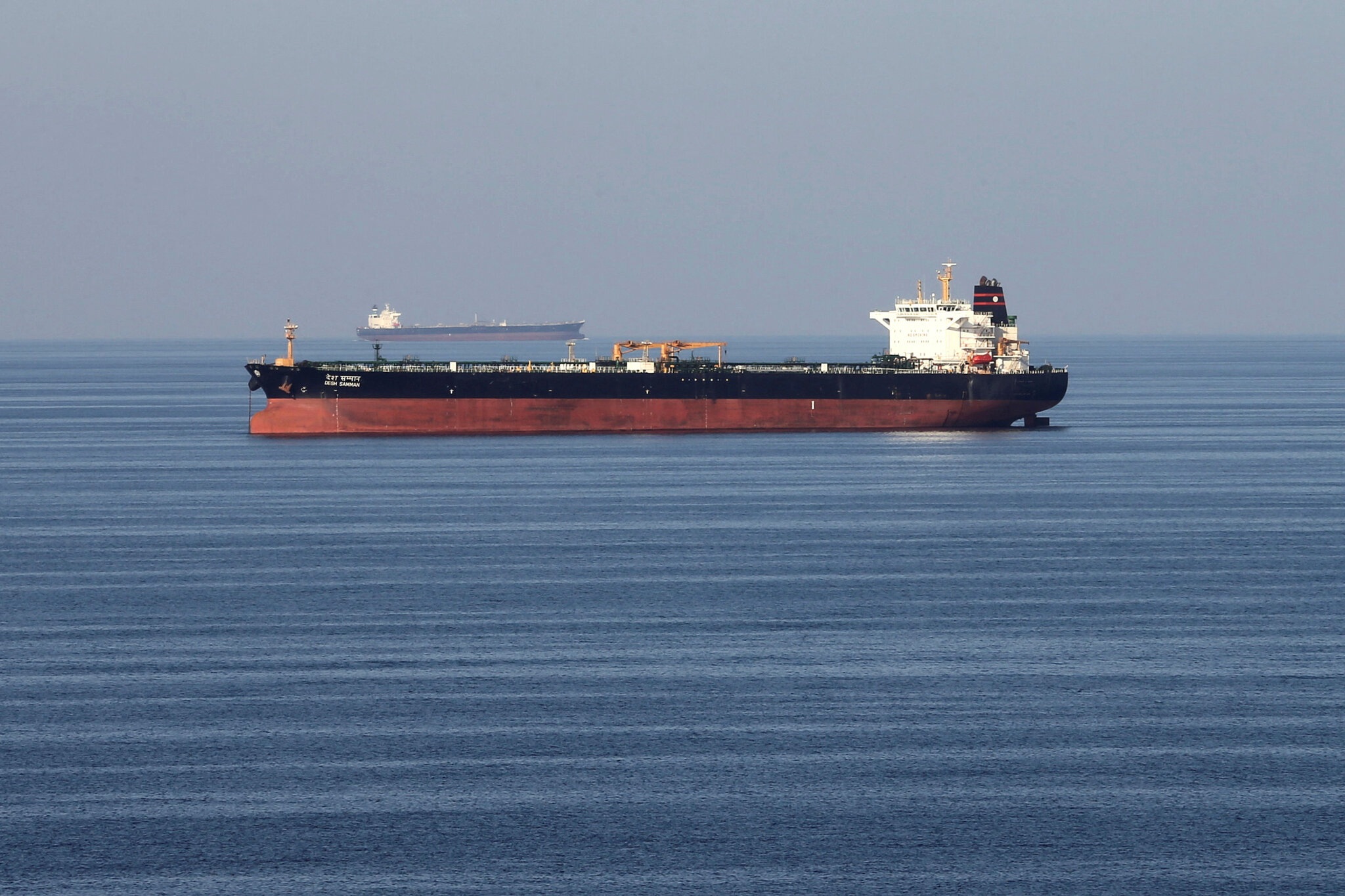
Chinese refiners have suspended oil-product exports for October as Beijing prioritizes domestic fuel inventories, tightening an already constrained global market and raising the risk of further price increases for diesel, gasoline and jet fuel.
Four people briefed on the matter told Reuters that Beijing had not granted major refiners in the world’s largest refining hub permission to export fuel to destinations other than Hong Kong and Macau during October. China began a week-long national holiday on Thursday, and it was unclear whether export approvals would resume when the holiday ends on October 7.
The decision comes as global fuel markets absorb supply disruptions from the war involving Iran and attacks by Ukraine on Russian refining infrastructure. The loss of Chinese export barrels could intensify competition among importers in Asia and beyond, particularly for middle distillates such as diesel.
“It highlights that the government’s focus remains domestic supply security. International markets are an afterthought,” said Michal Meidan, head of China energy research at the Oxford Institute for Energy Studies.
“Although refiners would like to capitalize on strong export margins, and China theoretically has the capacity to ramp up refining runs and exports, unless domestic stocks are adequate exports will be limited,” she said.
The move marks another turn in China’s management of refined-fuel exports since the Iran war disrupted Middle Eastern crude supplies. Beijing restricted exports in March before easing the restrictions in July, when it began managing gasoline, diesel and jet-fuel shipments on a monthly basis.
The latest pause suggests that the July relaxation was never a return to normal export policy. Instead, Beijing appears to be treating overseas fuel sales as a variable that can be increased when domestic inventories are comfortable and withdrawn when local supply comes under pressure.
That matters to global markets because China has enormous refining capacity even though its contribution to international fuel trade has historically been smaller than that of major exporting hubs such as India and South Korea.
Diesel Market Feels The Squeeze
The immediate pressure is emerging in Asian diesel markets. October-November price spreads for Asian diesel swaps rose to a two-week high on expectations that Chinese export supply would be absent. The structure of the market indicates that traders are placing a higher value on fuel available in the near term, a sign that the loss of Chinese barrels is tightening the regional balance.
PetroChina, China’s state oil major, cancelled several gasoline and jet-fuel cargoes scheduled for October, three sources said. Some of those shipments had only been committed to buyers within the previous two weeks. Zhejiang Petrochemical Corp, a privately controlled refinery, also did not schedule oil-product shipments during the holiday week, according to another source.
The impact could extend well beyond China because Asian countries rely heavily on Chinese refineries for incremental supply when domestic production or inventories fall short.
Bangladesh is particularly exposed. A senior government energy official said the country obtains as much as one-third of its refined-fuel imports from Unipec and PetroChina, although it has not received notification that those suppliers will stop deliveries. The official said Bangladesh could source fuel elsewhere if necessary.
Singapore, Malaysia, Australia, Vietnam, Bangladesh and the Philippines were among the largest destinations for Chinese fuel exports in September, according to Kpler and LSEG data.
South Korea could replace some of the missing supply, but its ability to respond quickly is limited because much of its refinery output is committed under term contracts, said Zameer Yusof, senior manager for clean oil products at Kpler.
That leaves spot buyers competing for a smaller pool of immediately available cargoes, increasing the sensitivity of regional prices to further disruptions.
The decision appears to be driven less by a lack of refining capacity than by concern over China’s fuel inventories and the availability of crude. Trade sources said Beijing has linked the resumption of exports to domestic stocks recovering to levels seen before the war.
Kpler estimates commercial gasoil and diesel inventories are about 20 million barrels below that threshold, while gasoline inventories are roughly 9 million barrels short.
“Our analysis shows commercial gasoil and diesel inventories sitting around 20 million barrels below that threshold, with gasoline roughly 9 million barrels short, so a pause on those products was likely,” Yusof said.
The inventory deficit helps explain why Chinese refiners are not simply responding to attractive export margins. Refiners may have an economic incentive to sell overseas when international prices are high, but the government has a separate objective: ensuring sufficient fuel is available for China’s domestic economy.
That creates a floor under China’s domestic supply and a ceiling on its contribution to the international market.
September export volumes already showed the effect of the tighter policy. China loaded an estimated 1.4 million metric tons of diesel, 500,000 tons of gasoline and at least 2 million tons of jet fuel during the month, including bonded volumes destined for Hong Kong and Macau. Those volumes were below August levels.
The October suspension therefore comes after exports had already begun to decline rather than at a point when Chinese shipments were expanding aggressively.
Refining disruptions in Russia and reduced supplies from the Middle East have removed alternative sources of middle distillates just as governments are becoming more sensitive to the inflationary impact of fuel prices.
U.S. Energy Secretary Chris Wright has said the world has lost diesel exports from both the Middle East and China, while Washington expects European countries to announce additional supplies.
The Trump administration has also urged Germany and France to draw down emergency diesel inventories to help contain prices, according to Reuters. Washington has warned that it could consider restricting U.S. diesel exports if European supplies are not increased. That puts greater pressure on governments and refiners to find alternative sources at a time when the international market has fewer spare barrels.
Beijing’s Domestic-First Policy Creates A Global Supply Problem
The latest Chinese decision also complicates efforts to stabilize global fuel markets. President Xi Jinping’s recent visit to Washington was followed by pressure from President Donald Trump for China to help stabilize global fuel supplies. China’s decision to withhold October exports indicates that Beijing’s ability or willingness to provide that support is constrained by domestic considerations.
Energy experts say that China can increase refinery utilization and theoretically release more products into international markets, but doing so requires sufficient crude supplies and comfortable domestic inventories. If those conditions are absent, high international prices may not be enough to persuade Beijing to prioritize exports.
That makes Chinese fuel policy an important variable for global traders.
The market impact could be amplified because fuel shortages are occurring simultaneously across several major producing regions. Iran-related disruptions have reduced Middle Eastern supply, while Ukrainian attacks have affected Russian refining infrastructure. European governments are being encouraged to release emergency stocks, and Asian refiners are being asked to cover gaps left by Chinese cargoes.
The result is a market in which disruptions that might once have been absorbed by spare refining capacity are more likely to feed directly into prices.
China’s decision does not necessarily mean exports will remain suspended for the entire month. Beijing could resume approvals after October 7 if inventories improve and domestic refining output is sufficient. But the uncertainty itself is significant for importers, because buyers cannot easily plan around Chinese cargoes when permits are being issued on a month-by-month basis.
For refiners, the policy also changes the economics of export decisions. A refinery may have the physical ability to produce additional diesel or gasoline and may see strong margins in overseas markets, but government controls can prevent that output from reaching international buyers. That is why the significance of China’s move extends beyond the barrels immediately removed from the market. It demonstrates that one of the world’s largest refining systems is no longer a dependable source of marginal export supply during a global shortage.