DD
MM
YYYY

PAGES

DD
MM
YYYY

spot_img

PAGES

Home Blog Page 90

Morgan Stanley Confirms Bitcoin Trading, Lending, Yield And Custody Plans

0

In a significant step toward deeper integration of digital assets into traditional finance, Global Investment Bank Morgan Stanley has confirmed plans to offer comprehensive Bitcoin services directly to its clients.

The bank’s Head of Digital Asset, Amy Oldenburg made the announcement during a conversation with Phong Le President and CEO of Strategy, at the recent Bitcoin for Corporations conference held in Las Vegas in late February 2026.

According to Oldenburg, Morgan Stanley intends to build its own in-house technology for Bitcoin custody and trading, moving beyond the current setup where clients can access spot Bitcoin ETFs and, in some cases, limited crypto trading via the bank’s ETrade platform.

“We will definitely do it,” Oldenburg stated when addressing future plans for Bitcoin custody and trading infrastructure. She further emphasized that developing these capabilities natively is a priority, allowing clients to hold legal custody of their Bitcoin under Morgan Stanley’s regulated oversight.

While some Bitcoin holders particularly long-term advocates may prefer self-custody, Oldenburg noted that bringing assets onto the bank’s platform would unlock additional services in a trusted, institutional environment.

The ambitions don’t stop at basic custody and spot trading. When asked about Bitcoin-based yield and lending products,

“That’s part of the discussion and exploration. It’s a natural part of the roadmap to continue to explore. We’re in a very early journey on that, just in terms of the number of products that are out in the market”, Oldenburg expressed strong support.

She highlighted unexpected momentum in decentralized finance (DeFi) lending protocols and related crypto-native yield opportunities this year, signaling that Morgan Stanley is closely tracking these developments as it considers similar offerings for its clients.

Morgan Stanley’s crypto journey has accelerated noticeably.  Earlier phases allowed select high-net-worth clients to access spot Bitcoin ETFs. In 2025–2026, the firm expanded crypto trading access via E Trade for certain users.

The year 2026 brought the appointment of Amy Oldenburg to lead digital asset strategy, along with filings related to Bitcoin and Solana ETFs in some contexts.

Now, the bank is shifting toward full-stack, proprietary infrastructure rather than relying solely on third-party partnerships.

With nearly $9 trillion in assets under management (and trillions more in advisory relationships), Morgan Stanley’s move could expose millions of traditional investors, wealth managers, and institutions to Bitcoin in a familiar, regulated wrapper.

This development follows similar expansions by competitors such as Goldman Sachs, JPMorgan Chase, Citigroup, BNY Mellon, amongst others, that have moved aggressively into crypto infrastructure, intensifying competition across traditional finance.

Goldman Sachs

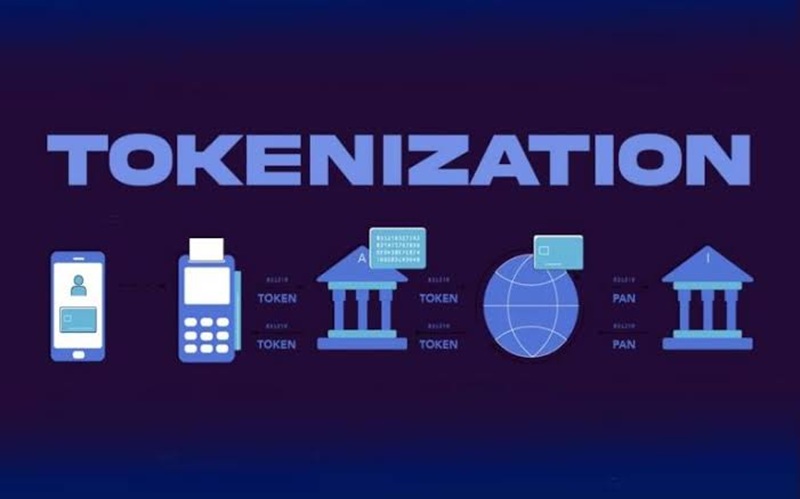
Goldman Sachs has built a dedicated digital assets division, offering crypto trading for institutional clients and expanding structured products tied to digital assets. The firm has also explored tokenization initiatives and blockchain-based financial instruments.

JPMorgan Chase

JPMorgan has developed blockchain infrastructure for institutional settlement and provides crypto-related services to large clients. The bank has also been involved in digital asset custody development and continues to expand blockchain-based financial rails.

Citigroup

Citigroup has focused on institutional crypto services, including digital asset custody frameworks and tokenization initiatives designed to integrate blockchain technology into traditional capital markets.

While still described as “early journey” for yield/lending, Oldenburg’s comments make clear that Morgan Stanley views these services as logical extensions of its digital asset roadmap.

The bank’s expansion highlights a structural shift in how major financial institutions view Bitcoin. Rather than treating digital assets as peripheral investment options, banks are building long-term infrastructure to support ownership, financing, and income generation

For the Bitcoin ecosystem, the message is clear, the world’s largest financial institutions are no longer just observing, they’re building the on-ramps.

The Tekedia EDIA Play Framework

0

Every business is constructed on three foundational pillars: people, processes, and tools. These are the engines through which products and services are created to remove frictions in markets.

When talent is properly aligned, processes are intelligently designed, and tools are optimally deployed, firms create value at scale. At Tekedia Institute, our programs are designed to help co-learners master how to optimize these pillars for maximum market impact. In essence, we help organizations solve the calculus of the market where growth, friction reduction, and profit are the desired outputs.

To operationalize this thinking, we conceptualize market strategy through what we call the Tekedia EDIA Play framework:

  • Efficiency Play – Doing the same thing faster, cheaper, and more reliably. This is the domain of operational excellence, automation, and lean supply chains.
  • Differentiation Play – Making customers perceive you as meaningfully distinct through brand, design, superior experience, or specialized knowledge.
  • Innovation Play – Creating something truly new, shifting the basis of competition and redefining the rules so competitors must respond to your architecture.
  • Aggregation Play – Using scale, platforms, and networks to coordinate fragmented demand and supply, capturing value through orchestration rather than direct production.

Join me tomorrow at Tekedia Mini-MBA as we examine the Grand Playbook of Business and unpack how these four plays shape market leadership.

Tekedia Mini-MBA Edition 19 Has Started, Register and Join | $170 or ?120,000

US Jobless Claims Come in Below Estimates by Economists

0

The latest US weekly initial jobless claims report, by the Department of Labor, showed initial claims rising slightly by 4,000 to a seasonally adjusted 212,000 for the week ending February 21.

This figure came in below economists’ expectations, which were around 215,000–217,000. The prior week’s figure was revised to 208,000. The increase was modest and influenced by the Presidents’ Day holiday in the reporting period, which can sometimes distort weekly data.

The four-week moving average (smoothing volatility) ticked up slightly to about 220,250. Continuing claims; people receiving ongoing benefits dropped by 31,000 to 1.833 million for the week ending February 14, signaling that laid-off workers are finding new jobs relatively quickly.

Layoffs remain at historically low and healthy levels, pointing to a resilient and stable labor market despite the small uptick in new filings. This supports expectations that the unemployment rate will hold steady around 4.3% for February (Chicago Fed forecast: 4.28%, likely rounding to 4.3%), following January’s drop to 4.3% from 4.4%.

This data is viewed as a positive sign for economic stability, with the labor market cooling only marginally rather than showing stress. The next major jobs report (nonfarm payrolls for February) is due in early March 2026. This reinforces a picture of a stable, resilient labor market with low layoffs (historically healthy levels), even amid some broader softness in hiring from prior uncertainty; tariffs, past high rates, and government shutdown effects.

The data points to a “low-hire, low-fire” environment where the labor market is stabilizing rather than weakening significantly. Layoffs remain subdued, and continuing claims fell to 1.833 million. This reduces urgency for immediate rate cuts, as downside risks to employment appear contained.

No cut expected at the March 17-18 FOMC meeting: Economists and market reactions suggest the Fed is likely to hold the federal funds rate steady at 3.50%–3.75%. The report bolsters views that the Fed won’t ease before Jerome Powell’s term ends in May 2026.

Market pricing shows very low odds ~4% of a March cut, with expectations shifted toward possible easing in mid-to-late summer or later.

Forecasts point to the rate holding steady around 4.3% for February; nonfarm payrolls report due March 6. A stable or slightly higher reading would align with full employment, giving the Fed room to prioritize inflation progress over labor support.

Recent stronger-than-expected January jobs data (130,000 added, unemployment at 4.3%) already tilted sentiment toward patience. Inflation remains above the 2% target in parts, with uncertainties like potential tariff policies adding upside risks.

Incoming Chair nominee Kevin Warsh may bring a different approach, but near-term policy under Powell appears hawkish-leaning, with markets pricing roughly 2–2.25 quarter-point cuts by end-2026 potentially starting later in the year. Some analysts note mixed signals: low claims are positive, but other indicators.

Slower hiring, past weak GDP partly from shutdown effects could still allow for easing if inflation cools further or labor softens. This claims report is mildly positive for economic stability but neutral-to-hawkish for Fed easing expectations. It keeps the door open for cuts later in 2026 if data trends dovish, but it doesn’t push for action soon. The March jobs report will be the next major data point shaping the outlook.

US and Iran Talks Remain Focused on Nuclear Issues

0

US and Iran to begin serious nuclear talks on Monday in ongoing high-stakes negotiations over Iran’s nuclear program. The most recent round of indirect talks (the third this year) concluded yesterday (Thursday, February 26) in Geneva, Switzerland, without a final deal.

These discussions were mediated by Oman and involved U.S. envoys including Steve Witkoff and Jared Kushner and Iran’s Foreign Minister Abbas Araghchi. Both sides described the session as one of the most intense and serious to date, lasting several hours around six and a half in some reports.

Mediators and officials noted “significant progress” or “good progress,” with understandings reached on some issues but gaps remaining on others; uranium enrichment levels, Iran’s highly enriched uranium stocks, sanctions relief, and potentially related matters like ballistic missiles.

No breakthrough was achieved, and the risk of U.S. military action remains elevated amid a major American military buildup in the Middle East including aircraft carriers, warplanes, and troops—the largest in over two decades. Importantly, technical-level talks involving experts from both sides are set to begin on Monday (March 2, 2026, assuming standard scheduling) in Vienna, Austria, at the International Atomic Energy Agency (IAEA) headquarters.

These will focus on technical details, such as verification processes, enrichment limits, and related nuclear issues, with help from IAEA experts. A fourth round of higher-level (political) negotiations is expected to follow soon after, likely in about a week, following consultations in each capital.

This fits the phrasing of “beginning serious nuclear talks on Monday,” as the Vienna session represents the next concrete step in the diplomatic process—more focused and technical than the prior Geneva rounds.

Iranian officials emphasized seriousness on both sides to reach a deal, while U.S. demands reportedly include indefinite restrictions (no sunset clauses), dismantling or limiting key facilities (like Fordow, Natanz), and shipping out enriched uranium, though Iran rejects zero enrichment or facility destruction.

The backdrop includes ongoing threats: President Trump has warned of strikes if no agreement is reached, and Iran has vowed retaliation. Markets reacted with oil price jumps due to uncertainty.

Iran’s ballistic missile program is one of the most advanced and extensive in the Middle East, serving as a core element of its military doctrine for deterrence, asymmetric warfare, and supporting regional proxies.

The program remains a major point of tension in ongoing U.S.-Iran nuclear negotiations, with the U.S. pushing for limitations while Iran views it as non-negotiable. Iran possesses the largest ballistic missile arsenal in the region, with estimates of over 3,000 missiles, including thousands of short-range ballistic missiles and medium-range ballistic missiles.

Iran has imposed a self-declared range limit of about 2,000 km roughly 1,240 miles, which covers Israel, much of the Middle East, parts of southeastern Europe, and U.S. military bases in the region. Fateh-110/313 up to 500 km, Zolfaghar (700 km), Fath-360 (30–120 km, noted for precision and bunker-busting variants), Fath-450 (150–250 km), and anti-ship variants like Khalij Fars.

Many feature improved precision, solid-fuel propulsion for quicker launches and better survivability, maneuverable reentry vehicles, and resistance to electronic warfare. Iran has demonstrated these in exercises, strikes on Israel in 2024–2025 conflicts, and proxy support to Houthis, and Hezbollah.

Iran does not currently have intercontinental ballistic missiles (ICBMs) capable of reaching the continental United States. U.S. intelligence  states Iran could develop a militarily viable ICBM by around 2035, potentially adapting space launch vehicles, but this would require a political decision and faces technical hurdles—even with assistance from partners like North Korea or China, it could take 8+ years.

Iran has actively rebuilt facilities damaged in the June 2025 Israel-Iran War and prior strikes, with satellite imagery showing rapid reconstruction at sites like Khojir Missile Production Complex and Taleghan 2 at Parchin (hardened with concrete “sarcophagus” against airstrikes).

Ongoing production and hardening efforts prioritize the program as a deterrent. Recent IRGC exercises showcased SRBMs like Fath-360/450, drones, and precision strikes, signaling preparation for potential Gulf conflicts targeting U.S. assets.

No major new missile tests publicly announced in early 2026, but rebuilding and enhancements continue. The program faces heavy U.S. sanctions, including recent Treasury actions targeting shadow fleet vessels, procurement networks; for solid propellant precursors like sodium perchlorate, and entities in Iran, Turkey, and UAE supporting missile and drone production.

UN-related restrictions persist in some forms due to Iran’s nuclear non-compliance, though ballistic missile-specific UN limits expired earlier but are echoed in U.S./allied measures. In current indirect nuclear talks, the U.S. demands curbs on missiles as a future issue, viewing them as linked to nuclear delivery potential and regional threats.

Iran firmly rejects discussing or limiting its missile program, calling it essential for defense—Supreme Leader Khamenei reportedly sees concessions as “equivalent to losing a war.” Talks remain focused on nuclear issues for now, with technical sessions upcoming, but missiles are a “big problem” per U.S. officials and a likely future sticking point.

The program bolsters Iran’s asymmetric strategy amid U.S. military buildup in the region and threats of strikes if diplomacy fails. Diplomacy continues under pressure, but a comprehensive deal remains elusive for now. Further updates will depend on the Vienna technical discussions and subsequent rounds.

Jack Dorsey’s Block Lays Off Over 4,000 Workers in Bold AI-Driven Overhaul

0

In a move that has sent shockwaves across the tech and fintech industries, Block Inc.  , the company behind Square, Cash App, and Afterpay, has announced the reduction of nearly half of its workforce.

The company, via its founder Jack Dorsey, disclosed that it has laid off a significant number of more than 4,000 of its workers, shrinking from over 10,000 employees to just under 6,000.

The decision, according to Dorsey, was framed not as a response to financial distress, but as a proactive embrace of artificial intelligence and “intelligence tools” that are fundamentally reshaping how companies operate.

In a lengthy memo posted on X (formerly Twitter), he explained the rationale behind the sweeping cuts.

Part of the memo reads,

“Today we’re making one of the hardest decisions in the history of our company: we’re reducing our organization by nearly half, from over 10,000 people to just under 6,000. That means over 4,000 of you are being asked to leave or are entering into consultation. I’ll be straight about what’s happening, why, and what it means for everyone.

“We’re not making this decision because we’re in trouble. Our business is strong. gross profit continues to grow, we continue to serve more and more customers, and profitability is improving. But something has changed. We’re already seeing that the intelligence tools we’re creating and using, paired with smaller and flatter teams, are enabling a new way of working that fundamentally changes what it means to build and run a company. and that’s accelerating rapidly.”

Dorsey emphasized that Block’s core business remains strong, gross profit is growing, customer numbers are rising, and profitability is improving. Yet he argued that gradual, repeated layoffs over months or years would erode morale, focus, and stakeholder trust more than a single decisive action.

“I’d rather take a hard, clear action now and build from a position we believe in than manage a slow reduction of people toward the same outcome,” he stated.

For the affected workers, the company has structured a relatively generous severance package with 20 weeks of salary plus one additional week per year of tenure, equity vesting through the end of May, six months of continued healthcare coverage, retention of corporate devices, and $5,000 in transition support (with adjustments for non-U.S. employees based on local laws).

Following Block’s significant downsizing of its workforce, the market reacted strongly and positively. The company’s stock surged more than 24% in after-hours trading following the announcement, with some reports citing peaks near 25–31% in early reactions. Investors appear to view the move as a clear signal of cost efficiency, productivity gains through AI, and strategic agility in a rapidly evolving tech landscape.

Notably, the announcement has sparked intense debate across social media. Some see Block’s move as a forward-thinking bet on AI’s compounding capabilities, with Dorsey himself suggesting that “most companies are late to this shift.

However, critics warn of broader societal risks, noting that massive white-collar job displacement, reduced consumer spending power, and unemployment will rise broadly, which raises questions about whether AI-driven efficiency ultimately erodes the very demand companies rely on.

Block’s dramatic restructuring may prove to be a bellwether. As AI tools become more powerful and accessible, other large organizations could follow suit either gradually or, like Block, in one decisive sweep. For now, Dorsey has placed a high-stakes bet that a dramatically smaller, AI-augmented team can not only survive but thrive in the emerging future of work.

Whether this becomes a model for the industry or a cautionary tale remains to be seen, but the message from Block’s move is unmistakable. The era of AI reshaping corporate headcount has arrived, and it’s moving faster than many expected.