DD
MM
YYYY

PAGES

DD
MM
YYYY

spot_img

PAGES

Home Blog Page 91

Tekedia Expands Benefits for Mini-MBA, AI Lab, AI in Business; Adds Facyber Cybersecurity Certificates as Bonus

3

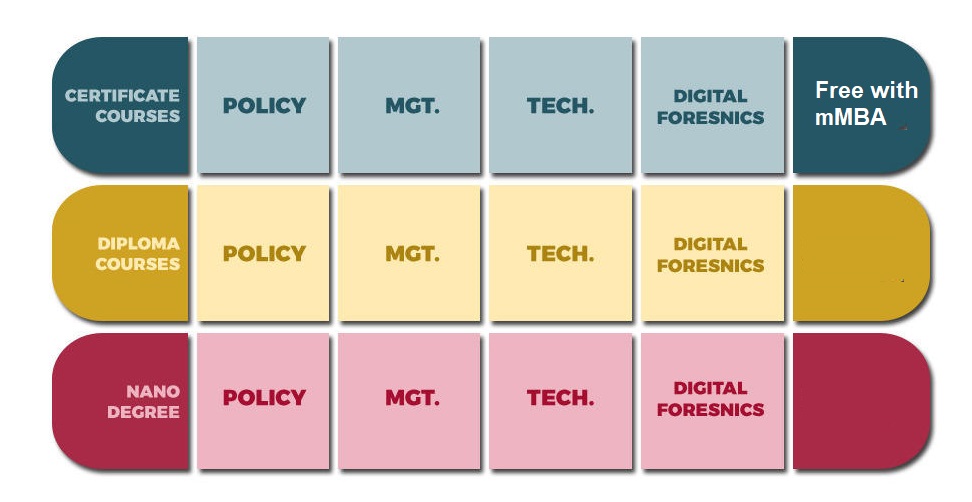
We are pleased to announce an expansion of Tekedia Institute’s bonus offerings. Effective immediately, when you register for any of the following programs – Tekedia Mini-MBA, Tekedia AI Lab, or Tekedia AI in Business Masterclass – you will receive complimentary access to a Certificate module at First Atlantic Cybersecurity Institute (Facyber).

There are four tracks in Facyber for you to select from, and each module takes 12 weeks. All programs are self-paced with a brilliant portal designed for geeks.  The course syllabus and Table of Content are provided on Facyber.com. Here are the tracks:

  • Certificate in Cybersecurity Policy (CCYP)
  • Certificate in Cybersecurity Technology (CCYT)
  • Certificate in Cybersecurity Management (CCYM)
  • Certificate in Cybersecurity Intelligence & Digital Forensics (CCDF)

What To Do After the Qualified Program Registration

  1. Visit Facyber and create your account (use the same email used for your qualified program)
  2. Activate the account in your email
  3. Email team with the certificate course of interest, and confirm that you have done #1 and #2 steps by writing “I have done steps #1 and #2”. Remember to let them know the track of interest.
  4. Admin will respond after setup & activation
  5. Login back to Facyber, you will see the course.

How to unlock AI’s full potential – Uber’s CEO, Dara Khosrowshahi

0

When Uber chief executive Dara Khosrowshahi spoke about artificial intelligence at the World Economic Forum in Davos, his message cut against the celebratory tone that often dominates conversations about corporate AI adoption. The real divide, he argued, is no longer between companies that use AI and those that do not, but between those willing to fundamentally rewire how they operate and those content to stage what he described as a “pretend transformation.”

Many companies, he said, have learned how to talk fluently about AI without allowing it to meaningfully reshape their businesses. Tools that summarize documents, generate presentations, or draft emails may save time, but they do not alter decision-making, incentives, or outcomes in a way that creates lasting advantage. These uses are visible and easy to deploy, which makes them attractive to executives eager to signal progress, yet they largely leave existing structures intact.

What differentiates serious adopters, in his view, is whether AI is embedded into the organization’s core processes rather than bolted on at the edges. That shift requires companies to confront an uncomfortable reality: most large organizations are not just collections of people and products, but dense webs of rules, policies, and exceptions built up over years. AI, Khosrowshahi suggested, exposes how brittle and outdated many of those frameworks have become.

Uber’s own journey with AI-powered customer service illustrates this tension. Early efforts focused on training AI systems to follow the same policy manuals used by human agents. While this approach delivered modest efficiency gains, it also reproduced the limitations of the old system. The breakthrough came only when Uber’s engineers scrapped the inherited rulebook and redesigned the system from first principles.

Instead of encoding thousands of if-then rules, developers defined a small set of underlying objectives. One of the most important, Khosrowshahi said, was ensuring that customers felt satisfied at the end of an interaction. From there, the AI was allowed to reason through how best to achieve that goal, rather than mechanically enforcing policies designed for a different era. Letting the system optimize for outcomes rather than compliance, he argued, proved far more powerful.

This approach has broader implications for how companies think about control and trust. Traditional corporate systems rely on rigid rules to manage risk and ensure consistency. AI systems that reason toward goals introduce flexibility, but also require leaders to accept less predictable paths to those outcomes.

For many organizations, that trade-off is deeply unsettling, which helps explain why genuine transformation has been slower than the pace of AI investment might suggest.

Khosrowshahi framed this challenge bluntly, describing companies themselves as “a bunch of policies.” To unlock AI’s full potential, those policies must be questioned, dismantled, and in many cases rewritten entirely. That process, he acknowledged, is rarely smooth. Internal resistance, missteps, and operational failures are part of the journey.

“You have to survive through a bunch of car crashes internally,” he said, capturing the trial-and-error reality behind glossy AI announcements.

Uber’s internal tooling reflects how deeply the company is pushing into this transition. Developers are using AI-assisted coding and reasoning tools such as Anysphere’s Cursor and Anthropic’s Claude, integrating them directly into software development workflows. This signals a move beyond experimentation toward treating AI as infrastructure rather than novelty.

Khosrowshahi’s remarks come amid rising corporate spending on AI, driven by expectations of productivity gains and competitive pressure. A recent RBC Capital poll found that 90% of IT professionals expect their organizations to increase AI spending this year. Yet alongside that surge is a growing unease that AI may not be delivering the transformative gains many executives promised shareholders and employees.

Concerns about skill erosion, over-automation, and the hollowing out of institutional knowledge are becoming harder to dismiss. Khosrowshahi did not deny these risks, but his comments implied that shallow adoption may be the greater danger. Companies that deploy AI superficially may bear the cultural disruption of change without reaping strategic rewards, leaving workers disillusioned and systems no more effective than before.

His argument ultimately reframes the AI debate away from tools and toward leadership choices. The question is not whether a company has an AI strategy, but whether it is prepared to rethink how decisions are made, how success is defined, and how much legacy structure it is willing to abandon. In that sense, separating the pretenders from the real deal in AI adoption is less about technology sophistication and more about organizational courage.

Khosrowshahi indicates that AI becomes a catalyst for redesigning how the business functions at its core for firms willing to do the hard work. For those that are not, it risks becoming another layer of automation draped over systems that were never built to learn, adapt, or reason in the first place.

Setapp Mobile Shuts Down, Raising Hard Questions About the Viability of Apple’s DMA-Era App Economy

0

One of the most visible attempts to build an alternative iOS app marketplace under the European Union’s Digital Markets Act is coming to an end, underscoring how difficult it remains for developers to operate outside Apple’s App Store, even after regulatory intervention.

Ukrainian software firm MacPaw is shutting down Setapp Mobile in a decision seen as one of the clearest stress tests yet of the European Union’s attempt to prise open Apple’s tightly controlled iOS ecosystem. While the Digital Markets Act (DMA) was designed to enable alternative app distribution and weaken Apple’s gatekeeper power, Setapp’s exit suggests that regulatory access alone may not translate into a commercially sustainable market.

Setapp Mobile, which launched in September 2024, was among the most ambitious alternative app stores to emerge under the DMA. Unlike single-publisher stores or niche offerings, it attempted to recreate its successful desktop subscription model on iOS, bundling dozens of third-party apps into a single €9.99 monthly subscription for EU users. It promised predictable revenue and discovery outside Apple’s App Store for developers, while for users, it offered simplicity and cost savings.

That model will now end on February 16, 2026, when all mobile apps are removed from the platform. MacPaw says its desktop subscription service is unaffected, underlining that the problem lies squarely within Apple’s mobile ecosystem rather than with Setapp’s broader business.

At the core of Setapp’s decision are Apple’s revised EU business terms, introduced in response to the DMA. While Apple technically complied with the law by allowing alternative app stores and sideloading, it simultaneously introduced a complex and shifting fee structure that many developers argue undermines the spirit of the regulation.

The most controversial element is the Core Technology Fee, which charges €0.50 for every first annual install above one million within a 12-month period. Apple argues the fee is necessary to recover investments in iOS infrastructure and security. Developers counter that it effectively penalizes success and makes scaling unpredictable.

For a subscription-based marketplace like Setapp, that unpredictability is especially acute. Subscription services rely on steady user growth to spread fixed costs and improve margins. Under Apple’s framework, rapid growth risks triggering fees that are difficult to forecast and hard to pass on to users without eroding the value proposition. That dynamic turns growth from an advantage into a financial risk.

MacPaw’s public explanation points directly to this problem. The company said “still-evolving and complex business terms” made Setapp Mobile incompatible with its current business model, adding that the commercial conditions continued to change. The language reflects a broader frustration across the developer community: rules that are revised frequently make it difficult to plan pricing, investment, or long-term product strategy.

The shutdown also exposes a wider structural issue with Apple’s DMA compliance. While alternative app stores are now permitted, they must still operate within Apple’s technical, contractual, and financial boundaries. Apple continues to control key elements of the platform, including iOS security architecture, user permissions, and core system APIs. That control limits how far alternative marketplaces can differentiate themselves from the App Store experience or reduce their reliance on Apple.

As a result, only certain types of players appear able to survive. Epic Games’ iOS store, for example, is backed by a company willing to absorb losses and legal costs as part of a broader strategic fight with Apple. AltStore, an open-source project, operates at a much smaller scale with different expectations around profitability. Setapp, by contrast, was attempting to build a mid-scale, commercially sustainable business. Its failure highlights how narrow that middle ground may be.

There are also geopolitical and industry context layers to Setapp’s exit. MacPaw, based in Ukraine, has continued operating through years of war-related disruption while expanding internationally. Setapp Mobile was meant to be a growth engine in one of the world’s most tightly regulated tech markets. Its closure underscores how regulatory complexity, rather than market demand, can become the decisive constraint on innovation.

The shutdown may raise uncomfortable questions for EU regulators. The DMA’s goal was not merely to allow alternatives in theory, but to foster genuine competition. If alternative app stores can exist only at the margins or with exceptional financial backing, regulators may face pressure to reassess whether Apple’s fee structures and contractual terms are consistent with the law’s intent.

Apple, for its part, maintains that it has complied fully with the DMA and that its fees are justified. The company has argued that operating system development, security updates, and user protections require substantial ongoing investment. But Setapp’s experience strengthens the argument that compliance focused on formal checklists, rather than economic outcomes, may fall short.

However, the DMA has opened doors for developers, but walking through them carries new risks and costs. The failure of one of the most polished and consumer-friendly alternative stores suggests that many developers will remain cautious, sticking with Apple’s App Store not because it is ideal, but because it remains the most predictable option.

In that sense, Setapp Mobile’s shutdown is less about a single product and more about the unresolved tension at the heart of Europe’s tech regulation push. Access has improved. Choice exists on paper. Yet the economics of the iOS ecosystem still appear heavily shaped by Apple’s priorities.

Unless that balance shifts, Setapp’s exit may come to be seen not as an isolated retreat, but as an early signal that meaningful competition on iOS remains far harder to achieve than the DMA’s architects anticipated.

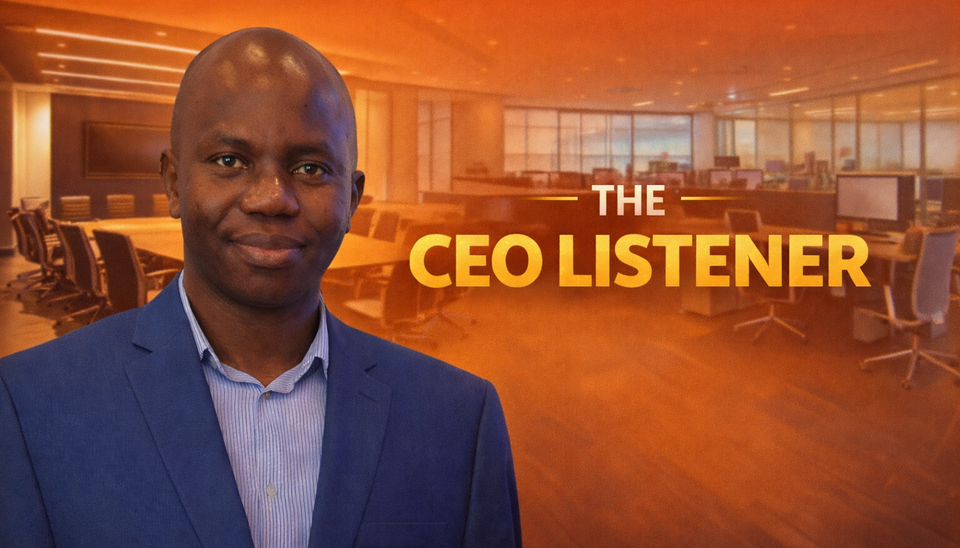
The CEO Listener: Join Tekedia CEO and Director Program

0

The Tekedia CEO & Director Program is crafted for leaders who shape industries: CEOs, board members, directors, and C-suite executives (CFOs, CMOs, CTOs, CIOs, etc.). It equips them with the frameworks and mastery required to build category-leading companies, drive innovation, accelerate growth, and architect modern enterprises. The program blends pre-recorded sessions with personalized, high-touch live engagements.

Enrollment is flexible: you can join and begin immediately. In other words, there is no fixed start date. And your learning pathway is customized entirely around your schedule and leadership priorities.

In 2025, I listened to and advised more than 120 CEOs, board directors, and senior executives. They confided in me, and together, we mapped pathways to growth, innovation, and measurable results.

Register, and we will bring the school to you, personally, privately, and purposefully.

Africa’s Unicorn Momentum: Why the Engine Stalled and How We Reignite It

1

In the last few years, Africa dazzled global capital with flashes of brilliance with young founders building billion-dollar companies (also called unicorns), cities buzzing with innovation, and the continent showing glimpses of its latent greatness. But in 2025, that momentum slowed. The unicorn engine, once roaring, began to sputter. And the message from the market was unmistakable: Africa is still struggling to consistently breed and scale unicorns into durable, global companies.

With two unicorns Moniepoint and Tyme minted in the final quarter, optimism surged with predictions that the continent had entered a new era of rapid scale and significant investors funding.

It was the first time since early 2023 that more than one unicorn had been minted in a single quarter, raising hopes that the momentum would continue into the new year. Analysts viewed them as symbols of resilience and renewed confidence in the African tech ecosystem, amid a challenging funding winter.

Across the continent, venture funding experienced what I call a bottom-heavy recovery. Investors kept writing seed cheques, but growth capital, the oxygen required for scale, evaporated. Late-stage funding plunged to its lowest point since 2020. Without scale capital, even the finest innovations struggle to break orbit. You cannot build dragons when the fuel tank is filled with droplets.

But there is a deeper matter here. Eight out of Africa’s nine unicorns sit in fintech, a brilliant sector, but also a reflection of structural confinement. Limited patient capital, fragmented regulations, small domestic markets, and weak exit corridors have kept our startups from expanding into the global theaters where valuation, defensibility, and IP-scale moats are forged.

Africa is blessed with innovators but constrained by the scaffolding required to turn innovation into enduring enterprises. We have entrepreneurs who can build amazing products, but the pathways to compound those products at scale are narrow. In Tekedia, we have noted repeatedly: a great idea without a scale pathway is like a seed trapped in a bottle, it cannot grow into a tree.

Some say, “We do not need unicorns.” I disagree. Not because a unicorn is a trophy, but because a unicorn is a marker of an ecosystem capable of supporting world-class enterprises. If Africa must rise, it must learn how to produce giants, not just mere startups.

The solution is not to shrink ambition; it is to fix the pipes of capital.

A major lever is our pension funds. If we reform the pension ordinances, responsibly, to allow a defined, prudent portion of pension assets to participate in private capital, we will unlock a catalytic force. No foreign investor can out-muscle Africa’s pension funds if those funds are allowed to dream beyond treasury bills. Israel did it; Singapore mastered it; America institutionalized it. Africa can do the same.

Good People, the capital is already here. In Nigeria alone, by November 2025, about N4.91 trillion, over 93% of all physical cash, sat outside the banking system. That is capital sleeping in lockers, bags, pockets, and homes. If anyone can organize that idle money into productive capital, Nigeria and indeed African SMEs and startups would soar, and the unicorn drought would end. Indeed, to breed unicorns, the challenge is not the absence of money but the translation of turning money into capital, to fuel ideas into industries, and startups into scale-ups.