DD
MM
YYYY

PAGES

DD
MM
YYYY

spot_img

PAGES

Home Blog Page 915

Jack Dorsey Launches Bitchat A Decentralized Offline Messaging App

0

Jack Dorsey, co-founder of Twitter, recently launched Bitchat, a decentralized, encrypted messaging app that operates without internet connectivity using Bluetooth mesh networks. Unlike traditional messaging apps, Bitchat requires no servers, accounts, phone numbers, or permanent identifiers, ensuring enhanced privacy through end-to-end encryption and ephemeral messages that hop between nearby devices.

Described as a “weekend project,” the app is designed to be resilient to network outages and censorship, allowing offline communication within physical proximity. It’s currently in beta, with a 10,000-user limit reached on Apple’s TestFlight, and a broader rollout is pending review. The app follows in the footsteps of similar offline communication tools like FireChat and Bridgefy, which gained traction during protests for secure, internet-free messaging. Posts on X highlight enthusiasm for its potential in privacy-focused, offline communication, with some speculating about future applications like offline Bitcoin transactions.

Bitchat’s end-to-end encryption, lack of user accounts, and serverless design ensure privacy and protect against surveillance or censorship, making it valuable in scenarios like protests, authoritarian regimes, or network outages. For communities in regions with restricted internet access due to government censorship or poor infrastructure, Bitchat provides a way to communicate securely without relying on costly or unavailable internet services. This could empower marginalized groups, such as activists or rural populations, to stay connected.

By using Bluetooth Low Energy (BLE) mesh networks, Bitchat enables communication in areas without internet, such as remote regions, disaster zones, or during blackouts. Its ability to relay messages across nearby devices extends its range, making it a lifeline in emergencies. Offline apps can partially bridge the access divide by providing communication tools to those in underserved areas where broadband infrastructure is lacking, particularly in rural or developing regions where 45.2% of households globally lack internet access. This reduces dependency on expensive internet subscriptions or infrastructure.

Bitchat requires no SIM cards, internet plans, or centralized servers, reducing financial barriers to communication. Devices only need Bluetooth capability, which is standard in most modern smartphones. Affordability is a major barrier to ICT access, especially for low-income populations. Bitchat’s free, offline model could enable communication for those who cannot afford data plans, potentially narrowing the economic aspect of the digital divide. Bitchat’s reliance on physical proximity for message relay encourages hyper-local networks, useful for community organizing, events, or grassroots movements.

In communities with limited internet but high smartphone penetration, such as urban slums or rural areas in developing countries, offline apps can leverage existing devices to create local communication networks, enhancing social inclusion without requiring external connectivity. Using apps like Bitchat could introduce users to digital tools in a simplified, low-stakes environment, encouraging familiarity with technology. Digital literacy is a key component of the digital divide, as access alone is insufficient without skills to use technology effectively. Offline apps, by being intuitive and requiring minimal setup (no accounts or internet), could serve as an entry point for digitally illiterate populations to engage with technology.

Bitchat requires smartphones with Bluetooth, which, while widespread, are still unaffordable for some populations, particularly in least developed countries (LDCs) or among low-income groups. This exacerbates the access divide, as those without devices are excluded from using the app, reinforcing inequalities between device owners and non-owners. Globally, 2.6 billion people remain offline, often due to the cost of devices or lack of infrastructure.

Bitchat’s effectiveness depends on a critical mass of users within Bluetooth range (up to 30 meters, extendable via relays). In sparsely populated areas or among communities with low adoption, the network may fail, limiting its utility. Rural or isolated communities, already disproportionately affected by the digital divide due to limited infrastructure, may struggle to maintain a functional mesh network, reducing the app’s ability to bridge connectivity gaps in these areas.

While Bitchat is designed to be simple, users still need basic digital literacy to install, navigate, and troubleshoot the app. Those unfamiliar with smartphones or apps may find it inaccessible. The digital divide includes disparities in digital skills, which are lower among older, less-educated, or low-income populations. Without training or support, these groups may be unable to use offline apps effectively, limiting their impact on inclusion. Bitchat supports text-only messaging in its beta phase, with no file or media sharing, and its speed is constrained by Bluetooth’s low bandwidth. This may deter users accustomed to richer, internet-based platforms like WhatsApp or Signal.

Users with internet access may prefer online apps with broader features, creating a divide in user experience between connected and disconnected populations. This could reinforce perceptions that offline tools are “second-tier,” potentially discouraging adoption among those who need them most. Bitchat’s interface and documentation may not support local languages or cultural contexts, limiting its usability for non-English speakers or diverse communities. Language barriers are a significant aspect of the digital divide, as much online content is English-dominated. Without localization, offline apps risk excluding non-English-speaking populations, particularly in developing regions.

By eliminating the need for internet or SIM cards, Bitchat reduces economic and infrastructural barriers to communication, directly addressing the access divide in areas with poor connectivity. Offline communication can enhance social and economic opportunities for disconnected populations, such as enabling coordination during crises or supporting local commerce in areas without internet. Privacy-focused, decentralized tools like Bitchat align with digital human rights, giving users control over their communication and reducing reliance on centralized platforms that may exploit data.

Bitchat’s open-source nature invites developers to enhance its features, such as Wi-Fi support or media sharing, which could increase its utility and adoption. Future iterations could integrate with other offline technologies, like offline internet solutions (e.g., content caching systems), to provide richer services without connectivity. Pair offline apps with programs like One Laptop Per Child or subsidized smartphone schemes to ensure device ownership among low-income populations. Develop community-based training to teach users how to install and use apps like Bitchat, targeting older adults, non-English speakers, and low-income groups. Adapt Bitchat’s interface and documentation to local languages and cultural contexts to increase accessibility in diverse regions.

Offline communication apps like Bitchat offer transformative potential to enhance privacy, enable connectivity in disconnected areas, and reduce economic barriers to communication. They can partially bridge the digital divide by providing low-cost, internet-free communication to underserved populations, particularly in crisis scenarios or regions with poor infrastructure. However, their reliance on smartphones, user density, and digital literacy risks excluding the most marginalized, potentially deepening divides in access and skills. To fully realize their benefits, offline apps must be integrated into broader digital inclusion strategies that address device ownership, training, and localization.

BYD to Begin Assembling EVs in Brazil, Deepening Global Expansion as Tesla Struggles

0

China’s electric vehicle giant BYD is set to begin assembling vehicles at its new factory in Brazil as early as this month, marking its boldest overseas expansion move yet.

The push into Brazil, BYD’s largest foreign market, comes amid a global acceleration of its footprint—at a time when rival Tesla is grappling with declining deliveries and growing investor fatigue, partly fueled by CEO Elon Musk’s deepening political entanglements.

BYD’s senior vice president in Brazil, Alexandre Baldy, told reporters that the plant in Camaçari, Bahia state—acquired from Ford in 2023—will begin assembling 50,000 vehicles this year using imported “Complete Knock Down” (CKD) kits. While full production is scheduled for July 2026, Baldy confirmed the company has already completed this year’s vehicle imports ahead of Brazil’s new EV import tariffs, which kicked in on July 1.

“We should inaugurate in the coming days,” Baldy said. “We’ve already completed this year’s imports, taking advantage of the period before the import tax increase.” He added that BYD is also negotiating reduced tax rates on locally assembled vehicles.

The move positions BYD to significantly reduce its dependence on imports and better compete under Brazil’s new protectionist measures aimed at strengthening domestic manufacturing.

A Strategic Push Beyond China

BYD’s Brazil assembly plant is being hailed as its most ambitious global investment to date, capping a string of recent expansions that are rapidly turning the Shenzhen-based firm into the world’s top EV powerhouse.

In 2023, BYD overtook Tesla in global EV deliveries, shipping 3.02 million electric vehicles compared to Tesla’s 1.81 million, according to company filings. BYD has since broadened its international footprint with factories in Thailand and plans in Hungary, where it will build its first passenger EV plant in Europe. In Uzbekistan, the company announced plans to build electric buses and hybrids. The company also entered Japan and India in 2022, where it’s been aggressively rolling out its popular Atto 3 SUV.

The Brazil venture marks its first car assembly facility in the Americas, and BYD is positioning the move as a springboard into Latin America’s growing EV market. Once fully operational, the Camaçari complex is expected to create up to 20,000 direct and indirect jobs, adding political and economic weight to its presence in the region.

Labor and Regulatory Hurdles

However, the move has come with some challenges. In December 2024, local labor inspectors accused Chinese contractors building the Bahia plant of subjecting workers to slavery-like conditions. Brazilian prosecutors filed a lawsuit in May 2025, citing allegations of human trafficking, following failed settlement talks.

Baldy said BYD has “always sought to respect Brazilian law and human dignity in all operations” and is working to reach a resolution, but offered no explanation for why negotiations with labor authorities broke down.

In the meantime, BYD took advantage of Brazil’s pre-tariff window, flooding the market with over 22,000 finished vehicles from China in the first five months of the year. The surge drew backlash from local automakers who accused BYD of delaying its production ramp-up while benefiting from a temporary trade advantage.

Tesla on the Back Foot

While BYD’s dominance grows, Tesla is showing signs of stress. The company recently reported a 14% year-on-year drop in vehicle deliveries for Q2 2025, missing Wall Street expectations and signaling deepening concerns about slowing demand, rising competition—especially in China—and a brand that’s losing its shine in key international markets.

Much of the concern among investors is tied to Elon Musk’s polarizing political activities. His recent announcement of a new political party, the “America Party”, has triggered fresh unease on Wall Street, contributing to a $68 billion drop in Tesla’s market capitalization in a single day. Analysts warn that Musk’s political activism, especially his alignment with far-right U.S. politics, is alienating large swaths of Tesla’s traditional customer base—notably in Europe, where environmental consciousness and brand image are crucial.

“Very simply, Musk diving deeper into politics and now trying to take on the Beltway establishment is exactly the opposite direction that Tesla investors/shareholders want him to take during this crucial period for the Tesla story,” said Dan Ives, global head of tech research at Wedbush Securities.

In contrast, BYD has remained largely apolitical, focusing instead on product development, price competitiveness, and strategic global alliances. Its dual strategy of selling both full EVs and plug-in hybrids has also helped it weather markets where charging infrastructure remains limited.

BYD’s aggressive expansion—underpinned by price undercutting, vertical integration, and government support—has become a case study in how to beat Western automakers at their own game. With the Brazil assembly plant, BYD is not just entering a new geography—it’s sending a message: the Chinese EV leader is no longer playing catch-up. It’s setting the pace.

Meanwhile, with Tesla stumbling and competitors like Volkswagen and GM still recalibrating their EV roadmaps, BYD’s calculated bets abroad—from São Paulo to Budapest to Bangkok—could firmly entrench it as the dominant global force in electric mobility.

CBN Warns of Fresh Inflation Threat as Input Costs Surge Across Sectors

0

The Central Bank of Nigeria (CBN) has raised the alarm that sustained increases in production costs across key sectors could soon drive a fresh wave of consumer inflation.

This warning is contained in the apex bank’s June 2025 Purchasing Managers’ Index (PMI) report, which provides critical insights into business conditions across the country.

The report reveals a widening gap between input prices and output prices, particularly within the Industry, Services, and Agriculture sectors. The CBN noted that firms are still holding back from fully passing on rising costs to consumers—an approach it says is becoming increasingly unsustainable.

“The increase in the gap between higher input costs and output price tends to put pressure on business profit margins. Cost absorption by firms is likely to be unsustainable in the long term and may foreshadow future consumer price inflation,” the CBN stated.

Agriculture is Most Exposed to Cost Pressures

According to the report, the Agriculture sector recorded the largest gap between input and output prices in June—9.8 index points—suggesting that agribusinesses are absorbing significantly more cost pressure than they can pass on. This is concerning in a country where food accounts for the bulk of household expenditure and has consistently driven headline inflation.

By comparison, the Services sector recorded a gap of 4.4 index points, the lowest among the three major segments, indicating relatively milder pressure. The Industry sector also reported cost imbalances, though not as steep as in agriculture.

The implication is weighty that unless these trends reverse, businesses—particularly those in agriculture—will be left with no option but to raise prices, which could exacerbate Nigeria’s fragile inflation environment.

Growth Persists, but Risks Lurk Beneath

Despite cost concerns, the report showed a continued expansion in economic activity, with the composite PMI rising to 52.3 index points in June 2025. This marks the sixth consecutive month of overall growth, suggesting that firms are still experiencing an uptick in output and demand.

Across the sectors:

  • Industry recorded a PMI of 51.4 index points, driven largely by rising production levels. Out of the 17 industrial subsectors surveyed, 9 showed expansion.
  • Services followed closely with a PMI of 51.3, backed by increased business engagements across 11 of its 14 subsectors.
  • Agriculture, however, led the pack with a robust PMI of 55.2, also notching its eleventh straight month of expansion. All five agricultural subsectors surveyed recorded growth, largely due to intensified farming activity during the planting season.
  • In total, 25 out of 36 subsectors recorded expansion during the month, further indicating that economic momentum is widespread.

Mounting Inflation Risks Amid Fragile Recovery

The CBN’s concern comes at a time when the government and monetary authorities have been grappling with persistent inflation, high borrowing costs, and currency volatility. Although inflation slowed marginally in recent months, the apex bank warns that a new round of price increases could be imminent if firms begin to offload accumulated cost pressures onto consumers.

With agriculture under the most strain—and food inflation already one of Nigeria’s most stubborn economic problems—any upward price adjustments in the sector could ripple across the economy.

Analysts say the warning from the CBN underscores the delicate balance between sustaining economic recovery and managing inflation, especially as the central bank continues to tighten monetary policy to tame price growth. However, supply-side challenges such as high logistics costs, forex instability, and insecurity in farming regions continue to erode production gains.

The June PMI report may thus signal a critical inflection point, where businesses must choose between eroding their margins or risking consumer backlash by raising prices—each scenario with far-reaching implications for Nigeria’s economic outlook.

Bitcoin Adoption Is Accelerating Amongst Institutional Investors And Corporations

0

Bitcoin’s adoption by institutions and nations is accelerating, marking a shift from speculative asset to strategic reserve. BlackRock and Fidelity are treating Bitcoin as a high-beta asset, sensitive to macroeconomic cycles. BlackRock’s IBIT Bitcoin ETF surpassed its S&P 500 fund in revenue, with Bitcoin hitting $109,000 in July 2025. Companies like MicroStrategy (holding 592,345 BTC worth over $64 billion) and others (60+ public firms) are integrating Bitcoin into treasury strategies, up 54% with 8,400 BTC acquired recently.

Spot Bitcoin ETFs, approved in the U.S. in 2024, have driven institutional inflows, with Bitwise predicting $427 billion in holdings by 2026. Regulatory clarity, like the repeal of SAB 121, has enabled banks like JPMorgan to offer crypto services. Institutional adoption is reducing volatility and boosting Bitcoin’s dominance (65% to 70% expected in July 2025), with forecasts of $135,000 by Q3 and $200,000 by year-end.

The U.S. and others are exploring Bitcoin as a reserve asset alongside gold for its scarcity and inflation hedge. States like Texas are pushing for Strategic Bitcoin Reserves (SBR). El Salvador, holding $600M in BTC, and debt-free Bhutan continue Bitcoin initiatives despite IMF pressure. Other nations like the Central African Republic and Pakistan face IMF resistance due to loan dependencies.

In 2023, institutional crypto adoption increased by 35% year-over-year, with over 88% of institutional investors finding crypto appealing, according to Fidelity Digital Assets. Publicly listed companies have boosted their Bitcoin holdings by 16% in the first quarter of 2025, with institutions now controlling 3.2% of the total Bitcoin supply, valued at approximately $57 billion. Spot Bitcoin ETFs have surpassed one million BTC under management, with institutional inflows soaring to $25.8 billion in 2024, up from $5.8 billion in 2023.

A survey by Coinbase and EY Parthenon predicts that 86% of institutional investors will either already be invested in cryptocurrencies or have plans to invest in 2025. Governments hold over 463,000 BTC, with the U.S. (200,000 BTC) and China (190,000 BTC) leading. Sovereign adoption is seen as a geopolitical hedge, potentially pushing Bitcoin to $200,000. Countries like Nigeria, Vietnam, and India drive 75% of global crypto adoption, using Bitcoin for remittances and financial inclusion, complementing institutional moves in the West.

The IMF has halted Bitcoin adoption in loan-dependent nations, citing risks to monetary stability and control. This limits financial autonomy for countries like Pakistan and Argentina. While some see it as a catalyst for adoption, others note risks like security breaches (e.g., Coinbase’s $180–$400M loss in May 2025). Analysts like Peter Brandt warn of potential crashes, though institutional backing may mitigate such risks compared to past cycles. Bitcoin’s 1.21 billion transactions reflect growing trust and real-world use, from retail to institutional transfers.

The “Saylor Cycle” suggests institutional and sovereign adoption could drive a 100x rally, evolving Bitcoin into a global strategic asset akin to gold or U.S. Treasurys. Grassroots adoption in high-growth markets complements top-down institutional moves, creating a dual momentum. Bitcoin is no longer a fringe asset. Institutions like BlackRock and corporations like MicroStrategy, alongside nations like El Salvador and U.S. states, are cementing its role as a store of value and geopolitical hedge.

However, IMF resistance and regulatory uncertainties pose hurdles, particularly for loan-dependent nations. The interplay of institutional validation and grassroots adoption in high-growth markets is driving Bitcoin’s maturity, with price targets ranging from $125,027 to $1M by 2030.

SWL Miner launches automated cloud mining platform to help investors of mainstream crypto assets such as BTC, ETH, DOGE, XRP, etc. achieve daily income of $6,200

0

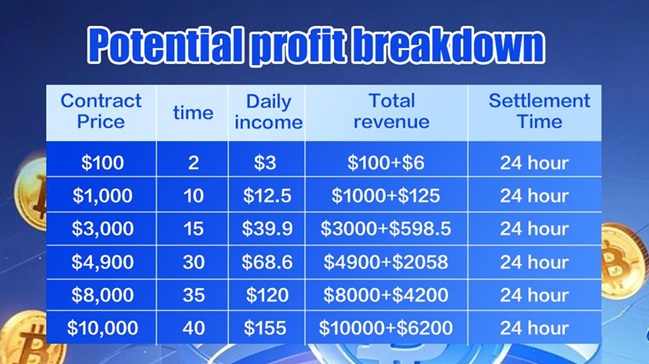
In the cryptocurrency market full of volatility and uncertainty, how to obtain “stable income” has become the core pursuit of many investors. SWL Miner breaks the traditional concept that “only speculation in cryptocurrencies can make profits” and provides users with a simpler and more stable way to increase the value of digital assets. Data shows that in the context of the current volatile market, high-level users of the SWL Miner platform can still obtain stable passive income of up to US$6,200per day, truly achieving the goal of making money by holding cryptocurrencies without fear of volatility.

As the market fluctuates violently, investors seek “shock-resistant” income models

Mainstream currencies such as Bitcoin, Ethereum, Litecoin, and Dogecoin have fallen frequently recently, causing many high-leverage traders to suffer heavy losses. However, unlike spot speculation, SWL Miner provides a “non-dependent” income model: through cloud mining contracts, users convert the currency they hold into computing power leasing income, which is settled daily, automatically credited, and transparent.

A globally trusted platform

SWL Miner was founded in 2017 with a registered capital of 1,000,000 pounds. Its headquarters is located at 19 Cave Road, Burrow, East Yorkshire, UK. It is one of the world’s leading cloud mining platforms. As an innovative leader in the cryptocurrency mining industry, SWL Miner has always adhered to the development strategy of “technology-driven + environmental protection-oriented” and is committed to creating an efficient, transparent and sustainable digital asset mining ecosystem.

With powerful cloud computing capabilities as the core, relying on self-built data centers, professional mining equipment, and intelligent algorithm scheduling systems, it provides global users with safe, low-threshold, and stable-income crypto asset mining services.

SWL Miner core advantages:

  1. Intelligent computing power scheduling: Maximize computing efficiency through AI algorithms to achieve the best balance between cost and output
  1. Green energy drive: fully adopt renewable energy for power supply, significantly reducing carbon emissions and electricity costs
  1. Security and compliance architecture: The platform is regulated by the UK, the operating mechanism is transparent, and the contract mechanism is clear and verifiable
  1. Stable income mechanism: daily income distribution, users can view in real time and withdraw freely
  1. Global deployment: services cover 180+ countries, trusted by more than 3.6 million users

How to achieve a daily income of $6,200?

The SWL Miner platform runs on a distributed cloud computing network, and users can start earning passive income in just four steps:

  1. Register an account: Visit kloudminer.com and fill in your username and email address to complete the registration process (new users can also receive a $15 bonus after registration. If you purchase contracts worth $15 every day, you can earn $0.6!).
  1. Open a computing power contract: You can choose a contract according to your budget and get a stable income. The following is a detailed list of some of the platform’s contract income 

For more contract details, please click the official link:https://kloudminer.com/xml/index.html#/contract

  1. Recharge channels: Multi-currency compatibility supports BTC, XRP, ETH, LTC, USDC, BNB, USDT-TRC20, USDT-ERC20, BCH, DOGE, SOL and other stablecoins.
  1. Start mining: The system will automatically start mining immediately after purchasing the contract. During the entire mining process, you can view the income in real time and intuitively through our platform. The mining income is paid to your account every day and users can withdraw it at any time.

The platform has also launched a new affiliate program: 

In order to allow more people to enjoy the benefits of cloud mining, SWL Miner has launched a competitive promotion plan, sincerely inviting global agents, community operators, and opinion leaders in the encryption field to join the cooperation and create profits together.

Conclusion: Instead of betting on the rise and fall, it is better to earn a stable income every day 

When the market is turbulent and unpredictable, smart investors will look for “anti-volatility” ways to make profits. SWL Miner uses an efficient, transparent and stable cloud mining mechanism to bring users real daily returns that do not rely on luck. With just a mobile phone and a small amount of assets, you can start enjoying thousands of dollars in passive income every day.


To learn more about SWL Miner, visit its official website https://kloudminer.com/ to view the mining plans and start your mining journey

App Download: https://kloudminer.com/xml/index.html#/app

Company Email: info@swlminer.com