DD
MM
YYYY

PAGES

DD
MM
YYYY

spot_img

PAGES

Home Blog Page 916

World Liberty Financial Advances Proposal To Make WLFI Token Tradeable

0

World Liberty Financial, a DeFi platform linked to the Trump family, proposed making its WLFI governance token tradable. The proposal aims to transition WLFI from a non-transferable token to a tradable asset on secondary markets and peer-to-peer platforms, enabling broader community participation and price discovery. If approved via community vote, it would unlock a portion of tokens for early investors, with founders’ and advisors’ tokens subject to a longer vesting schedule to ensure long-term commitment.

The move is framed as aligning with the project’s goal of open governance and decentralization, potentially increasing liquidity and utility. However, concerns exist about regulatory scrutiny and potential token dumps by early investors, including the Trump family, who hold 22.5 billion tokens and 60% of the company’s revenue. The community appears strongly supportive, with no formal exchange listings yet announced.

Allowing WLFI tokens to be tradable on secondary markets or peer-to-peer platforms would enhance liquidity, enabling token holders to buy, sell, or trade freely. This could attract new investors, increase market participation, and potentially drive up token value through price discovery. Increased liquidity could lead to volatility, especially if early investors, including the Trump family (holding 22.5 billion tokens), sell significant portions. This could trigger a “token dump,” depressing prices and eroding trust in the project.

The proposal aligns with WLF’s stated goal of fostering open governance. Tradability could empower the community by giving token holders more control over their assets, reinforcing the decentralized ethos of DeFi. The concentration of 22.5 billion tokens (out of a total supply of 30 billion) with the founding team, including the Trump family, raises concerns about centralized control. Even with vesting schedules, the perception of insider dominance could undermine the project’s decentralization claims.

Given the Trump family’s high-profile involvement and the project’s U.S.-based operations, making WLFI tradable could attract increased regulatory attention, particularly from the SEC. If WLFI is deemed a security rather than a governance token, it could face compliance hurdles, fines, or restrictions, especially in light of past SEC actions against similar projects. Clear regulatory navigation could set a precedent for DeFi projects, potentially legitimizing WLF in the eyes of institutional investors.

For supporters, the move could symbolize financial freedom and resistance to centralized banking systems, aligning with the project’s branding as a “liberty-focused” platform. It could strengthen WLF’s appeal among crypto enthusiasts and politically aligned groups. The Trump family’s involvement ties WLFI to a polarizing political figure, potentially alienating segments of the crypto community that prioritize apolitical or neutral projects. This could limit mainstream adoption.

WLF’s structure, where 60% of revenue goes to the Trump family and affiliates, could deter investors wary of projects that disproportionately benefit insiders. Tradability might amplify scrutiny of this model, as token holders may demand more equitable revenue distribution. If managed transparently, tradability could incentivize the team to prioritize long-term growth to maintain token value, benefiting all stakeholders.

For those aligned with Donald Trump or his family, WLFI’s tradability could be seen as a bold step toward financial sovereignty and a challenge to traditional financial systems. Supporters may view it as an opportunity to invest in a project tied to a political movement, especially given the community’s reported strong support for the proposal.

Opponents may see WLFI as a politically motivated cash grab, leveraging the Trump brand to profit from crypto’s popularity. The heavy allocation of tokens and revenue to the Trump family could fuel accusations of opportunism, further polarizing perceptions of the project. Some in the crypto community, particularly those who value decentralization and transparency, may criticize WLFI for its centralized token distribution and revenue model.

The perception that the Trump family holds disproportionate control could alienate purists who favor projects with equitable governance. Others, particularly those focused on short-term gains, may embrace WLFI’s tradability as an opportunity to speculate on a high-profile project. The promise of liquidity and potential exchange listings could attract this group, regardless of governance concerns.

Those favoring stricter crypto oversight may view WLFI’s tradability as a test case for regulating DeFi projects with political ties. They may push for SEC intervention to protect investors from potential risks like token dumps or insider manipulation. Conversely, those who oppose regulatory overreach may see WLFI as a battleground for defending DeFi’s autonomy. A successful, compliant rollout of tradable WLFI tokens could bolster arguments for self-regulation in the crypto space.

The proposal’s structure, which unlocks tokens for early investors while imposing vesting schedules on founders, could create tension. Early investors may benefit from immediate liquidity, while newer investors might face volatility or diluted value if large token sales occur. Retail investors may be drawn to WLFI’s branding and accessibility, but institutional investors might hesitate due to regulatory risks and the project’s unconventional leadership. This could limit WLFI’s ability to compete with established DeFi protocols.

The proposal to make WLFI tradable is a pivotal moment for World Liberty Financial, with the potential to boost its visibility and adoption while also exposing it to significant risks. It could deepen divides between political factions, crypto purists and speculators, and regulatory stakeholders. The success of the proposal hinges on transparent execution, regulatory compliance, and managing community expectations around token distribution and revenue allocation.

LetsBonk Flips Pump.fun In 24-hour Revenue-Trading

0

LetsBonk, a Solana-based memecoin launchpad, surpassed Pump.fun in 24-hour revenue, generating $1.04 million compared to Pump.fun’s $533,412, according to DeFiLlama data. This marks a significant shift in the Solana memecoin ecosystem, where Pump.fun has historically dominated. LetsBonk also outperformed in token launches, deploying 18,093 memecoins in a single day, driven by viral tokens like SAVOUR and WUKONG.

Its success is attributed to strong community support from the BONK token, transparent revenue allocation (e.g., 50% for BONK buybacks and burns), and integration with Raydium’s LaunchLab for enhanced liquidity. However, Pump.fun still leads in 30-day revenue with $37 million versus LetsBonk’s $4.5 million, indicating the latter’s long-term sustainability is yet to be proven.

LetsBonk’s rapid rise challenges Pump.fun’s dominance, which has been the go-to platform for Solana memecoin launches since 2024. This could spur innovation, as platforms compete on fees, token deployment speed, and community incentives. For instance, LetsBonk’s 50% revenue allocation for BONK buybacks and burns contrasts with Pump.fun’s model, potentially attracting users seeking deflationary tokenomics.

LetsBonk’s success is tied to the BONK community’s support, leveraging the memecoin’s popularity to drive adoption. This suggests that community loyalty and engagement are becoming critical differentiators in the launchpad space, potentially pushing platforms to prioritize user incentives over pure transaction volume. The surge in LetsBonk’s revenue, driven by viral tokens like SAVOUR and WUKONG, underscores the speculative nature of memecoins.

While this fuels short-term gains, it raises questions about long-term stability, as Pump.fun’s $37 million in 30-day revenue dwarfs LetsBonk’s $4.5 million. Rapid spikes in activity could lead to boom-bust cycles, impacting investor confidence. LetsBonk’s integration with Raydium’s LaunchLab for instant liquidity provides a competitive edge, potentially setting a new standard for launchpads. This could pressure Pump.fun to enhance its own integrations or risk losing market share.

The rise of LetsBonk reflects the broader trend of DeFi platforms competing to capture value in high-growth ecosystems like Solana. It highlights how quickly new entrants can disrupt established players, especially in memecoin-driven markets where sentiment and hype play significant roles. LetsBonk and Pump.fun represent different approaches to memecoin launches.

LetsBonk emphasizes community rewards and deflationary mechanisms (e.g., BONK burns), while Pump.fun focuses on scalability and volume, with over 1.5 million tokens launched historically. This creates a divide in user preference: those prioritizing short-term gains and community benefits may lean toward LetsBonk, while Pump.fun retains users valuing its established infrastructure.

The BONK community’s rallying behind LetsBonk has created a tribal dynamic, with some viewing Pump.fun as a “legacy” platform. Social media posts on X show BONK supporters celebrating LetsBonk’s milestone, while Pump.fun advocates argue its consistent revenue and higher 30-day figures prove its reliability. This polarization could fragment the Solana memecoin community, as loyalties align with competing platforms.

The revenue flip highlights a divide between speculative, short-term gains and sustainable growth. LetsBonk’s $1.04 million in 24 hours reflects a hype-driven surge, but Pump.fun’s $37 million over 30 days suggests greater stability. Investors and developers may split based on risk tolerance—high-risk traders favoring LetsBonk’s momentum, and cautious users sticking with Pump.fun’s track record.

LetsBonk’s model, with lower fees (0.02 SOL vs. Pump.fun’s 0.05 SOL for token creation, based on X posts), appeals to retail users and smaller projects. However, Pump.fun’s broader adoption and infrastructure may still favor larger developers, creating a divide between grassroots and institutional memecoin creators.

LetsBonk’s revenue flip signals a dynamic shift in the Solana memecoin ecosystem, fostering competition and innovation but also exposing risks tied to speculative bubbles. The divide between platforms and their communities could deepen as each carves out distinct niches—LetsBonk with community-driven hype and Pump.fun with established scale. Long-term implications depend on whether LetsBonk can sustain its momentum and if Pump.fun adapts to the challenge.

Implications of Elon Musk’s America Party and Bitcoin Embrace

0

Elon Musk announced the formation of the America Party, a new political movement aimed at challenging the U.S. two-party system. In a response to an X user, Musk confirmed the party would embrace Bitcoin, stating, “Fiat is hopeless, so yes.” This stance aligns with his long-standing criticism of traditional fiat currency and support for cryptocurrencies, evidenced by Tesla’s $1.5 billion Bitcoin purchase in 2021 and its current holding of 11,509 BTC, alongside SpaceX’s 8,285 BTC.

The America Party’s launch follows Musk’s public feud with President Donald Trump over a $3.3–$3.4 trillion spending bill, which Musk called a “disgusting abomination” for inflating the U.S. deficit. He aims to target key House and Senate races to influence legislation, leveraging his 221.8 million X followers and wealth, though the party lacks formal structure or FEC registration as of now.

Some, like Trump, argue third parties historically disrupt without succeeding in the U.S. system, while crypto advocates like Max Keiser see Musk’s move as a bullish signal for Bitcoin, which spiked to around $109,000 after his announcement. The America Party’s formation could fragment the U.S. political landscape, particularly impacting the Republican Party, given Musk’s recent alignment with conservative voters.

His criticism of the $3.3–$3.4 trillion spending bill and feud with Trump may siphon votes from GOP candidates, potentially weakening their 2026 midterm performance. Historically, third parties like Ross Perot’s Reform Party in 1992 (19% of the vote) disrupted elections but failed to win major races due to the U.S.’s winner-takes-all system. Musk’s wealth and X platform (221.8M followers) give him unprecedented influence to amplify his message, but building a viable party infrastructure remains a challenge without FEC registration or grassroots momentum.

Musk’s endorsement of Bitcoin and dismissal of fiat currency (“Fiat is hopeless”) could accelerate crypto adoption. Bitcoin’s price surged to ~$109,000 post-announcement, reflecting market sensitivity to his influence. Tesla (11,509 BTC) and SpaceX (8,285 BTC) holdings could see valuation boosts, potentially encouraging other corporations to invest in crypto. However, his stance may pressure regulators, already wary of crypto’s volatility and tax evasion risks, to tighten policies, especially if the America Party gains traction.

A pro-Bitcoin platform could also clash with Federal Reserve interests, complicating monetary policy debates. Musk’s move deepens the U.S. cultural divide. His X posts resonate with anti-establishment sentiments, appealing to younger, tech-savvy, and libertarian-leaning voters frustrated with government spending and bureaucracy. Conversely, traditionalists and Trump loyalists, like those labeling Musk’s party a “grift,” view it as a betrayal of conservative unity, potentially alienating GOP bases.

The Bitcoin focus further polarizes, attracting crypto enthusiasts while repelling skeptics who see it as speculative or risky. Supporters, including crypto advocates like Max Keiser, see Musk as a visionary challenging a bloated system. They view Bitcoin as a hedge against fiat-driven inflation (U.S. debt ~$33 trillion) and trust Musk’s influence to drive innovation. His X platform amplifies this group’s voice, creating a digital echo chamber.

Critics, including Trump and GOP loyalists, argue Musk’s party is a vanity project that risks splitting the conservative vote, benefiting Democrats. They see his Bitcoin push as reckless, citing its volatility (e.g., 2022 crash) and regulatory hurdles. Traditional finance advocates and older voters may view his rejection of fiat as destabilizing. Some analysts suggest the America Party’s impact depends on execution.

Without a clear policy platform beyond Bitcoin and fiscal critique, it risks fading like past third-party efforts. The crypto focus may alienate moderates, while regulatory pushback could limit its economic influence. Musk’s wealth and platform give him leverage, but the U.S.’s structural barriers to third parties and polarized voter bases may limit the America Party’s success unless it rapidly builds a coherent agenda and coalition.

Tesla Loses $68bn in Value as Musk’s Political Ambitions Rattle Wall Street: “Investors Are Tired of the Chaos”

0

Tesla stock sank nearly 7% on Monday, erasing more than $68 billion in market capitalization, after CEO Elon Musk announced plans to launch a new political party in the United States.

The sudden drop reflects mounting investor anxiety over Musk’s increasingly political profile — a development analysts say is once again pulling his attention away from Tesla’s core business amid a period of declining sales and rising competition.

The billionaire entrepreneur revealed on Saturday that the new formation, dubbed the “America Party,” will aim to influence a limited number of Congressional races in 2026 — just “2 or 3 Senate seats and 8 to 10 House districts,” Musk posted on X. The goal, he said, is to hold enough sway to become a decisive voting bloc on controversial bills, claiming it would help “ensure that [laws] serve the true will of the people.”

But for investors, the move was anything but strategic.

Political Chaos Reignites Investor Frustration

Musk’s announcement set off a wave of concern among Tesla shareholders, many of whom have spent the last year urging the CEO to pull back from overt political engagement. The reaction was swift and harsh on financial markets.

“Very simply, Musk diving deeper into politics and now trying to take on the Beltway establishment is exactly the opposite direction that Tesla investors/shareholders want him to take during this crucial period for the Tesla story,” said Dan Ives, global head of tech research at Wedbush Securities.

Tesla has already endured several rough quarters. The company recently reported a 14% year-over-year decline in vehicle deliveries for the second quarter — a glaring miss that reflects softening demand in the U.S., growing competition in China, and lingering macroeconomic pressures. With Musk now pivoting back into the political arena, many investors fear Tesla could again become collateral damage in the public discourse.

Some analysts say the current storm is reminiscent of the turbulence surrounding Musk’s tenure at the Department of Government Efficiency (DOGE) — a federal initiative he joined earlier this year to streamline government spending. While his involvement was lauded by some for its reformist tone, it brought with it intense political scrutiny, partisan backlash, and headline-grabbing controversies that many blamed for Tesla’s stock struggles at the time.

“I think Elon’s biggest challenge for the next 16 months is ensuring Tesla investors that this third-party involvement will not result in the same outcome that DOGE introduced,” an analyst wrote on X.

“Violence against Tesla, polarizing takes, constant negative headlines against the CEO, brand-damage concerns, etc. It is quite obvious that a significant percentage of the retail base is tired of the constant political chaos.”

The analyst named Farzad added that there had been a “collective sigh of relief” when Musk left DOGE in May. His re-entry into political activism, therefore, is being seen as a step backward — and possibly a catalyst for more instability around Tesla.

A Divided Investor Base

Tesla’s investor community is increasingly split. On one side are long-time believers in the company’s bold vision — including Robotaxi development, Optimus humanoid bots, and next-gen batteries — who see current stock dips as buying opportunities. On the other are retail and institutional investors who’ve grown weary of the non-stop drama surrounding Musk’s media presence and political provocations.

“Tesla investors are definitely entering a volatile time — if they haven’t already,” Farzad continued. “Many who believe in Tesla’s Robotaxi & Bot ventures will view this as a buying opportunity. They will likely be buying the shares of people who have simply hit a limit to how much they can bear Elon being in the public light with politics.”

Trump Slams Musk’s Party

Musk’s announcement also revived tensions with President Donald Trump, whom Musk once advised on several issues. The two have since diverged, particularly over Trump’s controversial spending bills and cuts to electric vehicle tax credits and green energy subsidies — policy shifts Musk has openly criticized.

Trump dismissed Musk’s third-party plans as “ridiculous” over the weekend, saying the Tesla CEO had gone “completely off the rails.”

This latest public spat only reinforces the perception that Musk is no longer able to separate his political stances from his business interests — a dynamic that many investors fear could continue to damage Tesla’s brand, especially in an increasingly polarized consumer environment.

Tesla Shares Dive Again

The market reaction saw Tesla shares fall nearly 7%, and the broader tech-heavy Nasdaq also dipped, with Tesla among the top laggards. This comes just days after the S&P 500 and Nasdaq closed at all-time highs, buoyed by optimism over inflation easing and a strong earnings season ahead.

But Tesla’s political entanglements are introducing risks that many of its peers are not facing.

“This is the most hated V-shaped rally,” said Tom Lee, head of research at Fundstrat, referring to how Tesla’s stock has previously rebounded from sharp drops — but always with asterisks tied to Musk’s personal moves.

As Tesla heads into its second-half earnings season, shareholders will be looking for clarity on key programs like Full Self-Driving, the next-gen Model 2, the much-delayed Cybertruck ramp-up, and Optimus. But those ambitions could be overshadowed by political crossfire if Musk’s “America Party” becomes a persistent headline.

Trump Threatens 10% Tariff on BRICS Members and Allies, Drawing Sharp Rebuke from Brazil’s Lula and Unease Across Global South

0

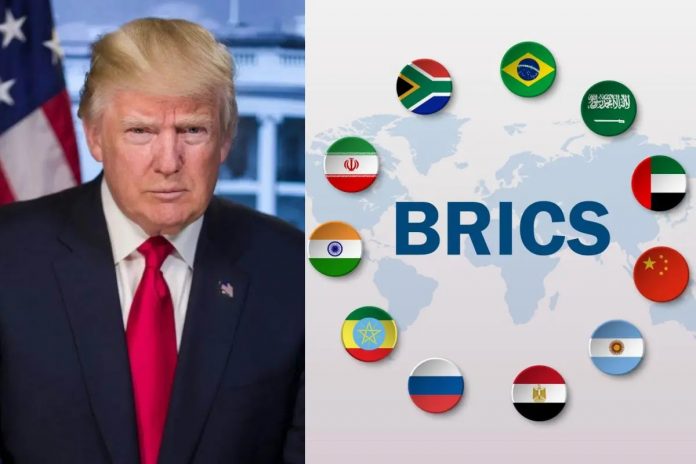
U.S. President Donald Trump ignited international uproar on Sunday after vowing to slap punitive tariffs on countries aligned with the BRICS bloc, a group of emerging economies that has increasingly positioned itself as a counterweight to U.S.-led global economic structures.

The warning, issued in a post on Trump’s Truth Social account, stated: “Any country aligning itself with the anti-American policies of BRICS will be charged an ADDITIONAL 10% tariff. There will be no exceptions to this policy.”

The threat came just hours before the conclusion of the BRICS leaders’ summit in Rio de Janeiro and sent immediate shockwaves across the diplomatic landscape, especially among members and aspiring members of the bloc.

At a post-summit press conference, Brazilian President Luiz Inácio Lula da Silva, host of this year’s BRICS gathering, issued a blistering response, accusing Trump of behaving like a global emperor and warning that such economic intimidation was out of step with the current world order.

“I don’t think it’s very responsible and serious for a president … of a country the size of the U.S. to threaten the world over the internet – it’s not right,” Lula said. “The world has changed. We don’t want an emperor.”

Lula stressed that BRICS countries are sovereign and have the same right as the United States to determine their own trade policies and partnerships. “People need to understand that respect is good – we like to give it, and we like to get it in return,” he added.

BRICS as a Symbol of the Global South’s Rise

Trump’s tariff warning comes amid the bloc’s rapid expansion and growing influence. BRICS—originally comprised of Brazil, Russia, India, China, and South Africa—has in 2025 expanded to include Egypt, Ethiopia, Indonesia, Iran, and the United Arab Emirates, making the group a more potent coalition of economies outside the Western orbit.

Despite internal differences, the bloc used this year’s summit to present a united front, releasing a joint declaration denouncing “unilateralism, protectionism, and illegal military interventions.” While the statement did not explicitly name the United States, Trump interpreted it as a veiled attack on American interests.

In recent months, BRICS has gained momentum around efforts to reduce dependence on the U.S. dollar. The bloc has been encouraging trade in local currencies—a process widely viewed as the first step toward “de-dollarization.” This initiative, which Trump previously dismissed as futile, has now drawn his ire.

Earlier this year, he declared BRICS “dead” and warned of 100% tariffs against member countries should they persist in pursuing dollar alternatives.

While BRICS, as an organization, did not issue an official response to Trump’s statement, individual members responded cautiously but firmly.

China’s Foreign Ministry reiterated that BRICS “is not a bloc for confrontation, nor does it target any country.” Spokeswoman Mao Ning added, “Trade war and tariff war have no winners, and protectionism leads nowhere.”

Russia’s presidential spokesman Dmitry Peskov acknowledged Trump’s remarks had been “noticed,” according to Russian state media, but stopped short of offering detailed commentary.

The relative silence from the broader bloc reflects what analysts describe as a strategic effort not to escalate tensions unnecessarily — particularly as many BRICS members, including India, China, and Indonesia, are still engaged in active bilateral trade negotiations with the U.S.

Despite the muted institutional response, Lula suggested Trump’s rhetoric reflected anxiety over BRICS’ rising global profile.

“Some people are getting nervous because BRICS is growing stronger and giving a voice to the Global South,” Lula said.

In a symbolic show of unity, Lula hosted a group photo on Monday that featured not only the 10 full BRICS members but also UN Secretary-General António Guterres, WHO Director-General Tedros Adhanom, and the presidents of Chile, Uruguay, Uganda, and Bolivia, all seen as sympathetic to BRICS or considering closer engagement.

Trump’s Words Stir Global South Calculations

According to Farwa Aamer of the Asia Society, Trump’s posture could complicate decisions for Global South countries weighing whether to align more closely with BRICS.

“Trump’s posture could deter some countries from joining any time soon, especially those looking to maintain stable ties with the U.S.,” Aamer said, adding that most would likely adopt a “wait-and-see approach” rather than engage in open confrontation.

Gustavo de Carvalho of the South African Institute of International Affairs agreed, noting that Trump’s threat “only becomes a real deterrent if the U.S. actually implements aggressive penalties.”

“BRICS members don’t want to be seen as anti-Western. They want to be seen as leading a non-Western alternative,” he said. “It’s about leverage. Trump’s threats give the U.S. room to negotiate better deals with countries that also engage with BRICS.”

Trump’s warning marks the latest flashpoint in the broader geopolitical contest between Washington and an emerging multipolar world. BRICS is increasingly seen not just as an economic bloc, but as a symbol of resistance to Western dominance, a role it continues to embrace — cautiously but deliberately.