DD
MM
YYYY

PAGES

DD
MM
YYYY

spot_img

PAGES

Home Blog Page 917

CBN Warns of Fresh Inflation Threat as Input Costs Surge Across Sectors

0

The Central Bank of Nigeria (CBN) has raised the alarm that sustained increases in production costs across key sectors could soon drive a fresh wave of consumer inflation.

This warning is contained in the apex bank’s June 2025 Purchasing Managers’ Index (PMI) report, which provides critical insights into business conditions across the country.

The report reveals a widening gap between input prices and output prices, particularly within the Industry, Services, and Agriculture sectors. The CBN noted that firms are still holding back from fully passing on rising costs to consumers—an approach it says is becoming increasingly unsustainable.

“The increase in the gap between higher input costs and output price tends to put pressure on business profit margins. Cost absorption by firms is likely to be unsustainable in the long term and may foreshadow future consumer price inflation,” the CBN stated.

Agriculture is Most Exposed to Cost Pressures

According to the report, the Agriculture sector recorded the largest gap between input and output prices in June—9.8 index points—suggesting that agribusinesses are absorbing significantly more cost pressure than they can pass on. This is concerning in a country where food accounts for the bulk of household expenditure and has consistently driven headline inflation.

By comparison, the Services sector recorded a gap of 4.4 index points, the lowest among the three major segments, indicating relatively milder pressure. The Industry sector also reported cost imbalances, though not as steep as in agriculture.

The implication is weighty that unless these trends reverse, businesses—particularly those in agriculture—will be left with no option but to raise prices, which could exacerbate Nigeria’s fragile inflation environment.

Growth Persists, but Risks Lurk Beneath

Despite cost concerns, the report showed a continued expansion in economic activity, with the composite PMI rising to 52.3 index points in June 2025. This marks the sixth consecutive month of overall growth, suggesting that firms are still experiencing an uptick in output and demand.

Across the sectors:

  • Industry recorded a PMI of 51.4 index points, driven largely by rising production levels. Out of the 17 industrial subsectors surveyed, 9 showed expansion.
  • Services followed closely with a PMI of 51.3, backed by increased business engagements across 11 of its 14 subsectors.
  • Agriculture, however, led the pack with a robust PMI of 55.2, also notching its eleventh straight month of expansion. All five agricultural subsectors surveyed recorded growth, largely due to intensified farming activity during the planting season.
  • In total, 25 out of 36 subsectors recorded expansion during the month, further indicating that economic momentum is widespread.

Mounting Inflation Risks Amid Fragile Recovery

The CBN’s concern comes at a time when the government and monetary authorities have been grappling with persistent inflation, high borrowing costs, and currency volatility. Although inflation slowed marginally in recent months, the apex bank warns that a new round of price increases could be imminent if firms begin to offload accumulated cost pressures onto consumers.

With agriculture under the most strain—and food inflation already one of Nigeria’s most stubborn economic problems—any upward price adjustments in the sector could ripple across the economy.

Analysts say the warning from the CBN underscores the delicate balance between sustaining economic recovery and managing inflation, especially as the central bank continues to tighten monetary policy to tame price growth. However, supply-side challenges such as high logistics costs, forex instability, and insecurity in farming regions continue to erode production gains.

The June PMI report may thus signal a critical inflection point, where businesses must choose between eroding their margins or risking consumer backlash by raising prices—each scenario with far-reaching implications for Nigeria’s economic outlook.


Bitcoin Adoption Is Accelerating Amongst Institutional Investors And Corporations

0

Bitcoin’s adoption by institutions and nations is accelerating, marking a shift from speculative asset to strategic reserve. BlackRock and Fidelity are treating Bitcoin as a high-beta asset, sensitive to macroeconomic cycles. BlackRock’s IBIT Bitcoin ETF surpassed its S&P 500 fund in revenue, with Bitcoin hitting $109,000 in July 2025. Companies like MicroStrategy (holding 592,345 BTC worth over $64 billion) and others (60+ public firms) are integrating Bitcoin into treasury strategies, up 54% with 8,400 BTC acquired recently.

Spot Bitcoin ETFs, approved in the U.S. in 2024, have driven institutional inflows, with Bitwise predicting $427 billion in holdings by 2026. Regulatory clarity, like the repeal of SAB 121, has enabled banks like JPMorgan to offer crypto services. Institutional adoption is reducing volatility and boosting Bitcoin’s dominance (65% to 70% expected in July 2025), with forecasts of $135,000 by Q3 and $200,000 by year-end.

The U.S. and others are exploring Bitcoin as a reserve asset alongside gold for its scarcity and inflation hedge. States like Texas are pushing for Strategic Bitcoin Reserves (SBR). El Salvador, holding $600M in BTC, and debt-free Bhutan continue Bitcoin initiatives despite IMF pressure. Other nations like the Central African Republic and Pakistan face IMF resistance due to loan dependencies.

In 2023, institutional crypto adoption increased by 35% year-over-year, with over 88% of institutional investors finding crypto appealing, according to Fidelity Digital Assets. Publicly listed companies have boosted their Bitcoin holdings by 16% in the first quarter of 2025, with institutions now controlling 3.2% of the total Bitcoin supply, valued at approximately $57 billion. Spot Bitcoin ETFs have surpassed one million BTC under management, with institutional inflows soaring to $25.8 billion in 2024, up from $5.8 billion in 2023.

A survey by Coinbase and EY Parthenon predicts that 86% of institutional investors will either already be invested in cryptocurrencies or have plans to invest in 2025. Governments hold over 463,000 BTC, with the U.S. (200,000 BTC) and China (190,000 BTC) leading. Sovereign adoption is seen as a geopolitical hedge, potentially pushing Bitcoin to $200,000. Countries like Nigeria, Vietnam, and India drive 75% of global crypto adoption, using Bitcoin for remittances and financial inclusion, complementing institutional moves in the West.

The IMF has halted Bitcoin adoption in loan-dependent nations, citing risks to monetary stability and control. This limits financial autonomy for countries like Pakistan and Argentina. While some see it as a catalyst for adoption, others note risks like security breaches (e.g., Coinbase’s $180–$400M loss in May 2025). Analysts like Peter Brandt warn of potential crashes, though institutional backing may mitigate such risks compared to past cycles. Bitcoin’s 1.21 billion transactions reflect growing trust and real-world use, from retail to institutional transfers.

The “Saylor Cycle” suggests institutional and sovereign adoption could drive a 100x rally, evolving Bitcoin into a global strategic asset akin to gold or U.S. Treasurys. Grassroots adoption in high-growth markets complements top-down institutional moves, creating a dual momentum. Bitcoin is no longer a fringe asset. Institutions like BlackRock and corporations like MicroStrategy, alongside nations like El Salvador and U.S. states, are cementing its role as a store of value and geopolitical hedge.

However, IMF resistance and regulatory uncertainties pose hurdles, particularly for loan-dependent nations. The interplay of institutional validation and grassroots adoption in high-growth markets is driving Bitcoin’s maturity, with price targets ranging from $125,027 to $1M by 2030.

SWL Miner launches automated cloud mining platform to help investors of mainstream crypto assets such as BTC, ETH, DOGE, XRP, etc. achieve daily income of $6,200

0

In the cryptocurrency market full of volatility and uncertainty, how to obtain “stable income” has become the core pursuit of many investors. SWL Miner breaks the traditional concept that “only speculation in cryptocurrencies can make profits” and provides users with a simpler and more stable way to increase the value of digital assets. Data shows that in the context of the current volatile market, high-level users of the SWL Miner platform can still obtain stable passive income of up to US$6,200per day, truly achieving the goal of making money by holding cryptocurrencies without fear of volatility.

As the market fluctuates violently, investors seek “shock-resistant” income models

Mainstream currencies such as Bitcoin, Ethereum, Litecoin, and Dogecoin have fallen frequently recently, causing many high-leverage traders to suffer heavy losses. However, unlike spot speculation, SWL Miner provides a “non-dependent” income model: through cloud mining contracts, users convert the currency they hold into computing power leasing income, which is settled daily, automatically credited, and transparent.

A globally trusted platform

SWL Miner was founded in 2017 with a registered capital of 1,000,000 pounds. Its headquarters is located at 19 Cave Road, Burrow, East Yorkshire, UK. It is one of the world’s leading cloud mining platforms. As an innovative leader in the cryptocurrency mining industry, SWL Miner has always adhered to the development strategy of “technology-driven + environmental protection-oriented” and is committed to creating an efficient, transparent and sustainable digital asset mining ecosystem.

With powerful cloud computing capabilities as the core, relying on self-built data centers, professional mining equipment, and intelligent algorithm scheduling systems, it provides global users with safe, low-threshold, and stable-income crypto asset mining services.

SWL Miner core advantages:

  1. Intelligent computing power scheduling: Maximize computing efficiency through AI algorithms to achieve the best balance between cost and output
  1. Green energy drive: fully adopt renewable energy for power supply, significantly reducing carbon emissions and electricity costs
  1. Security and compliance architecture: The platform is regulated by the UK, the operating mechanism is transparent, and the contract mechanism is clear and verifiable
  1. Stable income mechanism: daily income distribution, users can view in real time and withdraw freely
  1. Global deployment: services cover 180+ countries, trusted by more than 3.6 million users

How to achieve a daily income of $6,200?

The SWL Miner platform runs on a distributed cloud computing network, and users can start earning passive income in just four steps:

  1. Register an account: Visit kloudminer.com and fill in your username and email address to complete the registration process (new users can also receive a $15 bonus after registration. If you purchase contracts worth $15 every day, you can earn $0.6!).
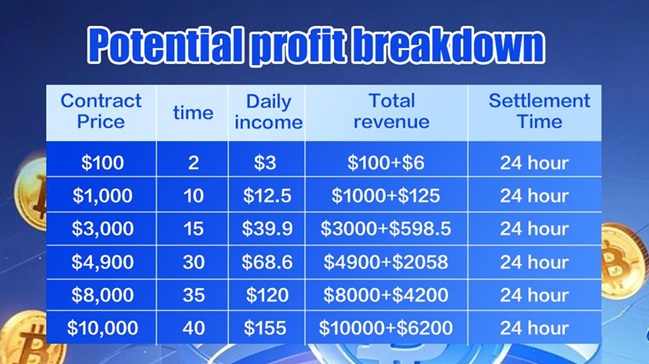
  1. Open a computing power contract: You can choose a contract according to your budget and get a stable income. The following is a detailed list of some of the platform’s contract income 

For more contract details, please click the official link:https://kloudminer.com/xml/index.html#/contract

  1. Recharge channels: Multi-currency compatibility supports BTC, XRP, ETH, LTC, USDC, BNB, USDT-TRC20, USDT-ERC20, BCH, DOGE, SOL and other stablecoins.
  1. Start mining: The system will automatically start mining immediately after purchasing the contract. During the entire mining process, you can view the income in real time and intuitively through our platform. The mining income is paid to your account every day and users can withdraw it at any time.

The platform has also launched a new affiliate program: 

In order to allow more people to enjoy the benefits of cloud mining, SWL Miner has launched a competitive promotion plan, sincerely inviting global agents, community operators, and opinion leaders in the encryption field to join the cooperation and create profits together.

Conclusion: Instead of betting on the rise and fall, it is better to earn a stable income every day 

When the market is turbulent and unpredictable, smart investors will look for “anti-volatility” ways to make profits. SWL Miner uses an efficient, transparent and stable cloud mining mechanism to bring users real daily returns that do not rely on luck. With just a mobile phone and a small amount of assets, you can start enjoying thousands of dollars in passive income every day.


To learn more about SWL Miner, visit its official website https://kloudminer.com/ to view the mining plans and start your mining journey

App Download: https://kloudminer.com/xml/index.html#/app

Company Email: info@swlminer.com

World Liberty Financial Advances Proposal To Make WLFI Token Tradeable

0

World Liberty Financial, a DeFi platform linked to the Trump family, proposed making its WLFI governance token tradable. The proposal aims to transition WLFI from a non-transferable token to a tradable asset on secondary markets and peer-to-peer platforms, enabling broader community participation and price discovery. If approved via community vote, it would unlock a portion of tokens for early investors, with founders’ and advisors’ tokens subject to a longer vesting schedule to ensure long-term commitment.

The move is framed as aligning with the project’s goal of open governance and decentralization, potentially increasing liquidity and utility. However, concerns exist about regulatory scrutiny and potential token dumps by early investors, including the Trump family, who hold 22.5 billion tokens and 60% of the company’s revenue. The community appears strongly supportive, with no formal exchange listings yet announced.

Allowing WLFI tokens to be tradable on secondary markets or peer-to-peer platforms would enhance liquidity, enabling token holders to buy, sell, or trade freely. This could attract new investors, increase market participation, and potentially drive up token value through price discovery. Increased liquidity could lead to volatility, especially if early investors, including the Trump family (holding 22.5 billion tokens), sell significant portions. This could trigger a “token dump,” depressing prices and eroding trust in the project.

The proposal aligns with WLF’s stated goal of fostering open governance. Tradability could empower the community by giving token holders more control over their assets, reinforcing the decentralized ethos of DeFi. The concentration of 22.5 billion tokens (out of a total supply of 30 billion) with the founding team, including the Trump family, raises concerns about centralized control. Even with vesting schedules, the perception of insider dominance could undermine the project’s decentralization claims.

Given the Trump family’s high-profile involvement and the project’s U.S.-based operations, making WLFI tradable could attract increased regulatory attention, particularly from the SEC. If WLFI is deemed a security rather than a governance token, it could face compliance hurdles, fines, or restrictions, especially in light of past SEC actions against similar projects. Clear regulatory navigation could set a precedent for DeFi projects, potentially legitimizing WLF in the eyes of institutional investors.

For supporters, the move could symbolize financial freedom and resistance to centralized banking systems, aligning with the project’s branding as a “liberty-focused” platform. It could strengthen WLF’s appeal among crypto enthusiasts and politically aligned groups. The Trump family’s involvement ties WLFI to a polarizing political figure, potentially alienating segments of the crypto community that prioritize apolitical or neutral projects. This could limit mainstream adoption.

WLF’s structure, where 60% of revenue goes to the Trump family and affiliates, could deter investors wary of projects that disproportionately benefit insiders. Tradability might amplify scrutiny of this model, as token holders may demand more equitable revenue distribution. If managed transparently, tradability could incentivize the team to prioritize long-term growth to maintain token value, benefiting all stakeholders.

For those aligned with Donald Trump or his family, WLFI’s tradability could be seen as a bold step toward financial sovereignty and a challenge to traditional financial systems. Supporters may view it as an opportunity to invest in a project tied to a political movement, especially given the community’s reported strong support for the proposal.

Opponents may see WLFI as a politically motivated cash grab, leveraging the Trump brand to profit from crypto’s popularity. The heavy allocation of tokens and revenue to the Trump family could fuel accusations of opportunism, further polarizing perceptions of the project. Some in the crypto community, particularly those who value decentralization and transparency, may criticize WLFI for its centralized token distribution and revenue model.

The perception that the Trump family holds disproportionate control could alienate purists who favor projects with equitable governance. Others, particularly those focused on short-term gains, may embrace WLFI’s tradability as an opportunity to speculate on a high-profile project. The promise of liquidity and potential exchange listings could attract this group, regardless of governance concerns.

Those favoring stricter crypto oversight may view WLFI’s tradability as a test case for regulating DeFi projects with political ties. They may push for SEC intervention to protect investors from potential risks like token dumps or insider manipulation. Conversely, those who oppose regulatory overreach may see WLFI as a battleground for defending DeFi’s autonomy. A successful, compliant rollout of tradable WLFI tokens could bolster arguments for self-regulation in the crypto space.

The proposal’s structure, which unlocks tokens for early investors while imposing vesting schedules on founders, could create tension. Early investors may benefit from immediate liquidity, while newer investors might face volatility or diluted value if large token sales occur. Retail investors may be drawn to WLFI’s branding and accessibility, but institutional investors might hesitate due to regulatory risks and the project’s unconventional leadership. This could limit WLFI’s ability to compete with established DeFi protocols.

The proposal to make WLFI tradable is a pivotal moment for World Liberty Financial, with the potential to boost its visibility and adoption while also exposing it to significant risks. It could deepen divides between political factions, crypto purists and speculators, and regulatory stakeholders. The success of the proposal hinges on transparent execution, regulatory compliance, and managing community expectations around token distribution and revenue allocation.

LetsBonk Flips Pump.fun In 24-hour Revenue-Trading

0

LetsBonk, a Solana-based memecoin launchpad, surpassed Pump.fun in 24-hour revenue, generating $1.04 million compared to Pump.fun’s $533,412, according to DeFiLlama data. This marks a significant shift in the Solana memecoin ecosystem, where Pump.fun has historically dominated. LetsBonk also outperformed in token launches, deploying 18,093 memecoins in a single day, driven by viral tokens like SAVOUR and WUKONG.

Its success is attributed to strong community support from the BONK token, transparent revenue allocation (e.g., 50% for BONK buybacks and burns), and integration with Raydium’s LaunchLab for enhanced liquidity. However, Pump.fun still leads in 30-day revenue with $37 million versus LetsBonk’s $4.5 million, indicating the latter’s long-term sustainability is yet to be proven.

LetsBonk’s rapid rise challenges Pump.fun’s dominance, which has been the go-to platform for Solana memecoin launches since 2024. This could spur innovation, as platforms compete on fees, token deployment speed, and community incentives. For instance, LetsBonk’s 50% revenue allocation for BONK buybacks and burns contrasts with Pump.fun’s model, potentially attracting users seeking deflationary tokenomics.

LetsBonk’s success is tied to the BONK community’s support, leveraging the memecoin’s popularity to drive adoption. This suggests that community loyalty and engagement are becoming critical differentiators in the launchpad space, potentially pushing platforms to prioritize user incentives over pure transaction volume. The surge in LetsBonk’s revenue, driven by viral tokens like SAVOUR and WUKONG, underscores the speculative nature of memecoins.

While this fuels short-term gains, it raises questions about long-term stability, as Pump.fun’s $37 million in 30-day revenue dwarfs LetsBonk’s $4.5 million. Rapid spikes in activity could lead to boom-bust cycles, impacting investor confidence. LetsBonk’s integration with Raydium’s LaunchLab for instant liquidity provides a competitive edge, potentially setting a new standard for launchpads. This could pressure Pump.fun to enhance its own integrations or risk losing market share.

The rise of LetsBonk reflects the broader trend of DeFi platforms competing to capture value in high-growth ecosystems like Solana. It highlights how quickly new entrants can disrupt established players, especially in memecoin-driven markets where sentiment and hype play significant roles. LetsBonk and Pump.fun represent different approaches to memecoin launches.

LetsBonk emphasizes community rewards and deflationary mechanisms (e.g., BONK burns), while Pump.fun focuses on scalability and volume, with over 1.5 million tokens launched historically. This creates a divide in user preference: those prioritizing short-term gains and community benefits may lean toward LetsBonk, while Pump.fun retains users valuing its established infrastructure.

The BONK community’s rallying behind LetsBonk has created a tribal dynamic, with some viewing Pump.fun as a “legacy” platform. Social media posts on X show BONK supporters celebrating LetsBonk’s milestone, while Pump.fun advocates argue its consistent revenue and higher 30-day figures prove its reliability. This polarization could fragment the Solana memecoin community, as loyalties align with competing platforms.

The revenue flip highlights a divide between speculative, short-term gains and sustainable growth. LetsBonk’s $1.04 million in 24 hours reflects a hype-driven surge, but Pump.fun’s $37 million over 30 days suggests greater stability. Investors and developers may split based on risk tolerance—high-risk traders favoring LetsBonk’s momentum, and cautious users sticking with Pump.fun’s track record.

LetsBonk’s model, with lower fees (0.02 SOL vs. Pump.fun’s 0.05 SOL for token creation, based on X posts), appeals to retail users and smaller projects. However, Pump.fun’s broader adoption and infrastructure may still favor larger developers, creating a divide between grassroots and institutional memecoin creators.

LetsBonk’s revenue flip signals a dynamic shift in the Solana memecoin ecosystem, fostering competition and innovation but also exposing risks tied to speculative bubbles. The divide between platforms and their communities could deepen as each carves out distinct niches—LetsBonk with community-driven hype and Pump.fun with established scale. Long-term implications depend on whether LetsBonk can sustain its momentum and if Pump.fun adapts to the challenge.