DD
MM
YYYY

PAGES

DD
MM
YYYY

spot_img

PAGES

Home Blog Page 917

A Look At President Trump’s 50% Tariff On Copper Imports

0

President Donald Trump announced a 50% tariff on copper imports, causing U.S. copper futures to surge by as much as 17% to a record high of $5.9535 per pound on the Comex in New York, marking the largest single-day increase since 1988. Prices later settled around $5.5495 per pound. The tariff, aimed at boosting domestic production, is expected to be implemented by late July or August 1, following a Section 232 investigation into copper imports on national security grounds. The U.S. imported about 810,000 metric tons of refined copper in 2024, nearly half its consumption, primarily from Chile.

The price spike reflects market concerns over supply chain disruptions, as the U.S. lacks sufficient domestic capacity to meet demand. Analysts warn that the tariff could raise costs for industries like electronics, construction, and electric vehicles, potentially increasing consumer prices. Global benchmark prices on the London Metal Exchange fell by up to 2.4% to $9,653 per ton, indicating reduced U.S. demand. Critics, including U.S. copper users, argue the tariff may undermine manufacturing goals by increasing input costs, while traders anticipate short-term volatility and a possible price correction due to ample U.S. inventories.

Copper is a critical input for industries like electronics, construction, automotive (especially electric vehicles), and renewable energy. The tariff-driven price surge (U.S. copper futures hit $5.9535 per pound) will raise production costs, potentially making U.S.-made goods less competitive. Higher input costs could lead to increased prices for consumer goods, such as wiring, appliances, and vehicles, contributing to inflationary pressures in the U.S. economy.

The U.S. imported 810,000 metric tons of refined copper in 2024, nearly half its consumption. With domestic production unable to meet demand, the tariff may exacerbate supply shortages, forcing companies to scramble for alternative sources or pay higher prices. While current U.S. copper inventories are ample, sustained high prices and import restrictions could deplete stocks, leading to further price volatility.

The tariff makes imported copper more expensive, leading to a drop in global benchmark prices (e.g., London Metal Exchange prices fell to $9,653 per ton). This could hurt copper-exporting countries like Chile, which supplies a significant portion of U.S. imports. The tariff may strain trade relations with key partners, particularly Chile and other copper-producing nations, potentially prompting retaliatory measures.

U.S. copper producers may benefit from higher prices and increased demand for domestic supply, aligning with the tariff’s goal of boosting local production. However, expanding domestic mining and refining capacity requires significant investment and time, limiting immediate benefits. Environmental regulations and labor costs could further constrain growth. Higher copper prices could contribute to broader inflationary pressures, complicating the Federal Reserve’s efforts to manage inflation, especially if other commodities face similar tariffs.

U.S. copper users and manufacturers have criticized the tariff, arguing it undermines Trump’s pro-manufacturing agenda by increasing costs. This could lead to political pushback from affected industries. The tariff stems from a Section 232 investigation framing copper as a national security issue. However, critics argue that copper’s commodity nature and global availability weaken this justification, potentially setting a precedent for broader trade restrictions.

The 17% single-day price surge reflects speculative trading and market uncertainty. Traders anticipate volatility as markets adjust to the tariff’s implementation (expected by late July or August 1, 2025). Ample U.S. inventories and reduced global demand could lead to a price correction, though sustained supply constraints might keep prices elevated. Copper is essential for solar panels, wind turbines, and electric vehicle batteries.

Higher prices could slow the adoption of clean energy technologies, potentially conflicting with global decarbonization goals. U.S. renewable energy projects may become costlier compared to regions with cheaper copper, such as China or Europe. While the tariff aims to bolster domestic production and reduce reliance on imports, it risks raising costs, disrupting supply chains, and fueling inflation.

How do esports players practice reaction time and reflexes

0

Esports players rely heavily on fast reaction times and sharp reflexes. The most skilled esports players who play on a wide variety of games can be wagered today if you become a member of the 1x Bet platform.

This is especially true in high-paced games, with 4 of examples being:

  • Valorant;
  • Counter-Strike;
  • League of Legends;
  • and Apex Legends.

To maintain peak performance, professional gamers adopt a variety of training methods to improve and maintain their reaction speed. Also, gamers who succeed in those and other aspects are always available at 1x Bet site, where punters can make great wagers on them.

Software and web-based options

One common method involves specialized software or web-based tools designed to test and improve reaction time. Programs like Aim Lab or KovaaK’s FPS Aim Trainer allow players to engage in drills that focus on 4 elements: hand-eye coordination, target tracking, flick shots, and visual recognition speed. Something that needs absolutely no training is to login 1xBet and start betting players who undergo rigorous preparation for facing their esports competitions.

These tools give players measurable feedback, helping them identify weaknesses and track improvement over time.

In addition to software-based training, many players engage in game-specific practice routines. If you like various games, the 1xBet platform allows you to login and try esports bets on competitions that feature lots of themes too.

For FPS players, this often includes custom aim maps where the goal is to sharpen target acquisition and muscle memory under pressure. In MOBAs like League of Legends, players work on skill-shot dodging, quick decision-making, and micromanagement drills to reduce delay in their responses.

Some non-gaming options

Outside of games, reaction time can also be improved through physical and mental exercises. Hand-eye coordination activities can enhance reflexes, with 4 examples being juggling, table tennis and speed ball training. Some players use tools like reaction balls or light-based reflex trainers (such as BlazePods) to stimulate peripheral vision and fast movement responses. Punters can grab the official app 1xBet download for free to bet on esports too.

Mental training is equally important. Meditation and breathing techniques help players stay calm under pressure, allowing for clearer thinking and faster decision-making. Since fatigue and stress can slow down reflexes, pros also follow strict routines that include 4 other elements: healthy sleep patterns, nutrition, hydration, and regular physical exercise. Now, you can download the official 1xBet app and try mobile esports bets too.


Disclaimer:

BCLB ?: 0000348

18+

T@C apply

Play responsibly

The past glory and present challenges in Pakistan boxing

0

Pakistan’s boxing history is rich with pride and passion. Boxing fans can also make a bet Pakistan with 1xBet on the best events of this sport too.

In the decades following independence, the country established itself as a force in Asian and international boxing. The 1960s and 70s were considered the golden era of Pakistani boxing. Stars like Syed Hussain Shah, who won a bronze medal at the 1988 Seoul Olympics, and Mehrullah Lassi, a Commonwealth Games gold medalist, brought national recognition to the sport. A bet with 1xBet Pakistan is also available on other great boxers from this country too.

Pakistan was regularly securing medals in the Asian Games, South Asian Games, and other international competitions. The Pakistan Boxing Federation (PBF) was active, and boxing clubs thrived in many cities, with 3 examples being:

  • Karachi;
  • Lahore;
  • and Quetta.

However, in recent years, Pakistani boxing has witnessed a steep decline. The sport now suffers from a lack of infrastructure, poor management, and limited government support. Internal rifts within the PBF have hampered progress, with infighting and administrative disputes often making headlines. Young and talented boxers frequently lack the facilities, coaching, and international exposure needed to compete on the world stage. Many gyms operate with outdated equipment and without proper medical or nutritional support for athletes.

Issues that must be addressed

Moreover, funding remains a critical issue. Most boxers come from underprivileged backgrounds and cannot afford proper training or travel for international competitions. Without sufficient sponsorship or governmental backing, they often struggle to maintain their form and morale. This has led to a brain drain, with many top talents either switching to other professions or trying to represent other countries. If you install 1xBet mobile version now you will also have a chance to bet on great boxers from all over the world too.

Despite these challenges, there are glimmers of hope. A few passionate coaches and former boxers continue to train the next generation in small clubs. The rise of professional boxing in South Asia and the emergence of global promotions have started to attract some attention to Pakistani fighters.

Overall, it can be said that Pakistani boxing can reclaim its past glory by working in 3 aspects: strategic reforms, increased investment, and better management. Those who like Pakistani boxing can install the mobile version of the 1xBet app now so they can bet on their favorite boxers too.

PiggyVest Celebrates Strong First Half of 2025 With N2.6 Trillion Paid to Users

0
Piggybank for saving has enslaved many to online lenders

PiggyVest, Nigeria’s leading savings and investment platform, celebrates the halfway mark of 2025 by highlighting its key achievements and unveiling an ambitious roadmap for the remainder of the year.

In a message shared with its user base, the company celebrated record-breaking milestones, addressed recent service hiccups, and unveiled a roadmap filled with innovative features and community-focused events.

For the first half (H1) of 2025, PiggyVest reported that over N2.6 trillion was paid back to users in withdrawals, matured savings, and interest. This staggering figure reflects the platform’s growing reliability and the increasing trust Nigerians place in it as a long-term wealth-building partner.

Other major highlights from H1 2025 include;

•N47,000 Saved Every Second

An impressive average of ?47,000 was saved every second on the platform. This real-time indicator of savings momentum demonstrates the increasing financial awareness among users and a shift toward goal-oriented financial planning.

•Nearly 7 Million Active Users

PiggyVest revealed that close to 7 million Nigerians engaged actively with the platform in H1. This growth reflects not only rising user adoption but also PiggyVest’s relevance across different age groups, income levels, and regions of the country.

Addressing Service Disruptions and Infrastructure Upgrades

Despite its successes, PiggyVest acknowledged facing technical challenges in the past few months, including intermittent app issues and delays in interest payments. These disruptions, the company explained, were linked to large-scale infrastructure upgrades aimed at future-proofing its systems to support the expanding user base.

“H1 was not without its challenges,” the company stated in its user communication. “In recent weeks, some of you may have experienced issues with the app or delays in your interest payments; we sincerely apologise for the inconvenience. This is primarily due to ongoing infrastructure improvements to accommodate our rapidly growing user base.”

PiggyVest reassured users that all issues have now been resolved and emphasized its continued commitment to delivering a reliable, secure, and user-first experience.

PiggyVest’s Bold Vision for H2 2025

Looking ahead, PiggyVest is gearing up for an eventful second half of the year, with new features, events, and investment tools that will further empower users on their financial journeys.

PiggyVest users can look forward to a suite of new offerings which include;

  • FlexDollar virtual US account numbers, allowing users to receive USD directly and hold foreign currency.
  • Safelock Dollar, a foreign currency version of the existing Safelock feature, enables users to lock away dollars for a set period.
  • PocketApp account numbers, currently in testing, will make transactions via the PocketApp smoother and more seamless.
  • Expanded Investment Options: PiggyVest is deepening its investment services through Investify, with plans to launch mutual funds and direct stock investments. This move will allow users to diversify their portfolios beyond traditional savings, giving them more control over how they build wealth.

Conclusion

PiggyVest’s H1 2025 performance showcases its pivotal role in reshaping how Nigerians save, invest, and engage with their money. With bold plans and a strong focus on user empowerment, the company is positioning itself for an even more impactful H2.

As financial technology continues to evolve in Nigeria, PiggyVest remains at the forefront driven by innovation, community engagement, and an unwavering commitment to helping millions build a financially secure future.

Aevo Launches “Aevo Degen” Decentralized Derivatives Exchange as GameSquare Holdings Receives Board Approval For $100M Ethereum Investments

0

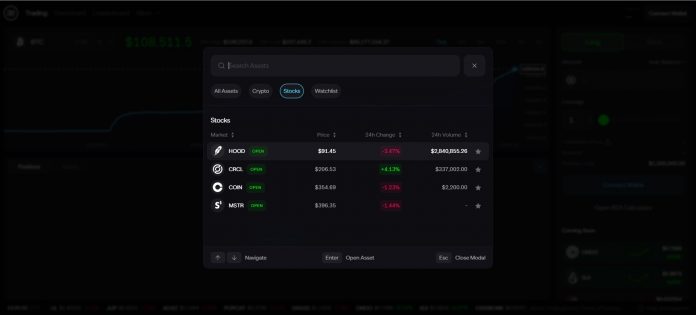
Aevo, a decentralized derivatives exchange built on a custom Ethereum Layer 2, launched a platform called Aevo Degen, offering up to 1000x leverage on tokenized stock derivatives for select equities, including Coinbase (COIN), Robinhood (HOOD), MicroStrategy (MSTR), and Circle (CRCL), with plans to add more stocks. The platform operates during U.S. stock market hours, with all positions automatically closed at the end of each trading day.

These tokenized derivatives track stock prices via oracles without representing direct ownership, allowing trading within the crypto ecosystem without a traditional brokerage. Traders can control large positions with minimal capital (e.g., $100 controls a $100,000 position), but a 0.1% adverse price move can wipe out the entire position.

Fees are only charged as a share of profits, not on unprofitable trades. Trades are executed at market price with no slippage. Early users (first 100-200) can receive a 1:1 deposit match up to $50. However, the high leverage carries significant risks, as small price swings can lead to rapid, substantial losses. Aevo emphasizes robust technical infrastructure, but users are cautioned to manage risks carefully due to the volatile nature of such trading.

The launch aligns with trends toward tokenizing traditional financial assets, though it raises concerns about regulation and risk management. The launch of Aevo’s Degen platform with 1000x leverage trading on tokenized equities has significant implications across financial, regulatory, and market dynamics. Tokenized equities on a crypto platform lower barriers to entry, allowing retail traders to engage in high-leverage trading without traditional brokerage accounts.

This could attract a new wave of crypto-native traders to equity markets. 1000x leverage magnifies price movements, potentially increasing volatility in the underlying tokenized assets, especially for volatile stocks like Coinbase or MicroStrategy. Small market moves could trigger large liquidations, impacting price stability. A 0.1% adverse price move can wipe out a trader’s position, posing extreme risks, especially for inexperienced retail traders drawn to the platform’s high-leverage allure.

Mass liquidations during market downturns could strain the platform’s infrastructure or lead to cascading effects in the broader crypto market, given the interconnectedness of tokenized assets and crypto exchanges. Tokenized equities operating outside traditional stock exchanges may fall into regulatory gray zones, especially in jurisdictions like the U.S., where the SEC closely monitors securities. Aevo’s use of oracles to track prices without direct ownership may not exempt it from securities laws, potentially attracting regulatory action.

As a decentralized platform, Aevo may face varying regulatory challenges across jurisdictions, complicating compliance and user access. The platform accelerates the trend of tokenizing real-world assets (RWAs), bridging traditional finance and DeFi. This could pave the way for broader adoption of tokenized securities but also raises questions about market integrity and investor protections.

By offering zero-fee trading and high leverage, Aevo challenges traditional brokers, potentially pressuring them to innovate or lower costs. The “Degen” branding and 1000x leverage may attract speculative traders, potentially leading to irrational market behavior or “gamification” of trading, similar to past retail-driven events (e.g., GameStop 2021). The complexity and risk of high-leverage derivatives necessitate robust user education to prevent widespread losses, which Aevo must address to maintain credibility.

The platform’s reliance on oracles for price feeds introduces risks of manipulation or technical failures, which could disrupt trading or lead to unfair liquidations. As a new platform, Aevo Degen’s ability to handle high trading volumes and maintain liquidity during volatile periods remains untested. While Aevo’s platform offers innovative access to high-leverage equity trading, it introduces substantial risks for users and potential regulatory challenges. It could reshape how retail traders engage with equities in the crypto ecosystem but requires careful risk management and regulatory clarity to avoid adverse outcomes.

GameSquare Holdings Received Board Approval For $100M Ethereum Investments

GameSquare Holdings, Inc. (Nasdaq: GAME), a media and entertainment company, has received board approval for a phased investment of up to $100 million in Ethereum (ETH) as part of a new treasury strategy. This initiative marks a significant pivot toward decentralized finance (DeFi) and blockchain-based financial management.

The company announced on July 8, 2025, that it priced an underwritten public offering of 8,421,054 shares at $0.95 each, raising approximately $8 million to kickstart this Ethereum-based treasury vehicle. The strategy is supported by a partnership with Dialectic, a crypto investment firm, utilizing its Medici platform to target on-chain yields of 8–14%, significantly higher than typical ETH staking returns of 3–4%.

The investment will be deployed in stages to maintain sufficient capital for ongoing operations, with plans to explore additional yield-generating opportunities within the Ethereum ecosystem, such as stablecoins and NFTs. Following the announcement, GameSquare’s stock surged 58.76% on July 8, 2025, closing at $1.54, with trading volume exceeding $40 million, reflecting strong investor enthusiasm.

The move aligns with a broader trend of institutional adoption of cryptocurrencies, though it carries risks due to Ethereum’s price volatility and potential regulatory challenges. The implications of GameSquare’s (Nasdaq: GAME) board approving a phased $100 million investment in Ethereum are multifaceted, affecting the company, its stakeholders, and the broader market.

By allocating up to $100 million to Ethereum, GameSquare is diversifying its treasury away from traditional assets like cash or bonds. The targeted 8–14% yield through Dialectic’s Medici platform could significantly outperform conventional treasury returns, boosting financial efficiency. Ethereum’s price volatility (e.g., 15–20% daily swings in 2025) introduces risk. A sharp decline in ETH value could impair GameSquare’s balance sheet, impacting liquidity for operational needs.

As a media and entertainment company with esports and gaming ties, investing in Ethereum aligns with blockchain trends like NFTs and Web3 gaming, potentially opening new revenue streams or partnerships. Evolving crypto regulations, especially in the U.S., could complicate compliance or impose restrictions on GameSquare’s ability to hold or liquidate ETH, particularly if Ethereum is classified as a security.

The 58.76% stock surge on July 8, 2025, reflects investor optimism about GameSquare’s crypto pivot. However, sustained gains depend on Ethereum’s performance and effective execution of the treasury strategy. Investors gain exposure to high-yield DeFi opportunities but face increased risk from crypto market fluctuations. Conservative shareholders may view this as a departure from GameSquare’s core business.

The move positions GameSquare as a forward-thinking company, potentially attracting tech-savvy investors but alienating those wary of crypto’s speculative nature. GameSquare’s investment reinforces Ethereum’s credibility as a corporate treasury asset, following the likes of MicroStrategy and Tesla with Bitcoin. This could encourage other public companies to explore crypto allocations.

Partnering with Dialectic to leverage DeFi protocols highlights the growing maturity of Ethereum’s ecosystem, promoting broader adoption of yield-generating strategies. A $100 million ETH purchase, even if phased, could contribute to bullish price momentum for Ethereum, especially in a market sensitive to institutional flows. GameSquare’s move signals deeper integration of blockchain in gaming, potentially accelerating trends like play-to-earn models, NFT-based in-game assets, or decentralized esports platforms.

Competitors in the media and gaming sectors may feel pressured to explore similar crypto strategies to remain financially competitive or relevant in Web3 spaces. The investment reflects confidence in Ethereum’s long-term value and DeFi’s stability, but it also underscores reliance on high-risk assets amid inflationary or uncertain economic conditions.

A bear market or significant ETH price drop could erode GameSquare’s treasury value. Smart contract vulnerabilities or platform failures in Dialectic’s Medici could lead to losses. If the strategy underperforms, activist investors or shareholders may push for a reversal. Interest rate hikes or stricter crypto regulations could dampen the strategy’s viability.

GameSquare’s Ethereum investment is a bold bet on blockchain’s future, with potential to enhance returns and industry positioning but accompanied by significant financial and regulatory risks. The success of this strategy will hinge on Ethereum’s market performance, DeFi execution, and GameSquare’s ability to balance innovation with operational stability.