DD
MM
YYYY

PAGES

DD
MM
YYYY

spot_img

PAGES

Home Blog Page 917

Kuda Processes N14.3 Trillion in Q1 2025, Signals Robust Growth

0

Kuda, a Nigerian digital bank that offers free transfers, cashless payment options, savings, and loans, has revealed that it processed over 300 million transactions worth N14.3 trillion in the first quarter (Q1) of 2025, spanning both its retail and business banking operations.

This disclosure was made by CEO Babs Ogundeyi during a media briefing held in Lagos on Monday, July 7, 2025. Breaking down the numbers, Babs noted that N8.5 trillion came from retail banking, while N5.8 trillion was generated from business users.

This marks Kuda’s most comprehensive operational disclosure, going beyond its usual customer growth reports. While the neobank previously announced a user base exceeding 7 million as of January 2024, this is the first time it has shared detailed financial metrics. As of January 2024, the company had notched up an impressive N55.8 trillion ($61.4 billion) in total transactions since its 2019 launch.

In addition to transaction volumes, Kuda also issued N16.4 billion in overdrafts in Q1, putting it on pace to surpass its entire 2023 overdraft issuance of $12.6 million (N19 billion) once Q2 results are available. The company further disclosed that it paid out N130 million in interest to users during the quarter.

Transfers remained the core of user activity, with business clients alone accounting for N1.5 trillion in transfers. Despite Kuda offering mostly free transfers, the platform saw a higher volume of paid transfers, suggesting that Nigerian users continue to favor transfers as their primary payment method even when fees apply.

Notably, in Q1, the Kuda relaunched its multicurrency wallet, targeting the competitive remittance market. The wallet currently supports pounds and euros for users outside Nigeria, with plans to add US and Canadian dollars within six months.

With over 300 million transactions already recorded in Q1, Kuda appears on course to exceed 1.2 billion transactions by year-end. Founded in 2019 by Babs Ogundeyi and Musty Mustapha, Kuda offers a range of services, allowing users to open accounts, deposit funds, conduct transactions, and access credit.

The company which operates under a microfinance banking licence from the Central Bank of Nigeria, has witnessed significant growth since the beginning of the COVID-19 pandemic having firmly positioned itself as a safe alternative to brick-and-mortar banks at a time when social distancing rules have made visiting banking halls a challenging experience.

In 2021, the digital-led challenger bank for Africa revealed that its Android app was downloaded over 1 million times. Kuda’s total deposits more than doubled from $41 million in 2021 to $100 million in 2022. The report also highlighted Kuda’s growing business banking services as deposits from business customers jumped 154x from less than $102,000 to nearly $15 million at the end of the year.

Expanding its reach, the neobank has ventured into cross-border payments across Africa and Europe. Last year, the Nigerian-based parent company received payment licences in Tanzania and Canada to further its plans to expand across the African and global markets.

It has also extended its footprint to the UK and Pakistan, acquiring a digital banking license from the State Bank of Pakistan. As a pioneer of Nigeria’s neobanking sector, Kuda competes with OPay, PalmPay, and Moniepoint. Unlike its rivals, which rely heavily on mobile money and agent networks, Kuda maintains an app-first approach, offering digital retail banking and credit.

Step Aside Ripple (XRP) and Solana (SOL), These 4 Tokens Under $2 Are the Top Cryptos to Accumulate This July

0

As the crypto market gears up for a bullish second half of 2025, the spotlight is gradually shifting from legacy large-caps like Ripple (XRP) and Solana (SOL) to a new wave of undervalued, high-upside altcoins priced under $2. While XRP continues to battle legal uncertainties and SOL consolidates after a turbulent start to the year, a handful of rising stars are attracting both retail and whale attention — and they’re all trading at bargain prices.

For those eyeing exponential returns before the next leg of the bull market, Little Pepe (LILPEPE), BONK, SEI, and Cronos (CRO) have emerged as the top four cryptos to accumulate this July.

Little Pepe (LILPEPE) — The Meme Coin That Refuses to Be Ignored

At the front of the under-$2 surge is Little Pepe (LILPEPE), a rapidly rising ERC-20 meme coin that’s already blown past expectations. Priced at $0.0013 in its current fourth presale stage, LILPEPE has raised over $3.6 million, with over 3 billion tokens sold across all stages, and momentum is only getting stronger. What sets LILPEPE apart from other meme tokens is its visionary plan to launch a Layer 2 blockchain exclusively for meme coins. This chain will offer lightning-fast transactions, ultra-low fees, resistance to sniper bots, and a meme-specific Launchpad for new token deployments. No meme project has gone this far in building a dedicated, scalable infrastructure.

The project is backed by anonymous experts who have helped guide some of the biggest meme coins in the crypto space, and LILPEPE already has plans in motion to list on two major centralized exchanges at launch. The team has also signaled that a listing on the world’s largest exchange is on the roadmap — a potential game-changer.

To amplify buzz, LILPEPE recently launched a $777,000 giveaway, offering 10 lucky winners $77,000 worth of LILPEPE tokens each, solidifying its status as the most viral meme coin of 2025. With predictions already pointing to a 10,000%–25,000% rally, many believe LILPEPE is on track to outshine BTC’s returns in the coming cycle.

BONK — Solana’s Favorite Meme Revival

BONK has stayed relevant thanks to ongoing community support and integrations within the Solana ecosystem. Currently priced well under $0.01, BONK is widely seen as a high-upside play for meme coin speculators. BONK’s connection to Solana — which is itself preparing for a bullish rebound — gives the token major tailwinds. If SOL runs, BONK will likely follow. With upcoming NFT and DeFi collaborations, BONK could see a surge in demand that surpasses Bitcoin’s percentage returns. As traders search for meme coins with credibility and utility, BONK’s unique positioning makes it a contender worth watching.

Cronos (CRO) — A Sleeper Giant in Crypto Infrastructure

Cronos (CRO), at $0.0807 with a $2.15 billion market cap, powers Crypto.com’s ecosystem, integrating with its exchange and DeFi platforms. Analysts project $0.50 by Q4, representing a 520% gain, driven by Crypto.com’s 80 million users and partnerships with companies like Visa. CRO’s EVM-compatible chain supports NFTs and DeFi, boasting a $500 million TVL. A bullish engulfing pattern and low RSI suggest a rebound. While less volatile than LILPEPE, CRO’s real-world adoption and regulatory compliance make it a stable 2025 bet, rivalling XRP’s institutional appeal.

Historically, exchange tokens like BNB and OKB have delivered massive returns. CRO could be next — and at its current price, it offers plenty of room to outperform the relatively mature Bitcoin.

SEI — Smart Contracts at Speed and Scale

The SEI Network is a high-performance Layer 1 blockchain optimized for trading. Its native token, SEI, is trading well under $2 and has quietly become a favorite among developers seeking fast, efficient dApps with robust backend infrastructure.

SEI is making waves by offering front-running resistance, low-latency execution, and institutional-grade throughput — features that make it ideal for building DeFi platforms, DEXs, and even gaming projects. With more than 70 active projects in its ecosystem and counting, SEI is emerging as a significant player in the industry. As crypto trading platforms seek to escape the high fees and slow confirmations of older chains, SEI could experience explosive adoption, and its token may surge far beyond expectations.

Final Thoughts: The Real Opportunity Lies Below $2

As attention fades from big names like XRP and SOL — which may offer more stability but less explosive upside — savvy investors are positioning themselves in undervalued, narrative-driven tokens with unique value propositions.

LILPEPE brings meme coin virality with real-world infrastructure, BONK enjoys deep ties to the Solana ecosystem, SEI caters to the fastest-growing sector of crypto trading, and CRO is tied to one of the most aggressive CEX expansion strategies in the industry. For those looking to turn modest investments into outsized gains in the coming months, July 2025 is the perfect time to accumulate these gems under $2 before the rest of the market wakes up to their potential.


For more information about Little Pepe (LILPEPE) visit the links below:

Website: https://littlepepe.com

Whitepaper: https://littlepepe.com/whitepaper.pdf

Telegram: https://t.me/littlepepetoken

Twitter/X: https://x.com/littlepepetoken

Digital Gaming Platforms Drive Financial Innovation in Emerging Markets

0

Digital gaming platforms are reshaping economic landscapes across emerging markets, offering users more than entertainment. In areas where traditional banking is scarce, these interactive ecosystems enable individuals to earn, trade and invest digital assets, fostering financial inclusion and economic empowerment. By integrating secure payment systems, gamified financial education and peer-to-peer services, these platforms bridge gaps in access and literacy while driving sustainable growth and innovation. Similarly, platforms like BetRivers, with its BetRivers bonus code incentives, demonstrate how well-designed promotional frameworks can boost engagement and deliver meaningful financial benefits.

Defining Digital Gaming Ecosystems

Digital gaming platforms combine interactive gameplay with economic functionalities. Users participate in virtual economies where they acquire tokens, trade assets, and access financial tools—all within a game environment. These ecosystems leverage mobile connectivity and secure transactional technologies to bring unbanked or underbanked populations into the digital economy. As players engage, they gain familiarity with concepts such as digital wallets, transaction fees, and asset valuation, often without realizing they are building foundational financial skills.

Key Features Fueling Financial Innovation

Digital gaming platforms stand out for their capacity to merge entertainment with practical financial services. Core features include seamless in-game purchases and withdrawals, data-driven personalization, and community-based trading. Secure encryption and multifactor authentication ensure trust, while alternative payment options—such as mobile money or cryptocurrency—enable transactions in regions lacking conventional banking. Analytics tools track user behavior, tailoring incentives that encourage savings, responsible spending, and investment in virtual assets. This synergy between engagement and education positions gaming as a catalyst for broader economic participation.

Financial Inclusion Through Gaming

In emerging markets, traditional banking often faces barriers such as high fees, lack of physical branches, and stringent documentation requirements. The phenomenon of Gen Z’s shift toward crypto highlights growing distrust in these institutions. Gaming platforms circumvent these obstacles by offering digital wallets accessible via smartphones. Peer-to-peer lending features allow users to borrow micro-loans based on their gaming reputation or activity score, bypassing credit checks. Virtual marketplaces let small entrepreneurs sell in-game services or digital goods, generating income streams that feed back into local economies. By lowering entry thresholds, these platforms transform passive gameplay into active financial participation.

Illustrative Case Studies

The impact of digital gaming on financial landscapes becomes clear when examining real-world implementations.

Country Platform Feature Economic Impact
Brazil Integrated mobile payments Users made over 2 million transactions, boosting local digital commerce
Nigeria Micro-lending based on gameplay Unbanked players accessed $500,000 in loans within first year

In Brazil users leveraged integrated mobile payments to transact for in-game items and local goods, creating a digital commerce boom. In Nigeria micro-lending tied to gameplay performance opened new credit channels, granting small loans without traditional collateral and seeding entrepreneurial ventures.

Challenges and Opportunities

Emerging markets present both hurdles and promising trends for gaming-driven financial innovation.

  • Limited internet penetration and unstable connectivity in rural areas can restrict platform access
  • Regulatory uncertainty often complicates compliance for fintech-gaming hybrids
  • Cultural skepticism toward digital finance requires trust-building through transparent policies

Looking ahead, partnerships between gaming platforms and local financial institutions could expand service offerings. Advances in blockchain may enable more efficient cross-border remittances, while gamified financial education modules promise to deepen users’ understanding of savings, budgeting, and investment. As mobile networks improve, the potential user base will grow, further driving economic inclusion.

Conclusion

By merging engaging gameplay with innovative financial services, digital gaming platforms are charting a new path to inclusion and growth in emerging markets. Secure transaction systems, gamified education, and peer-based lending demonstrate how interactive environments can address gaps left by traditional banking. As regulators adapt and infrastructure improves, these platforms will likely become even more integral to economic ecosystems, empowering users to participate fully in the digital economy and fostering sustainable development across diverse regions.

Behind the Headlines: Tesla’s Self-Driving Stumble and Waymo’s Underrated Dominance

0

The launch of the Tesla self-driving taxi service in Austin was supposed to be another triumph for Elon Musk. Instead, it demonstrated the deep gap between market expectations and technological reality. It highlighted the underestimation of the true industry pioneer, Waymo, the Alphabet subsidiary. The robotaxi launched nearly 20 Model Y vehicles as prototypes to test operational challenges such as unexpected stops and navigating intersections.

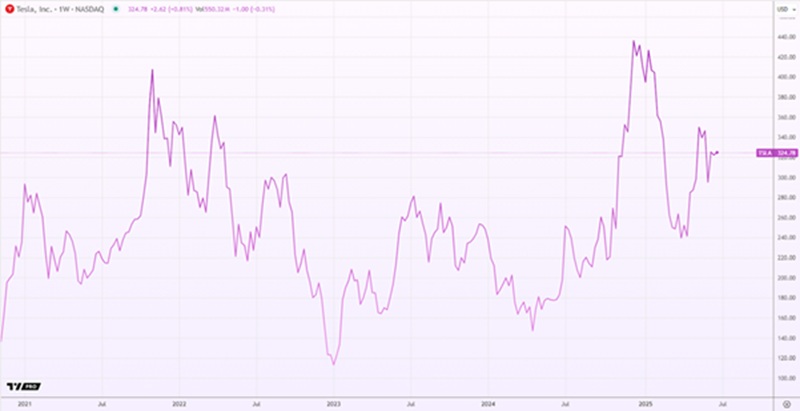
This media storm, which often happens with Tesla, immediately affected the market. Tesla stock price fluctuations have become the object of close attention from speculators, and the paradox is that even negative news about the service drives up the giant’s shares.

Up to 60% of Tesla’s phenomenal capitalization of $1.05 trillion is based solely on expectations of the success of its autonomous taxi business. The market estimates Tesla’s potential robotaxi service at about $600-700 billion. For comparison, Waymo’s entire capitalization is estimated at only $45 billion. Tesla is worth more than the next twenty automakers combined.

While Tesla is testing two dozen cars in one city, Waymo has long and successfully operated a fleet of more than 1,500 fully self-driving cars without a safety driver in several key locations: Phoenix and its suburbs, San Francisco, Los Angeles, and soon Austin. The scales of operation are incomparable:

  • More than 250,000 paid trips per week.
  • Millions of autonomous miles have been accumulated on public roads.
  • One of the best safety indicators in the industry, with data from California and Arizona traffic accident reports.
  • A full-fledged commercial service available through the app.
  • Strategic partnerships like those with Uber Eats for food delivery in some regions.

In 2024, Waymo confidently attracted $5.6 billion in investments, confirming its valuation of $45 billion. This is a serious amount that demonstrates trust. However, it’s just $45 billion compared to $600-700 billion of Tesla’s autonomous park.

Every statement, every announcement, or failed launch of Elon Musk instantly becomes world news. Tesla is constantly in the spotlight. Alphabet’s Waymo is much more restrained and methodical, focusing on security and gradual scaling rather than high-profile press releases.

Investors believe in Musk’s “magic” and ability to revolutionize industries. Tesla’s capitalization is a bet on its future vision, often at the expense of current results.

Waymo has been working on autonomy since 2009. Their approach was initially based on creating a full-fledged autonomous vehicle rather than gradually improving driver assistance systems like Tesla’s. This is more difficult and requires more time and resources, but it leads to creating a truly autonomous solution.

As Waymo is a subsidiary, Alphabet doesn’t disclose its financial statements separately. Its success and scale are less noticeable to many investors than Tesla’s public profile. Investment rounds are rare events that draw attention to their real value.

Waymo is not just a startup, but a technology leader with 15 years of experience, real revenue, and a vast base of proven autonomous miles. The current market value of $45 billion may look very attractive to those who believe in the victory of reality over rumor. The Austin Tesla experiment only highlighted how undervalued Waymo is today.

Waymo Begins Testing in Philadelphia as It Eyes Expansion of Self-Driving Ride-Hailing Service

0

Alphabet’s autonomous vehicle subsidiary, Waymo, has launched public road testing in Philadelphia, marking another milestone in its push to bring self-driving ride-hailing services to major U.S. cities.

The move is part of the company’s broader effort to expand its Waymo One robotaxi service beyond its current strongholds in Phoenix, San Francisco, Los Angeles, and Austin, Texas.

Announcing the test on Monday via X, Waymo said, “This city is a National Treasure,” adding a touch of local flavor to its rollout by referencing Philadelphia’s gritty spirit and beloved cheesesteaks.

The test fleet will operate manually for now, with trained human safety drivers behind the wheel as Waymo collects detailed mapping data and monitors traffic conditions across complex urban neighborhoods — from North Central and University City to Eastwick and even along stretches by the Delaware River.

The Philadelphia trial will run through the fall and, according to the company, focus on evaluating how its Waymo Driver system responds to the city’s dense layout, unique traffic signals, and varied infrastructure. These “road trips,” as Waymo calls them, are crucial for gauging feasibility in new locations and are often precursors to full driverless deployment if regulatory and safety benchmarks are met.

However, the move into Philadelphia comes as Waymo faces intensifying competition, particularly from Tesla, which has renewed its ambitions for robotaxis. Tesla CEO Elon Musk has declared autonomous ride-hailing as the next major chapter in Tesla’s growth, signaling a race between the two tech giants for dominance in a future self-driving market that could transform urban mobility.

Tesla has quietly been testing its Full Self-Driving (FSD) beta system in Austin, Texas — a city where Waymo already operates. Unlike Waymo, which takes a more conservative, highly supervised rollout approach, Tesla’s software-first strategy allows it to gather data from tens of thousands of Tesla vehicles already in private hands. The company is using this massive fleet to refine its FSD model with a view to launching a dedicated robotaxi vehicle, which Musk has hinted could be unveiled as soon as August 2025.

While Waymo’s vehicles use lidar, a defined set of rules, and pre-mapped terrain, Tesla’s approach relies more on neural networks and real-time camera-based perception. Musk insists this makes Tesla’s system more scalable globally — though safety regulators have raised concerns about Tesla’s real-world testing methodology and marketing of its FSD feature.

In contrast, Waymo has leaned into regulatory cooperation and rigorous piloting. Its Waymo One service currently handles over 250,000 paid rides per week, using a fully driverless fleet in selected areas. The company also recently began similar test operations in New York City and is eyeing expansion into Washington, D.C., Miami, and Atlanta by 2026.

Despite its long lead in deployment, Waymo continues to weigh heavily on Alphabet’s balance sheet. In 2024, Alphabet’s “Other Bets” division — which includes Waymo — posted $1.65 billion in revenue, up slightly from the previous year. But losses deepened to $4.44 billion, raising questions among investors about the long-term viability of Alphabet’s autonomous ambitions.

Meanwhile, Tesla’s pitch to investors positions its robotaxi project as a profit engine that could generate billions in revenue through a self-driving fleet-as-a-service model, potentially displacing Uber and Lyft.

Waymo’s expansion to Philadelphia could be seen as a sign that it is accelerating its rollout to beat competitors like Tesla. However, technological and consumer acceptance challenges are still ahead, underlining that the battle for control of the robotaxi future is only just beginning.

As the rollout continues, user experience will tell which company has the better software, and which can best navigate the regulatory, logistical, and public trust hurdles required to put self-driving cars on America’s roads — without a safety driver.