
DD
MM
YYYY

PAGES

DD
MM
YYYY

spot_img

PAGES

Home Blog Page 919

Digital Gaming Platforms Drive Financial Innovation in Emerging Markets

0

Digital gaming platforms are reshaping economic landscapes across emerging markets, offering users more than entertainment. In areas where traditional banking is scarce, these interactive ecosystems enable individuals to earn, trade and invest digital assets, fostering financial inclusion and economic empowerment. By integrating secure payment systems, gamified financial education and peer-to-peer services, these platforms bridge gaps in access and literacy while driving sustainable growth and innovation. Similarly, platforms like BetRivers, with its BetRivers bonus code incentives, demonstrate how well-designed promotional frameworks can boost engagement and deliver meaningful financial benefits.

Defining Digital Gaming Ecosystems

Digital gaming platforms combine interactive gameplay with economic functionalities. Users participate in virtual economies where they acquire tokens, trade assets, and access financial tools—all within a game environment. These ecosystems leverage mobile connectivity and secure transactional technologies to bring unbanked or underbanked populations into the digital economy. As players engage, they gain familiarity with concepts such as digital wallets, transaction fees, and asset valuation, often without realizing they are building foundational financial skills.

Key Features Fueling Financial Innovation

Digital gaming platforms stand out for their capacity to merge entertainment with practical financial services. Core features include seamless in-game purchases and withdrawals, data-driven personalization, and community-based trading. Secure encryption and multifactor authentication ensure trust, while alternative payment options—such as mobile money or cryptocurrency—enable transactions in regions lacking conventional banking. Analytics tools track user behavior, tailoring incentives that encourage savings, responsible spending, and investment in virtual assets. This synergy between engagement and education positions gaming as a catalyst for broader economic participation.

Financial Inclusion Through Gaming

In emerging markets, traditional banking often faces barriers such as high fees, lack of physical branches, and stringent documentation requirements. The phenomenon of Gen Z’s shift toward crypto highlights growing distrust in these institutions. Gaming platforms circumvent these obstacles by offering digital wallets accessible via smartphones. Peer-to-peer lending features allow users to borrow micro-loans based on their gaming reputation or activity score, bypassing credit checks. Virtual marketplaces let small entrepreneurs sell in-game services or digital goods, generating income streams that feed back into local economies. By lowering entry thresholds, these platforms transform passive gameplay into active financial participation.

Illustrative Case Studies

The impact of digital gaming on financial landscapes becomes clear when examining real-world implementations.

Country Platform Feature Economic Impact
Brazil Integrated mobile payments Users made over 2 million transactions, boosting local digital commerce
Nigeria Micro-lending based on gameplay Unbanked players accessed $500,000 in loans within first year

In Brazil users leveraged integrated mobile payments to transact for in-game items and local goods, creating a digital commerce boom. In Nigeria micro-lending tied to gameplay performance opened new credit channels, granting small loans without traditional collateral and seeding entrepreneurial ventures.

Challenges and Opportunities

Emerging markets present both hurdles and promising trends for gaming-driven financial innovation.

  • Limited internet penetration and unstable connectivity in rural areas can restrict platform access
  • Regulatory uncertainty often complicates compliance for fintech-gaming hybrids
  • Cultural skepticism toward digital finance requires trust-building through transparent policies

Looking ahead, partnerships between gaming platforms and local financial institutions could expand service offerings. Advances in blockchain may enable more efficient cross-border remittances, while gamified financial education modules promise to deepen users’ understanding of savings, budgeting, and investment. As mobile networks improve, the potential user base will grow, further driving economic inclusion.

Conclusion

By merging engaging gameplay with innovative financial services, digital gaming platforms are charting a new path to inclusion and growth in emerging markets. Secure transaction systems, gamified education, and peer-based lending demonstrate how interactive environments can address gaps left by traditional banking. As regulators adapt and infrastructure improves, these platforms will likely become even more integral to economic ecosystems, empowering users to participate fully in the digital economy and fostering sustainable development across diverse regions.

Behind the Headlines: Tesla’s Self-Driving Stumble and Waymo’s Underrated Dominance

0

The launch of the Tesla self-driving taxi service in Austin was supposed to be another triumph for Elon Musk. Instead, it demonstrated the deep gap between market expectations and technological reality. It highlighted the underestimation of the true industry pioneer, Waymo, the Alphabet subsidiary. The robotaxi launched nearly 20 Model Y vehicles as prototypes to test operational challenges such as unexpected stops and navigating intersections.

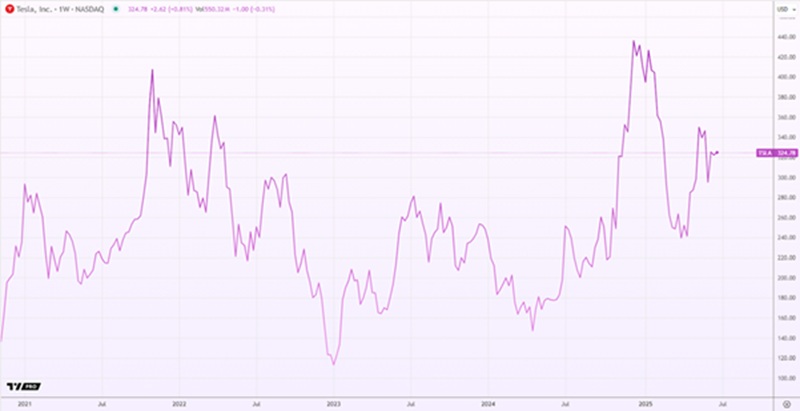
This media storm, which often happens with Tesla, immediately affected the market. Tesla stock price fluctuations have become the object of close attention from speculators, and the paradox is that even negative news about the service drives up the giant’s shares.

Up to 60% of Tesla’s phenomenal capitalization of $1.05 trillion is based solely on expectations of the success of its autonomous taxi business. The market estimates Tesla’s potential robotaxi service at about $600-700 billion. For comparison, Waymo’s entire capitalization is estimated at only $45 billion. Tesla is worth more than the next twenty automakers combined.

While Tesla is testing two dozen cars in one city, Waymo has long and successfully operated a fleet of more than 1,500 fully self-driving cars without a safety driver in several key locations: Phoenix and its suburbs, San Francisco, Los Angeles, and soon Austin. The scales of operation are incomparable:

  • More than 250,000 paid trips per week.
  • Millions of autonomous miles have been accumulated on public roads.
  • One of the best safety indicators in the industry, with data from California and Arizona traffic accident reports.
  • A full-fledged commercial service available through the app.
  • Strategic partnerships like those with Uber Eats for food delivery in some regions.

In 2024, Waymo confidently attracted $5.6 billion in investments, confirming its valuation of $45 billion. This is a serious amount that demonstrates trust. However, it’s just $45 billion compared to $600-700 billion of Tesla’s autonomous park.

Every statement, every announcement, or failed launch of Elon Musk instantly becomes world news. Tesla is constantly in the spotlight. Alphabet’s Waymo is much more restrained and methodical, focusing on security and gradual scaling rather than high-profile press releases.

Investors believe in Musk’s “magic” and ability to revolutionize industries. Tesla’s capitalization is a bet on its future vision, often at the expense of current results.

Waymo has been working on autonomy since 2009. Their approach was initially based on creating a full-fledged autonomous vehicle rather than gradually improving driver assistance systems like Tesla’s. This is more difficult and requires more time and resources, but it leads to creating a truly autonomous solution.

As Waymo is a subsidiary, Alphabet doesn’t disclose its financial statements separately. Its success and scale are less noticeable to many investors than Tesla’s public profile. Investment rounds are rare events that draw attention to their real value.

Waymo is not just a startup, but a technology leader with 15 years of experience, real revenue, and a vast base of proven autonomous miles. The current market value of $45 billion may look very attractive to those who believe in the victory of reality over rumor. The Austin Tesla experiment only highlighted how undervalued Waymo is today.

Waymo Begins Testing in Philadelphia as It Eyes Expansion of Self-Driving Ride-Hailing Service

0

Alphabet’s autonomous vehicle subsidiary, Waymo, has launched public road testing in Philadelphia, marking another milestone in its push to bring self-driving ride-hailing services to major U.S. cities.

The move is part of the company’s broader effort to expand its Waymo One robotaxi service beyond its current strongholds in Phoenix, San Francisco, Los Angeles, and Austin, Texas.

Announcing the test on Monday via X, Waymo said, “This city is a National Treasure,” adding a touch of local flavor to its rollout by referencing Philadelphia’s gritty spirit and beloved cheesesteaks.

The test fleet will operate manually for now, with trained human safety drivers behind the wheel as Waymo collects detailed mapping data and monitors traffic conditions across complex urban neighborhoods — from North Central and University City to Eastwick and even along stretches by the Delaware River.

The Philadelphia trial will run through the fall and, according to the company, focus on evaluating how its Waymo Driver system responds to the city’s dense layout, unique traffic signals, and varied infrastructure. These “road trips,” as Waymo calls them, are crucial for gauging feasibility in new locations and are often precursors to full driverless deployment if regulatory and safety benchmarks are met.

However, the move into Philadelphia comes as Waymo faces intensifying competition, particularly from Tesla, which has renewed its ambitions for robotaxis. Tesla CEO Elon Musk has declared autonomous ride-hailing as the next major chapter in Tesla’s growth, signaling a race between the two tech giants for dominance in a future self-driving market that could transform urban mobility.

Tesla has quietly been testing its Full Self-Driving (FSD) beta system in Austin, Texas — a city where Waymo already operates. Unlike Waymo, which takes a more conservative, highly supervised rollout approach, Tesla’s software-first strategy allows it to gather data from tens of thousands of Tesla vehicles already in private hands. The company is using this massive fleet to refine its FSD model with a view to launching a dedicated robotaxi vehicle, which Musk has hinted could be unveiled as soon as August 2025.

While Waymo’s vehicles use lidar, a defined set of rules, and pre-mapped terrain, Tesla’s approach relies more on neural networks and real-time camera-based perception. Musk insists this makes Tesla’s system more scalable globally — though safety regulators have raised concerns about Tesla’s real-world testing methodology and marketing of its FSD feature.

In contrast, Waymo has leaned into regulatory cooperation and rigorous piloting. Its Waymo One service currently handles over 250,000 paid rides per week, using a fully driverless fleet in selected areas. The company also recently began similar test operations in New York City and is eyeing expansion into Washington, D.C., Miami, and Atlanta by 2026.

Despite its long lead in deployment, Waymo continues to weigh heavily on Alphabet’s balance sheet. In 2024, Alphabet’s “Other Bets” division — which includes Waymo — posted $1.65 billion in revenue, up slightly from the previous year. But losses deepened to $4.44 billion, raising questions among investors about the long-term viability of Alphabet’s autonomous ambitions.

Meanwhile, Tesla’s pitch to investors positions its robotaxi project as a profit engine that could generate billions in revenue through a self-driving fleet-as-a-service model, potentially displacing Uber and Lyft.

Waymo’s expansion to Philadelphia could be seen as a sign that it is accelerating its rollout to beat competitors like Tesla. However, technological and consumer acceptance challenges are still ahead, underlining that the battle for control of the robotaxi future is only just beginning.

As the rollout continues, user experience will tell which company has the better software, and which can best navigate the regulatory, logistical, and public trust hurdles required to put self-driving cars on America’s roads — without a safety driver.

Implications of Trump’s 25% Blanket Tariffs On Imports From Japan and South Korea

0

On July 7, 2025, U.S. President Donald Trump announced the imposition of 25% blanket tariffs on imports from Japan and South Korea, effective August 1, 2025. This decision, shared via letters posted on Truth Social to Japanese Prime Minister Shigeru Ishiba and South Korean President Lee Jae-myung, marks a continuation of Trump’s trade war strategy initiated in April 2025.

The tariffs target all goods from these countries, with additional sector-specific duties on key industries like cars, steel, and electronics, but are not stacked on top of existing sectoral tariffs. The U.S. had a $68.5 billion goods trade deficit with Japan and a $66 billion deficit with South Korea in 2024, according to the Office of the U.S. Trade Representative. Trump has cited these deficits as justification, arguing they reflect unfair trade practices.

In April 2025, Trump introduced “reciprocal” tariffs under a “Liberation Day” policy, initially setting a 24% tariff on Japan and 25% on South Korea. These were paused on April 9 for 90 days, reducing rates to a flat 10% to allow negotiations. The new 25% tariffs effectively reinstate and slightly increase Japan’s rate. The letters warn that if Japan or South Korea raise tariffs on U.S. goods in response, the U.S. will increase its tariffs by an equivalent amount. They also note that tariffs could be avoided if companies from these countries manufacture in the U.S., with promises of streamlined approvals.

Trump extended the deadline for trade negotiations to August 1, suggesting flexibility if countries propose alternative deals. However, only preliminary agreements with the UK, Vietnam, and China have been reached so far, with Japan and South Korea’s talks slowed by their own elections and demands for exemptions on key exports like steel and autos. Alongside Japan and South Korea, 12 other nations received tariff letters, with rates up to 40% (e.g., Myanmar and Laos). These vary based on trade deficits and are part of Trump’s broader strategy to address perceived economic imbalances.

Prime Minister Ishiba called the tariffs “extremely regrettable,” questioning their compliance with U.S.-Japan trade agreements and World Trade Organization rules. Japan is pushing for a bilateral deal, with a cabinet task force formed to strategize. The Finance Ministry vowed to monitor markets and may take “bold action” if fluctuations become excessive. South Korea plans to intensify trade talks to mitigate the impact, particularly on its auto industry, which exported $34.74 billion in vehicles to the U.S. in 2024.

U.S. markets dipped, with the S&P 500 down 0.8% and the Dow Jones Industrial Average falling 0.9–1.2% on July 7. Shares of Japanese automakers like Toyota (-4%), Nissan (-7.16%), and Honda (-3. U.S. markets dipped, with the S&P 500 down 0.8% and the Dow Jones Industrial Average falling 0.9–1.2% on July 7. Shares of Japanese automakers like Toyota (-4%), Nissan (-7.16%), and Honda (-3.86%) declined, reflecting concerns over potential auto tariff escalations.

Economists warn that tariffs may raise consumer prices, as seen in 2018 when Trump’s tariffs on South Korean washing machines increased prices by 34%. The Tax Foundation estimates Trump’s 2025 tariffs could equate to a $1,200 tax increase per U.S. household. The tariffs strain relations with close allies, potentially disrupting supply chains for cars, electronics, and semiconductors. Japan and South Korea are key U.S. partners in economic security, shipbuilding, and critical minerals, making the move contentious.

Both countries may impose counter-tariffs, escalating tensions. China, facing higher U.S. tariffs, has already signaled closer cooperation with Japan and South Korea to counter U.S. policies, though joint action claims were downplayed by Seoul and Tokyo. The tariffs reflect Trump’s skepticism of free trade and focus on reducing trade deficits, but critics argue deficits aren’t inherently harmful and tariffs may hurt U.S. consumers more than they help manufacturers. The unilateral approach, bypassing Congress via emergency powers, has sparked legal debates, with a federal court previously ruling against similar actions in May 2025.

Bitcoin long-term holders (LTHs) Are Holding Approximately $1.2T In Unrealized Profits

0

Bitcoin investors are holding approximately $1.2 trillion in unrealized profits, according to recent data from Glassnode. This figure reflects the difference between Bitcoin’s market capitalization of $2.1 trillion and its realized capitalization of $955 billion, with the average investor seeing a paper gain of around 125%. Despite Bitcoin trading near its all-time high of $111,970, investors are showing restraint, with daily realized profits averaging only $872 million, significantly lower than the $2.8–$3.2 billion seen during previous peaks at $73,000 and $107,000.

This HODLing behavior, particularly among long-term holders and institutional investors like ETFs and companies such as MicroStrategy, suggests strong confidence in Bitcoin’s future growth. However, this large pool of unrealized gains could lead to selling pressure if market sentiment shifts. The low daily realized profits ($872M vs. $2.8–$3.2B at prior peaks) indicate strong conviction among long-term holders (LTHs) and institutional investors, like those in Bitcoin ETFs or firms like MicroStrategy. This HODLing suggests expectations of further price appreciation, potentially stabilizing the market in the short term.

The massive unrealized gains represent a latent risk. If market sentiment shifts—due to macroeconomic factors (e.g., interest rate hikes, regulatory crackdowns) or a sharp price correction—investors may rush to lock in profits, triggering volatility or a cascade of sell-offs. Unrealized gains are not evenly distributed, amplifying wealth inequality among Bitcoin holders. Early adopters and large institutional players hold disproportionate shares, which could influence market dynamics if they decide to liquidate.

Significant unrealized gains attract attention from regulators and tax authorities, especially in jurisdictions eyeing crypto as a revenue source. Potential capital gains tax changes could prompt preemptive selling. LTHs, including early adopters and institutions, are sitting on substantial gains and appear reluctant to sell, reflecting a belief in Bitcoin’s long-term value. In contrast, short-term traders or newer retail investors may be more likely to realize profits during price surges, contributing to the modest daily profit-taking.

Institutional players (e.g., ETFs, MicroStrategy) control significant Bitcoin holdings, often with lower cost bases, giving them outsized unrealized gains. Retail investors, especially late entrants, may have higher average purchase prices, limiting their gains and exposing them to greater risk in a downturn. Access to Bitcoin investment varies globally. Investors in wealthier nations with robust crypto infrastructure (e.g., U.S., EU) likely hold a larger share of gains compared to those in regions with limited access or regulatory hostility, exacerbating global wealth disparities.

Some HODLers view Bitcoin as a hedge against fiat inflation or a store of value, prioritizing long-term holding over short-term gains. Others see it as a speculative asset, more likely to sell during rallies, creating tension between ideological and profit-driven motives. When Bitcoin investors take profits, it means they sell their holdings to realize the gains from the difference between their purchase price and the current market price. This can have several effects on the market and broader ecosystem, especially with $1.2 trillion in unrealized gains at play.

Selling to lock in profits increases the supply of Bitcoin on the market. If significant profit-taking occurs, especially in a short period, it can lead to a price drop as demand struggles to absorb the increased supply. Large-scale profit-taking, particularly by whales (large holders) or institutions, can trigger sharp price swings. For example, if a portion of the $1.2T in unrealized gains is realized rapidly, it could spark a cascade of sell-offs, amplifying volatility.

Historical data shows profit-taking often precedes corrections. For instance, Glassnode notes that daily realized profits were $2.8–$3.2B during Bitcoin’s peaks at $73,000 and $107,000, compared to $872M recently, suggesting restrained selling. A surge in profit-taking could push prices closer to those correction levels again. Profit-taking by large players can signal to retail investors that a peak has been reached, potentially triggering fear-driven sales or panic. Conversely, if prices remain stable post-profit-taking, it could reinforce confidence and fuel FOMO (fear of missing out), attracting new buyers.

Long-term holders (LTHs) HODLing through price surges may start selling if they perceive diminishing returns, while short-term traders may exit quickly, deepening the divide between these groups. Profit-taking injects liquidity into the market, as sellers convert Bitcoin into fiat or other assets. This can benefit exchanges and trading platforms but may also strain order books if selling is concentrated. Institutions like ETFs or companies (e.g., MicroStrategy) with large unrealized gains may strategically time profit-taking, influencing market trends. Their actions are often watched closely, amplifying their impact.

Realizing profits triggers taxable events in many jurisdictions. With $1.2T in unrealized gains, widespread profit-taking could lead to significant tax liabilities, potentially prompting some investors to delay selling until tax policies are clearer. Large profit-taking events can draw scrutiny from regulators, especially if they suspect market manipulation or if governments seek to capture revenue from crypto gains. This could lead to tighter regulations, affecting market access.

Profit-taking redistributes wealth from Bitcoin’s ecosystem to other assets or fiat. Early adopters and institutions with low cost bases (e.g., those who bought at $1,000–$10,000) stand to gain the most, widening the wealth gap with newer retail investors. The divide between LTHs and short-term traders grows, as LTHs may hold through volatility, while newer investors sell, potentially locking in smaller gains or losses. Similarly, institutional profit-taking could overshadow retail investors’ impact.

Profits realized from Bitcoin often flow into other markets (stocks, real estate, altcoins), potentially inflating those asset classes or stabilizing them if Bitcoin’s price drops. In a high-profit-taking scenario, a Bitcoin price crash could ripple through crypto markets, impacting leveraged positions and causing liquidations, as seen in past cycles.

Profit-taking with $1.2T in unrealized gains could lead to price volatility, regulatory scrutiny, and wealth redistribution, deepening the divide between long-term holders, short-term traders, institutions, and retail investors. While restrained selling and strong demand may mitigate immediate impacts, a coordinated wave of profit-taking could trigger significant market corrections. Monitoring on-chain data, like Glassnode’s realized profit metrics, and institutional behavior will be key to anticipating these shifts.