DD
MM
YYYY

PAGES

DD
MM
YYYY

spot_img

PAGES

Home Blog Page 919

Dangote Refinery to End Crude Imports by December 2025, Eyes Full Reliance on Nigerian Oil

0

The Dangote Petroleum Refinery is set to phase out all crude imports by December 2025, replacing foreign supply with Nigerian oil, according to Devakumar Edwin, Vice President of Oil and Gas at Dangote Industries.

The plan, which would see the 650,000 barrels-per-day (bpd) facility rely entirely on domestic crude, marks a significant shift in Nigeria’s energy landscape.

Edwin told Bloomberg that contracts with foreign suppliers—including Brazil, Angola, Ghana, Equatorial Guinea, and the United States—will expire by year-end. In their place, the refinery will transition to sourcing all its feedstock from within Nigeria.

“We expect some of the long-term contracts will expire. Personally, and as a company, we expect that before the end of the year, we can transition 100 per cent to local crude,” he said.

The Dangote Refinery, currently operating at around 550,000 bpd, sourced 53% of its crude from Nigerian producers and 47% from the U.S. in June 2025. That month marked a turning point as domestic producers began supplying roughly half of the feedstock—a development Edwin attributes to improved relations between the refinery, local traders, and the government.

This shift comes amid ongoing efforts by Africa’s most populous country to reclaim greater value from its crude production. For decades, Nigeria has exported most of its crude, only to re-import it as refined fuel at significantly higher costs. Dangote’s $20 billion refinery, located in Lagos, was built specifically to end this cycle and make Nigeria self-sufficient in fuel production.

Government support appears solid. The Nigerian National Petroleum Company Limited (NNPCL) is already allocating five cargoes—each carrying close to one million barrels of crude—to the refinery in July and the same number again in August.

Aliko Dangote, founder of the refinery, had previously revealed that the facility was relying heavily on U.S. crude despite the government’s “naira-for-crude” supply framework aimed at bolstering domestic supply. That dependence, he said, was driven by initial reluctance from local traders and producers to meet the refinery’s needs, forcing it to turn abroad.

Domestic Oil Production: A Persistent Concern

However, the refinery’s bold shift to 100 percent Nigerian crude faces a critical obstacle: the country’s low and inconsistent crude oil output. Official data shows that Nigeria’s production still hovers around 1.5 million barrels per day—well below its estimated potential of 2.2–2.5 million bpd and a far cry from what is needed to feed a refinery of Dangote’s magnitude while meeting export and debt-servicing commitments.

Years of underinvestment, rampant oil theft, pipeline sabotage, and operational inefficiencies continue to undermine production targets. Although the government has repeatedly pledged to ramp up output, progress has been sluggish. Oil majors operating in the country have either downsized or exited onshore assets, citing insecurity and rising operational risks.

This constrained output presents a real risk to Dangote Refinery’s plan. Nigeria’s oil is already entangled in forward sales agreements, where future oil deliveries have been pledged in exchange for loans and other financial arrangements. These deals significantly reduce the volume of unencumbered crude available for local use, including refinery feedstock.

Industry experts caution that unless Nigeria can lift its oil output significantly in the coming months, Dangote’s plans could face bottlenecks.

From Net Importer to Exporter

Although it has had to contend with early hurdles, the refinery’s gradual ramp-up has already begun to reshape Nigeria’s fuel economy. By the second quarter of 2025, Nigeria emerged as a net exporter of petroleum products for the first time in decades—though that milestone has not come without logistical and structural challenges.

One of the biggest of those has been the inability of local producers to meet the refinery’s initial demand. In the months following the plant’s January commissioning, the Dangote team was forced to import large volumes of foreign crude to keep operations running. A significant portion came from U.S. shale producers, known for their predictable supply and favorable contract terms.

But Edwin now says those days are numbered, with a surge in local deliveries expected in the coming months as more Nigerian oil traders wrap up existing foreign supply obligations.

But the success of the plan also hinges on the stability of government policies and the reliability of local producers to meet the quality and volume standards the Dangote plant requires. Any significant disruption in Nigeria’s oil-producing regions—particularly the Niger Delta—could strain operations.

Moreover, previous refinery projects in Nigeria have stumbled due to similar challenges. What sets Dangote apart is the sheer scale of the investment, the private-sector efficiency driving it, and growing cooperation with state-owned entities like NNPCL.
Trump Courts West African Leaders With Trade Deals, Not Aid — After Scrapping USAID

0

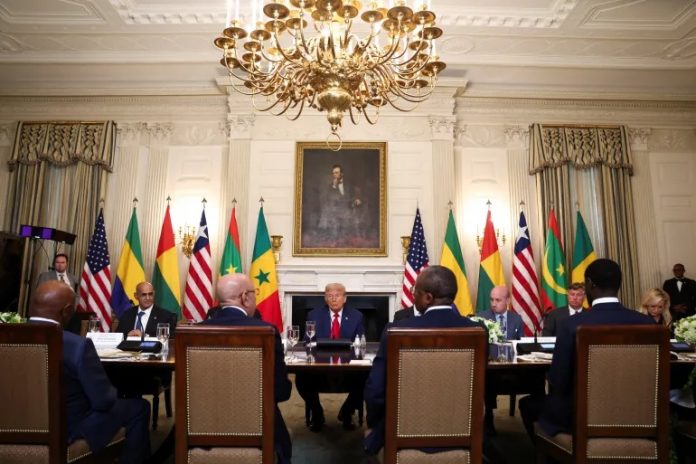
President Donald Trump on Wednesday hosted the leaders of five West African nations at the White House, promising a new era of economic partnership based on trade, not charity.

The meeting marked a symbolic turning point in U.S.-Africa relations—coming just months after the Trump administration shuttered the U.S. Agency for International Development (USAID), accusing it of waste, regime meddling, and links to foreign destabilization.

The shift also comes as key African voices, including WTO Director-General Ngozi Okonjo-Iweala and African Development Bank President Akinwumi Adesina, have urged the continent to end its reliance on foreign aid and forge a path defined by investment and trade.

“We have closed the USAID group to eliminate waste, fraud and abuse,” Trump said Wednesday. “And we’re working tirelessly to forge new economic opportunities involving both the United States and many African nations.”

The five invited nations—Liberia, Senegal, Mauritania, Gabon, and Guinea-Bissau—represent only a fraction of U.S.-Africa trade volume, but carry outsized geopolitical importance. Some sit atop critical minerals needed for U.S. supply chains; others are strategic transit routes in the West African subregion. All have suffered setbacks from recent U.S. aid cuts and shifting global alliances.

End of USAID and What It Signifies

Earlier this year, the Trump administration disbanded USAID, ending nearly six decades of U.S.-led development assistance abroad. While some hailed the move as overdue reform, it also drew fire from critics and rights groups who warned that cutting health and food programs in fragile states could lead to “millions of preventable deaths.”

Trump and his allies, however, justified the move with damning claims: that USAID had long served as a covert political arm for regime change operations and influence campaigns abroad—particularly under Democratic administrations. According to sources close to the administration, some U.S. intelligence officials alleged the agency had funded civil society groups later implicated in political unrest, while also channeling money to entities linked to extremist financing in conflict zones.

Praise for Peace, Pitch for Resources

In their speeches, the West African presidents responded with flattery and opportunism. Each leader praised Trump for helping broker a recent ceasefire between Rwanda and the Democratic Republic of Congo, which the U.S. hopes will unlock access to rare minerals in eastern Congo—a region known for cobalt, gold, and tantalum.

Mauritanian President Mohamed Ould Ghazouani listed his country’s mineral bounty, including rare earths and uranium, while signaling openness to U.S. investment.

“We have lithium, manganese, the kind of resources needed for the energy transition,” he said. “And we are ready to do business.”

Liberian President Joseph Boakai, whose country has historically been the most aid-dependent in Africa, expressed “optimism” about the new partnership model. Liberia once relied on U.S. assistance equal to 2.6% of its gross national income—more than any other country in the world, according to the Center for Global Development.

By placing trade at the center of U.S.-Africa ties, Trump appears to be echoing calls for Africa to quit depending on aid — though critics warn his approach is more transactional than transformational.

A Calculated Move Amid Tariff Diplomacy and Travel Bans

Wednesday’s meeting also took place against the backdrop of escalating U.S. tariff diplomacy. The Trump administration is preparing to enforce higher trade tariffs against several developing nations starting August 1. Although none of the five West African nations present at the summit are currently listed among those targeted, analysts see their inclusion at the White House as a calculated attempt to court allies rich in resources and willing to play ball.

Notably, the same countries—Gabon, Senegal, Liberia, and Mauritania—are among those reportedly being considered for inclusion in an expanded travel ban.

Trump made clear that he sees trade not just as commerce, but as leverage. “You guys are going to fight, we’re not going to trade,” he told the African leaders. “And we seem to be quite successful in doing that.”

His comments drew polite silence from the guests, but one could sense the recalibration of relations underfoot.

The Trump administration argues that aid, as practiced before, undermined local agency and enabled corruption.

“We are likely to see a trend where African countries will seek to leverage resources such as critical minerals, or infrastructure such as ports, to attract US commercial entities in order to maintain favorable relations with the current US administration,” said Beverly Ochieng, an analyst at Control Risks, a security consulting firm.

“Each of the African leaders sought to leverage natural resources in exchange for US financial and security investments, and appeared to view the U.S. intervention in the Democratic Republic of Congo as a model to further cooperation,” Ochieng added.

Whether this ushers in a new model of African empowerment or merely shifts the terms of dependency is a debate just beginning to unfold.

Microsoft Reveals $500m in AI Savings, Following Layoffs, Fueling Debate Over Automation’s Human Cost

0

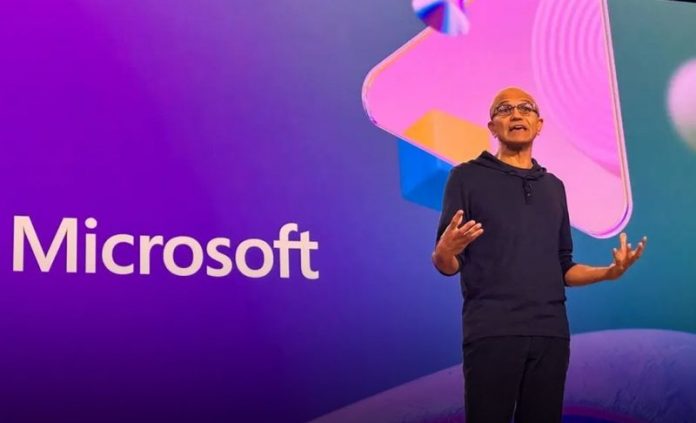
Microsoft has quietly revealed that artificial intelligence tools have saved the company over $500 million in its call centers alone over the past year, reinforcing the growing role of automation in corporate efficiency.

The internal admission, disclosed by Chief Commercial Officer Judson Althoff during a private presentation and first reported by Bloomberg, shows that AI is not just transforming productivity—it’s now playing a critical role in reshaping Microsoft’s workforce and cost structure.

The revelation comes just one week after Microsoft laid off more than 9,000 workers in its third major round of job cuts this year, bringing the total number of layoffs across the company in 2025 to nearly 15,000. These layoffs cut across departments, including Xbox, sales, customer service, and software engineering.

Microsoft’s announcement—celebrating efficiency gains from AI tools like Copilot, which now generate more than 35% of all new code—follows its revenue moment. The company reported $26 billion in profit and $70 billion in revenue in the most recent quarter. Its market capitalization surged to $3.74 trillion, displacing Apple and sitting just behind Nvidia, whose AI chips power Microsoft’s AI infrastructure.

Layoffs Amid Booming AI Profits

To many laid-off workers, the juxtaposition between record profitability and job loss stings, and the internal remarks have stirred resentment within the company.

While Microsoft hasn’t publicly attributed the latest layoffs directly to AI replacement, internal actions suggest a reshuffling of priorities that favor automation over manpower. The company has indicated that its call centers now rely heavily on AI to manage routine customer service functions, cutting down on the need for human agents. Althoff said AI support has enabled Microsoft to better serve smaller customers while keeping human staff focused on high-value clients.

At the same time, engineering teams are leaning more heavily on generative tools to accelerate software development. Copilot, Microsoft’s AI coding assistant, is contributing more than a third of the company’s production code, shrinking development timeframes and potentially reducing the need for large engineering teams.

Microsoft is also replacing some of the laid-off workers with more technically specialized roles. According to Business Insider, the company is prioritizing the hiring of “solution engineers” with strong AI and product knowledge to help push its enterprise tools like Copilot.

The tension between Microsoft’s AI-driven gains and its human cost has been further amplified by a controversial, now-deleted LinkedIn post from Matt Turnbull, a producer at Xbox Game Studios. In the post, Turnbull suggested that employees affected by the layoffs could turn to AI tools like ChatGPT and Copilot to help manage the emotional and cognitive load that comes with losing a job.

The post drew immediate backlash, with critics calling it “tone-deaf” and out of touch with the real pain of unemployment. It was quickly deleted, but the damage had been done, casting a shadow over Microsoft’s internal messaging and highlighting the emotional toll of AI-led restructuring.

AI as the New Corporate Workhorse

Microsoft’s embrace of AI is part of a broader industry shift. The company plans to invest $80 billion in AI infrastructure throughout 2025, focusing heavily on data centers, high-performance computing, and the continued rollout of AI-powered productivity tools across its ecosystem. Internally, executives have described this pivot as a redefinition of the company’s mission around “frontier AI.”

Insiders believe the $500 million in savings from AI is just the beginning. Microsoft expects similar efficiencies across other divisions in the coming years. Althoff emphasized that these gains are not just about saving money but also about enabling scale, noting that AI tools help Microsoft better serve a broader base of customers without proportional increases in staffing.

However, critics argue that the company’s gains are coming at the expense of its workforce. Many of the 15,000 jobs lost this year were in functions that AI is now beginning to replace—customer service, product marketing, and low-to-mid-tier software engineering. That’s leading to growing concern over what kinds of roles will survive in a corporate world increasingly defined by automation.

The layoffs and internal restructuring are occurring as Microsoft races to stay ahead in the AI arms race. In addition to deepening its investment in OpenAI, the company is pursuing AI dominance on multiple fronts—from Azure-based Copilot products to partnerships with AI chipmakers and a growing portfolio of AI-powered productivity and infrastructure services.

It is believed that Microsoft’s goal is to become the premier platform for enterprise AI across industries. The company is already one of the largest consumers of Nvidia’s AI chips and continues to funnel billions into expanding its AI datacenters around the globe.

IMF Flags Nigeria’s Crypto Surge as Threat to Capital Controls, Monetary Stability

0

The International Monetary Fund (IMF), in its latest country report on Nigeria, has raised alarm over the country’s booming crypto economy — warning that if left unchecked, it could destabilize Nigeria’s financial architecture, undermine regulatory controls, and punch holes in already strained capital flow management.

The warning comes at a time when Nigeria has become one of the world’s most active crypto markets. According to Chainalysis’ 2023 Global Crypto Adoption Index, Nigeria ranks among the top three globally, with more than $59 billion in crypto transactions recorded between July 2023 and June 2024. A separate poll by Consensys and YouGov found that 62% of Nigerian crypto users had owned Bitcoin, while others invested heavily in Binance Coin, Ethereum, Dogecoin, Tether, and Solana.

This explosion in adoption coincides with a global surge in crypto markets. Since January 2020, the total crypto market value has jumped from $211 billion to $3.4 trillion by the end of 2024 — a meteoric 1,511% rise in just five years. But Nigeria’s case is unique, both in scale and context. With a battered naira, rigid forex controls, and widespread distrust in formal financial institutions, crypto has flourished as both an escape hatch and a workaround.

But not without consequences.

The IMF’s core concern is that Nigeria’s crypto boom is expanding beyond regulatory reach. A significant portion of capital flows into and out of the country now bypasses traditional banking systems. This undermines the Central Bank’s ability to control liquidity, inflation, and exchange rates. More troubling, a large volume of these transactions go unrecorded, effectively stripping Nigeria of foreign exchange earnings and eroding tax revenue.

Informal crypto activity is also contributing to forex market distortions. As users trade naira for dollars through peer-to-peer platforms, dollar demand in the unofficial market rises, feeding speculative behavior and widening the gulf between the official and black-market rates. According to estimates from Bureau De Change operators, up to 90% of foreign currency inflows into Nigeria are now off the radar — a staggering figure that underscores how much influence crypto now has in shaping Nigeria’s currency dynamics.

Beyond economic instability, Nigeria is facing serious image problems internationally. The country remains on the FATF Grey List — a designation reserved for jurisdictions with strategic deficiencies in combating money laundering and terrorist financing. The situation is worsened by statistics from Sumsub’s 2024 “Fraudlympics,” which placed Nigeria first globally for crypto-related fraud, identity theft, and forced verification scams. In terms of terrorism risks, Nigeria ranked sixth globally in the 2025 Global Terrorism Index.

Faced with these pressures, Nigerian regulators have begun scrambling for a grip.

Under Dr. Emomotimi Agama, the Securities and Exchange Commission (SEC) is leading the charge. In early 2025, the country rolled out its first naira-backed stablecoin, the cNGN, launched through licensed exchanges. By June, the SEC introduced a suite of initiatives including the “Crypto Smart, Nigeria Strong” national awareness campaign, a framework for regulating stablecoins, and licensing guidelines for all virtual asset service providers (VASPs). It now mandates that crypto platforms must register, operate physically within Nigeria, and file regular transaction reports.

In a move to deepen oversight, the SEC has also begun integrating blockchain into its regulatory systems to ensure transparency and data integrity. It’s aligning closely with international watchdogs like the International Organization of Securities Commissions (IOSCO) in a bid to strengthen cross-border enforcement and secure Nigeria’s position in the global financial ecosystem.

Still, the IMF believes more must be done. In its advisory, it outlined a nine-point policy blueprint with 37 specific actions Nigeria must adopt — from defining the legal status of crypto assets and clarifying tax obligations to monitoring the impact of crypto on monetary policy and building resilient, regulated alternatives for cross-border payments.

The informal nature of Nigeria’s crypto economy means large sums are slipping through regulatory cracks. Profits go untaxed. Illicit financial flows remain hard to trace. And capital flight is harder to control. In a country already contending with high inflation, volatile exchange rates, and an economy that’s heavily dollar-dependent, the risks are real — and growing.

However, crypto’s appeal in Nigeria stems from a deeper distrust — in the naira, in banking systems, in government institutions. Nigerians are embracing crypto not just as a financial tool, but as a protest, a shield, and a last resort.

Financial experts have noted that if the Nigerian government hopes to regain control, it must do more than regulate. It must rebuild trust. That means implementing robust reforms and demonstrating a credible commitment to economic transparency.

Trump Fires Off New Tariff Threats to Eight Countries, Threatens Brazil With 50% Over Bolsonaro Trial

0

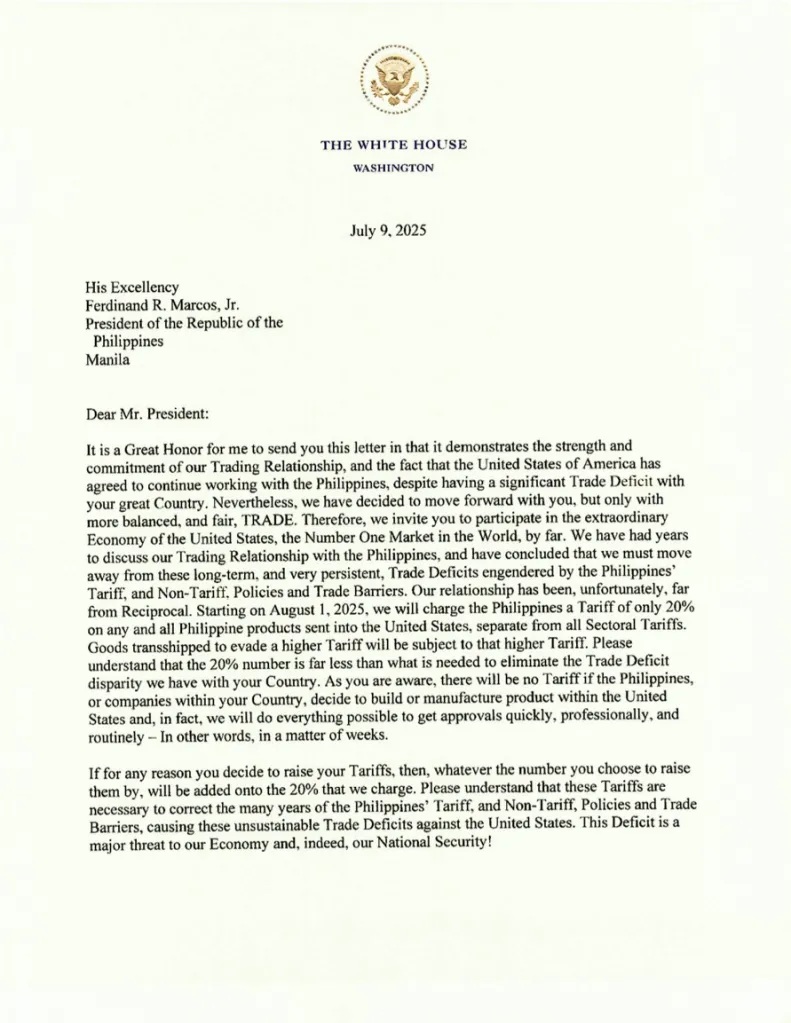
President Donald Trump has fired a fresh barrage of tariff warning letters to eight countries, warning them to reach trade agreements with the United States before August 1 or face stiff levies on their exports.

In a particularly pointed rebuke, Trump singled out Brazil for what he described as an international disgrace over the ongoing trial of former president Jair Bolsonaro, threatening a 50% tariff on Brazilian imports unless the country reverses course.

“It is a Witch Hunt that should end IMMEDIATELY!” Trump wrote in a letter to Brazilian President Luiz Inácio Lula da Silva. “The way that Brazil has treated former President Bolsonaro, a Highly Respected Leader throughout the World during his Term, including by the United States, is an international disgrace.”

The White House confirmed the letters were sent Wednesday to Brazil, the Philippines, Brunei, Moldova, Algeria, Iraq, Libya, and Sri Lanka. The letters include customized tariff threats ranging from 20% to 50% and follow through on Trump’s broader April 2 “Liberation Day” trade strategy, which called for sweeping tariffs across virtually all U.S. trading partners unless bilateral deals are struck.

Trump accused the governments involved of erecting unfair trade barriers and contributing to what he described as “unsustainable Trade Deficits” that jeopardize both the American economy and national security.

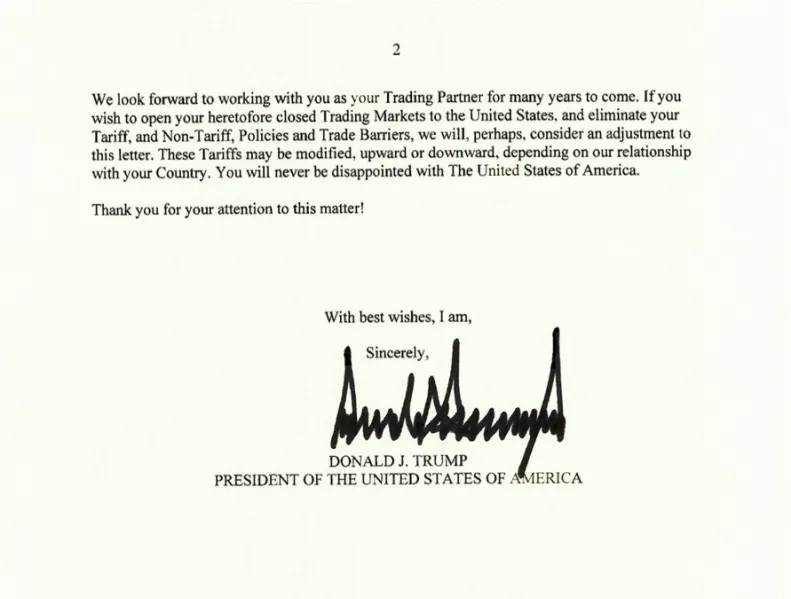
“Please understand that these Tariffs are necessary to correct the many years of Tariff, and Non-Tariff, Policies and Trade Barriers,” the letters stated. “This Deficit is a major threat to our Economy and, indeed, our National Security!”

Each letter opened with near-identical language: “It is a Great Honor for me to send you this letter in that it demonstrates the strength and commitment of our Trading Relationship.”

But the tone quickly turned confrontational, especially in the case of Brazil, which has recently placed former President Bolsonaro on trial over charges linked to election interference.

Trump, who has long maintained a close ideological alignment with Bolsonaro, framed the legal action as a political vendetta. He also used the opportunity to reassert his commitment to defending “Free Elections” and “Free Speech Rights of Americans,” tying Bolsonaro’s prosecution to broader global threats against conservative leaders.

In the same batch of letters, Trump threatened a 20% tariff on the Philippines, 25% on Brunei and Moldova, and 30% on Algeria, Iraq, Libya, and Sri Lanka. He also warned that these rates could be increased if countries retaliate or fail to engage in “good faith” negotiations.

The eight countries are just the latest on Trump’s growing list of trade targets. Earlier this week, he issued similar letters to 14 other nations, including key Asian economies like Japan, South Korea, Indonesia, and Thailand. Altogether, Trump has now publicly threatened punitive tariffs on 22 countries as part of his restructured “America First” trade agenda.

Press Secretary Karoline Leavitt defended the aggressive moves during a White House briefing, saying, “They will take the letters seriously because they have taken the president seriously… his phone rings off the hook from world leaders all the time who are begging him to come to a deal.”

Treasury Secretary Scott Bessent said the administration has identified 18 key trading partners for negotiations since the April 2 declaration, with several deals already in the works.

“We are close to several deals,” Bessent told CNN, while noting “foot-dragging on the other side.” He said announcements of major agreements could come within days.

So far, Trump has finalized provisional frameworks with the United Kingdom, Vietnam, and a ceasefire agreement with China. While the details remain limited, the UK deal reportedly retains a 10% baseline tariff. The agreement with Vietnam imposes a 20% tariff on direct exports and a much steeper 40% rate on goods believed to be transshipped from China or other third-party nations.

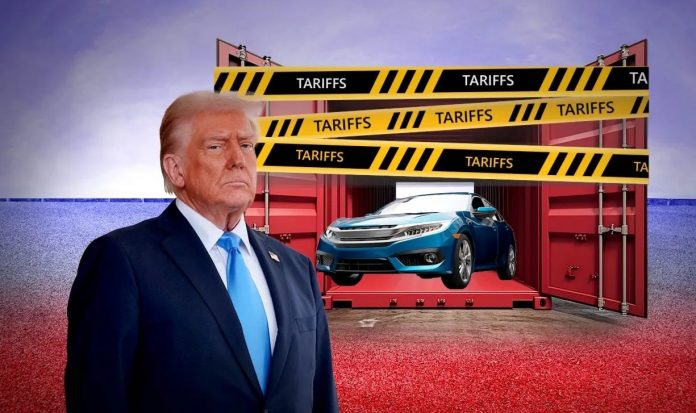
Trump has also reinforced 25% tariffs on automobiles, aluminum, steel, and other imports from Canada and Mexico that do not meet standards under the United States-Mexico-Canada Agreement (USMCA).

The use of trade policy to penalize countries over issues unrelated to commerce—such as Brazil’s judicial proceedings—marks a continued evolution of Trump’s diplomatic strategy. His trade doctrine now blends economic leverage with political messaging, signaling that countries that align ideologically or strategically with the U.S. will receive preferential treatment, while those seen as adversarial will pay a price.

As the August 1 deadline looms, businesses, investors, and foreign governments are scrambling to assess the real-world impact of what many see as a volatile but highly calculated trade campaign.