DD
MM
YYYY

PAGES

DD
MM
YYYY

spot_img

PAGES

Home Blog Page 92

South Korea Plays Down Immediate Fallout from U.S. Chip Tariffs, But Warns Risks Still Loom

0

South Korea is projecting calm in the immediate aftermath of the United States’ decision to impose a 25% tariff on certain advanced artificial intelligence chips, but beneath the reassurance lies a deeper unease about where Washington’s semiconductor policy is heading and what it could ultimately mean for Asia’s chip powerhouses.

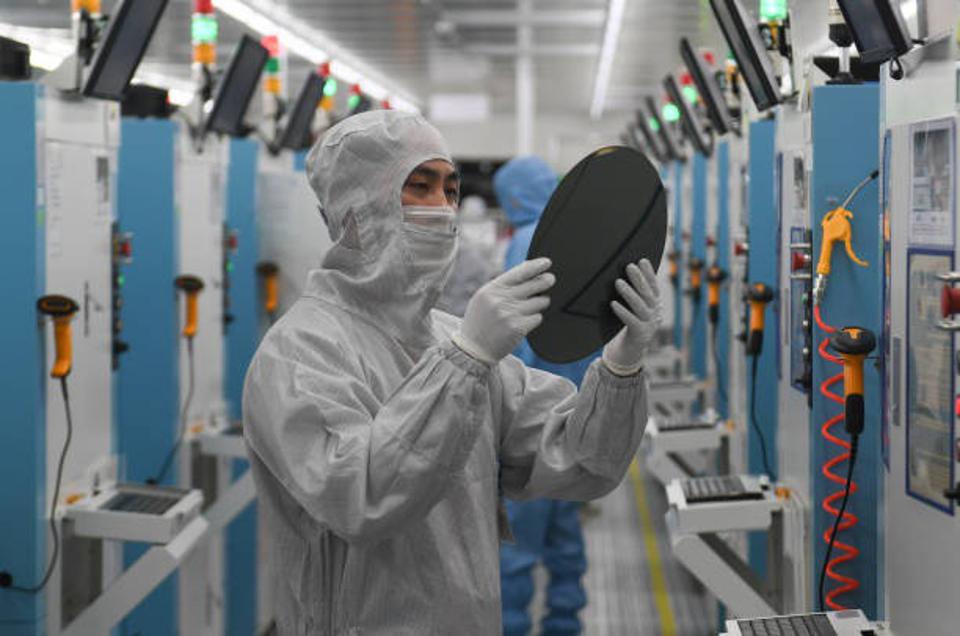
Trade Minister Yeo Han-koo said on Saturday that the first phase of the U.S. measures would have only a limited impact on South Korean companies, largely because the tariffs target high-end AI processors produced by firms such as Nvidia and AMD, rather than the memory chips that dominate South Korea’s export profile. Samsung Electronics and SK Hynix, the world’s two largest memory chipmakers, derive the bulk of their semiconductor revenue from DRAM and NAND products, which remain outside the scope of the proclamation for now.

Yet Yeo’s remarks were careful not to sound complacent. He warned that it was “not yet time to be reassured,” underlining uncertainty over how quickly and how broadly the United States might expand the measures. The government, he said, would continue close consultations with industry to prepare for potential escalation and to safeguard South Korean interests.

The tariffs stem from a proclamation signed by President Donald Trump on Wednesday following a nine-month investigation under Section 232 of the Trade Expansion Act of 1962, which allows the U.S. to restrict imports deemed a threat to national security. The initial action applies a 25% duty to selected advanced AI chips that meet specific performance benchmarks, including Nvidia’s H200 processor and AMD’s MI325X, both critical components in cutting-edge AI training systems.

The White House has sought to reassure markets by stressing that the tariffs are narrowly tailored. According to an accompanying fact sheet, the duties will not apply to chips and derivative devices imported for U.S. data centers, startups, non-data-center consumer electronics, civil industrial uses, or public sector applications. That carve-out is significant, given that hyperscale data centers account for a substantial share of global demand for AI hardware and remain a key end market for memory chips supplied by South Korean firms.

However, the administration has also been explicit that broader action could follow. The fact sheet said the United States may, in the near future, impose wider tariffs on semiconductors and related products to incentivize domestic manufacturing. That warning was sharpened on Friday by Commerce Secretary Howard Lutnick, who said South Korean and Taiwanese chipmakers that do not invest more heavily in U.S. production could face tariffs of up to 100%.

Lutnick’s comments, delivered at a groundbreaking ceremony for Micron’s new semiconductor plant in upstate New York, underscored the strategic thrust of U.S. policy. Washington is using trade pressure alongside subsidies to accelerate the reshoring of semiconductor manufacturing and reduce dependence on overseas suppliers, particularly in Asia.

This creates a delicate balancing act for South Korea. Its chipmakers are already among the largest foreign investors in U.S. semiconductor manufacturing, drawn by incentives under the CHIPS Act and by the need to stay close to key customers. Samsung is building a multibillion-dollar fabrication complex in Texas, while SK Hynix has announced plans linked to advanced packaging and memory production in the United States.

Even so, the prospect of expanding tariffs raises concerns that trade measures could eventually spill over from logic and AI processors into memory chips or products that incorporate them. That would strike at the core of South Korea’s export economy. Semiconductors account for a significant share of the country’s overseas sales, and any disruption to global chip trade risks knock-on effects for growth, investment, and employment.

There is also anxiety about the precedent being set. Section 232 investigations were once used sparingly, but their application to semiconductors signals a more assertive use of national security arguments in trade policy. For allies like South Korea, which are deeply integrated into U.S.-centric supply chains, this blurs the line between strategic cooperation and economic pressure.

In the short term, analysts say South Korean firms are likely to benefit indirectly from the tariffs, as U.S. restrictions on advanced Chinese chips tighten and demand for memory tied to AI workloads continues to grow. Over the longer term, however, the risk is that an expanding web of tariffs and localization requirements fragments the global semiconductor market, raising costs and complicating investment decisions.

Yeo’s message reflects that dual reality. The first-phase impact may be limited, but the trajectory of U.S. policy points to a more uncertain and politicized trade environment. The challenge for South Korea will be to leverage its strategic importance to the U.S. semiconductor ecosystem while guarding against measures that could, over time, erode the foundations of its chip export dominance.
Join Tekedia Capital And Own A Piece of the World’s Best Startups

0

Tekedia Capital Syndicate, a major investment syndicate with hundreds of professionals, citizens, companies, investment clubs and more, makes it possible for people to co-own some of the world’s finest startups.

Membership for 4 investment cycles goes for $1,000 or N1,000,000 depending on your currency of choice. Go here, become a member and join to co-invest.

Tekedia Capital offers a specialty investment vehicle (or investment syndicate) which makes it possible for citizens, groups and organizations to co-invest in innovative startups and young companies around the world. Capital from these investing entities is pooled together and then invested in a specific company or companies.

WhatsApp Group

Once you become a member, you will also join Tekedia Capital WhatsApp Group where investors like you converge.

Musk seeks up to $134bn from OpenAI and Microsoft as dispute over AI control heads to jury trial

0

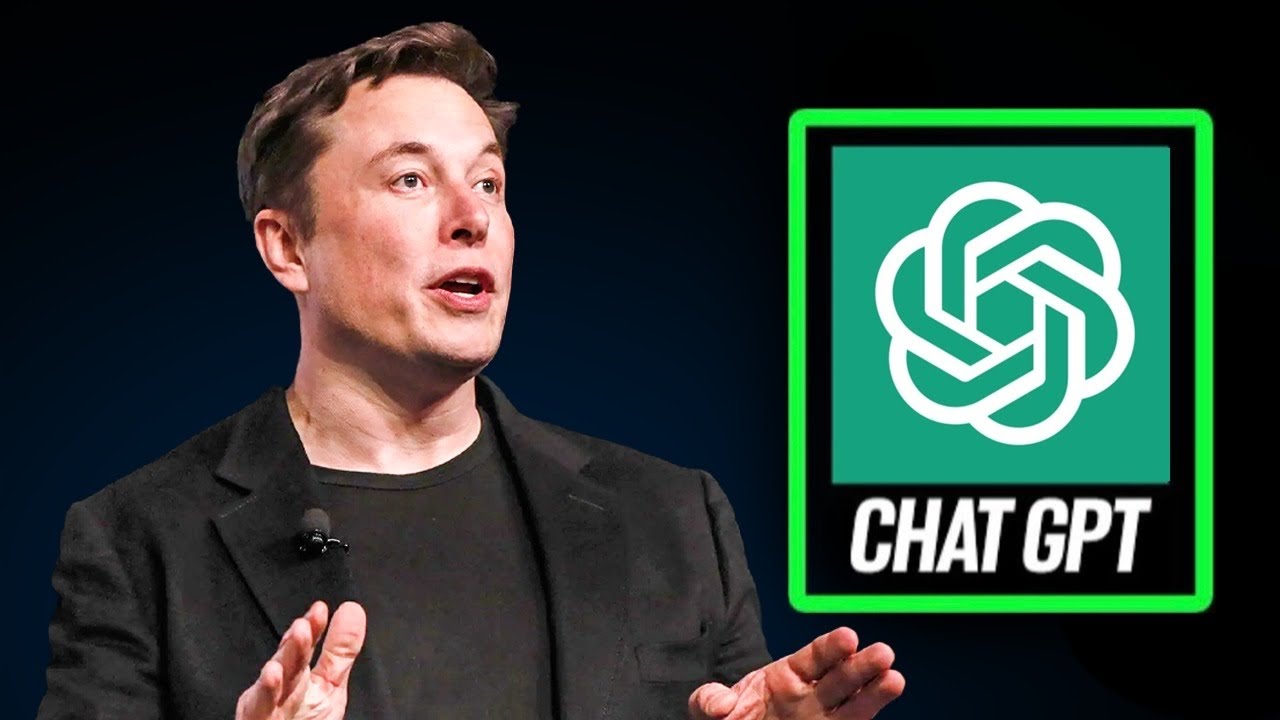
Elon Musk is seeking as much as $134 billion in damages from OpenAI and Microsoft, arguing that both companies benefited enormously from his early backing of the artificial intelligence startup and that those gains were improperly obtained after OpenAI abandoned its original mission.

The bid is fast becoming one of the most consequential legal battles in the global AI race, not only because of the staggering sums involved, but because of what it could mean for how artificial intelligence is funded, governed, and commercialized.

At its core, the lawsuit is an attempt by Musk to retroactively redefine his role in OpenAI’s origin story — from philanthropist and early supporter to aggrieved architect whose contributions, he argues, laid the groundwork for extraordinary private gains that he was unfairly cut out of.

In the filing submitted on Friday, Musk contends that OpenAI’s transformation from a nonprofit research lab into a for-profit enterprise tightly aligned with Microsoft fundamentally altered the bargain under which he provided early funding, credibility, and strategic support. He argues that those changes enabled OpenAI to generate between $65.5 billion and $109.4 billion in value, while Microsoft extracted a further $13.3 billion to $25.1 billion through its exclusive cloud, licensing, and distribution arrangements.

The numbers themselves are striking, but so is the legal theory underpinning them. Musk is not claiming conventional investor damages. Instead, he is seeking “disgorgement” — the return of what he describes as “wrongful gains” — a remedy more commonly associated with fraud or breach of fiduciary duty than with disputes between founders and donors. His filing explicitly likens his role to that of an early startup investor who took existential risk and therefore deserves outsized returns once the venture succeeds.

OpenAI and Microsoft reject that framing outright. They argue that Musk was never promised equity-like returns, that OpenAI’s restructuring was necessary to raise capital at the scale required to compete in frontier AI, and that Musk’s claims amount to an unprecedented attempt to siphon value out of an organization he voluntarily left seven years ago.

The companies’ counter-filing attacks the credibility of Musk’s damages model, warning that it invites jurors to speculate about hypothetical alternate histories of OpenAI — scenarios in which Musk remained involved, the nonprofit model remained intact, and Microsoft’s role was either reduced or nonexistent. They argue that such speculation is not only unverifiable but fundamentally misleading.

Beyond the courtroom, the case exposes deeper fault lines in the AI ecosystem.

First is the unresolved tension between public-interest AI and commercial reality. OpenAI was founded on the idea that artificial general intelligence should benefit humanity broadly, not concentrate power or wealth. Musk’s lawsuit leans heavily on that original mission, portraying the Microsoft partnership and profit-seeking structure as a departure so severe that it invalidates earlier commitments. OpenAI counters that without commercialization, the organization would have been unable to fund the computing power, talent, and infrastructure needed to remain competitive.

Second is the question of control. Musk left OpenAI in 2018 after disagreements over leadership and direction. Since then, the company has become one of the most influential forces in technology, while Musk has launched xAI to compete directly with it. That competitive overlap looms over the case. OpenAI and Microsoft have already characterized Musk as a “donor-turned-competitor,” suggesting his legal action is as much about weakening a rival as it is about righting alleged wrongs.

Third is the precedent the case could set. If a jury accepts Musk’s argument, it could unsettle how nonprofits, research labs, and mission-driven organizations attract early funding. Future donors and founders may demand clearer exit rights, financial upside, or contractual safeguards, potentially accelerating the shift away from nonprofit structures in cutting-edge technology fields.

The stakes are heightened by the remedies Musk is seeking. In addition to massive financial damages, his filing leaves open the possibility of punitive penalties and injunctive relief. Even a narrowly tailored injunction could disrupt OpenAI’s governance or constrain aspects of its partnership with Microsoft — a relationship that underpins products across cloud computing, enterprise software, and consumer AI services.

The case carries reputational as well as financial risk for Microsoft. While the company insists it did not aid any breach of OpenAI’s mission, a prolonged trial will inevitably scrutinize how much influence it exerts over OpenAI’s strategy and whether its commercial interests shaped decisions that were once framed as altruistic.

The dispute is gradually evolving into a referendum on the economics of AI itself: who bears the early risks, who captures the rewards, and whether lofty founding ideals can survive once AI systems become engines of immense profit and power. Whatever the jury decides, the outcome is likely to ripple far beyond Musk, OpenAI, and Microsoft, shaping how the next generation of AI ventures are built, funded, and controlled.

Michael Saylor Pushes Back at Critics, Clarifies That Corporate Bitcoin Bets Are Not Reckless

0

Strategy chairman and Bitcoin advocate Michael Saylor has pushed back against critics who argue that companies holding Bitcoin are acting recklessly.

In a recent podcast, he compared corporate treasury Strategies to individual investing, arguing that ownership levels vary, but the underlying decision to hold BTC is rational regardless of company size or business model.

According to Saylor, companies today face limited attractive options for idle funds. Traditional instruments such as government treasuries offer low returns, while stock buybacks can fail to create value if the underlying business is struggling. He therefore argues that Bitcoin represents one of several possible alternatives, particularly for firms that can tolerate sharp price swings.

The Bitcoin advocate further stated that a company running at a loss could still improve its overall financial position if the value of its Bitcoin holdings rises faster than its operating losses. “If you’re losing $10 million a year but making $30 million in Bitcoin gains, didn’t I just save the company?”, he added.

“The Bitcoin community tends to eat its young,” Saylor said, adding that companies that hold Bitcoin are often held to a different standard than those that avoid the asset altogether.

His comment comes as CoinGecko’s annual report revealed that crypto treasury companies were among the year’s biggest buyers even as prices fell. Their balance sheets grew sharply, and their actions left a clear mark on supply and markets.

Reports disclose that these treasury firms deployed close to $50 billion into Bitcoin, Ethereum, and other tokens during 2025. At the start of the year, treasuries held more than $56 billion in crypto. By January one, 2026, that figure had risen to $134 billion, a gain of 137%. This buying helped push institutional ownership higher, with treasuries holding more than 5% of both Bitcoin and Ethereum supply by year-end.

94-Year-Old Fast Food Chain Steak ‘n Shake, stated on Saturday that it increased its Bitcoin (BTC) exposure and reiterated that its same-store sales have risen “dramatically” ever since it began accepting Bitcoin payments about eight months ago. In its post on X on Friday, the company said all Bitcoin sales are directed into its Strategic Bitcoin Reserve (SBR) and that it has now increased its Bitcoin stack by $10,000,000.

Data from public disclosures shows that listed companies collectively hold about 1.1 million BTC, representing roughly 5.5% of the 19.97 million coins currently in circulation. Strategy remains the largest public holder, with 687,410 BTC, according to Bitcoin Treasuries.

These figures help explain why corporate Bitcoin purchases draw significant attention from both markets and regulators. When companies accumulate large positions, the move is no longer seen as experimental; it becomes a material part of how their financial health is assessed.

Market observers remain divided. Some view large Bitcoin positions as a sign of strong conviction and long-term thinking. Others see them as a concentration risk that introduces additional volatility into corporate earnings and valuations.

As more firms adopt Bitcoin as a treasury asset, scrutiny is likely to increase. Once holdings reach the hundreds of thousands, the choice becomes central to how investors judge a company’s financial strategy.

Outlook

Looking ahead, corporate Bitcoin adoption is likely to remain a polarizing but increasingly influential trend. As more companies allocate meaningful portions of their treasuries to digital assets, the debate will shift from whether firms should hold Bitcoin to how they manage the risks associated with it.

Regulatory scrutiny is also expected to intensify. With treasuries now controlling over 5% of Bitcoin and Ethereum’s circulating supply, policymakers may view corporate accumulation not just as a financial decision, but as a systemic factor capable of influencing markets.

Forget DOGE and ZEC: Smart Money is Rotating Millions into Zero Knowledge Proof for a Predicted 6000x Gains

0

The global crypto market hit $3.23 trillion this week. While the Dogecoin (DOGE) price bull narrative targets $0.17, the recent Zcash (ZEC) price breakdown saw values test $380. But do these saturated giants truly offer life-changing multipliers?

Analysts point to Zero Knowledge Proof (ZKP). Experts report billions in stagnant capital aggressively rotating from Zombie Chains into ZKP, sparking a bidding war. This liquidity shift creates a supply shock, which researchers claim fuels a massive 6000x repricing event as demand overwhelms the daily allocation.

Wealth managers describe a liquidity avalanche flooding the ZKP auction, forcing prices vertical. With entry discounts evaporating, ZKP outperforms legacy assets, cementing its status as the top bullish crypto for investors racing against this tidal wave.

The $1.7 Billion ZKP Liquidity Vacuum

Zero Knowledge Proof stands as a fortress of completed infrastructure, boasting $100 million in self-funded development and hardware shipping immediately. Unlike projects selling promises, this Layer-1 protocol utilizes daily coin auctions to mechanically squeeze supply. Financial researchers reviewing these unique mechanics have identified it as the top bullish crypto, pointing to its finalized Inverted launch model.

A historic capital shift is accelerating. Wealth managers observe billions in stagnant funds fleeing Zombie Chains and aggressively rotating into the ZKP auction. This phenomenon, described as a liquidity avalanche, forces vast sums of capital to compete for a fixed daily allocation of 200 million tokens.

The math punishes hesitation. As liquidity floods the contract, the price per token spikes vertically, causing the Early Bird discount to evaporate in real-time. A strict $50,000 daily purchase cap forces wide distribution, creating a supply shock that prevents whale manipulation.

Analysts claim this structural imbalance fuels a 6000x repricing event, where overwhelming demand chases scarce assets. The $1.7 billion liquidity target is nearing completion, creating a high-stakes race against the market’s velocity.

Investors must beat this capital influx today to avoid the premium prices set by tomorrow’s winners. This race to front-run the rotation cements ZKP as the top bullish crypto, offering a mathematical path to generational returns.

Regulatory Wins Spark the Dogecoin (DOGE) price bull

Dogecoin currently sits between $0.145 and $0.15, yet massive institutional changes are unfolding. On January 15, 2026, 21Shares filed for a Dogecoin ETF, a move that brings Wall Street money closer to the asset. Simultaneously, the new CLARITY Act proposes classifying the coin as a safe non-security, clearing away long-standing legal fears. These shifts provide a solid base for the developing Dogecoin (DOGE) price bull, as analysts now eye a push past the $0.16 resistance level.

Technical data supports this optimism. A bullish divergence on the charts suggests momentum is building despite flat prices. Furthermore, the House of Doge is expanding into Japan to increase actual usage. If the price maintains support above $0.14, experts target a rise to $0.175. This mix of legal safety and global growth is driving the current Dogecoin (DOGE) price bull, marking a mature phase for the asset.

SEC Victory Reverses the Zcash (ZEC) price breakdown

Zcash recently faced a scary moment that traders identified as a severe Zcash (ZEC) price breakdown. Between January 10 and 13, the price dropped to support levels near $380 after reports confirmed the entire core development team had resigned. This sudden governance crisis caused panic selling, with many investors fearing the value would crash toward $164. However, the situation changed completely on January 14 when the Zcash Foundation announced that the US SEC had closed its investigation without recommending any legal action.

This major regulatory win triggered a sharp recovery, effectively canceling the expected Zcash (ZEC) price breakdown. In just 24 hours, the asset surged 14% to reclaim the $445 level. While the initial drop scared the market, the clarity from the SEC has restored confidence. With the price now holding firmly above $400, experts believe the immediate danger is over and the focus is shifting back to growth.

Summing Up

The market is witnessing a massive shift. Institutional ETF filings are currently driving the Dogecoin (DOGE) price bull, while a crucial SEC victory has officially reversed the dangerous Zcash (ZEC) price breakdown. Yet, the single biggest opportunity lies elsewhere.

Wealth managers describe a liquidity avalanche as capital flees stagnant chains to flood the Zero Knowledge Proof (ZKP) auction. This bidding war is overwhelming supply, and analysts claim this structural imbalance is triggering a massive 6000x repricing event.

With the daily discount evaporating, researchers call ZKP the top bullish crypto. The race is on. Experts warn that if investors do not beat this rush of capital today, they will miss the chance for generational wealth tomorrow.

Find Out More about Zero Knowledge Proof:

Website: https://zkp.com/

Auction: https://auction.zkp.com/

X: https://x.com/ZKPofficial

Telegram: https://t.me/ZKPofficial