DD
MM
YYYY

PAGES

DD
MM
YYYY

spot_img

PAGES

Home Blog Page 920

Meta Poaches Apple’s Top AI Executive As Push to Cement Superintelligence Ambitions Continues

0

In another bold move underscoring its ambitions to dominate the artificial intelligence (AI) frontier, Meta has hired Apple’s head of AI models, Ruoming Pang, marking a high-profile defection that underlines the escalating talent war among Silicon Valley’s tech giants.

Pang’s departure, first reported by Bloomberg, comes at a critical time for Apple as it struggles to keep pace with rivals in developing cutting-edge generative AI systems.

Pang led Apple’s in-house foundation models team, a group of over 100 engineers responsible for training the neural networks powering Apple Intelligence—the company’s newly launched suite of AI features. These include on-device functions such as Genmoji, Priority Notifications, and Mail summarization, all slated to roll out with iOS 18 later this year.

However, sources familiar with Apple’s AI efforts say the company’s models have failed to keep up with rivals like OpenAI, Anthropic, and even Meta itself. Apple has reportedly considered licensing external models to bridge the gap, including options from OpenAI and Anthropic, particularly for its upcoming Siri overhaul.

Pang’s departure may be just the beginning. People with knowledge of Apple’s AI division say other senior engineers could soon follow him out the door, casting further doubt over the company’s internal capacity to lead in the rapidly evolving AI space.

Meta’s Superintelligence Labs: A Magnet for Talent

Pang will now join Meta’s Superintelligence Labs, the elite AI division launched by CEO Mark Zuckerberg to accelerate the company’s long-term AI roadmap. Superintelligence Labs has become a destination for elite researchers and engineers, recruiting talent from OpenAI, Google DeepMind, and now Apple.

Meta’s Superintelligence Labs is helmed by Alexandr Wang, former CEO of Scale AI, a data labeling startup Meta recently acquired through a $14.3 billion investment. Wang now serves as Meta’s Chief AI Officer. Alongside him is Nat Friedman, the former CEO of GitHub, who will oversee Meta’s AI product strategy and applied research. The team also includes Daniel Gross, Friedman’s longtime business partner and the co-founder of Safe Superintelligence, a high-profile startup that rebuffed Meta’s acquisition offer earlier this year.

The team’s goal is to develop next-generation AI systems capable of multimodal reasoning, natural conversation, and even autonomous decision-making across Meta’s ecosystem.

Meta has reportedly offered compensation packages ranging from $10 million to $100 million for key hires, underlining just how serious Zuckerberg is about building what he’s called a “frontier AI platform”—an end-to-end system that will not only power Meta’s social platforms but also lead in enterprise and developer tools.

For Pang, the move represents both a leap into a more advanced AI environment and a chance to help shape the architecture of Meta’s AI offerings from the ground up.

Pang’s exit also reflects broader cracks in Apple’s AI strategy. While the company has prioritized privacy and on-device intelligence, that approach has limited its ability to deliver the kind of rich, real-time generative AI experiences users now expect. Meanwhile, competitors are racing ahead with large-scale cloud-based models, pushing updates at a blistering pace.

Meta’s poaching of Pang is just the latest in a long line of aggressive hires that illustrate the company’s intent to dominate AI. Earlier this year, it recruited top scientists from Google’s DeepMind, secured researchers from Safe Superintelligence (SSI), and added ex-OpenAI contributors to its AI safety and alignment units.

As Meta assembles what some in the industry have described as the “Avengers of AI,” Apple finds itself facing mounting pressure—not just to ship features, but to retain the talent capable of building them.

While Apple Intelligence will debut later this year in a suite of consumer-facing features, the company’s reliance on third-party AI providers for core capabilities suggests it is still playing catch-up. In contrast, Meta’s Superintelligence Labs is becoming a self-contained AI powerhouse, poised to lead innovation and influence the next wave of AI products across platforms and industries.

Pang’s jump from Apple to Meta may appear as a single hire—but it represents a seismic shift in the battle for AI supremacy. And with Meta aggressively stacking its AI roster, more shakeups are likely to follow.

Dubai’s RWA Milestone Positions The UAE As A Trailblazer In Digital Finance

0

Dubai’s approval of the region’s first tokenized money market fund, the QCD Money Market Fund (QCDT), is indeed a significant step in the UAE’s push to lead in real-world asset (RWA) tokenization. Launched by Qatar National Bank (QNB) and DMZ Finance, with regulatory approval from the Dubai Financial Services Authority (DFSA), the fund is domiciled in the Dubai International Financial Centre (DIFC). It aims to bring traditional assets like U.S. Treasuries on-chain, targeting institutional applications such as bank-eligible collateral, stablecoin backing, and Web3 payment infrastructure.

This move underscores the UAE’s broader strategy to integrate blockchain technology into its financial ecosystem, supported by a robust regulatory framework. The approval signals Dubai’s commitment to fostering compliant digital finance, with the global RWA tokenization market projected to reach $18.9 trillion by 2033. Posts on X reflect enthusiasm, highlighting Dubai’s proactive stance in creating infrastructure for tokenized assets, including real estate and bonds, positioning the city as a global hub for blockchain innovation.

However, while this development opens opportunities, investors should remain cautious, as tokenization introduces regulatory and market risks, and claims about specific projects (e.g., visa programs) have been debunked by UAE authorities. The UAE’s approval of the first tokenized money market fund in Dubai carries significant implications across financial, regulatory, and technological domains.

Legalizing tradable on-chain RWAs like the QCD Money Market Fund unlocks new investment opportunities, bridging traditional finance (e.g., U.S. Treasuries) with blockchain. This could accelerate the adoption of tokenized assets, with the global RWA market potentially reaching $18.9 trillion by 2033. The fund’s focus on institutional use cases (e.g., collateral, stablecoin backing, Web3 payments) could drive mainstream financial institutions to integrate blockchain, enhancing liquidity and efficiency in asset markets.

Dubai’s move strengthens its position as a global hub for digital finance, attracting capital, talent, and innovation to the DIFC and UAE. The DFSA’s approval establishes a robust regulatory model for tokenized assets, providing clarity and confidence for issuers and investors. This could set a global benchmark for RWA regulation. A regulated environment reduces risks of fraud and mismanagement, though investors must remain vigilant about unverified schemes (e.g., tokenized visa programs debunked by UAE authorities).

The framework paves the way for tokenizing diverse assets (real estate, bonds, commodities), fostering a scalable digital asset ecosystem. On-chain trading of RWAs enhances transparency, immutability, and settlement speed, potentially reducing costs compared to traditional systems. The fund’s infrastructure could spur development of interoperable blockchain platforms, enabling seamless cross-border transactions and DeFi integration.

Dubai’s proactive stance may encourage further R&D in tokenization tech, smart contracts, and digital custody solutions. By embracing RWAs, the UAE furthers its Vision 2030 goal of reducing oil dependency, boosting its fintech and blockchain sectors. The UAE’s first-mover advantage in the MENA region could attract regional and global players, reinforcing its role as a financial and tech leader.

As more jurisdictions explore tokenization, Dubai’s model could shape international standards, enhancing the UAE’s soft power in digital finance. While the DFSA provides oversight, evolving tech may outpace regulations, requiring continuous updates to address cybersecurity, AML, and KYC concerns. Tokenized assets tied to traditional markets (e.g., Treasuries) may face volatility or liquidity risks, especially in nascent on-chain markets.

Dubai’s RWA milestone positions the UAE as a trailblazer in digital finance, with potential to reshape global asset markets. However, success hinges on balancing innovation with robust regulation, investor education, and infrastructure development. Stakeholders should monitor official announcements and verify claims to navigate this evolving landscape effectively.

Africa: Rethink How You Build

0

The landscape of global innovation is shifting at an unprecedented pace, and recent trends at Tekedia Capital highlight a critical divergence. Our latest cohort of 18 companies, invested in just three months ago, is demonstrating the fastest revenue growth we’ve ever observed, surpassing even the strong performance of our October 2024 class. This earlier class included a remarkable company that achieved a $10 million Annual Recurring Revenue (ARR) within four months of its inception and is now on track for $100 million within its first year, having recently secured $36 million in funding.

This data leads to a stark conclusion: the innovation gap between developing and developed nations is not merely present, but rapidly widening to an asymmetrical degree. The defining characteristic of leading companies today is “AI-nativity.” These are not just firms using artificial intelligence, but rather businesses fundamentally built upon AI, regardless of their industry. For instance, the most successful insurance companies of tomorrow will likely be AI companies that happen to offer insurance products, not traditional insurance firms merely integrating AI. Similarly, a premier online tutor like ChatGPT isn’t an edtech company that uses AI; it’s an AI company providing educational services.

When we contrast these emerging, AI-native enterprises with many African startups, a troubling pattern emerges. The gap in the pace of innovation and the value delivered to users is expanding. There’s a tangible risk that many African Software-as-a-Service (SaaS) companies could face overnight disintermediation.

This observation is not an alarmist prediction, but a conclusion drawn from reviewing the financials of dozens of companies across five continents in Tekedia Capital. In this rapidly accelerating era of AI, many African startups are struggling to keep pace, and a significant portion of our SaaS companies could potentially disappear by 2027. Urgent action is required. We must fundamentally rethink our approach to building businesses to ensure Africa can compete and win in this new global landscape. I have called the landscape the accelerated society era and we must find our level there productively.

The Accelerated Society: A New Era of Disruption and Integration

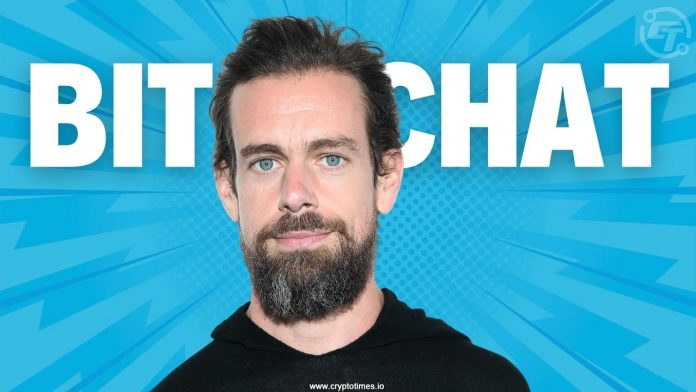
Jack Dorsey Unveils Bitchat, A Fully Decentralized, Off-Grid Messaging App With No Internet or Servers, Designed to Rival WhatsApp

0

Block CEO and Twitter co-founder Jack Dorsey has launched Bitchat, a radical new messaging platform that operates completely off the internet, signaling a major push toward decentralized, surveillance-resistant communication.

Announced over the weekend, the beta version of the app is now available on Apple’s TestFlight, with a white paper published on GitHub detailing the technical foundations of what Dorsey describes as a “personal experiment” in alternative connectivity.

Unlike mainstream messaging platforms such as Meta’s WhatsApp, Messenger, or Telegram, Bitchat does not require a phone number, email, or any central server to function. The app works entirely over Bluetooth mesh networks, allowing users to send encrypted messages between nearby devices — even in the absence of Wi-Fi, mobile data, or internet infrastructure.

A Challenge to Centralized Messaging Giants

Dorsey’s latest project is already being seen as a potential rival to WhatsApp, particularly in regions where internet shutdowns, government surveillance, or data privacy concerns are prevalent. While WhatsApp remains the dominant player in mobile messaging — with over 2 billion users globally — it requires user registration through personal identifiers like phone numbers, stores data on cloud servers, and has faced scrutiny over metadata collection and integration with Meta’s broader advertising ecosystem.

Bitchat, in contrast, is a privacy-first tool that doesn’t track users or store any messages outside of devices. Its peer-to-peer architecture ensures that conversations never touch centralized infrastructure, and messages are ephemeral by default, disappearing once delivered or after a set time.

How Bitchat Works

Bitchat leverages Bluetooth mesh networking and store-and-forward technology, enabling messages to hop across multiple devices like digital whispers in a crowd. Even if the recipient is not in range, another user’s phone can hold and later forward the message, making the system resilient in disaster zones, protest areas, remote regions, or under authoritarian censorship.

The app also includes support for group chats or “rooms,” which can be named using hashtags and locked behind passwords. In future updates, WiFi Direct support is expected, expanding the app’s operational range and speed while maintaining the infrastructure-free design.

This setup mirrors technology used in Bridgefy, a Bluetooth messaging app that became popular during the Hong Kong protests of 2019, and in Briar, another off-grid messaging app used in authoritarian states and emergencies. But Bitchat’s simple interface, strong encryption focus, and Dorsey’s influential backing could allow it to break through to a broader audience.

Aligning with Dorsey’s Push for Decentralization

The launch follows Dorsey’s continued advocacy for decentralized platforms. After stepping away from Twitter, he backed Bluesky, a federated social media protocol, and supported Damus, a Nostr-based app that runs on open standards with no central authority.

Bitchat is an extension of this mission. Dorsey called it an experiment in “Bluetooth mesh networks, relays, store-and-forward models, message encryption models, and a few other things” — essentially, a testbed for off-grid communication that could upend how people connect in restrictive or crisis environments.

Implications for Global Messaging and Security

Dorsey’s move comes at a time when governments are clamping down on encrypted communication, and tech platforms are facing increasing demands to hand over user data. In this climate, apps like Bitchat are not just technological experiments — they are statements of digital autonomy.

The potential to rival WhatsApp, especially among users concerned with privacy or living under regimes prone to surveillance or internet control, is substantial. While WhatsApp has end-to-end encryption, its reliance on centralized servers and phone-based identifiers creates attack surfaces that Bitchat aims to eliminate entirely.

Bitchat is still in beta and available only to iOS testers for now, but its ambition is clear. With no central database, user accounts, or app-based identity, it embodies one of the most radical visions yet for peer-to-peer communication.

In an era of growing concerns over state surveillance, tech censorship, and infrastructure failure, Jack Dorsey’s Bitchat is carving out a space where freedom of speech and privacy do not depend on connectivity — or on big tech platforms.

Key Lessons from How Nigerian Influencers Use Social Media

0

Between April 23 and July 6, 2025, an in-depth analysis of Nigerian influencers’ social media activity revealed fascinating patterns that speak volumes about how influence is built and sustained in the digital age. From the rapid-fire conversations of Twitter to the quieter corridors of LinkedIn, Nigerian social, business, and political influencers are making deliberate choices about where, how, and what they post.

In a country where social media platforms have become the new public square, understanding these choices offers valuable lessons for anyone seeking to shape narratives, build credibility, or mobilize audiences. In this piece, our analyst explores what the data tells us about platform preferences, content formats, and untapped opportunities. The article also states key lesson for aspiring influencers, brands, and strategists can learn from those who are already leading the way.

Twitter is the primary arena for digital influence

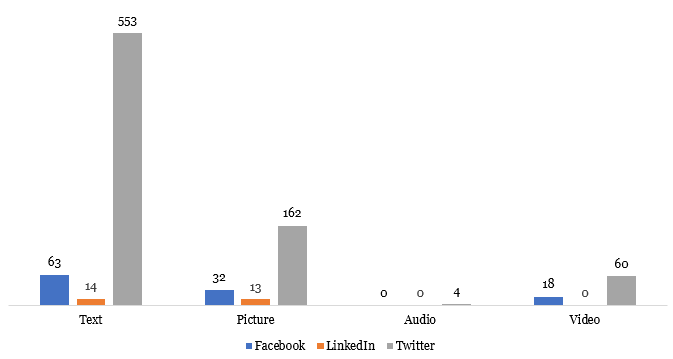
The analysis reveals that Twitter stands out as the most heavily used platform by Nigerian influencers. During the period under review, influencers posted 553 text messages on Twitter, far outpacing Facebook’s 63 and LinkedIn’s 14. Twitter also saw the highest number of picture posts at 162, compared to 32 on Facebook and 13 on LinkedIn.

Exhibit 1: Content type by social media type

social media types used by Nigerian influencers
Source: Social media handles, 2025

This pattern highlights Twitter’s role as the main stage for public discourse in Nigeria. Influencers use the platform’s immediacy and reach to share opinions, respond to events in real time, and participate in national conversations. The dominance of text posts is consistent with Twitter’s design as a text-first platform that encourages concise, impactful communication. The significant number of picture posts further suggests that influencers understand the power of visuals to drive engagement and virality.

The key lesson here is that Twitter is indispensable for those who want to shape conversations, mobilize followers, or assert thought leadership in Nigeria’s dynamic social and political landscape. Success on the platform requires not just frequent posting, but also an ability to deliver timely, relevant, and engaging content that resonates with fast-moving audiences.

Facebook plays a supporting role

Facebook emerged as a secondary platform in terms of message volume. Nigerian influencers shared 63 text posts, 32 picture posts, and 18 video posts on Facebook during the study period. These figures indicate that while Facebook remains part of the influencer toolkit, it is no longer the first choice for driving mass engagement.

Facebook’s strength lies in its community-building features and its support for diverse content formats. Influencers may use the platform to connect with specific audience segments, share longer updates, or participate in group discussions. However, the data suggest that Facebook is used more selectively, possibly for deeper engagement with established followers rather than for broad public influence.

The lesson from this is that Facebook should not be ignored, but its use should be strategic. Influencers and brands can benefit from tapping into the platform’s community features and its capacity for richer storytelling, but they must integrate Facebook into a broader, multi-platform approach that leverages other channels for greater reach.

LinkedIn remains a niche platform

LinkedIn recorded the lowest activity among the three platforms studied. Influencers posted only 14 text messages and 13 picture messages, with no audio or video content during the period. This reflects LinkedIn’s position as a platform for professional networking rather than mass communication.

Nigerian influencers appear to use LinkedIn sparingly, focusing on targeted messages aimed at professional audiences. This may involve sharing achievements, industry insights, or thought leadership content designed to enhance personal or organizational reputation. The limited activity suggests that LinkedIn is not the platform of choice for influencers seeking widespread visibility or rapid engagement.

The key lesson is that LinkedIn serves a specialized role. For influencers and organizations looking to build credibility within specific industries or professional communities, LinkedIn offers value. However, it should not be relied upon as the primary channel for broad-based influence.

Rich media formats are underutilized

One of the more striking findings is the limited use of rich media formats such as video and audio. Across all platforms, audio messages were rare, with just four recorded on Twitter and none on Facebook or LinkedIn. Video posts were more common but still relatively low, with 60 on Twitter and 18 on Facebook. LinkedIn had no video posts at all during the period analyzed.

This underuse of rich media stands in contrast to global trends where video and audio formats are becoming central to digital engagement. The data suggest that Nigerian influencers have yet to fully embrace these formats on Facebook, LinkedIn, and Twitter. It is likely that many influencers are turning to platforms like YouTube, Instagram, or TikTok for video and audio content, which were not included in this particular analysis.

The lesson here is that there is significant untapped potential in using video and audio to enhance digital influence. Influencers who are willing to invest in creating high-quality rich media content could differentiate themselves and build deeper connections with their audiences.

Editor’s Note: This article is a product of Infoprations’ Communicative Strategies of Nigerian Influencers Project, 2025. The team includes Abdulazeez Sikiru Zikirullah, Moshood Sodiq Opeyemi, Bello Opeyemi Zakariyha, and Oni Oluwaseun.