DD
MM
YYYY

PAGES

DD
MM
YYYY

spot_img

PAGES

Home Blog Page 925

Console-Like Visuals Hit Mobile Games

0

Australia’s mobile gaming sector is entering a golden age. Once limited by low-res screens and basic mechanics, current mobile titles now feature photorealistic lighting, advanced shading and effects comparable to console-quality graphics. These shifts are rooted in global technology trends, but the Australian market’s appetite—supported by strong 5G rollout and developer innovation—makes this a distinctly local evolution.

Mobile Gaming’s Visual Leap and Australian Market Outlook

Modern smartphones possess GPUs capable of rendering console-level visuals. That capability aligns with the success of apps such as Roblox, Minecraft: Play with Friends and other sandbox-style titles in early 2025. For instance, Roblox generated around AU$191 K weekly revenue in January–March before stabilising near AU$99 K, with active users around 800 K.

Australia’s mobile gaming market reached AUD 1.77 billion in 2024 and is forecast to exceed AUD 2.8 billion by 2034 at a CAGR of 4.7 percent. Speedier networks—5G specifically—are heavily credited; downloading large visual assets and streaming high-definition sequences now occur seamlessly.

Analysts at IMARC and Expert Market Research also link console-grade visuals directly to consumer retention. Immersive graphics hold attention longer, increase in-app purchases, and elevate brand reputation in crowded app stores.

Console-Grade Engines Driving Mobile Experiences

Technological enablers include:

  • Advanced mobile GPUs (e.g., ARM Mali-G78, Apple A17) offering desktop-level shaders and post-processing.
  • Game engines such as Unreal Engine 5 and Unity’s HDRP, enabling real-time global illumination and physically based rendering.
  • Cloud rendering and streaming over 5G, letting mid-tier devices deliver console-level fidelity via remote servers.

Local developers such as Melbourne’s Fgfactory and Virtua Technologies now release increasingly ambitious mobile titles. Remote studios meanwhile use Australia’s market as a testbed for graphic-heavy mobile ports.

Casino-Style Mobile Games: Growth and Monetisation

High-fidelity visuals have reshaped mobile casino titles as much as action shooters and racers. Ultra-realistic lighting, 3-D reels and cinematic lobby transitions now define Real Money games that run smoothly on modern handsets.

Platforms profiled by realmoneycasinosau.com illustrate how:

  • enhanced graphics shorten load times
  • strengthen player trust
  • meet strict auditing standards.

Developers report that visual polish is now budgeted alongside compliance tools when green-lighting a new Real Money Casino Australia release.

Industry data compiled by market-tracker Telsyte shows that deposits rise by almost one-fifth. This occurs when a legacy slot app is updated with console-grade shaders and particle effects. Mid-2024 telemetry confirms the trend across multiple studios.

  • Higher monetisation: polished interfaces support premium coin bundles.
  • Longer sessions: detailed animations keep users engaged.
  • Discoverability boost: store algorithms prioritise visually rich titles over simpler ones. This helps the best online casino apps secure valuable top-chart positions.
  • Brand credibility: studios deploying console-style assets see lower first-day churn.

Analysts believe the gap between mainstream mobile games and specialised Real Money Casino products will continue to narrow. Improving mobile GPUs are driving this shift. As a result, the sector is moving toward parity with handheld consoles in both visual quality and user expectations.

Interactive Titles & Console-Like Fidelity

Australia’s mid-core and hardcore mobile gamers gravitate to action and sandbox titles with console-level aesthetics. YouGov data classifies 29 percent of Aussies as medium gamers, and 4 percent as heavy—many play graphically intense mobile games weekly.

Popular engine-driven titles include Genshin Impact, Apex Legends Mobile and Call of Duty Mobile, which blend fast-paced gameplay with real-time ray-tracing support. Their success in Australia reflects broader trends—console-dominant aesthetics now standard in premium mobile experiences.

Emerging Ecosystem: Devices, Monetisation, Market Segments

Australia’s gaming ecosystem now spans mobile, console and cloud. Key data points include:

Segment Revenue (2024) Forecast Growth
Mobile gaming AUD 1.77 billion 4.7 % CAGR to 2034
Console gaming USD 840 million 9.5 % CAGR to 2033
Overall video game market USD 12.6 billion 16.5 % CAGR to 2030

Hybrid trends are emerging: mobile-first titles upscale to OLED handhelds, streaming consoles to devices over 5G networks. Cloud gaming trials in Australia are showing traction in apps like NVIDIA GeForce Now.

Monetisation models are evolving too:

  • Freemium with cosmetic and loot-box sales
  • Battle passes unlocking content via subscription
  • Gacha systems tied to high-fidelity character animations

Visual investment drives both user engagement and in-app economy lifecycles.

What This Means for Developers and Players

Console-level mobile graphics not only win downloads—they enhance:

  • User retention – high visual quality keeps players engaged
  • Revenue density – immersive environments support premium spend
  • Brand credibility – polished visuals communicate reliability and scale

Australian developers, bolstered by state grants and IGEA support, are using this graphic edge to compete internationally. Yet this raises challenges around device compatibility, bandwidth constraints, and ethical monetisation (e.g., loot-box regulations).

Australia’s mobile gaming market has come of age—powered by console-grade visuals, skyrocketing user expectations and a monetisation ecosystem ready to capitalise. As technical capability expands and regulation catches up, the country is set to remain a leading force in the APAC region’s gaming revolution.


Tech and Lifestyle Highlights That Matter in July 2025

0

July doesn’t just mark the middle of the year; it brings a shift in pace across gaming, tech, and culture. Key announcements, launches, and changes this month aren’t just noise; they’re signals about where creative industries, gadgets, and daily habits are heading. Whether it’s a new console release, a slick foldable phone, or a fashion move rooted in material, this month shapes the tools we use and the stories we live.

Gaming Grabs the Spotlight

On July 17, Donkey Kong Bananza launches exclusively for Nintendo Switch 2. Developed by the Super Mario Odyssey team, it’s the first full 3D Donkey Kong game since 1999’s Donkey Kong 64 and the first new platformer since Tropical Freeze in 2014. Featuring co-op with Pauline, destructible underground zones, and transformation-based mechanics, it showcases the console’s shift toward character-driven adventures.

Nintendo is also distributing Switch 2 dev kits to select indie studios, with titles built for next-gen features not possible on the original Switch, signaling a move toward performance-based exclusivity. Meanwhile, on PC, the Steam Summer Sale is in full swing, but it’s indie titles like Night Segment and Forecourt that are dominating Twitch streams and online buzz.

Outside of screens, gaming is reclaiming physical space. Pop-up arcades, VR lounges, and retro tournament nights are growing again in major cities across Europe and North America. Whether for competition or nostalgia, these venues offer players something digital platforms can’t replicate: face-to-face community. At the same time, online casinos continue to thrive due to their massive game libraries, fast payouts, flexible transaction methods, and generous perks like welcome rewards, cashback offers, and free spins. However, every platform has its own strengths. This expertly curated comparison for July 2025 breaks down what each online casino offers and which ones are gaining traction this summer. From console launches to indie hits and arcade revivals, July’s gaming scene shows how play keeps evolving, on every screen and in every space.

Foldables and Smarter Systems

Samsung’s Galaxy Unpacked is set for July 9 in Brooklyn, where the company will unveil the Galaxy Z Fold 7 and Z Flip 7. The Fold 7 is expected to be slimmer and lighter than previous models, featuring an 8-inch inner screen, a 6.5-inch cover display, a 200MP rear camera, and a Snapdragon 8 Elite chip. Leaked dimensions place it at 8.9 mm folded and 4.2 mm unfolded, making it Samsung’s thinnest foldable yet.

The Z Flip 7 will likely see a bump to a 4.1-inch outer display and a 6.9-inch inner foldable screen, both running at 120Hz. Battery life improves with a 4,300mAh capacity. Both devices will ship with Android 16 and One UI 8, Samsung’s latest interface with AI-driven layout and multitasking features.

Also, this month, Qualcomm will hold its first Snapdragon Auto Day in New Delhi on July 30. The event will highlight advances in connected vehicle technology, including V2X communication, cloud-integrated ADAS systems, and Snapdragon Ride platforms. With AWS as a partner, Qualcomm’s push into the automotive sector reflects India’s growing relevance as a hub for tech-enabled mobility.

Meanwhile, Amazon Prime Day is stretching from July 8 to 11, with a deeper focus on personalization. Amazon is now adjusting deal visibility based on how users scroll, not just what they search, making this year’s event feel less like a blanket sale and more like an evolving storefront.

Clothing, Materials, and Micro-Details

Fashion this July is defined by fabric choices and construction details. Gingham prints are trending again, seen across both formal and casual wear. It’s not just nostalgia, it’s about familiarity layered with function. Resin bangles, scarf-belts, and textured accessories support a return to tactile elements.

Sneaker designs are slimming down, prioritizing lighter materials like suede and mesh over the chunkier looks that dominated the past few years. Skirts are showing asymmetry, layering, and structured edges. Rather than leaning into logos or hyper-trends, current styling favors items that feel considered and personal.

What’s emerging is a split: designer houses are pushing oversized, maximalist ensembles, while Gen Z leans toward thrifted, mismatched fits that reject seasonal pressure in favor of individual rhythm.

Food That Tastes Like Storytelling

The Summer Fancy Food Show in New York underscored a shift that smaller trends had already been signaling. This year’s focus wasn’t on fine cheeses or aged wines, but on mushroom-based sodas, probiotic protein snacks, sparkling waters styled after craft beer, and restaurant-quality pantry items. These choices reflect more than novelty; they signal a deeper change in how food is being packaged, presented, and consumed.

Ramen broths, chilli oils, and curry pastes once found only in restaurant kitchens are now made for the home shelf, making it easier to bring complex flavors into everyday meals. But this isn’t about indulgence. It’s about connection. People are seeking more than taste; they want to know the origin, the intent, and the role a product plays in their lives.

The direction is clear. Food that resonates today isn’t just functional; it’s thoughtful. What rises to the top are products that carry identity, purpose, and a sense of story, offering something that feels considered, not just convenient.

Immersive Nights Out and New Leisure Norms

While digital platforms still dominate entertainment, there’s a growing return to real-world, immersive group experiences. July is seeing strong attendance at escape rooms, interactive exhibits, and projection-based installations. In cities like London and Berlin, venues are blurring the line between gallery, game space, and nightlife.

Cinema is quietly evolving too. Themed nights that combine gaming competitions with screenings are gaining traction. Some independent theatres are even experimenting with audience-vote endings or real-time polling to steer the narrative of experimental films.

Concerts and live shows are shifting toward more modular formats: smaller, more frequent events, limited-run pop-ups, and artist-curated retail drops that tie the event to a memory. In-person events are no longer just about attendance; they’re about participation and shareable identity.

Conclusion

July 2025 marks a shift toward coherence across tech, style, and everyday choices. Devices, games, clothes, and food are all starting to reflect a shared demand: people want experiences with substance. The tools we use are becoming more intelligent and more personal. Clothing choices carry a narrative. Meals connect to memory and place. Whether it’s buying a foldable, queuing for an escape room, or playing through Donkey Kong Bananza, this month highlights a clear move toward meaningful engagement, not just staying current, but feeling connected.

Blink & You Might Miss It! Neo Pepe Coin’s ($NEOP) Fourth Presale Stage  Moving Fast

0

Meme Coin Innovation Fuels Presale Frenzy

Crypto markets are experiencing a surge in presale interest, with innovative meme coins rapidly gaining traction. Analysts point to projects that blend technology, tokenomics, and community-driven ecosystems—rather than just viral hype. Recent coverage highlights how meme coins have evolved beyond mere jokes to serious investment vehicles.

Prominent crypto influencer Ben Armstrong, better known as BitBoy Crypto, recently underscored the significance of timely participation in presales, stating that strategic early entry could yield substantial influence within community-driven projects. This echoes sentiments across platforms like Binance and Uniswap, where emerging tokens frequently witness explosive debuts immediately following presale completions.

Decentralized Exchanges Fuel Rapid Crypto Growth

Decentralized exchanges (DEXs), particularly Uniswap, have witnessed accelerated activity, largely driven by investors’ insatiable appetite for early-stage tokens. These platforms provide not only trading flexibility but also crucial liquidity pools necessary for fledgling tokens to thrive post-launch. The DEX environment fosters a robust ecosystem where investor actions can immediately influence token valuation and stability.

Recent data from blockchain analytics firm Glassnode reveals significant upticks in liquidity pooling and trading volume on decentralized exchanges, emphasizing the pivotal role these platforms play during presale events. Such engagement further highlights investor confidence and their willingness to back projects promising substantial community governance and robust tokenomics.

Stage Three Wraps Up & Stage Four Nears

Neo Pepe Coin, currently in its third presale stage, exemplifies the intensity and urgency prevalent in today’s crypto market. With a carefully orchestrated 16-stage presale structure, Neo Pepe Coin’s ongoing third stage is nearing completion, prompting potential investors to act swiftly. The current token price, approximately $0.07, will soon rise to $0.08 as stage four approaches, underscoring the immediacy of the moment.

Neo Pepe operates through a transparent presale that issues tokens via incremental pricing tiers—starting at roughly $0.05 and escalating gradually. Each transaction feeds a 2.5% auto-liquidity fund that is permanently burned to fortify long-term price stability. This model helps guard against pump?and?dump schemes while solidifying trust.

Top 5 Crypto Presales For New Crypto Investors

The presale landscape of 2025 is vibrant and filled with projects poised to significantly impact the cryptocurrency ecosystem. Investors looking to secure early positions should closely monitor these standout opportunities:

  1. Neo Pepe Coin ($NEOP): Offers a transparent 16-stage presale with incremental pricing, robust auto-liquidity mechanisms, decentralized governance via the NEOPGovernor contract, and a strong thematic “Memetrix” narrative emphasizing financial freedom and decentralization.
  2. Remittix (RTX): Aims to revolutionize international remittance through blockchain, dramatically reducing transaction costs and increasing speed and transparency across borders.
  3. Solaxy (SOLX): Positioned as the next-generation decentralized platform, Solaxy focuses on scalable blockchain transactions, interoperability, and advanced smart contract capabilities.
  4. Bitcoin Bull (BTCBULL): Uniquely combines meme culture with the historical growth and resilience associated with Bitcoin, appealing to both meme enthusiasts and traditional crypto investors.
  5. Kaanch (KNCH): Dedicated to environmental sustainability, Kaanch integrates blockchain technology with eco-friendly initiatives, aiming to reshape how sustainable practices are tracked, incentivized, and adopted globally.

Embracing Meme-Powered Decentralization

Neo Pepe Coin stands distinct as arguably the top Pepe coin available today, seamlessly blending the viral energy of meme coins with genuine decentralized governance. It establishes itself firmly within the crypto narrative through compelling thematic branding known as the “Memetrix,” symbolizing financial freedom and decentralization.

Key to Neo Pepe’s allure is its robust governance structure powered by the NEOPGovernor contract, granting holders meaningful control over future development, strategic exchange listings, and treasury management. This decentralized decision-making positions Neo Pepe Coin as the best Pepe coin for both serious investors and meme enthusiasts alike.

Strategic Auto-Liquidity Mechanism & Investor Attraction

Unique among emerging tokens, Neo Pepe employs a transparent auto-liquidity generation mechanism. Tokens acquired during presale stages are unlocked hourly post-launch, ensuring gradual market entry and significantly mitigating volatility risks.

Token Empire Delivers Insightful Breakdown of Neo Pepe Coin

Crypto reviewer Token Empire dives deep into Neo Pepe’s presale specifics, thoughtfully exploring its distinctive liquidity framework, creatively structured token distribution, and inclusive governance model. This concise and thoughtful analysis clearly illustrates why knowledgeable crypto participants are paying close attention to Neo Pepe’s rising momentum.

Nearly at Stage Four—Act Quickly

The swift progression towards stage four serves as a clarion call for crypto investors who value timely engagement and potentially significant market influence. Crypto experts consistently highlight that early-stage participation can be pivotal in shaping investment outcomes.

If you’ve been watching from the sidelines, now could be your moment—you might want to get a little Neo Pepe before this opportunity rapidly vanishes.

Escape Centralized Control—Enter the Memetrix

Don’t let centralized finance dictate your future. Embrace the Memetrix—take the red pill of decentralization, step boldly into the realm of financial freedom, and claim your place in the community-driven revolution. Act decisively now and rewrite your crypto destiny with Neo Pepe Coin.

For further engagement and detailed participation guidelines, visit the official Neo Pepe Coin website and join their community channels for the latest updates.

Get Started with $NEOP

  • Website: Neo Pepe Coin Official
  • Whitepaper: Neo Pepe Coin Whitepaper
  • Telegram: Neo Pepe Coin Telegram
  • Twitter/X: Neo Pepe Coin Twitter

What Nigerian Influencers Are Really Telling Us

0

In today’s contemporary media space, the voices of political, business, and social influencers help shape how Nigerians see themselves and their nation. Their posts, tweets, and statements often carry more weight than formal speeches, acting as signposts for public values, fears, and aspirations.

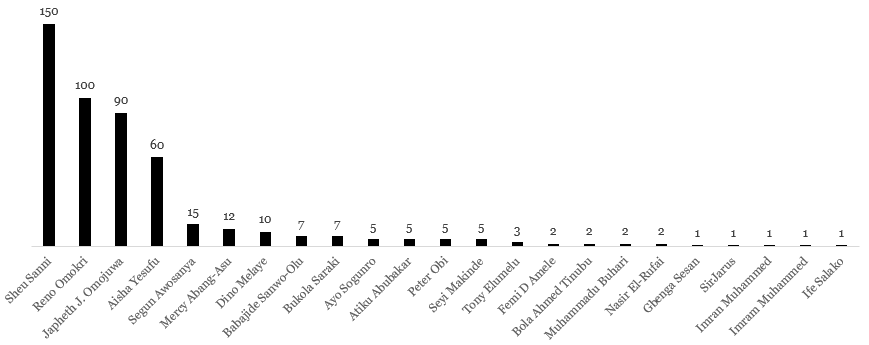
A recent collection of messages posted on Facebook, Twitter, and LinkedIn by Nigerian influencers (see Exhibit 1) between April 23 and July 6, 2025 paints a compelling picture of a country in reflection, resistance, and redefinition. Whether addressing politics, religion, identity, or development, these voices are doing more than reacting. They are actively shaping the national conversation.

Exhibit 1: Selected influencers and number of messages analysed

Source: Social media handles of the influencers, 2025

One of the strongest currents in these messages is politics and democracy. With rising political defections, influencers like former Senate President Bukola Saraki voiced concern over the state of party loyalty and democratic integrity. He argued that the People’s Democratic Party (PDP) is better off with “fewer members who are loyal, sincere, determined, and committed,” rather than those who shift allegiance opportunistically. Similarly, one of the influencers reminded Nigerians that Peter Obi won over 6 million votes in 2023 despite lacking governor support, suggesting that real democratic momentum comes from citizens, not political elites. These interventions highlight growing frustration with transactional politics and a desire for deeper political accountability.

Moral leadership also emerged as a major theme, especially following the death of Pope Francis. Influencers from different sectors offered rich tributes that revealed the Pope’s symbolic power in Nigeria’s moral landscape. President Tinubu called him a “humble servant of God” and “tireless champion of the poor,” while Peter Obi recalled their three personal meetings and praised him as a voice for justice and human dignity. These tributes suggest that many Nigerians are looking beyond their borders for moral clarity, and are eager for leaders, religious or political, who embody compassion, courage, and service.

Beyond politics and religion, influencers are also reflecting deeply on social identity and public behaviour, especially in the digital space. One widely shared post declared, “I don’t simply post, I launch ideas with precision.” This sentiment reflects a growing desire among influencers to be seen as thinkers and change-makers rather than mere entertainers. Others pushed back against online toxicity, warning that “social media and insults is like 5 and 6” in Nigeria today. These voices speak to a broader struggle over how Nigerians relate to one another in public, and the damage that unchecked hostility, trolling, and tribalism can cause.

Cultural pride and heritage were also central to many influencers’ messages. Lagos State Governor Babajide Sanwo-Olu highlighted the importance of the Fanti Carnival, saying it reaffirmed his belief in the role of heritage in shaping “a confident, creative, and united Lagos.” By celebrating indigenous festivals and historical communities like Isale-Eko, Campos, and Olowogbowo, leaders are reinforcing cultural identity as a counterbalance to global pressures and urban erasure.

At the same time, influencers are not shying away from harsh truths about Nigeria’s security and inequality. One commentator noted how lands belonging to historic public schools in Kaduna—built by colonialists or leaders like Ahmadu Bello—have been sold off for private mansions and shopping malls. In another tragic example, Sahara Reporters shared the story of Easter celebrants in Gombe who were killed by a truck in what was suspected to be a terrorist act. These events triggered emotional reactions, with influencers urging better governance and stronger community responsibility.

Despite these challenges, there is a thread of hope and active citizenship woven through many of the messages. One of the most uplifting moments came from the global celebration of chess champion Tunde Onakoya, who broke a Guinness World Record. Influencers like Sanwo-Olu used the occasion to praise perseverance and youth excellence. In the same spirit, Peter Obi made donations to a Catholic orphanage and an Anglican hospital, reinforcing the idea that leadership must be rooted in human service, not just public image.

What do all these voices and messages amount to? They reflect a Nigeria that is in deep search of itself. They show a people who are tired of political gimmicks, yearning for moral leadership, proud of their roots, and eager for a society where kindness, creativity, and justice can thrive.

The power of these messages lies not just in their content but in their collective direction. They are building a public consciousness that challenges both silence and cynicism. When influencers take a stand, share their grief, or celebrate progress, they are not just reacting. They are writing the story of Nigeria’s future.

Editor’s Note: This article is a product of Infoprations’ Communicative Strategies of Nigerian Influencers Project, 2025. The team includes Abdulazeez Sikiru Zikirullah, Moshood Sodiq Opeyemi, Bello Opeyemi Zakariyha, and Oni Oluwaseun.

African Startups: H1 2025 Breaks Records For $10M+ Deals And Exit Since 2022

1

In a resounding display of resilience and growth, African startups have made a powerful statement in the first half (H1) of 2025.

Defying global economic headwinds and a cautious funding environment, the continent’s innovation ecosystem recorded its strongest performance in high-value deals and exits since 2022.

Recall that startups across the continent recorded a remarkable resurgence in fundraising in H1 of 2025, with total funding reaching $1.35 billion, a 78% increase compared to $800 million raised during the same period in 2024.

A report by Africa: The Big Deal, revealed that H1 2025 saw the largest number of $10m deals and exits since 2022, signaling renewed investor confidence and a maturing startup landscape driven by bold ideas and scalable solutions tailored for Africa and beyond.

A deeper look into the funding landscape reveals more nuanced trends around deal sizes, investor activity, and exit momentum. Between January and June 2025, 238 startups across the continent secured funding of at least $100,000. This figure is consistent with trends observed since mid-2023, although it falls slightly short of the numbers recorded in H1 and H2 2024. Of these, 108 startups raised over $1 million again, in line with recent patterns but marginally above average.

Notably, there has been a significant uptick in larger funding rounds. A remarkable 39 startups raised $10 million or more during the period, marking a return to levels not seen since the peak of investor enthusiasm in mid-2022. This is well above the average of 26 large deals per half-year recorded over the past five periods.

While most of these sizeable deals occurred in Africa’s traditional “Big Four” startup ecosystems—Nigeria, South Africa, Kenya, and Egypt, there was also notable activity in emerging markets. These include Côte d’Ivoire (Djamo), Ghana (Zeepay), Senegal (Wave, Kera Health), Togo (Gozem), and Uganda (Furaha), signaling a broader geographic spread of investor interest.

Exit activity also saw a surprising surge. There were 21 reported exits in H1 2025—almost matching the total number of exits recorded across all of 2023 (20) and 2024 (22). June alone saw six exit announcements, a level of activity not witnessed since 2022. However, detailed data on these exits remains limited, making it difficult to assess deal volumes or valuations.

On the investor front, over 330 unique investors participated in at least one $100k+ deal in Africa during H1 2025. This figure marks a slight increase from H1 2024 but remains below H1 2023 levels (400+) and far behind the 675+ recorded in H1 2022. The most active investors so far include DEG (the German Development Finance Institution, part of the KfW group), largely through BMZ’s develoPPP grant programme, and Digital Africa, a subsidiary of French DFI Proparco.

Other consistently active investors in the top ten include Launch Africa, Renew Capital, an Africa-focused venture capital firm that invests in early-stage tech-enabled startups, British International Investment (BII), and Partech Africa. A new entrant to the list is Investing in Innovation (i3), a pan-African initiative that support the commercialization and impact of leading startups with grants, introductions to major healthcare organizations and support to close partnerships.

Overall, the first half of 2025 has seen a healthy mix of stability and momentum in Africa’s startup funding scene, with renewed interest in larger deals and exits pointing to a maturing investment landscape.