DD
MM
YYYY

PAGES

DD
MM
YYYY

spot_img

PAGES

Home Blog Page 927

Samsung’s $44bn U.S. Chip Bet Hits Roadblocks Amid Demand Woes Buoyed by Export Restrictions

0

Samsung’s much-anticipated semiconductor fabrication plant in Taylor, Texas, is facing fresh delays, with sources attributing the setback to a combination of low customer demand and rapidly shifting chip technology standards.

The $44 billion facility, envisioned as a centerpiece of America’s push to reclaim chip-making supremacy, is now highlighting a critical flaw in Washington’s semiconductor strategy: an overemphasis on supply without addressing weakening demand, worsened by restrictive U.S. export policies.

The South Korean tech giant began constructing the Taylor site in 2022 with a $17 billion investment, later expanding its ambition to a multi-fab campus supported by a $6.6 billion CHIPS Act subsidy. Although the factory is now reportedly 92% complete, sources told Nikkei Asia that Samsung cannot move forward with chip production because it has no guaranteed buyers.

“Local demand for chips isn’t particularly strong, and the process nodes Samsung planned several years ago no longer meet with current customer needs,” the executive told Nikkei Asia. “However, overhauling the plant would be a major and costly undertaking, so the company is adopting a wait-and-see approach for now.”

Originally intended to produce 4nm chips, Samsung is now aiming for 2nm production to stay competitive. However, upgrading fabrication capabilities at this stage requires billions more in equipment, labor, and calibration costs — at a time when order books are thin.

Trump’s Chip Push Meets Market Reality

The delay is awkwardly timed. President Donald Trump has made domestic semiconductor production a cornerstone of his second-term industrial policy, repeatedly emphasizing the need to reduce U.S. dependence on Asian suppliers. The CHIPS Act, passed with bipartisan support, aimed to reinvigorate local manufacturing by providing over $52 billion in funding and tax breaks to companies building in America.

But Samsung’s stalled progress underscores a fundamental miscalculation: Washington bet heavily on boosting production capacity but did not adequately anticipate that demand could cool amid global economic uncertainty, overcapacity, and restrictive U.S. policies on chip exports.

“Although yields have since improved, U.S. restrictions on high-end chip production for China have further weighed on the company, keeping its capacity utilization below the industry average,” Trendforce analyst Joanne Chiao said to Nikkei Asia.

While demand for chips in artificial intelligence and cloud computing remains strong, consumer electronics and automotive sectors — which account for a bulk of chip consumption — have pulled back. High interest rates, inflation, and trade friction have further constrained purchases, leaving fabs like Samsung’s Taylor plant in a holding pattern.

A growing number of industry leaders are now urging the U.S. government to reconsider its sweeping export controls, especially those targeting China. While intended to protect national security and limit China’s access to advanced semiconductors, the measures have also constrained revenue streams for U.S. chipmakers and their partners.

Nvidia CEO Jensen Huang has been one of the most vocal critics. Speaking at multiple forums, Huang warned that the U.S. restrictions — particularly the ban on selling high-performance AI chips to China — are creating unintended ripple effects.

Huang said Nvidia expected to lose up to $8 billion in sales in the second quarter alone due to its inability to supply chips to China—the world’s largest market for AI infrastructure.

“You cannot underestimate the importance of the China market,” he stressed. “This is the home of the world’s largest population of AI researchers.”

Huang emphasized that while safeguarding national security is important, a more nuanced, surgical approach to export controls is essential. Blanket bans, he argued, risk weakening U.S. firms while allowing Chinese competitors, who have enjoyed state backing to boost domestic production, to fill the void.

Samsung’s Taylor ordeal is a cautionary tale for U.S. industrial planners. While America has spent billions to lure chipmakers, it has not ensured that economic conditions and policy environments are stable enough to sustain those investments.

Unlike TSMC’s Arizona plant — which is fully booked through 2027 with orders from Apple, AMD, Broadcom, and Nvidia — Samsung has no major U.S. customers lined up. Its lower market share and struggles with advanced-node yields have further limited its appeal. TrendForce estimates that Samsung holds only 7.7% of the global foundry market, compared to TSMC’s dominant 68%.

In addition, building new fabs is only part of the equation. Companies must also construct robust local supply chains, hire thousands of skilled workers, and secure long-term clients — all while dealing with regulatory uncertainty and geopolitical friction.

While Samsung still says it plans to open the Taylor fab by 2026, no firm production date has been set. With billions already sunk into the facility and CHIPS Act funds contingent on actual operations, the company is under pressure to get the plant up and running — or risk being left behind.

Some analysts believe that unless U.S. policymakers adjust their strategy to better align production incentives with global demand and review export controls, more fabs could soon join Taylor in limbo.

Ethiopia Secures $1bn World Bank Support to Boost Economic Reforms and Stabilize Financial Sector

0

Ethiopia has secured a fresh $1 billion funding package from the World Bank to bolster its wide-ranging economic reform agenda and address mounting financial sector vulnerabilities, the country’s Ministry of Finance disclosed over the weekend.

The agreement, made under the Second Sustainable and Inclusive Growth Development Policy Operation, was signed by Ethiopia’s Finance Minister Ahmed Shide, and Maryam Salim, the World Bank Country Director for Ethiopia, Eritrea, Sudan, and South Sudan. The financing comes in the form of both a grant and a concessional loan, marking a significant injection of international support as the government struggles to navigate post-conflict reconstruction, inflation, and foreign exchange shortages.

According to the ministry, the World Bank’s support will be channeled toward key areas of economic governance and development: stabilizing the financial sector, enhancing trade competitiveness, improving domestic revenue mobilization, and promoting transparency and effective governance. The funding will also help sustain social services delivery as the government works to maintain its fragile recovery.

“These are integral pillars of Ethiopia’s macroeconomic and structural transformation,” the ministry said in a statement. “The financing reflects the Bank’s continued commitment to supporting Ethiopia’s bold and far-reaching reform agenda.”

A Vote of Confidence — But with High Expectations

The fresh support from the World Bank is being interpreted by some observers as a vote of confidence in Prime Minister Abiy Ahmed’s economic team, despite a challenging fiscal environment. Ethiopia, still recovering from a brutal civil conflict in Tigray and facing high inflation, has been working to liberalize parts of its economy, modernize the financial sector, and attract foreign direct investment.

The World Bank’s support is expected to reinforce the government’s push to open up the banking and telecom sectors, overhaul tax administration, and introduce broader fiscal and monetary discipline — reforms that have drawn both praise and concern from citizens and development economists.

Ethiopia is facing significant external financing gaps. The local currency, the birr, has come under pressure from growing import demand and limited export earnings, while the country’s foreign reserves remain critically low. The public debt burden also remains a major concern, especially after the country missed a Eurobond repayment earlier this year, leading to a downgrade in its credit ratings.

The World Bank aims to help Ethiopia expand its tax base and reduce reliance on external borrowing by supporting domestic resource mobilization, a key concern raised by international lenders and credit agencies. The program also targets better oversight of public finances and efforts to restore fiscal credibility through transparency and efficiency.

The Ethiopian Ministry of Finance described the deal as a reaffirmation of the “strong and enduring collaboration” between Ethiopia and the World Bank — one that will be critical in helping the country navigate its macroeconomic pressures, rebuild trust in financial institutions, and lay the groundwork for inclusive growth.

This support comes at a time when the international development community is cautiously optimistic about Ethiopia’s reform efforts but remains watchful of risks. The World Bank itself has stressed the importance of continued implementation and political stability to ensure the reforms lead to measurable improvements in the lives of ordinary Ethiopians.

With this new injection of funds, the government will be expected to show tangible progress in cleaning up the financial sector, reining in fiscal deficits, and improving the effectiveness of public service delivery. But with inflation still hovering in double digits and millions of people facing food insecurity, the road remains fraught with challenges — even with international backing.

Trump Says U.S. to Begin Talks With China This Week on TikTok Deal, Claims “We Pretty Much Have a Deal”

0

President Donald Trump said Friday that the United States will begin formal talks with China this week over a potential agreement involving TikTok, the popular short-form video platform owned by China-based ByteDance.

The president, speaking aboard Air Force One, said discussions could begin as early as Monday or Tuesday, and may involve Chinese President Xi Jinping directly or one of his representatives.

“I think we’re gonna start Monday or Tuesday … talking to China – perhaps President Xi or one of his representatives – but we pretty much have a deal,” Trump said, suggesting that a framework for resolving the long-standing standoff over TikTok’s U.S. operations is already in place.

The president also floated the possibility of a diplomatic visit between the two leaders. “I might go there, or Xi might come here,” Trump added.

Last month, Trump and Xi formally invited each other for official visits amid efforts to manage growing tensions over trade and technology.

Trump’s remarks come after he issued a third executive order extending ByteDance’s deadline to sell or divest TikTok’s U.S. business to September 17, offering a temporary reprieve that avoids an outright ban on the platform. That order followed an earlier June 19 deadline, which itself had replaced a previous timeline set in April.

ByteDance’s failure to meet those earlier deadlines had put TikTok on the brink of being shut down in the U.S., where the app has amassed a user base of over 170 million people and plays a prominent role in American pop culture and political discourse. The White House’s stated concern has centered on the app’s potential to expose Americans’ data to the Chinese government, a claim TikTok has repeatedly denied.

Previously, during Trump’s first tenure, negotiations were underway to spin off TikTok’s U.S. operations into a U.S.-controlled firm, with ownership split among American investors. But progress stalled after Beijing signaled it would not approve such a deal. The current negotiation has spilled into a sweeping package of tariffs on Chinese goods — announced by Trump, which is widely interpreted as re-escalating economic tensions between the two powers.

Beijing’s Silence — and a Tense Backdrop

Notably, China has remained largely silent on TikTok in recent weeks, even as discussions over its fate have intensified in Washington. While that quietude might appear strategic, observers say it also reflects the broader tariff standoff between Beijing and the Trump administration. With trade friction escalating and TikTok’s ownership now entangled in a larger geopolitical contest, the upcoming talks are not expected to be smooth.

China’s position, however unstated recently, was more transparent earlier in the year. In the spring, officials made clear that any forced sale of TikTok’s U.S. operations would be viewed as a violation of its sovereignty and intellectual property rights. The Chinese Commerce Ministry added TikTok’s algorithm to its list of restricted technologies, signaling it would use its export controls to block any sale that included core software or recommendation systems.

Given this backdrop, analysts say that while Trump’s optimism is politically useful, the road to a final agreement remains rocky. The White House may need to negotiate not just a commercial transaction, but a face-saving arrangement that Beijing can accept without appearing to yield under pressure.

TikTok Thanks Trump and Vance, as Congress Watches Closely

Shortly after Trump’s comments, TikTok issued a statement thanking the president and Vice President J.D. Vance.

“We are grateful for President Trump’s leadership,” the statement read, adding that TikTok “will continue to work with Vice President Vance’s office to come to an agreement.”

Vance has emerged as a key intermediary in the process and has advocated for an approach that secures U.S. national security concerns without banning the platform outright — a move that could draw backlash from millions of users, particularly young voters.

But not everyone in Washington is pleased. Democratic Senator Mark Warner, vice chair of the Senate Intelligence Committee, slammed the executive order approach as circumventing Congress.

“The Supreme Court ruled the ban lawful. Yet the administration keeps issuing delays. This sets a troubling precedent,” Warner said in a statement.

He added that any future agreement must include enforceable safeguards on data privacy and content moderation, warning that a “cosmetic ownership change” would not suffice.

Though Trump suggested a deal is within reach, he admitted that China’s approval is still a key hurdle.

“I’m not confident, but I think so,” he said of Beijing’s willingness to sign off. “President Xi and I have a great relationship, and I think it’s good for them. I think the deal is good for China and it’s good for us.”

Behind the scenes, officials on both sides are reportedly exploring alternative structures, such as creating a U.S.-governed data firewall, licensing agreements, or partial ownership swaps to sidestep full divestment — any of which would require delicate diplomatic choreography.

Currently, TikTok remains online and under scrutiny, with its future hinging on complex negotiations that blend global politics with technology regulation. The countdown to September has started, and so has the next round of U.S.-China bargaining. Whether a deal can bridge the divide between tech sovereignty and security concerns remains an open — and consequential — question.

ADC Coalition: Is it a New Kind of Politics for a New Nigeria?

0

Nigeria’s political space has long been shaped by two dominant forces, the All Progressives Congress (APC) and the Peoples Democratic Party (PDP). Between them, power has changed hands, but for many citizens, meaningful change remains out of reach. In recent months, however, a new political conversation has begun, centered around the African Democratic Congress (ADC) and its growing coalition. The question many Nigerians are now asking is simple: is this just another alliance, or the beginning of a new kind of politics for a new Nigeria?

The ADC coalition is forming at a time when public frustration is at an all-time high. Across the country, the cost of living has soared. Basic necessities such as food, fuel, and housing are slipping out of reach for millions. A bag of rice now sells for ?70,000. A litre of petrol costs around ?935. Incomes have not kept pace, and for many, daily survival has become a struggle. This crisis has exposed deep failures in governance and weakened public trust in the political system.

In response, the ADC is presenting itself as a fresh alternative — not just a party, but a movement for rebuilding Nigeria from the ground up. Unlike many past coalitions, which were often centered on power-sharing deals or short-term political gains, this one is being pitched as a gathering of like-minded people who want to lead with purpose. Social media, especially Twitter, has become the primary space for mobilizing and shaping this message. Hashtags like #ItsADC and #CoalitionForChange are gaining attention, and many supporters are describing the movement as a “hurricane of hope.”

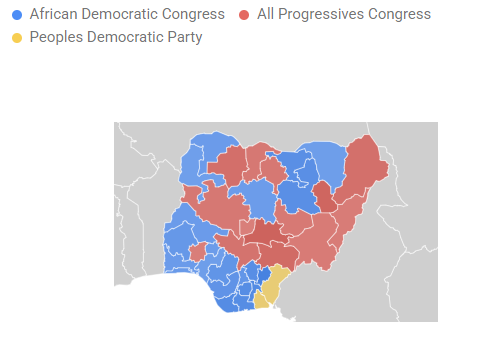
Exhibit 1: Public interest between July 1 and July 6, 2025

Source: Google Trends, July 1-July 6, 2025

One of the most notable aspects of this coalition is the diversity of those joining. Former PDP leaders like Atiku Abubakar, respected figures from APC like El-Rufai, and reform-driven personalities such as Peter Obi are all being associated with this movement. Youth leaders and civil society voices are also showing support. The idea is not simply to merge old names under a new party but to bring fresh thinking and shared values into one platform.

This coming together of past political rivals may raise eyebrows, and rightly so. Many Nigerians are wary of recycled politicians changing parties without changing their approach. But the ADC coalition seems to be trying to turn this skepticism into an opportunity. Its message consistently highlights unity, respect, and shared responsibility. In one widely shared tweet, a member urged followers: “We do not need to fight, insult, or attack anyone. When others resort to abuse or threats, we will respond with ideas.” That kind of language, focused on decency and solutions, is rare in Nigeria’s often aggressive political culture.

The coalition also places strong emphasis on real-life issues rather than political theatre. It speaks directly to the pain Nigerians are feeling. It acknowledges that citizens are tired of promises and are looking for honest leadership that actually listens and delivers. The message is not about one man or woman fixing everything, but about many people coming together to take responsibility for their country.

So, is this truly a new kind of politics?

The answer will depend on whether the coalition can stay focused and united. Nigeria has seen political partnerships rise quickly and collapse just as fast when egos and interests take over. The ADC will need to avoid those pitfalls if it hopes to earn the trust of a skeptical public. It will need to show that it is not just a reaction to APC or PDP, but a well-thought-out path to something better.

Politically, the ADC is gaining ground in areas like the South-West and the Middle Belt, regions known for their political engagement and appetite for reform. While the APC and PDP still have strongholds, the rise of a credible third force could reshape the way Nigerians vote — especially if younger and first-time voters get involved.

In the end, the ADC coalition is tapping into something real. It reflects a growing hunger for a different kind of leadership. Whether or not it succeeds in 2027 or beyond, it is already reshaping the political conversation. It is reminding Nigerians that change doesn’t have to come from the same familiar places. It can come from unity, bold ideas, and a renewed belief that a better Nigeria is not just possible, it is necessary.

Black Boxes That Shape Local Government Autonomy in Nigeria

0

Local government autonomy in Nigeria has long been a subject of constitutional debate and institutional contestation. While it is often discussed as a technical issue of administration or legislation, the reality is far more complex. Beneath the surface lies a web of power relations, institutional practices, and legal ambiguities that have become deeply entrenched.

Drawing from national newspaper reports spanning from 2010 to 2025, a close reading of Nigeria’s local government governance reveals how several black boxes continue to shape, and in some cases obstruct, the realization of true autonomy at the local level. These black boxes function by stabilizing certain governance practices, obscuring internal contradictions, and masking networks of influence and control.

One of the most enduring black boxes is the caretaker committee system. On the surface, it appears to be a temporary and lawful solution used by state governors when local government elections are delayed. In practice, however, it represents a politically expedient mechanism that circumvents democratic accountability. State governors routinely appoint political loyalists to head these committees. State Houses of Assembly often legitimize these appointments through tailored legislation. State Independent Electoral Commissions (SIECs), which should conduct local polls, frequently remain inactive or offer tacit support. The caretaker system, therefore, functions not through legality alone but through a network of actors who mutually reinforce each other’s authority and decisions. Over time, this network becomes taken for granted. It is rarely questioned except when civil society groups or legal advocates challenge it publicly or in court.

Closely tied to this is the black box of the State Independent Electoral Commissions. These bodies were established to manage local government elections and protect democratic integrity. In many states, however, SIECs have been compromised by political interference. Their budgets and leadership are controlled by the state executive, which limits their ability to act independently. Yet in public discourse, they are still referred to as electoral management bodies. This label conceals the political vulnerabilities and operational weaknesses they carry. As a result, their performance rarely comes under scrutiny unless their failures become too glaring to ignore.

There is also an emerging black box that represents a reformist ideal. This is the proposal to transfer the responsibility of conducting local government elections from SIECs to the Independent National Electoral Commission (INEC). Advocates argue that INEC, with its national reach and relative credibility, is better positioned to oversee impartial and regular elections. This proposal has gained traction among civil society organizations, youth movements, legal experts, and members of the National Assembly. However, even this solution depends on a broader network of support. It requires constitutional amendments, political agreement across federal and state levels, and consistent funding. Until these elements align, the model remains fragile and easily contested.

Another critical but often invisible black box is fiscal federalism. Although the constitution mandates financial independence for local governments, most states continue to operate joint accounts that allow governors to control local funds. This arrangement blackboxes the illusion of autonomy. Local governments are described as independent in law, yet they function within a structure that undermines their financial capacity. Reform efforts have been proposed, including direct allocation and increased financial transparency. These efforts, however, face resistance from those who benefit from the existing structure.

Our analyst notes that understanding local government autonomy in Nigeria requires more than legal analysis or administrative reform. It calls for a deeper look into the black boxes that obscure the true dynamics of governance. Caretaker committees, compromised electoral bodies, fragile reforms, and financial dependence are all part of a larger ecosystem that determines how power is exercised at the grassroots level. Actor-Network Theory offers a valuable lens for uncovering these hidden networks. For Nigeria to achieve genuine local government autonomy, it must not only design better systems but also confront and dismantle the entrenched practices that have been blackboxed for far too long.