DD
MM
YYYY

PAGES

DD
MM
YYYY

spot_img

PAGES

Home Blog Page 930

Black Boxes That Shape Local Government Autonomy in Nigeria

0

Local government autonomy in Nigeria has long been a subject of constitutional debate and institutional contestation. While it is often discussed as a technical issue of administration or legislation, the reality is far more complex. Beneath the surface lies a web of power relations, institutional practices, and legal ambiguities that have become deeply entrenched.

Drawing from national newspaper reports spanning from 2010 to 2025, a close reading of Nigeria’s local government governance reveals how several black boxes continue to shape, and in some cases obstruct, the realization of true autonomy at the local level. These black boxes function by stabilizing certain governance practices, obscuring internal contradictions, and masking networks of influence and control.

One of the most enduring black boxes is the caretaker committee system. On the surface, it appears to be a temporary and lawful solution used by state governors when local government elections are delayed. In practice, however, it represents a politically expedient mechanism that circumvents democratic accountability. State governors routinely appoint political loyalists to head these committees. State Houses of Assembly often legitimize these appointments through tailored legislation. State Independent Electoral Commissions (SIECs), which should conduct local polls, frequently remain inactive or offer tacit support. The caretaker system, therefore, functions not through legality alone but through a network of actors who mutually reinforce each other’s authority and decisions. Over time, this network becomes taken for granted. It is rarely questioned except when civil society groups or legal advocates challenge it publicly or in court.

Closely tied to this is the black box of the State Independent Electoral Commissions. These bodies were established to manage local government elections and protect democratic integrity. In many states, however, SIECs have been compromised by political interference. Their budgets and leadership are controlled by the state executive, which limits their ability to act independently. Yet in public discourse, they are still referred to as electoral management bodies. This label conceals the political vulnerabilities and operational weaknesses they carry. As a result, their performance rarely comes under scrutiny unless their failures become too glaring to ignore.

There is also an emerging black box that represents a reformist ideal. This is the proposal to transfer the responsibility of conducting local government elections from SIECs to the Independent National Electoral Commission (INEC). Advocates argue that INEC, with its national reach and relative credibility, is better positioned to oversee impartial and regular elections. This proposal has gained traction among civil society organizations, youth movements, legal experts, and members of the National Assembly. However, even this solution depends on a broader network of support. It requires constitutional amendments, political agreement across federal and state levels, and consistent funding. Until these elements align, the model remains fragile and easily contested.

Another critical but often invisible black box is fiscal federalism. Although the constitution mandates financial independence for local governments, most states continue to operate joint accounts that allow governors to control local funds. This arrangement blackboxes the illusion of autonomy. Local governments are described as independent in law, yet they function within a structure that undermines their financial capacity. Reform efforts have been proposed, including direct allocation and increased financial transparency. These efforts, however, face resistance from those who benefit from the existing structure.

Our analyst notes that understanding local government autonomy in Nigeria requires more than legal analysis or administrative reform. It calls for a deeper look into the black boxes that obscure the true dynamics of governance. Caretaker committees, compromised electoral bodies, fragile reforms, and financial dependence are all part of a larger ecosystem that determines how power is exercised at the grassroots level. Actor-Network Theory offers a valuable lens for uncovering these hidden networks. For Nigeria to achieve genuine local government autonomy, it must not only design better systems but also confront and dismantle the entrenched practices that have been blackboxed for far too long.


China’s DeepSeek Predicts Cardano (ADA), Ripple (XRP), and Little Pepe (LILPEPE) All-Time High Prices for the 2025 Bull Run

0

With the 2025 crypto bull run approaching, more crypto enthusiasts and investors will utilize the most advanced types of AI, including DeepSeek, to identify further performance of the most famous cryptocurrencies. Among the tokens with the most significant activity in the market, the AI algorithm DeepSeek has identified notable tokens such as Cardano (ADA), Ripple (XRP), and the currently booming Little Pepe (LILPEPE).  DeepSeek believes that these three cryptocurrencies will achieve new all-time highs in the upcoming bull market due to their distinctive infrastructure, high adoption ratio, and expanding utilization.

Cardano (ADA): The Rock Solid Climber that is to Surge Higher

Among the most innovative blockchain platforms, Cardano (ADA) is recognized as a sustainable and scalable technology for smart contracts and decentralized applications (dApps), currently trading at $0.55.  Despite the rising value and capitalization being slow and steady, Cardano (ADA) has not been able to compete alongside other blockchain projects, such as Ethereum (ETH) or Solana (SOL), which appear to be improving over time. The DeepSeek, however, predicts that Cardano is poised for a significant breakout, as its next upgrade, Hydra, is likely to drive the price significantly higher. The DeepSeek Prediction on Cardano (ADA): Target Price: 5.00 at the year-end of 2025. What makes it Bullish: The Hydra update will eliminate bugs related to scalability, and this issue will propel Cardano (ADA) to be one of the most popular options in DeFi and NFT projects. Moreover, the fact that Cardano is environment-friendly, using very little energy, appeals to institutional investors.

Ripple (XRP): Regulatory Clarity would Launch XRP to $10

Based on the DeepSeek prediction, the cost of XRP is expected to rise significantly if Ripple emerges victorious in the dispute with the SEC, as the prediction indicates that the XRP price will increase to beyond $2.19. XRP is already considered one of the oldest cryptocurrencies in the world, offering borderless payments as well as cross-border transaction solutions to the financial industry.  As soon as the legal aspect of Ripple is addressed, Deepseek expects a significant price jump, particularly given that XRP is still establishing a foothold in the global payment network. Prediction of Ripple (XRP) by DeepSeek: Price Target: $10.00 by year-end 2025. Reason why it is Bullish: Due to the precise legal understanding once it is provided, the potential of cross-border payments and DeFi applications of XRP is going to increase exponentially. An institutional demand for XRP, especially in emerging markets, is expected to rise, as Ripple becomes the preferred choice for sending remittances worldwide.

Little Pepe (LILPEPE): The Real Utility Meme Coin that is about to Go Crazy

The token has already shown that it can be a meme coin with some use. It is unlikely to compete with other meme coins, such as Dogecoin (DOGE) or Shiba Inu (SHIB), because Little Pepe (LILPEPE) offers a Layer-2 blockchain, which eliminates taxes, and provides the ability to block snipers using bots.  The transactions can be completed in a few seconds. This means that LILPEPE will have real-world value that other meme coins lack, as they only ride the hype waves, whereas LILPEPE will utilize the Pepe Pump Pad, a liquidity-locking and anti-rug pull meme token launching pad. As its community already consists of more than 5,000 people, and its presale has already received an enormous boost due to the raised amount of over $ 3 million, LILPEPE is destined to be one of the most influential meme coins in 2025. Prediction of DeepSeek on little pepe (LILPEPE): Price Target: $0.45 at the end of 2025. Why Bullish: LILPEPE is the meme coin that is unlike the typical meme coin, and it doesn’t want to be, because it’s all about real infrastructure and valuable applications. AI-powered forecasts indicate that LILPEPE has a 3,500x upside potential by 2026, so the meme token is all set to explode with the expansion of the meme coin market. The viral ad, along with the $777K giveaway, will simply increase it, causing the FOMO phenomenon and further increasing the price. The reason these tokens will explode in 2025 is.

Real World Applications:

Not speculative, community-based hype, like many other meme coins and blockchain projects, Cardano, Ripple, and LILPEPE all provide practical use cases in the form of DeFi, worldwide payments, and token launching services, which is why they are being viewed as long-term value projects.

Good Developer Ecosystem:

There is an expanding developer ecosystems that auger these projects. Cardano is still experiencing an inflow of developers who are keen on creating scalable and sustainable applications, and Ripple and LILPEPE are catching up with their new possibilities in the sphere of cross-border payments and meme coin ecosystems.

Regulatory Clarity:

Once clear on regulations, Ripple (XRP) will be among the major global remittance and cross-border payment providers.

Community and Marketing:

Having already generated tremendous community hype through its viral marketing efforts and 777K giveaway, LILPEPE not only features a Layer-2 blockchain, which means it was not created to scratch an itch, but also has genuine utility and safety features that distinguish it among other meme-driven coins, such as Dogecoin.

Institutional Adoption:

The growth of DeFi and NFTs leads to institutional adoption, and Cardano and Ripple may eventually be able to capitalize fully on their exceptional fundamentals. Due to its institutional potential, LILPEPE could reach new heights as it becomes more well-known in the meme coin environment.

A Good Way to Get These Tokens

Cardano (ADA): Cardano investors will want to monitor the rollout of Hydra and the growing institutional backing. As it continues to develop steadily and gain popularity, Cardano is expected to increase in value in 2025. Ripple (XRP): Ripple is about to end the legal war shortly, which would result in a substantial increase in the price of XRP. An investor targeting the early purchase of this currency should remember the growing popularity of Ripple in international money transfer. Little Pepe (LILPEPE): LILPEPE, with its presale price at $0.0013, is among the most underrated in the market. It has a real utility with its Layer-2 blockchain, and the fact that it boasts a tremendous community support makes it one of the best bets for early investors in terms of explosive growth.

Conclusion: Ripple, Cardano, and LILPEPE—The Future of Crypto

All of them, including Cardano (ADA), Ripple (XRP), and Little Pepe (LILPEPE), are expected to experience a massive boom in 2025. It may be the Scalability factors of Cardano, the legal status of Ripple, or the practical use of LILPEPE, but these tokens are becoming the big guns of the crypto-realm. With AI-powered insights still indicating high returns on such projects, those who have bought at the early stage will be the beneficiaries of the enormous potential such tokens have in 2025. Cardano and Ripple have stable and institutional-ready products, and LILPEPE is a coin that is undoubtedly going to take off, making it evident that these are among the best tokens to watch.


For more information about Little Pepe (LILPEPE) visit the links below:

Website: https://littlepepe.com

Whitepaper: https://littlepepe.com/whitepaper.pdf

Telegram: https://t.me/littlepepetoken

Twitter/X: https://x.com/littlepepetoken

Google Faces EU Antitrust Complaint Over AI Overviews as Publishers Fight for Survival

0

Google’s AI Overviews feature — the company’s much-hyped generative search tool — is now under formal antitrust scrutiny in Europe, after a coalition of independent publishers filed a complaint with the European Commission alleging the system is “abusing dominance” and devastating the online news ecosystem.

The complaint, filed by a group known as the Independent Publishers Alliance and supported by advocacy group Movement for an Open Web and legal campaigners Foxglove, accuses Google of misusing web content to power its AI-generated summaries at the top of search results, effectively cutting publishers out of the value chain.

“It’s clear: independent news faces an existential threat,” said Rosa Curling of Foxglove. “Google’s AI Overviews scrape and summarize the work of journalists and publishers without permission, diverting readers away and crushing the business model of news.”

The group is now demanding interim measures from EU competition regulators to temporarily halt or restrict Google’s AI Overviews while the complaint is being investigated.

AI Overviews and the ‘Zero-Click’ Surge

At the heart of the complaint is the growing trend of zero-click searches — queries that no longer result in users visiting external websites. Since the launch of Google’s AI Overviews in May 2024, the number of news-related searches that end without a click-through to a publisher has surged from 56% to nearly 69%, according to data from digital intelligence firm Similarweb.

The effects are already rippling across the industry. Organic traffic to news sites, once driven largely by search engine referrals, has plunged. At its peak in mid-2024, news sites were receiving over 2.3 billion visits per month via search. By May 2025, that figure had fallen below 1.7 billion.

These declines come at a time when AI is becoming the first stop for users seeking not just facts but context, summaries, and background information — needs traditionally filled by publishers.

No Real Opt-Out

One of the key arguments in the antitrust complaint is that Google gives publishers no meaningful choice. While technically a publisher can opt out of having their content used in AI Overviews, doing so would remove them from general Google search results altogether — a move that amounts to digital invisibility for most.

“You either let Google use your content to train and feed its AI, or you disappear from search entirely,” said one publisher backing the complaint. “That’s not consent. That’s coercion.”

The Alliance says this practice violates competition rules by forcing publishers into a lose-lose scenario: contribute free labor to a product that competes with their own, or face total marginalization.

Google’s Response

Google defended its AI Overviews feature in a statement to Reuters, saying the new AI experiences “enable people to ask even more questions, which creates new opportunities for content and businesses to be discovered.” It also disputed the data cited in the complaint, arguing that traffic patterns are shaped by a “variety of reasons,” including seasonality and user trends.

The tech giant maintains that it sends billions of clicks to publishers every day, and that AI Overviews are designed to enhance — not replace — the discovery of content online.

A Wider Regulatory Storm

The complaint is the latest in a growing wave of regulatory actions and lawsuits confronting AI-driven search. A similar complaint has been filed with the UK’s Competition and Markets Authority. In the U.S., textbook and ed-tech company Chegg filed a lawsuit earlier this year, accusing Google’s AI Overviews of diverting traffic away from its educational resources.

Meanwhile, the Digital Markets Act (DMA) in Europe is tightening scrutiny over platform dominance, with Google already facing probes into whether it is unfairly favoring its own services over rivals.

If the European Commission agrees to impose interim measures, Google could be forced to suspend or radically modify how AI Overviews function within EU territory — a move that would mark one of the most significant regulatory pushbacks against generative AI so far.

Winners and Losers in the AI Era

While AI Overviews appear to be draining traffic from traditional news sites, not every publisher is faring equally. Similarweb data shows that ChatGPT — OpenAI’s competing AI tool — is driving rising traffic to some news outlets, although not at a scale that replaces losses from Google Search.

Between January 2024 and May 2025, ChatGPT referrals to news sites rose from under 1 million to over 25 million, with top gainers including Reuters (up 8.9%), New York Post (7.1%), and Business Insider (6.5%). The New York Times, which is suing OpenAI over content scraping, saw a smaller increase of 3.1%.

ChatGPT-related news prompts also surged 212% over the same period, driven by growing interest in finance, sports, politics, and the economy.

But these gains remain a fraction of what publishers have lost overall. Many newsrooms have already implemented layoffs or shut down entirely. Others are scrambling to adopt alternative revenue models — from subscriptions and paywalls to Google’s Offerwall tool, which encourages micropayments or newsletter signups instead of ad-dependent clickbait.

A Fight for the Future of Journalism

At stake in this battle is not just the fate of one Google feature but the sustainability of independent journalism in the AI age.

By harvesting and rephrasing publisher content into bite-sized summaries, AI Overviews — critics argue — not only erode traffic and ad revenue but risk turning original reporting into a kind of invisible scaffolding for Google’s own products.

The European Commission has not yet publicly responded to the complaint, but its handling of the case could set a global precedent for how AI platforms must treat — and potentially compensate — the creators whose work fuels their models.

Nigerian Banks Resume Naira Card International Transactions, But With Tight Limits

0

After nearly three years of restrictions driven by severe foreign exchange (FX) shortages, several major Nigerian commercial banks have resumed international transactions on Naira-denominated debit cards — a move signaling renewed confidence in Nigeria’s FX market and the Central Bank’s management of foreign currency flows.

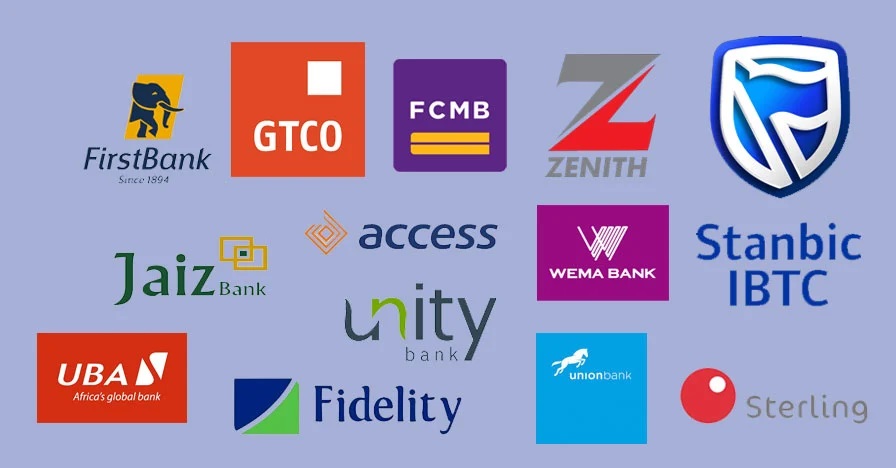
Customers of top-tier institutions such as Guaranty Trust Bank (GTBank), United Bank for Africa (UBA), Wema Bank, and others are once again able to use their Naira debit cards for payments on global platforms like Amazon, Netflix, Apple, and Spotify. However, the restored access comes with capped quarterly spending limits, with thresholds that vary by bank and, in some cases, even by customer.

GTBank was among the first to notify its customers, confirming in an email on Friday that its Naira Mastercard now supports international transactions, with a quarterly spending limit of $1,000. This ceiling includes all categories — ATM withdrawals, POS transactions abroad, and online purchases. ATM withdrawals alone are capped at $500 quarterly.

Curiously, not all GTBank customers are receiving the same limit. Bashir Ahmad, former media aide to ex-President Muhammadu Buhari, revealed via his X (formerly Twitter) account that his card was reactivated with a $4,000 quarterly limit, highlighting an unexplained inconsistency. GTBank has yet to officially clarify the criteria behind these varied thresholds, but many suspect they are based on account type, transaction volume, or customer profile.

UBA also announced the reactivation of international usage for its Premium Naira Cards, including Gold, Platinum, and World variants, stating customers could now “shop globally, swipe at POS machines abroad, and withdraw at ATMs internationally.”

Wema Bank followed with its own update, notifying customers that their Naira Mastercards were now “global,” granting them access to international platforms without the need for domiciliary accounts or virtual dollar cards.

For ordinary Nigerians, this development is a long-awaited relief. Since 2022, customers have faced mounting difficulties in paying for foreign services like Twitter Premium, iCloud storage, and Spotify subscriptions. Many resorted to third-party fintech platforms offering virtual dollar cards, often at premium rates and with additional risks.

The resumption of international functionality means greater convenience and lower dependency on intermediaries. It also marks a potential revenue rebound for global platforms whose Nigerian user bases had been cut off from seamless payment options during the card suspension period.

What Enabled the Return?

The decision to restore international transactions wasn’t spontaneous. Analysts attribute the shift to a marked improvement in Nigeria’s FX environment. According to Ayokunle Olubunmi, head of financial institutions ratings at Agusto & Co, the move is backed by better liquidity in the FX market and a reduced gap between the official and parallel market rates, which had previously encouraged arbitrage and speculation.

Charles Sanni, CEO of Cowry Treasurers, echoed the sentiment. “The naira has continued to appreciate against major currencies, diaspora remittances are rising, and new CBN policies are allowing non-residents — especially Nigerians abroad — to open accounts with ease,” he told The Cable.

Sanni added that renewed investor confidence, clearing of FX backlogs, the launch of a new FX trading platform, rising global oil prices, and efforts to recapitalize banks are all factors supporting the policy reversal.

A Recap of the Restrictions

Between 2022 and 2023, nearly every major bank halted international transactions using Naira cards as Nigeria’s dollar reserves came under immense pressure. In July 2022, Standard Chartered was the first to suspend global transactions on its Naira Visa debit card. First Bank followed in September, while GTBank, Zenith Bank, and others joined by January 2023.

The withdrawal of service came just before the 2023 general elections, at a time when foreign exchange demand skyrocketed and supply faltered. The CBN struggled to meet dollar obligations, leaving banks with little choice but to ration FX usage. Fintechs like Flutterwave and Eversend also suspended virtual dollar card services during the same period.

With GTBank, UBA, and Wema Bank leading the way, industry observers expect other commercial banks to resume international Naira card transactions soon. The competition among banks to retain and attract retail customers, especially high-net-worth clients and frequent travelers, is expected to accelerate the process.

The resumption of Naira card use for global payments is also expected to offer a short-term confidence boost in the banking sector, but it also underscores the fragility of Nigeria’s FX market. Analysts note that while convenient for consumers, the tight spending limits point to a cautious approach by banks — they are clearly not yet confident enough to fully restore pre-2022 functionality.

However, for many Nigerians, being able to pay for services directly — without needing to load a dollar card, or rely on risky workarounds — is a return to digital normalcy, however partial. Whether this newfound access lasts will depend on the continued stability of Nigeria’s volatile FX market.

Mark Cuban Says AI Could Create First Trillionaire — Even “Just One Dude in a Basement”

0

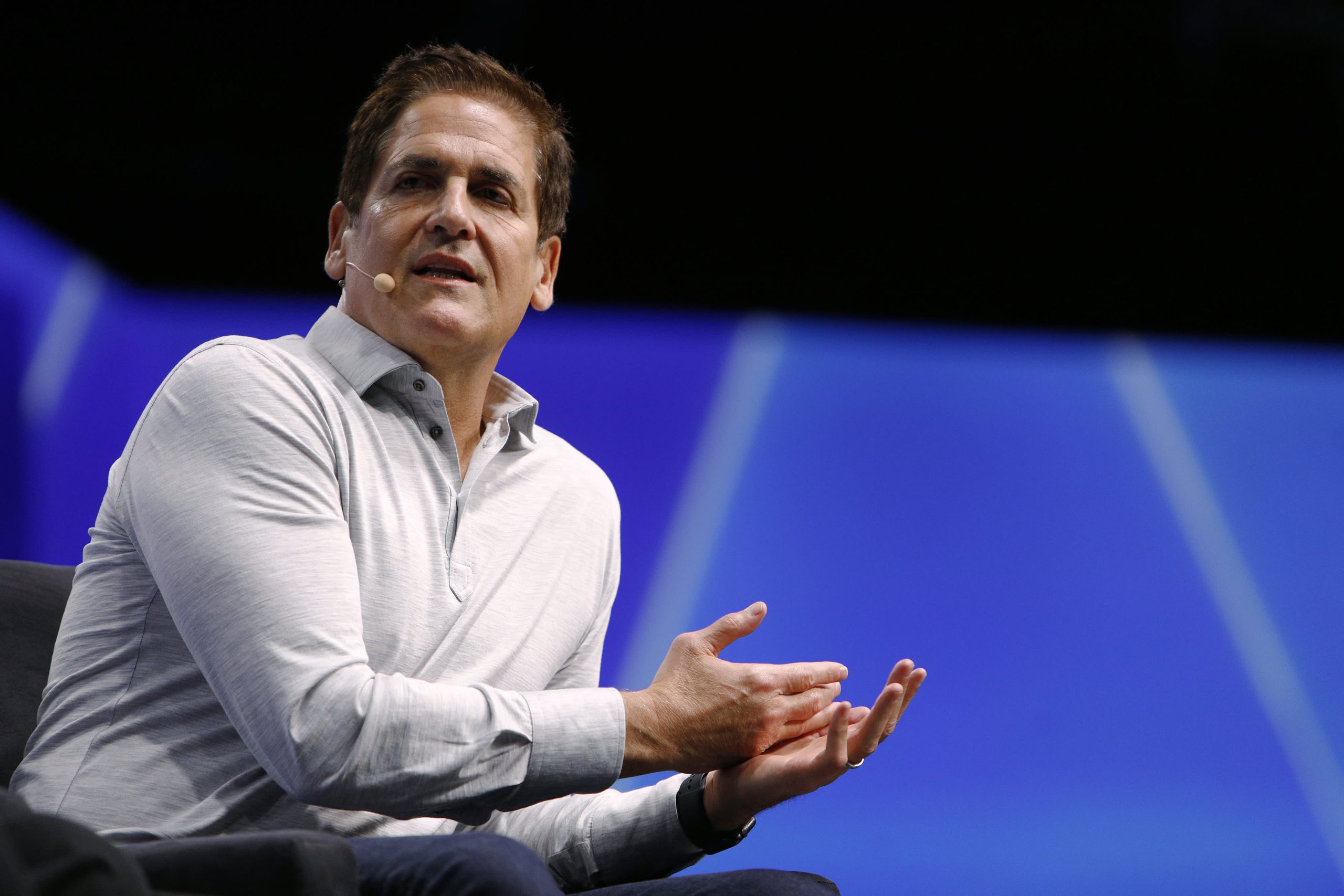
Tech billionaire and entrepreneur Mark Cuban believes artificial intelligence has the potential to create the world’s first trillionaire — and it might not be a corporate juggernaut that achieves it, but “just one dude in a basement.”

Speaking on a recent episode of the High Performance podcast, the 66-year-old investor said the AI revolution is still in its earliest stage, comparing its current adoption curve to the beginnings of the personal computer and smartphone eras.

“It’s just the very beginning, right? You know, we’re still in the preseason,” Cuban said.

But the potential is unlike anything the world has seen, he argued. “Not only do I think it’ll create a trillionaire, but it could be just one dude in the basement. That’s how crazy it could be.”

AI’s Economic Trajectory

Cuban’s prediction comes amid explosive growth in the artificial intelligence sector. According to estimates by PwC, AI could contribute up to $15.7 trillion to the global economy by 2030, making it one of the most transformative technologies of the 21st century. The consulting firm projects that $6.6 trillion will come from increased productivity, while $9.1 trillion will result from consumption-side effects such as higher demand for personalized and AI-enhanced products.

Meanwhile, market research firm Statista forecasts that the AI industry — covering software, hardware, and services — will reach a market size of over $1 trillion by 2031, up from about $241 billion in 2023. That growth is driven by surging adoption across healthcare, finance, transportation, media, manufacturing, and enterprise services.

Cuban believes that anyone who can harness AI to build a universally needed solution — like the role smartphones now play — could ride the wave to unprecedented personal wealth.

Someone who can come up with a way that makes AI as essential “will make a lot of money,” Cuban added.

Cuban emphasized that people tend to resist new technology in its early days, a pattern seen with PCs, smartphones, and now AI.

“Most people condemn things when they first happen,” he said. “But then, when you see people using it and you realize the value, that’s when people come around.”

The veteran investor said he’s already using AI extensively in both his business and personal life. For work, he turns to AI for tasks like software development and text-to-video generation. At home, he’s employed ChatGPT to help track his medications and exercise habits.

“I’m not here to tell you it’s going to replace everyone’s job — it won’t,” he said, but the technology is incredible, whether you’re innovative or just feeling bored.

A New Kind of Billionaire — or Trillionaire

Cuban’s trillionaire forecast underlines just how vast the AI stakes are. The world’s richest individual, Elon Musk, currently has a net worth of approximately $360 billion, according to the Bloomberg Billionaire Index. At his peak in December 2024, Musk’s net worth hit $439 billion, buoyed by a rally in Tesla stock. Yet even that historic figure falls far short of the $1 trillion mark.

Breaking that threshold would likely require a blend of perfect timing, massive market reach, and disruptive innovation — all of which Cuban says AI makes possible for even a single individual with the right idea and access to the right tools.

For those who think the era of building empires from garages and basements is over, Cuban’s message is that with AI, it might just be beginning again — on a trillion-dollar scale.