DD
MM
YYYY

PAGES

DD
MM
YYYY

spot_img

PAGES

Home Blog Page 930

This Month’s Best Crypto Meme Coins Include Neo Pepe Coin ($NEOP), Bitcoin Hyper, & BTC Bull (July 2025)

0

Bitcoin Hyper Gains Momentum Amid July Crypto Frenzy

In the midst of July 2025, the crypto presale landscape is thriving, capturing investor enthusiasm across diverse projects. Bitcoin Hyper has notably surged to the forefront, generating significant attention due to its ambitious roadmap and user-focused decentralized finance (DeFi) protocols. Crypto influencer Ivan on Tech recently highlighted Bitcoin Hyper as a presale opportunity with exceptional technical robustness and potential for rapid community adoption.

Bitcoin Hyper’s recent announcements emphasize strategic partnerships, blockchain interoperability, and user-driven features to ensure scalability and mass-market appeal. The project’s presale is structured with escalating token values to reward early adopters and generate sustained engagement. Notably, it incorporates a transparent token release mechanism aimed at stabilizing market dynamics post-launch.

Bitcoin Hyper ($HYPER) continues to build impressive momentum, having surpassed $1.6 million in its presale, moving toward a $1.9 million cap with a token price around $0.01205. It serves as a Layer-2 solution for Bitcoin, providing near-instant transactions, smart contract capabilities via Solana Virtual Machine (SVM) integration, and staking with APYs nearing 467%. Launch timing remains flexible but potentially earlier due to high demand.

BTC Bull Emerges as Crypto Enthusiast Favorite

Alongside Bitcoin Hyper, BTC Bull is capturing headlines with its innovative platform designed specifically for bullish market conditions. Aimed at crypto traders and holders expecting significant gains, BTC Bull offers tools and incentives designed to maximize profitability during market uptrends.

Recent coverage from decentralized exchange Uniswap emphasizes BTC Bull’s unique liquidity strategies, where token holders benefit directly from platform-generated profits. Such mechanisms have increased investor trust, resulting in notable demand during presale stages. As July progresses, anticipation around BTC Bull continues to climb, signaling robust investor confidence.

BTC Bull Token ($BTCBULL) has amassed over $7.5 million with less than 72 hours remaining in its presale. Priced approximately at $0.00258, it features a 55% staking APY. BTC Bull implements Bitcoin milestone-triggered token burns at key price points and BTC airdrops to token holders at even higher BTC price thresholds, aligning rewards closely with Bitcoin market performance.

Top 5 Crypto Presale Picks in July 2025

  1. Neo Pepe Coin ($NEOP) – Neo Pepe is rapidly gaining prominence with its sophisticated DeFi integration, community-driven governance, auto-liquidity mechanisms, and innovative tokenomics. Priced currently at around $0.07, this presale is nearing stage four, projected at $0.08, solidifying its status as the best crypto presale and top pepe coin.
  2. Bitcoin Hyper ($HYPER) – As a revolutionary Layer-2 solution for Bitcoin, Bitcoin Hyper offers near-instant transactions, smart contracts through Solana Virtual Machine integration, and impressive staking rewards with APYs nearing 467%. Its presale currently stands above $1.6 million.
  3. BTC Bull ($BTCBULL) – With a presale fund exceeding $7.5 million, BTC Bull delivers an innovative platform tailored for bullish markets. It incentivizes holders through milestone-triggered Bitcoin burns and BTC airdrops, promising significant returns.
  4. Kaanch – This blockchain infrastructure project is creating significant buzz through robust investor support. It focuses on scalable, secure blockchain solutions, attracting attention with its potential for considerable long-term gains.
  5. Best Wallet – A revolutionary decentralized asset management platform, Best Wallet promises unmatched security and user-centric features, significantly transforming decentralized asset management.

Unanticipated Contender: Neo Pepe Makes Major Waves

Speaking of strong presale performers, Neo Pepe Coin ($NEOP) has rapidly distinguished itself as a standout among July’s leading crypto presales. Often mentioned in the same breath as Bitcoin Hyper and BTC Bull, Neo Pepe is not just another meme token—it integrates a sophisticated DeFi and governance ecosystem, promising users genuine community control.

Governance at Its Finest—Why Investors Favor Neo Pepe

Neo Pepe’s governance structure, powered by the NEOPGovernor contract, offers token holders unparalleled democratic influence over critical decisions, including treasury allocations and protocol changes. Community-driven voting ensures each decision is transparent and fair, executed via a secure Timelock mechanism to prevent impulsive or harmful actions.

Strategic Pricing Structure Fuels Investor Urgency

Currently at approximately $0.07 per token, Neo Pepe is on the verge of entering its fourth presale stage, where the price is set to rise to $0.08. Investors keenly aware of this price structure have rushed to secure tokens, knowing that early participation could potentially enhance their holdings’ value significantly. If you’ve been watching the market carefully, you might want to get a little Neo Pepe before the price increase takes effect.

Auto-Liquidity and Community-First Tokenomics

Beyond governance, Neo Pepe introduces a 2.5% auto-liquidity mechanism, automatically adding liquidity to Uniswap and burning liquidity provider (LP) tokens, permanently locking funds and stabilizing token price. This innovative mechanism further boosts investor confidence, aligning Neo Pepe’s interests squarely with its community.

Top Crypto Influencer Sees Promise

Crypto influencer Lark Davis recently highlighted Neo Pepe as “not just a meme coin but a serious DeFi contender.” This endorsement has significantly bolstered investor sentiment, proving influential in driving presale momentum.

Crypto Exchanges & Future Potential

The anticipation around Neo Pepe extends beyond presale stages, with discussions already underway for strategic decentralized exchange (DEX) listings. Platforms like Uniswap are likely early adopters, reflecting Neo Pepe’s community-driven ethos and robust technical underpinnings.

Crypto Royal Spots Neo Pepe’s Winning Moves

Crypto Royal digs into what makes Neo Pepe Coin different in an increasingly crowded crypto market. His take zeroes in on Neo Pepe’s smart liquidity setup, structured community-led decision-making, and presale design crafted for maximum impact—all elements positioning this coin to potentially outperform its peers.

Choose Your Reality—Join the Memetrix Now!

Break free from centralized control—unplug from the traditional financial system and dive into the Memetrix. Neo Pepe is your gateway to true decentralized freedom, empowering each holder to shape reality with every token. Are you ready to defy convention, embrace the meme-powered DeFi movement, and write the future alongside visionary rebels and financial revolutionaries? Take the green pill, choose $NEOP, and redefine what’s possible. Welcome to the Memetrix—the future is decentralized, and it begins with you.


Get Started with $NEOP

  • Website: Neo Pepe Coin Official
  • Whitepaper: Neo Pepe Coin Whitepaper
  • Telegram: Neo Pepe Coin Telegram
  • Twitter/X: Neo Pepe Coin Twitter

GOP Pushes To Mask $3.8tn Cost Of Trump Tax Cuts As Musk Threatens To Unseat Lawmakers In Primary Next Year

0

Senate Republicans are pressing forward with a sweeping economic package that includes the permanent extension of President Donald Trump’s 2017 tax cuts — but in a move that’s drawing fierce criticism, they’re using an unprecedented accounting gimmick to hide the bulk of the bill’s $3.8 trillion price tag.

On Monday, GOP senators voted to adopt the controversial “current policy” approach, which treats Trump’s tax cuts as if they are already permanent — effectively rendering their cost invisible in the official score. The real impact, however, remains staggering. According to the Joint Committee on Taxation, simply extending the 2017 cuts would cost $3.8 trillion over 10 years. Yet the bill’s official price tag includes only $693 billion in new provisions — an omission that has alarmed budget analysts, drawn Democratic ire, and stirred internal tensions within the Republican Party.

The nonpartisan Congressional Budget Office (CBO) on Sunday estimated the legislation would add $3.3 trillion to the federal deficit over a decade under current law. Republicans argue that by measuring the bill against their “current policy” baseline — which assumes the tax cuts will remain in place — the cost drops to a more palatable $508 billion. Opponents, however, say the logic is circular and fundamentally dishonest.

“Even a preschooler knows this is magic math,” said Senator Patty Murray, the top Democrat on the Senate Appropriations Committee. “They’re trashing the rules just to make the bill look cheaper than it is.”

The maneuver enables Republicans to circumvent traditional budgetary constraints imposed by the Senate’s reconciliation process, which is designed for legislation with limited fiscal impact. By redefining what counts as a “cost,” GOP lawmakers can circumvent rules that would otherwise block the bill from passing with a simple majority.

Senator Lindsey Graham defended the move, saying, “We are going to make the tax cuts permanent. We’re not doing anything sneaky.”

Musk Declares War on the Bill

But outside the halls of Congress, the move has prompted a political firestorm — with Elon Musk leading the charge.

The tech billionaire launched a scathing attack on the legislation Monday afternoon, hours before the Senate was set to vote. Taking to X (formerly Twitter), Musk warned that any Republican who supports the bill should be prepared to face the consequences in next year’s primary elections.

“Every member of Congress who campaigned on reducing government spending and then immediately voted for the biggest debt increase in history should hang their head in shame,” Musk wrote. “And they will lose their primary next year if it is the last thing I do on this Earth.”

Musk, who previously vowed to scale back political spending, now appears poised to pour resources into funding challengers against Republicans he accuses of hypocrisy. His remarks underscore growing tension between Trump-aligned Republicans pushing for massive tax relief and fiscal conservatives — including high-profile donors — alarmed by America’s deteriorating debt outlook.

Musk has long voiced frustration with government spending, but his recent feud with Trump, as well as the bill’s rollback of green energy incentives, appears to have reignited his political engagement.

What’s in the Bill?

Beyond the extension of Trump’s 2017 tax cuts, the legislation includes nearly $700 billion in additional tax provisions. Notably, it provides a five-year increase in the cap on the state and local tax (SALT) deduction, which largely benefits residents of high-tax states. The inclusion of temporary cuts, rather than permanent ones, is designed to lower the apparent cost — a tactic used in the original 2017 legislation as well.

Trump has repeatedly urged Congress to pass what he calls “One Big, Beautiful Bill” by July 4. The Senate is expected to vote on final passage Tuesday, while the House could take up the legislation as early as Wednesday.

The package is a centerpiece of Trump’s 2025 economic agenda and is seen as a crucial test of Republican unity heading into the November elections. While the president continues to rally support behind the bill, opposition from fiscal hawks and mega-donors like Musk may complicate efforts to keep the GOP coalition intact.

Budget experts warn that the GOP’s accounting trick sets a dangerous precedent. If lawmakers normalize scoring massive tax cuts as having no cost, it could open the door to increasingly reckless fiscal policy. With debt levels already projected to hit record highs within the next decade, some economists believe that the strategy could further erode confidence in U.S. fiscal management.

Monero Preserves Privacy While Lightchain AI Preserves Developer Control in Distributed AI Environments

0

Monero continues to preserve user privacy through its robust anonymity features, safeguarding transactions from prying eyes in an increasingly surveillance-driven world. Meanwhile, Lightchain AI is preserving something equally vital—developer control within distributed AI environments.

Having successfully completed all 15 presale stages and entering its Bonus Round at a fixed price of $0.007, Lightchain AI has raised $21.2 million from strategic buyers. This momentum is powered by an AI-native Virtual Machine, transparent governance, and developer incentives that empower contributors to steer the project’s evolution.

While Monero protects individual privacy, Lightchain AI ensures that developers maintain control and influence in building the future of decentralized intelligence.

Monero Maintains User Privacy as Its Core Feature

Monero (XMR) stands out in the cryptocurrency landscape for its unwavering commitment to user privacy. Unlike many digital currencies where transactions are transparent, Monero employs advanced cryptographic techniques to ensure confidentiality.

Ring Signatures blend a user’s transaction with others, making it nearly impossible to identify the actual sender. Stealth Addresses generate unique, one-time addresses for each transaction, preventing linkage to the recipient’s public address. Ring Confidential Transactions (RingCT) conceal the transaction amount, adding another layer of privacy. Additionally, Dandelion++ protocol obscures the IP addresses of users, enhancing network-level anonymity.

These features collectively make Monero a preferred choice for users seeking financial privacy, ensuring that transactions remain confidential and untraceable.

Lightchain AI Empowers Developers with Control in Distributed AI Systems

Lightchain AI empowers developers with unprecedented control in distributed AI systems, fostering innovation through decentralization. Its architecture supports decentralized validator and contributor nodes, enabling secure, efficient AI model training and inference across the network.

Developers access a comprehensive Developer Portal with APIs, SDKs, and technical documentation, streamlining integration and deployment. The Transparent AI Framework ensures all computations are auditable, enhancing trust.

Governance Integration gives token holders voting power on protocol changes, promoting community-driven evolution. Supported by a $150,000 grant pool and public GitHub repositories, Lightchain AI creates an open, collaborative environment where developers shape the future of decentralized AI, balancing control, security, and scalability for real-world applications.

How Lightchain AI is Empowering Developers to Shape the Future of AI

At Lightchain AI, developers are at the heart of next-gen innovation. With powerful, easy-to-use tools, we’re giving creators the freedom to build scalable, secure AI applications that push boundaries.

Our Artificial Intelligence Virtual Machine (AIVM) delivers lightning-fast processing with parallel execution and sharded scalability—perfect for tackling even the most complex workloads. Plus, our active staking mechanisms and decentralized validator nodes ensure rock-solid security and community-driven governance.

But we don’t stop there. Through generous grants and transparent open-source repositories, we’re building an ecosystem where developers take the lead, driving the evolution of decentralized AI that’s built to make a real-world impact. Ready to innovate? Let’s build the future together.

https://lightchain.ai

https://lightchain.ai/lightchain-whitepaper.pdf

https://x.com/LightchainAI

https://t.me/LightchainProtocol

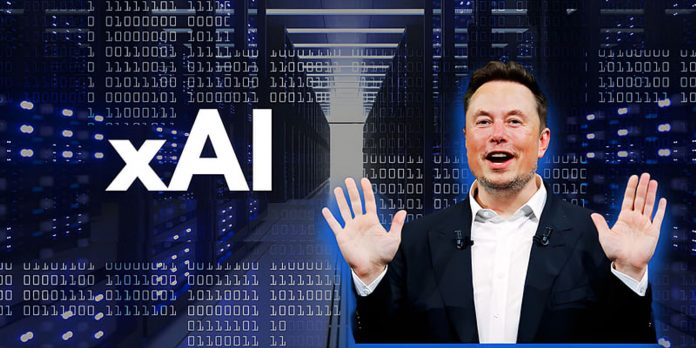
Elon Musk’s xAI Secures $10bn to Supercharge AI Race with Massive Data Center Push

0

Elon Musk’s artificial intelligence startup, xAI, has closed a blockbuster $10 billion funding round, combining $5 billion in debt financing with a separate $5 billion equity investment, marking one of the largest capital raises in the AI sector to date.

Led by Morgan Stanley, the twin funding rounds signal investor confidence in xAI’s ambitious roadmap to build world-class AI infrastructure, even as competition tightens among global AI powerhouses. The proceeds will be used to expand xAI’s data center capacity, support its flagship generative AI platform Grok, and further its push into developing artificial general intelligence (AGI) capabilities.

Oversubscribed, Despite Early Doubts

Morgan Stanley, which orchestrated the dual funding effort, confirmed the completion in a statement posted on X. The bank said the $5 billion debt raise involved a mix of secured notes and term loans and was oversubscribed, attracting top-tier global debt investors.

The strong demand comes in contrast to earlier reports suggesting “tepid” investor appetite, especially amid ongoing volatility in the tech sector and skepticism over Musk’s ability to scale xAI against well-funded incumbents like OpenAI, Google DeepMind, and Anthropic.

On the equity side, $5 billion was raised from strategic investors, complementing the debt round and giving xAI significant financial firepower. The company is reportedly in ongoing talks to raise an additional $20 billion in equity, which could value xAI between $120 billion and $200 billion, according to Bloomberg.

Why the Money Matters: Musk’s Infrastructure Bet

The $10 billion war chest positions xAI to aggressively scale its AI infrastructure. A substantial portion of the funding is earmarked for building advanced data centers to support AI training workloads, model deployment, and the continued development of Grok, Musk’s answer to ChatGPT.

Grok is deeply integrated with X (formerly Twitter), which Musk owns, allowing xAI to leverage real-time social media data for its language model. The integration provides a unique advantage in an industry where access to high-quality, proprietary data is often the differentiator.

This capital injection comes as part of Musk’s broader effort to challenge existing AI leaders by combining cutting-edge infrastructure, vertical integration across his business empire, and a vision of developing AGI that serves humanity, not corporate interests.

Musk previously described plans for a massive AI supercomputer dubbed “The Colossus”, aimed at supporting future iterations of Grok and other models. This computing architecture, paired with the new funding, is now on track for accelerated development.

Investor Confidence Amid AI Funding Frenzy

xAI’s successful raise places it in the same tier as the world’s most heavily backed AI startups. It joins the ranks of OpenAI, which has backing from Microsoft, and Anthropic, which is supported by Google and Amazon.

While the broader tech market has been cautious, investors have remained bullish on AI infrastructure plays. With xAI now fully funded to deploy hyperscale data centers and develop models, it adds competitive pressure to both public and private firms competing for AI leadership.

What’s Next for xAI?

With more than $10 billion in fresh capital, xAI is now well-positioned to:

  • Build out data centers to support next-generation model training.
  • Scale the Grok platform and introduce new AI products across Musk’s companies.
  • Expand engineering and research teams, likely drawing from rivals.
  • Accelerate the pursuit of AGI, Musk’s long-standing vision.

The company’s valuation trajectory also makes it a magnet for future capital, with investors reportedly considering stakes that would put xAI’s worth at nearly twice the market capitalization of many publicly listed AI and chip startups.

xAI’s dual funding announcement arrives amid a flurry of activity across the AI landscape. Meta recently announced its own Superintelligence Labs, while OpenAI, Google DeepMind, and others continue pushing toward AGI. The competition has shifted from model capabilities to compute dominance, with infrastructure buildout emerging as the new battleground.

With the new funding, xAI has emerged from the shadow of its better-known competitors to become one of the best-financed AI startups in the world. The $10 billion infusion is not just a bet on Grok or data centers—it’s a bet on Musk’s broader vision to control the rails of the next digital economy.

Apple Explores Third-Party AI Models For Siri in Bid to Catch up in AI Race

0

Tech giant Apple is considering integrating Anthropic’s Claude or OpenAI’s ChatGPT to enhance its Siri assistant, according to Bloomberg reports.

While Apple has traditionally relied on its own AI technology, it has reportedly engaged both AI companies to train large language models for testing on its cloud infrastructure. This move comes as Apple’s AI-upgraded Siri, initially planned for 2025, has been delayed to 2026 due to technical setbacks, highlighting the company’s struggle to keep pace in the competitive AI landscape.

Apple is perceived to be lagging in the AI race. Its AI efforts, including Siri, have faced challenges, with critics noting that Siri has not kept pace with competitors like Google Assistant, Amazon’s Alexa, or advanced models like ChatGPT. Recent reports highlight internal struggles, such as slower progress in developing proprietary large language models and a management shakeup, including the reassignment of AI chief John Giannandrea.

Apple’s exploration of third-party AI models from OpenAI or Anthropic for Siri suggests an acknowledgment of these gaps, as it seeks to bolster its AI capabilities to remain competitive. However, Apple’s strong ecosystem and integration potential could still position it to catch up if it leverages external partnerships effectively.

The tech giant continues to develop an internal project called “LLM Siri,” which aims to power a revamped Siri using in-house models. However, the company is now exploring deeper integration with third-party AI technologies, building on Siri’s existing ability to leverage ChatGPT for complex queries.

This potential pivot to external models signals Apple’s acknowledgment of its challenges in generative AI, a critical technology where it trails competitors like Google, OpenAI, and Anthropic.

Suff Syed, a Product & Design leader at Microsoft Research, commented on the development, stating,

“Apple is behind and the market knows it. Apple Intelligence and Siri are a punch line. But the bigger issue is Apple renting intelligence from the very companies out-innovating it. If it doesn’t do anything radical, it’s going to end up like IBM/HP. Rich, but irrelevant.”

Technology journalist for Bloomberg Mark Gurman in a post on X, disclosed that Apple’s effort to explore outside large language models instead of its foundation models has taken a toll on its AI team. Tom Gunter, one of its top engineers, left last week. And the team behind MLX, Apple’s open-source AI framework has threatened to quit.

Despite these concerns, Apple has not fully abandoned its in-house efforts, and it is concurrently running a project called LLM Siri that would power next year’s Siri overhaul with in-house AI. Top executives reportedly see third-party models as a potential way to close the gap with rivals.

Apple’s shares climbed 2% on the news that the tech giant is considering integrating third-party AI models for Siri. The surge in shares signals investor optimism about the potential integration of third-party AI models from OpenAI or Anthropic into Siri, which could enhance its capabilities and competitiveness. It further reflects market confidence in Apple’s strategy to modernize Siri and strengthen its position in the AI race, despite challenges in its in-house AI development.

The revamped Siri, expected with iOS 26.4 in 2026, aims to deliver advanced capabilities, including improved context-awareness and the ability to handle complex, multi-step commands by leveraging on-screen content and user data. While Apple weighs its options, no final decision has been made on abandoning its proprietary AI models.