DD
MM
YYYY

PAGES

DD
MM
YYYY

spot_img

PAGES

Home Blog Page 934

Okra Shutdown: Fintech to Return Investors’ Funds And Prioritize Employees’ Severance Amid Strategic Pivot

0

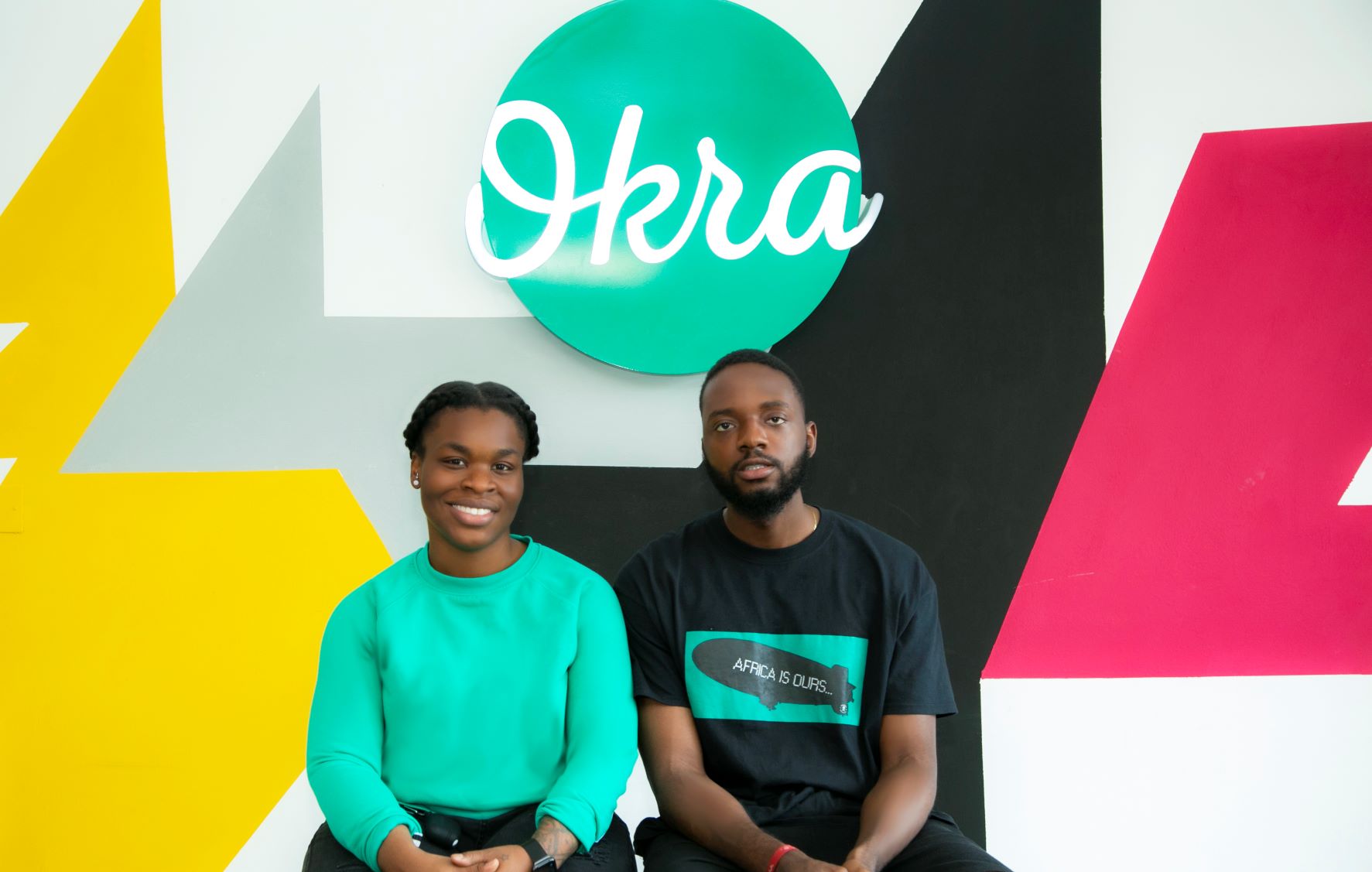
In a rare move that underscores transparency and responsibility in Africa’s startup ecosystem, Nigerian fintech Okra has announced its decision to return unspent funds to investors despite having three years of financial runway remaining.

This comes after the company reportedly shut down operations on July 3, 2025, after raising more than $16 million in funding. The closure also marked the end of Nebula, its cloud services platform, which had aimed to provide cost-effective cloud infrastructure amid Nigeria’s rising tech expenses.

Rather than prolonging operations with limited growth prospects, Okra opted for an orderly wind-down, prioritizing investor returns and employee welfare.

In an interview with Techpoint Africa, co-founder and CEO Fara Ashiru, stated that a significant amount will be returned to investors. Okra, which raised $16.5 million in funding over its lifespan, is estimated to return between $4 million and $5 million to investors. While Ashiru declined to disclose the specific amount, industry estimates suggest the startup spent around 60–75% of its total funding, leaving a significant amount unspent.

The decision to return funds reflects a focus on maintaining investor trust, a critical factor in Africa’s evolving startup ecosystem. The company has also implemented tiered severance packages based on tenure, with long-term staff receiving up to six months’ worth of salary and newer team members also receiving financial bonuses, an approach that stands in stark contrast to many high-profile startup failures.

Ashiru also addressed the shutdown of Nebula, Okra’s cloud product designed as a cost-effective alternative for African businesses. She noted that although some companies adopted Nebula, its lack of mission-critical use limited long-term viability. “This was a bold one and showed early promise, but the speed of adoption simply wasn’t fast enough,” Ashiru explained. She noted that continuing would have required additional capital and an extended timeline, a move she deemed irresponsible without stronger market traction.

Nebula positioned Okra alongside other homegrown cloud providers like Nobus and Layer3, targeting businesses seeking to reduce reliance on expensive foreign infrastructure. However, over time, it became increasingly unsustainable to run the business, because the company was spending more than it was bringing in.

Okra’s shutdown indeed marks a significant moment for Africa’s fintech ecosystem. As a pioneer in open banking, Okra built APIs that enabled seamless financial data access and payment processing, connecting bank accounts to third-party apps and serving major clients like Renmoney, Branch, and Bamboo.

The shutdown of Okra has sparked varied reactions across the African tech ecosystem. Many expressed sadness over the startup closure, recognizing its bold vision and contributions to Africa’s open banking landscape. Users highlighted the emotional weight of the shutdown, noting that behind it was a team that dared to innovate in a challenging environment. 

Several takes pointed to Nigeria’s harsh business environment as a key factor in Okra’s demise. Commentators cited a lack of government support, and economic volatility such as naira depreciation and high cloud infrastructure costs as major hurdles. The consensus is that even well-funded startups like Okra struggle to scale in a dollarized ecosystem with naira-based revenue.

Notably, some framed Okra’s closure as a “semicolon” rather than a full stop, suggesting its contributions to open banking and financial APIs will inspire future fintech ventures. These takes reflect a mix of frustration with systemic challenges, admiration for Okra’s achievements, and cautious optimism for the future of African fintech. While Okra’s legacy in open banking endures, its shutdown underscores the complexity of building sustainable startups in Africa’s volatile markets. 
The Grand Playbook of Business and Four Plays in Markets – Ndubuisi Ekekwe

0

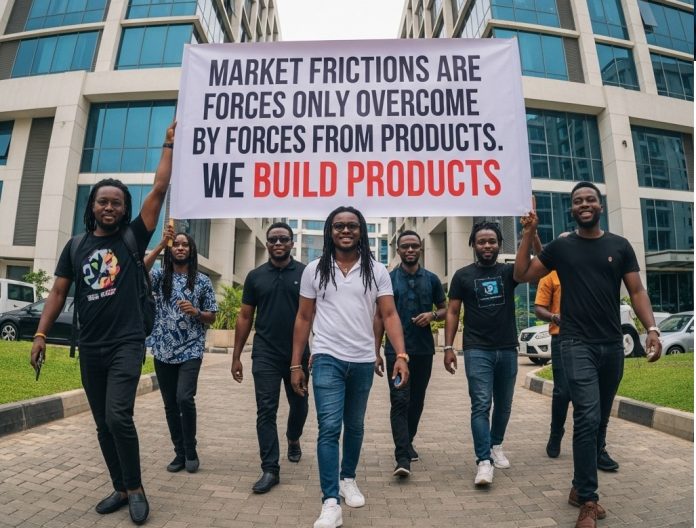
The world is full of market frictions. Only products can overcome those frictional market forces because products generate forces. Until your startup has great products, it will not exert any impact on the market because it will have no force to deal with the frictions customers are facing. Do not just build a company; build a product or service!

Join me tomorrow at Tekedia Mini-MBA.

Sat, July 5 | 7pm-8.30pm WAT | The Grand Playbook of Business and Four Plays in Markets – Ndubuisi Ekekwe | Zoom link

Response to a question: 

Yesterday, we chronicled a company which is tapping into the skills of young Nigerians and providing them opportunities in Europe and America. What All Talentz is doing is part of building communities you noted. With those jobs, the human spirit is strengthened.

On this particular post, my focus is making it clear that if people gather in a company and they fail to build that force (the product) that impacts, that company has no value. We cannot have companies everywhere and yet we cannot find solutions to our market needs… that is the point.  Thanks for the pointers.

Tesla Misses Deadline for Affordable EV Amid Sales Slump and Mounting Global Pressure

0

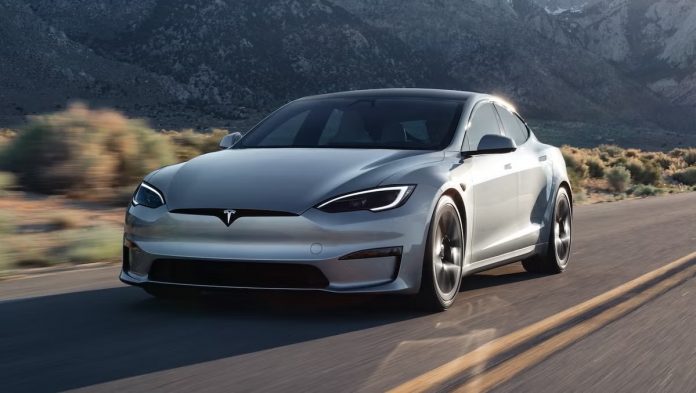
Tesla has once again missed a self-imposed deadline to begin production of its long-promised affordable electric vehicle, intensifying questions about its roadmap just as the company reels from a second consecutive year-over-year drop in vehicle deliveries.

Despite repeatedly assuring investors that the new low-cost model would begin production in the first half of 2025, the June deadline passed this week without an update. Notably, the company made no mention of the project in its latest earnings call, which instead focused on reaffirming earlier claims.

Tesla’s silence comes at a critical moment. After years of dominating the electric vehicle market, the automaker is now grappling with a stark slowdown in global EV adoption, fierce competition from cheaper Chinese models, and the erosion of brand loyalty in key regions. The push for a budget-friendly EV—reportedly a stripped-down version of the Model Y, codenamed “E41″—is not just a delayed product; it’s part of a larger rescue effort to reverse Tesla’s downward spiral trajectory and reclaim its edge in a shifting market.

A Race Against Time and Rivals

The idea of a $25,000 Tesla first surfaced in 2020, when CEO Elon Musk pledged to deliver a fully autonomous, mass-market EV within three years. The announcement, made during the company’s Battery Day presentation, raised expectations that Tesla would finally become a true mass-market automaker. But despite multiple reassurances, the timeline has been pushed back, contradicted, and rebranded—at times dismissed altogether.

By 2022, Musk admitted Tesla had deprioritized the project. In early 2024, he suggested production could begin by the end of 2024 or early 2025. But just months later, in October, he publicly argued that building a $25,000 “non-robotaxi” model would be “pointless” and “completely at odds” with Tesla’s mission—a statement that stunned investors who had been counting on affordable models to expand the company’s reach.

Still, in January 2025, following shareholder disappointment over the lackluster robotaxi debut, Tesla recommitted to the timeline, promising that cheaper models remained on track. April brought another twist. Reuters reported that Tesla had delayed the rollout of the E41 and had shifted focus to retooling factories in preparation for eventual mass production. The company declined to confirm or deny the report but reiterated that the launch was still planned within the first half of the year.

As of July, nothing has materialized.

China’s Subsidized Onslaught and Tesla’s Sliding Market Share

China, once Tesla’s crown jewel market, has become an increasingly hostile battlefield. Local manufacturers such as BYD have flooded the market with ultra-cheap, government-subsidized EVs, selling for nearly half the price of Tesla’s cheapest models. BYD, now the world’s top EV seller by volume, has capitalized on its scale, local supply chain advantages, and generous state support to displace Tesla in China’s mid-range market.

Tesla, lacking the same pricing flexibility and facing rising production costs, has been forced to slash prices aggressively, hurting its margins and brand perception. The new affordable model—reportedly intended to be cheaper to build than even the Model 3—is a key part of Musk’s counteroffensive. With lower-cost vehicles, Tesla hopes to retake ground lost in China and protect its presence as EV sales growth softens globally.

Reclaiming Europe’s Disenchanted Buyers

Europe presents another challenge—one not only rooted in price but in perception. Once Tesla’s second-largest market, the region has grown increasingly cold toward the brand, with critics citing Musk’s political antics, including his vocal support for far-right figures and controversial statements on social media platform X. These moves have alienated large swaths of European consumers, particularly in progressive cities that once embraced Tesla’s clean energy ethos.

Sales in Germany, France, and the UK have slowed, and Musk’s reputation is now seen as a liability in many European circles. The affordable EV project is expected to help offset this damage by returning focus to practical, sustainable transportation—at a price point that is palatable to middle-class Europeans who might otherwise turn to competitors like Renault, Peugeot, or Volkswagen.

A Shifting Narrative With No Clear Endpoint

Internally, Tesla appears to be facing mounting pressure to shift its narrative. The luxury halo once surrounding the brand is fading fast as competitors catch up on software, performance, and battery efficiency. Musk’s insistence on prioritizing robotaxis and full autonomy has also worn thin, especially after repeated delays and underwhelming demonstrations.

The affordable EV was meant to be the antidote to that fatigue—a way to broaden Tesla’s reach and tap into the global demand for economically viable electric vehicles. With the delay, however, the company risks not only missing out on that opportunity but also losing further credibility with investors and consumers alike.

Vehicle engineering VP Lars Moravy insisted in April that Tesla had already retooled factories and was resolving “last-minute issues” related to the new models. But his comments now read like the final thread in a timeline marked by shifting promises and missed milestones.

Tesla’s rivals aren’t waiting. BYD has already entered European markets and is expanding rapidly in Latin America and Southeast Asia. Volkswagen, Hyundai, and General Motors are all moving forward with affordable EV offerings, many with established supply chains and government backing.

Unless Tesla delivers on its promise soon, the company risks being left behind—not just by newcomers, but by the very market it helped pioneer.

Goldman Sachs Says Trump’s Trade Policies Aren’t Hurting the Global Economy—Yet

0

President Donald Trump’s sweeping trade overhaul has shaken the global order and alarmed economists around the world, stoking widespread fears that his hardline stance on tariffs and trade renegotiations would derail economic growth.

Despite the fears which have remained unabated, analysts at Goldman Sachs say the global economy remains largely unscathed—for now.

In a note released Thursday, the investment bank said it sees “very few signs that uncertainty is taking a toll on activity,” even as Trump continues to upend decades of trade policy with aggressive protectionist moves, including steep tariffs, abrupt deal withdrawals, and nationalist rhetoric that has disrupted long-standing global supply chains.

Tariffs, Nationalism, and “Liberation Day”

Since returning to the White House for a second term, Trump has moved swiftly to escalate his “America First” economic agenda. He has introduced new rounds of tariffs on key imports from China, the European Union, and Mexico, while threatening to pull the United States out of long-standing multilateral trade frameworks like the WTO. His administration has also canceled trade benefits to countries he accuses of taking unfair advantage of the U.S. market and has demanded one-on-one trade deals on American terms.

One of the most dramatic moments came in April when Trump declared “Liberation Day,” a policy pivot he framed as a move to “reclaim America’s economic sovereignty.” The announcement rattled financial markets as it came with hints of massive new tariffs and stricter foreign investment rules. Economists warned that it would likely trigger retaliation from other countries, increase business costs, and discourage investment.

Business leaders and analysts braced for a slowdown, especially in trade-exposed sectors such as manufacturing and tech. Some companies, anticipating higher import duties, accelerated shipments to the U.S. in a rush known as “front-loading,” which briefly inflated trade volumes. There were also concerns that this artificial bump was masking an underlying decline in economic momentum.

Goldman Sachs Allays The Fears

Contrary to those fears, Goldman Sachs says the data shows no major economic hit. Since late 2024, factory hiring, private investment, consumer spending, and broader activity have all held steady or even strengthened. Forecasts for both second-quarter and full-year GDP growth have been revised upward in key markets, including the U.S., Germany, India, and Brazil.

The bank attributes this resilience partly to the fact that trade-exposed investment accounts for only a modest slice of GDP in most economies—typically between 0.2 and 0.3 percentage points. So even where factory investment has slowed, particularly in emerging markets, the macroeconomic effect has been minimal.

Moreover, global financial conditions have remained surprisingly loose. Interest rates are stable, credit is flowing, and corporate borrowing costs have dipped slightly, aided by strong liquidity. This has made it easier for businesses to secure financing and maintain capital spending plans, even in uncertain times.

“Uncertainty usually bites hardest when financial conditions tighten,” the analysts wrote. “But this year, the opposite has happened. Liquidity has improved, and that’s helped cushion the fallout.”

Trump’s trade policies have undeniably created an atmosphere of uncertainty. Goldman’s proprietary uncertainty index jumped sharply after his re-election and remained elevated through the first quarter of 2025. But the report noted that uncertainty has begun to ease in recent months, partly due to signs that Trump is willing to negotiate new trade deals with allies and rivals alike.

Some businesses have been adapting. While front-loading distorted short-term trade data, Goldman said even after adjusting for those effects, there is little evidence of a drag on investment or hiring. Analysts found no substantial differences in performance between countries that ramped up exports to the U.S. and those that didn’t, suggesting that the impact of uncertainty has been broadly muted.

“While we continue to expect that tariffs will slow activity later this year, we expect this will be mostly driven by the direct impacts of tariffs rather than uncertainty around trade policy,” the report concluded.

Job Gains and Market Highs

Adding to the picture of economic strength, the U.S. posted stronger-than-expected jobs data in June. The economy added 147,000 jobs, and the unemployment rate dipped from 4.2% to 4.1%. The labor force participation rate also edged higher, suggesting more Americans are returning to the workforce despite fears that trade disruptions would trigger layoffs.

Financial markets have responded with optimism. The S&P 500 and Nasdaq hit record highs this week, buoyed by investor belief that Trump’s protectionism may ultimately boost domestic industry—at least in the short term—and by the perception that the worst-case trade war scenarios have not yet materialized.

Still a Long Road Ahead

While the short-term outlook appears stable, Goldman warns that challenges remain. The full effects of Trump’s second-term tariffs are still unfolding, and economists caution that any prolonged escalation—especially if China or the EU retaliates—could eventually weigh down investment, trigger inflation, and erode global growth.

“The uncertainty drag, therefore, appears smaller than feared,” Goldman wrote.

For now, though, the world economy appears to be weathering the Trump trade storm better than many feared.

How Nigeria Paused A Dynamic Startup Ecosystem [Podcast]

0

The Nigerian startup ecosystem, once a beacon of entrepreneurial spirit and a magnet for foreign investment, has experienced a significant downturn since May 2023. The primary catalyst for this decline was the government’s decision to float Naira without sufficient underlying economic structures to support its value. This led to a drastic currency devaluation, which in turn eroded startup valuations, deterred foreign and local investors, and ultimately froze capital flow.

The consequences have been severe: many promising startups have become “zombie companies” or have shut down, and there has been a significant “brain drain” as talented founders and innovators seek opportunities abroad. The current landscape is dominated by external-facing businesses, particularly in remittances, with little focus on internal economic development. This shift raises critical concerns about Nigeria’s ability to build a sustainable domestic economy and provide opportunities for its growing population if the fundamental issue of currency instability is not addressed.

In this podcast, I discuss this paralysis and the way forward for the Nigerian startup ecosystem.

A summary of the podcast is available here.

From Monday, the videos will move to Blucera.com exclusively.

About Tekedia Daily

To read our short introduction of Tekedia Daily – podcasting revelations on business, click here.

How To Listen to Tekedia Daily

At Blucera, home of Blucera WinGPT (AI personal educator and coach), eVault Legal Custodial services (store vital personal, family and business documents securely), business tools to grow enterprises, and global archives of Tekedia courses and libraries, Ndubuisi Ekekwe podcasts every week day. Some Tekedia Institute programs offer bonus access to Tekedia Daily or one can register at Blucera for the podcast.