DD
MM
YYYY

PAGES

DD
MM
YYYY

spot_img

PAGES

Home Blog Page 936

Banco Bilbao Vizcaya Argentaria (BBVA) Launches Bitcoin And Crypto-Assets Custody In Spain

0

Banco Bilbao Vizcaya Argentaria (BBVA), Spain’s second-largest bank, has launched Bitcoin (BTC) and Ethereum (ETH) trading and custody services for all retail customers in Spain, following regulatory approval from the Spanish Securities and Exchange Commission (CNMV) in March 2025. The service, accessible through BBVA’s mobile app, allows customers to buy, sell, and hold these cryptocurrencies within the bank’s digital banking platform.

BBVA uses its own cryptographic key custody platform, ensuring full control over asset security without third-party reliance. The rollout, which began with a small group and has now expanded to all adult customers, aligns with the EU’s Markets in Crypto-Assets (MiCA) regulation, effective December 2024. BBVA charges a 1.49% fee for trades and 4% for external transfers, with custody services free of charge. This marks Spain as the third market for BBVA’s crypto offerings, following Switzerland (2021) and Turkey (2023), where it also supports assets like USDC, Solana, and others. The bank does not provide advisory services for crypto, leaving transactions at the customer’s initiative.

BBVA’s entry into crypto services signals growing institutional acceptance of Bitcoin and Ethereum, potentially normalizing their use among retail investors in Spain. As a major bank with a trusted reputation, BBVA’s move could encourage other financial institutions to follow, accelerating crypto integration into traditional finance. The accessibility via BBVA’s mobile app lowers barriers for retail investors, potentially increasing participation from non-tech-savvy individuals who prefer familiar banking platforms over crypto exchanges.

The launch aligns with the EU’s MiCA regulation, providing a compliant framework that enhances consumer protection and market transparency. This could set a precedent for other EU banks, fostering a regulated crypto ecosystem. BBVA’s in-house custody platform emphasizes security, which may boost consumer confidence in holding crypto assets within a regulated banking environment compared to external exchanges.

BBVA’s 1.49% trading fee and 4% transfer fee are competitive but higher than some crypto exchanges (e.g., Binance or Coinbase often charge 0.1%-0.5% for spot trading). This could attract users prioritizing convenience and trust over cost, but price-sensitive traders may stick to dedicated crypto platforms. The service could drive competition among Spanish and European banks, pushing them to innovate or offer similar services to retain customers.

With successful implementations in Switzerland, Turkey, and now Spain, BBVA may expand crypto services to other regions, particularly in Latin America, where it has a strong presence. This could bridge crypto access in emerging markets, where banking infrastructure is robust but crypto adoption lags. Increased access to BTC and ETH through a major bank could drive demand, potentially impacting their prices positively, especially in Spain’s retail market. However, the scale of impact depends on adoption rates among BBVA’s customer base.

The focus on only BTC and ETH (unlike Turkey’s broader offerings) reinforces their dominance as the primary cryptocurrencies, potentially sidelining altcoins in institutional settings. BBVA’s service democratizes crypto access for retail customers, especially those hesitant to use crypto exchanges due to security or complexity concerns. The integration into a familiar banking app simplifies onboarding.

Higher fees (1.49% for trades, 4% for transfers) compared to crypto exchanges may deter cost-conscious investors, particularly younger or experienced traders who prefer platforms with lower fees or advanced features like staking or derivatives. MiCA compliance ensures a safer environment for customers, potentially reducing risks like fraud or exchange hacks. This could attract conservative investors and legitimize crypto as an asset class.

Strict regulatory requirements may limit BBVA’s ability to offer a broader range of cryptocurrencies or innovative features (e.g., DeFi or yield farming), which are available on unregulated platforms, creating a gap for tech-savvy users. BBVA’s trusted brand and in-house custody could appeal to customers wary of crypto’s volatility or security risks, offering a “bank-grade” experience. Crypto purists who value decentralization may view bank-controlled custody as contrary to the ethos of cryptocurrencies, preferring self-custody wallets or decentralized platforms.

The service could expand crypto adoption in Spain, potentially influencing other EU markets and encouraging financial inclusion for those without access to crypto exchanges. The service is limited to Spain (and select markets like Switzerland and Turkey), creating a divide between regions with access to BBVA’s crypto offerings and those without. Additionally, high fees may exclude lower-income customers, reinforcing a wealth gap in crypto access.

BBVA’s move could bridge the gap between institutional and retail crypto markets, fostering greater liquidity and stability. Without advisory services, retail investors may lack guidance, potentially leading to uninformed trading decisions. This contrasts with institutional clients who often have access to sophisticated advice, widening the knowledge gap.

BBVA’s launch of Bitcoin and Ethereum trading/custody services is a significant step toward mainstreaming cryptocurrencies in Spain, leveraging regulatory compliance and banking trust to attract retail investors. However, the divide between convenience and cost, regulation and innovation, and institutional versus retail access highlights both opportunities and challenges. While it may drive adoption and market stability, high fees and limited offerings could push some users toward alternative platforms, and regional disparities may persist until BBVA expands further.


Ondo Finance Acquires Oasis Pro To Advance Tokenization Expansion

0

Ondo Finance, a blockchain-based platform focused on real-world asset (RWA) tokenization, announced the acquisition of Oasis Pro, an SEC-registered broker-dealer, Alternative Trading System (ATS), and Transfer Agent. This strategic move, pending regulatory approval, provides Ondo with critical U.S. regulatory licenses to expand its tokenized securities offerings, particularly for U.S. investors.

The acquisition integrates Oasis Pro’s compliant infrastructure, which supports digital securities settlement in fiat and stablecoins like USDC and DAI, with Ondo’s institutional-grade tokenization technology. Oasis Pro, a FINRA member since 2020, has been a pioneer in digital asset markets and contributed to FINRA’s Crypto Working Group.

The deal includes Oasis Pro’s CEO, Pat LaVecchia, joining Ondo’s team to strengthen its regulatory and operational capabilities. Financial terms were not disclosed. This acquisition aligns with Ondo’s broader strategy, including its recent $250 million Ondo Catalyst fund with Pantera Capital, to lead in the growing tokenized securities market, projected to reach $18 trillion by 2033.

By acquiring Oasis Pro, an SEC-registered broker-dealer and FINRA member, Ondo gains critical regulatory licenses, enabling it to offer tokenized securities to U.S. investors in a compliant manner. This bridges DeFi with TradFi, making tokenized real-world assets (RWAs) more accessible to institutional and retail investors. Oasis Pro’s infrastructure, including its Alternative Trading System (ATS) and Transfer Agent capabilities, allows Ondo to facilitate primary issuance and secondary trading of digital securities in both fiat and stablecoins (e.g., USDC, DAI). This strengthens Ondo’s position in the $18 trillion tokenized securities market projected by 2033.

The acquisition integrates Oasis Pro’s established relationships with regulators (e.g., SEC, FINRA) and its role in FINRA’s Crypto Working Group. This enhances Ondo’s credibility, attracting institutional investors wary of DeFi’s regulatory uncertainties. Pat LaVecchia’s expertise as Oasis Pro’s CEO, now part of Ondo’s team, further bolsters operational and regulatory know-how.

Combining Oasis Pro’s compliant digital securities settlement system with Ondo’s blockchain-based tokenization platform creates a robust, scalable infrastructure for RWA tokenization. This could set a standard for secure, transparent, and efficient asset tokenization. The acquisition positions Ondo as a leader in the tokenized RWA space, especially after its $250 million Ondo Catalyst fund with Pantera Capital. It strengthens Ondo’s ability to compete with other platforms like Securitize or Polymesh, which also focus on compliant tokenization.

While Ondo operates globally, Oasis Pro’s U.S.-focused regulatory framework allows Ondo to cater to the lucrative U.S. market, potentially increasing adoption of its tokenized products like OUSG (tokenized U.S. Treasuries). TradFi operates under strict regulatory oversight (e.g., SEC, FINRA), prioritizing investor protection, transparency, and compliance. Oasis Pro’s licenses embody this framework.

DeFi often operates in a regulatory gray zone, emphasizing decentralization, permissionless access, and innovation but facing scrutiny for potential risks like fraud or money laundering. Ondo’s acquisition signals a convergence, as DeFi platforms increasingly seek regulatory legitimacy to gain trust and scale. However, this may alienate DeFi purists who value decentralization over compliance.

In TradFi access to securities is often restricted to accredited or institutional investors, with high barriers like minimum investment thresholds. DeFi tokenization democratizes access, allowing fractional ownership of assets (e.g., real estate, bonds) for retail investors globally. Ondo’s move could lower barriers for U.S. retail investors to access tokenized RWAs, but regulatory requirements may still limit full decentralization, maintaining some exclusivity.

TradFi relies on legacy systems, which are secure but slow and costly for cross-border transactions or settlement. DeFi leverages blockchain for near-instant settlement, transparency, and cost efficiency but faces scalability and interoperability challenges. Ondo’s integration of Oasis Pro’s ATS with blockchain technology could create a hybrid model, combining TradFi’s reliability with DeFi’s efficiency, though scaling this globally remains complex.

TradFi viewed as stable but resistant to innovation, with slow adoption of blockchain due to risk aversion. DeFi seen as innovative but risky, with volatility and regulatory uncertainty deterring mainstream adoption. Ondo’s acquisition could shift perceptions, positioning tokenized RWAs as a credible asset class for TradFi players, though DeFi’s volatility may still deter conservative investors.

Ondo Finance’s acquisition of Oasis Pro is a pivotal step toward bridging the TradFi-DeFi divide, combining regulatory compliance with blockchain innovation to expand the tokenized securities market. It enhances Ondo’s competitive edge, regulatory credibility, and market access, particularly in the U.S. However, the divide persists, as DeFi’s ethos of decentralization clashes with TradFi’s regulated framework.

Trump Reinstates 25% Tariffs on Key U.S. Trade Partners, Including Japan and South Korea, Global Markets React

0

President Donald Trump has reimposed steep tariffs on imports from at least seven countries, including key trade allies Japan and South Korea, in a sweeping move that marks a renewed escalation of his administration’s aggressive protectionist agenda.

The tariffs, which will now take effect on August 1, were initially paused for 90 days in April following a market rout that saw global indices slump in response to fears of an impending trade war.

In letters sent Monday to leaders of Japan, South Korea, Malaysia, Kazakhstan, South Africa, Laos, and Myanmar, Trump formally notified the countries of the decision to resume the earlier tariff rates—25% on South Korean goods and 24% on Japanese imports—while imposing up to 50% on other targeted countries.

The White House said similar letters would be sent to more nations in the coming days, and Press Secretary Karoline Leavitt confirmed that a formal executive order will be signed to delay the deadline from July 10 to August 1.

Market and Economic Shockwaves

The immediate market reaction was negative. The Dow Jones Industrial Average fell by 447 points (1%) on Monday, while the S&P 500 lost 0.8% and the Nasdaq dropped 0.9%, reflecting investor unease over the renewed trade tension.

The tariff letters emphasized the Trump administration’s intention to enforce what it calls “reciprocal” tariffs, designed to mirror what it claims are unfair trade practices and barriers by the listed countries. The letters warn that retaliatory tariffs from these nations would be met with additional levies on top of the 25% already reinstated. The language in the letters leaves room for tariff adjustments “upward or downward” depending on the future trajectory of U.S. bilateral trade relationships, but makes no promise of immediate relief.

“If for any reason you decide to raise your Tariffs, then, whatever the number you choose to raise them by, will be added onto the 25% that we charge,” one letter read.

Trump’s Deficit Doctrine

The move is consistent with Trump’s long-held belief that persistent U.S. trade deficits represent a threat to national economic health and sovereignty. In 2024, the U.S. recorded a $69.4 billion goods trade deficit with Japan and a $66 billion deficit with South Korea, according to the Office of the United States Trade Representative.

While economists widely dispute the notion that trade deficits inherently signal economic loss—arguing instead that they are often tied to investment inflows and consumer demand—Trump has maintained that the U.S. is being systematically shortchanged by its trading partners. The new tariffs are his latest effort to “correct” what he describes as years of lopsided deals.

Impact on U.S. Industries and Global Trade

The tariffs are likely to have far-reaching consequences for both U.S. consumers and exporters. Japan and South Korea supply vast quantities of cars, electronics, and steel to the United States. As these goods become more expensive due to the tariffs, prices for American consumers are expected to rise. Meanwhile, the targeted nations are likely to retaliate, threatening U.S. agricultural exports, technology products, and industrial equipment.

Beyond Japan and South Korea, the new tariffs also hit Malaysia and Kazakhstan, which could see 25% duties; South Africa, facing a 30% tariff; and Laos and Myanmar, with potential tariffs reaching as high as 50%.

For Laos and Myanmar, whose economies are heavily reliant on exports of raw materials and textiles, the tariffs represent a potentially crippling blow. South Africa’s trade ministry has not yet issued a formal response but has warned in the past that such measures could lead to reciprocal action and damage to diplomatic ties.

The Trump administration has justified these moves by citing efforts to protect U.S. jobs, industries, and national security interests. However, U.S. automakers and electronics companies, which rely heavily on imported components, are bracing for increased production costs and possible disruptions in their global supply chains.

Global Trade Tensions Mount

The new tariffs come at a time of rising geopolitical and economic uncertainty. The Trump administration has claimed it would strike “90 trade deals in 90 days” following the April tariff pause. But so far, it has only announced tentative frameworks with Vietnam, the United Kingdom, and a preliminary agreement with China.

The Vietnam deal, according to Trump, includes a 20% tariff on Vietnamese imports and a 40% duty on any goods transshipped through Vietnam to evade tariffs—a practice Trump said will be closely monitored.

Yet the broader trade policy appears to be driving a wedge in global supply chains. Tensions are mounting with BRICS-aligned countries, after Trump hinted at an additional 10% tariff on all BRICS member state exports, a move that would impact China, Russia, Brazil, India, and South Africa.

Fed Concerns and Inflationary Pressures

Federal Reserve Chair Jerome Powell recently warned that renewed tariff pressures could stoke inflation, complicating the central bank’s roadmap for interest rate adjustments. The rising cost of imports—particularly consumer electronics, cars, and appliances—could push up consumer prices just as the Fed was preparing to ease rates amid signs of slowing global growth.

Economists at Goldman Sachs have already revised their inflation forecasts upward and noted that further trade escalation could dampen household spending and GDP growth.

What Comes Next?

The Trump administration’s reversion to high tariffs underscores its long-standing skepticism of global free trade and preference for bilateral hardball. But many question the strategy’s sustainability, especially as few of the 90 projected trade deals have materialized and no clear negotiation framework appears to be guiding the current wave of tariffs.

With the August 1 deadline now firmed up, analysts expect weeks of lobbying, diplomatic outreach, and possible retaliatory threats from affected countries. If retaliations materialize, they could trigger another round of market volatility and dampen global investment sentiment.

As of now, Trump’s tariff play appears aimed at consolidating domestic political support ahead of the November midterms. But whether it will lead to “fairer” trade—as he often promises—or risk long-term economic harm, remains an open and heavily debated question.

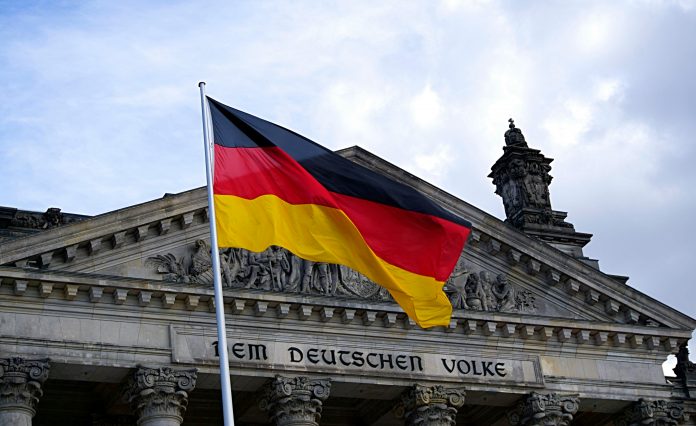
The Fall In Asylum Requests In Germany Reflects A Deliberate Policy Shift

0

In the first half of 2025, Germany experienced a significant decline in asylum applications, with reports indicating a drop of approximately 43% compared to the same period in 2024. According to German media citing EU Asylum Agency (EUAA) data, Germany recorded 61,300 to 65,495 first-time asylum applications from January to June 2025. Notably, June 2025 saw fewer than 7,000 applications, marking the lowest monthly figure since March 2013.

This decline has positioned Germany as the third-largest recipient of asylum applications in the EU, behind Spain (76,020 applications) and France (75,428 applications). The majority of applicants in Germany were from Afghanistan (22%), Syria (20%), and Turkey (11%). Stricter migration policies, including increased deportations and border controls under Chancellor Friedrich Merz, are cited as contributing factors to this trend.

The 43% drop in asylum applications reflects the effectiveness of stricter migration policies under Chancellor Friedrich Merz’s government, including enhanced border controls, accelerated deportations, and tightened asylum regulations. These measures align with a broader EU trend toward stricter immigration policies, as seen in countries like Spain and France, which still face higher application numbers.

Reduced asylum numbers may ease pressure on Germany’s administrative and social systems, such as housing, integration programs, and public services, which have been strained in recent years due to high migration inflows. The decline suggests that Germany is becoming a less attractive destination for asylum seekers compared to Spain and France, which now lead in asylum applications within the EU. This could be due to Germany’s tightened policies, increased deportations, or shifts in migration routes favoring southern EU entry points like Spain.

The concentration of applicants from Afghanistan, Syria, and Turkey indicates ongoing geopolitical crises driving migration, but the lower overall numbers may reflect improved border management or deterrence measures in transit countries. A reduction in asylum seekers could impact Germany’s labor market, which has historically relied on migrants to address labor shortages, especially in low-skilled sectors. Fewer asylum seekers may exacerbate challenges in an aging society with a declining workforce, potentially increasing pressure to reform legal migration pathways.

However, reduced strain on public resources (e.g., welfare, housing) could allow for reallocation of funds to other priorities, such as infrastructure or social programs for citizens. The decline may bolster support for Merz’s center-right government, which campaigned on stricter migration controls. This could strengthen the Christian Democratic Union (CDU) and its allies, particularly after years of public discontent over migration policies under previous administrations.

Conversely, it may reduce fuel for far-right parties like Alternative für Deutschland (AfD), which have capitalized on anti-immigrant sentiment, though this depends on how the public perceives the government’s broader handling of migration. The CDU-led government’s strict policies have drawn criticism from left-leaning parties (e.g., Greens, SPD) and pro-migration NGOs, who argue that tightened rules and deportations undermine humanitarian obligations and Germany’s reputation as a haven for refugees. This creates a polarized political landscape, with debates over balancing border security and human rights.

Germany’s decline in asylum applications contrasts with higher numbers in Spain and France, highlighting uneven burden-sharing within the EU. This could exacerbate tensions over EU asylum policy reform, as southern and western EU states push for more equitable distribution of migrants. German society remains split on migration. Some citizens, particularly in urban areas, support integration and humanitarian asylum policies, while others, especially in eastern states, back restrictive measures due to concerns over cultural integration and resource allocation.

The decline in applications may reduce social tensions but risks alienating communities that value Germany’s open-door legacy. Existing migrant communities, particularly from Afghanistan and Syria, may face increased scrutiny and integration challenges as the government prioritizes deportations and stricter vetting, potentially fostering feelings of exclusion or insecurity.

Urban areas with diverse economies may feel less immediate impact from reduced asylum inflows, as they benefit from established migrant labor. Rural regions, however, may face labor shortages in sectors like agriculture or construction, where asylum seekers often fill gaps. Reduced asylum numbers could free up public funds, but the benefits may not be evenly distributed. Wealthier regions may see reinvestment in infrastructure, while poorer areas might continue to struggle with underfunded services.

Germany’s stricter policies may push asylum seekers toward southern EU countries, straining their resources and potentially leading to diplomatic friction. Countries like Spain, now the top destination, may demand greater EU support or criticize Germany’s approach as deflecting responsibility. Germany’s shift toward restrictive policies could alter its global image as a leader in humanitarian migration, potentially affecting its soft power and relations with countries of origin like Afghanistan and Syria.

The fall in asylum requests in Germany in 2025 reflects a deliberate policy shift that may alleviate domestic pressures but risks deepening divides both within Germany and across the EU. Politically, it strengthens the government’s position but fuels debates over humanitarian values. Socially, it may ease integration challenges but alienate pro-migrant groups. Economically, it could exacerbate labor shortages while freeing up resources. Internationally, it shifts migration pressures to other EU states, highlighting the need for cohesive EU-wide policies.

The Movement of 80,000 BTC By An Ancient Bitcoin Whale Has Significant Implications

0

An ancient Bitcoin whale, dormant for 14 years, recently transferred 80,000 BTC—valued at approximately $8.6 billion—across eight wallets, each moving 10,000 BTC to new SegWit addresses (from legacy “1-” to modern “bc1q-” formats). This event, reported on July 4, 2025, sparked speculation about the motive, with some suspecting a hack due to a prior Bitcoin Cash (BCH) test transaction noted by Coinbase’s Conor Grogan, suggesting possible private key compromise.

However, Arkham Intelligence, supported by multiple sources, indicates no evidence of selling or mixer use, suggesting the transfers were likely for a wallet security upgrade to enhance efficiency and reduce fees. The funds, originally mined in 2011 when Bitcoin traded between $0.78 and $3.37, remain untouched in the new wallets, and Bitcoin’s price showed minimal disruption, dipping 2% from $110,000 to $107,600.

Additionally, Ledger CTO Charles Guillemet noted that OP_RETURN messages claiming legal possession were sent to the wallets before the transfers, possibly prompting the owner to move funds preemptively. Speculation about the whale’s identity includes early Bitcoin investor Roger Ver, though this remains unconfirmed. The transfer’s scale, representing a 13 million percent return on the initial investment, underscores its significance, but no immediate market impact suggests a technical move rather than a sell-off.

Bitcoin also hit an all-time high weekly close, trading above $108,000, with some sources citing $110,000 as a recent peak. This resilience indicates strong market confidence despite the whale’s activity. The transfer of $8.6 billion in BTC did not cause significant price volatility, with Bitcoin trading steadily at $108,000–$109,000, slightly below its all-time high weekly close of $111,814. This suggests strong market absorption, likely due to institutional demand (e.g., 131,000 BTC held by public companies and 111,000 BTC in ETF inflows in Q2 2025).

If the whale decides to sell, the sheer volume (80,000 BTC) could flood the market, potentially triggering a sell-off. This is a concern given the trend of early holders selling into ETF-driven demand, as noted by 10x Research. However, no exchange transfers have occurred, reducing immediate fears. The possibility of a hack, raised by Coinbase’s Conor Grogan, highlights vulnerabilities in dormant wallets. A single Bitcoin Cash test transaction before the BTC movement could indicate private key compromise, though no evidence confirms this. If true, it would be the largest crypto theft ever, shaking trust in wallet security.

Ledger CTO Charles Guillemet noted OP_RETURN messages sent to multiple dormant wallets, including these, claiming legal possession. This could signal attempts to exploit inactive addresses, prompting owners to secure funds or upgrade addresses, as Arkham suggests. Arkham’s theory that the whale moved funds to SegWit “bc1q-” addresses for better security and lower fees reflects Bitcoin’s ongoing adoption of modern standards. This could encourage other dormant holders to upgrade, improving network efficiency but also increasing on-chain activity that might be mistaken for selling.

The movement of such a large sum from a 14-year-old wallet fuels speculation about early Bitcoin adopters (e.g., Roger Ver or early miners) and their intentions. It reinforces Bitcoin’s narrative as a store of value, with unrealized gains from $0.78–$3.37 per BTC in 2011 to $108,000 today, but also stokes fear of massive dumps by early holders. The OP_RETURN messages claiming legal possession raise questions about how dormant assets are treated under law. If linked to figures like Roger Ver, recently released from prison, regulatory scrutiny on early Bitcoin holders could intensify, especially if funds are moved to exchanges.

Arkham Intelligence and parts of the community believe this is a routine address upgrade. The shift to SegWit addresses aligns with Bitcoin’s technical evolution, reducing fees and improving security. No exchange transfers, stable market prices, and the use of modern “bc1q-” addresses support this view. The lack of selling pressure suggests the whale is securing, not liquidating, assets. This camp sees the event as bullish, showcasing Bitcoin’s resilience and the prudence of long-term holders adapting to modern standards.

Coinbase’s Conor Grogan and others wary of hacks point to the BCH test transaction and OP_RETURN messages as red flags. The timing, after years of dormancy, and the scale of the transfer fuel suspicions of foul play or a prelude to selling. The BCH transaction could indicate private key testing, and OP_RETURN messages targeting dormant wallets suggest external attempts to claim or provoke movement. Speculation about Roger Ver or other early adopters adds to fears of a potential dump. This camp views the event as a potential threat, either from a hack undermining security or a whale preparing to sell, which could crash prices given the 80,000 BTC’s market weight.

The lack of exchange activity and stable prices lean toward Arkham’s address upgrade theory, but the hack concerns can’t be dismissed without further transparency (e.g., confirmation from the wallet owner). The community’s split reflects broader tensions in crypto: optimism about Bitcoin’s growth versus fears of vulnerabilities and market manipulation.