DD
MM
YYYY

PAGES

DD
MM
YYYY

spot_img

PAGES

Home Blog Page 938

Bitwise CIO Matt Hougan Predicts $10B Inflows To Ethereum

0

The prediction of $10 billion in net Ethereum ETF inflows for the second half of 2025 was made by Bitwise Chief Investment Officer (CIO) Matt Hougan, not the CEO, Hunter Horsley. Hougan’s forecast is based on growing institutional interest, Ethereum’s role in tokenized assets like stablecoins and equities, and recent ETF momentum, with $1.17 billion in inflows recorded in June 2025 alone. He argues that Ethereum’s blockchain utility and regulatory clarity make it appealing to traditional investors, potentially driving significant capital into spot Ethereum ETFs.

The prediction of $10 billion in net Ethereum ETF inflows in the second half of 2025, as forecasted by Bitwise CIO Matt Hougan, carries significant implications for the cryptocurrency market, Ethereum’s ecosystem, and the broader financial landscape. $10 billion in inflows signals growing confidence from institutional investors, such as hedge funds, pension funds, and wealth managers, in Ethereum as a long-term asset. This could boost Ethereum’s price and market capitalization, potentially pushing it closer to or beyond its all-time highs.

The influx of traditional capital via ETFs further legitimizes Ethereum in mainstream finance, reinforcing its role as a foundational blockchain for decentralized applications (dApps), smart contracts, and tokenized assets like stablecoins. Increased investment could drive more activity on Ethereum’s blockchain, supporting developers and projects building on layer-1 and layer-2 solutions. This may accelerate innovation in areas like DeFi, NFTs, and tokenized real-world assets (RWAs).

Higher ETF inflows may encourage more ETH staking, strengthening network security and supporting Ethereum’s proof-of-stake mechanism. This could also benefit layer-2 scaling solutions like Arbitrum and Optimism. Significant inflows could lead to short-term price spikes, but also volatility, as speculative trading often follows institutional moves. Investors may see increased market liquidity, but also potential corrections if expectations outpace fundamentals.

Ethereum ETFs could compete with Bitcoin ETFs for investor capital, potentially shifting market share. Ethereum’s unique value proposition (smart contracts, dApps) may appeal to investors seeking exposure beyond Bitcoin’s store-of-value narrative. The success of U.S.-based Ethereum ETFs could pressure other jurisdictions to approve similar products, expanding global access to Ethereum exposure.

Regulatory clarity around Ethereum (e.g., not being classified as a security) supports ETF growth, but increased inflows may draw further regulatory scrutiny to ensure investor protection and market stability. Large inflows from institutional investors could drive up ETH prices, potentially pricing out smaller retail investors who lack the capital to participate in the rally. ETFs, while accessible, often favor wealthier investors with access to sophisticated financial advisors or platforms.

Those who invested in Ethereum early may see significant gains, widening the wealth gap with latecomers who face higher entry costs. Investors in regions without access to Ethereum ETFs (e.g., countries with restrictive crypto regulations) may miss out on the benefits of regulated, low-risk exposure to ETH. This could exacerbate global inequalities in crypto investment opportunities. Understanding ETFs and their implications requires financial literacy, which may exclude less-educated or less-experienced investors, creating a divide between those who can navigate traditional finance and those who cannot.

The influx of traditional capital into Ethereum via ETFs may create tension between crypto’s decentralized ethos and the centralized, regulated nature of ETFs. Some crypto purists may view this as a “sell-out” to traditional finance, while others see it as necessary for mainstream adoption. Institutional dominance in ETF inflows could shift influence over Ethereum’s market dynamics away from decentralized communities toward Wall Street, potentially affecting governance or development priorities.

Increased ETF inflows may disproportionately benefit Ethereum’s layer-1 blockchain or specific layer-2 solutions, potentially sidelining competing blockchains (e.g., Solana, Cardano). This could consolidate Ethereum’s dominance but stifle innovation in other ecosystems. The focus on tokenized assets (e.g., stablecoins, RWAs) may prioritize certain Ethereum use cases over others, such as niche dApps or smaller DeFi protocols, creating a divide between mainstream and experimental applications.

The projected $10 billion in Ethereum ETF inflows could significantly boost Ethereum’s price, adoption, and ecosystem development, while further bridging crypto and traditional finance. However, it may also deepen divides between institutional and retail investors, regions with varying regulatory frameworks, and competing blockchain ecosystems. These dynamics highlight the need for balanced growth to ensure Ethereum’s rise benefits a broad range of stakeholders, rather than exacerbating existing inequalities or tensions in the crypto space.
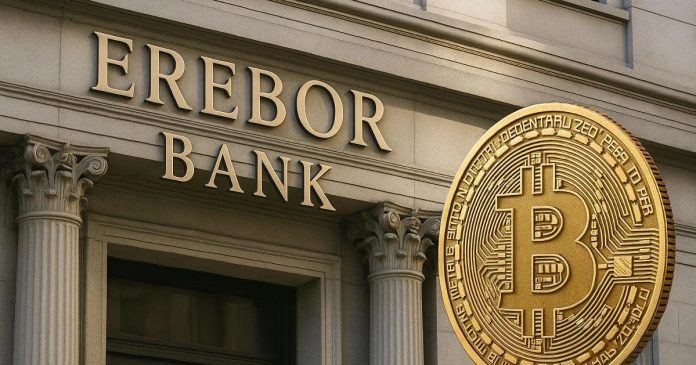

Erebor’s Launch Could Reshape Startup Financing, Legitimize Crypto In Traditional Banking

0

Peter Thiel, along with tech billionaires Palmer Luckey and Joe Lonsdale, is backing Erebor, a new U.S. digital bank aimed at serving cryptocurrency and tech startups, filling the void left by Silicon Valley Bank’s 2023 collapse. Named after the “Lonely Mountain” in J.R.R. Tolkien’s “The Lord of the Rings”, Erebor has applied for a national bank charter and plans to offer traditional banking services like loans and payroll, alongside blockchain-powered features such as stablecoin transactions.

The bank, headquartered in Columbus, Ohio, with an office in New York, will focus on underserved sectors like crypto, AI, and defense startups, which often struggle to access credit from traditional banks. Co-CEOs Jacob Hirshman (ex-Circle) and Owen Rapaport (Aer Compliance), with President Mike Hagedorn (ex-Valley National Bank), will lead operations, emphasizing regulatory compliance and digital-only services. Erebor aims to bridge traditional finance and Web3, potentially reshaping banking for high-growth industries.

Erebor’s launch could have significant implications for the crypto and tech startup ecosystem, as well as the broader financial landscape. Post-Silicon Valley Bank collapse, startups, especially in crypto, AI, and defense, have faced banking challenges due to traditional banks’ risk aversion. Erebor’s focus on these sectors could provide tailored financial services, enabling growth for underserved businesses.

By offering blockchain-powered features like stablecoin transactions alongside traditional banking (loans, payroll), Erebor could bridge Web3 and conventional finance, making crypto more accessible for businesses and potentially driving mainstream adoption. Erebor’s pursuit of a national bank charter signals a commitment to regulatory compliance, which could set a model for other crypto-focused institutions. Success here might encourage regulators to clarify rules for digital asset banking, fostering innovation while ensuring stability.

Erebor’s digital-only model and specialized services could pressure traditional banks to modernize or lose market share in high-growth sectors. It may also spur competition among fintechs, leading to better offerings for startups. By providing credit and banking solutions to crypto and tech startups, Erebor could stimulate job creation, innovation, and economic activity in these sectors, particularly in its Ohio and New York hubs.

The bank’s crypto focus could face scrutiny from regulators wary of digital assets’ volatility and fraud risks. Additionally, its success hinges on navigating a complex regulatory landscape and building trust among skeptical traditional investors. If Erebor succeeds, it could inspire similar ventures globally, accelerating the integration of crypto into mainstream finance and positioning the U.S. as a leader in digital banking innovation.

The rise of decentralized finance (DeFi) and stablecoins is pushing banks to adopt blockchain for secure, intermediary-free transactions like smart contracts and cross-border payments. Erebor’s plan to hold stablecoins and offer virtual currency services positions it at the forefront of this trend, catering to crypto-focused businesses.

Open banking, driven by APIs, allows third-party apps to access financial data, enhancing user experiences through account aggregation and personal finance tools. Erebor’s digital-only model likely relies on API-first solutions to integrate with fintechs and provide seamless services, reflecting this trend.

With digital banking’s growth, robust security measures like AI-driven fraud detection, biometrics, and quantum-resistant encryption are critical. Erebor’s emphasis on being a highly regulated entity for stablecoin transactions indicates a strong focus on compliance and security, aligning with the industry’s push for trust and safety.

Celsius Gets Node To Pursue $4B Lawsuit Against Tether USDT

0

A U.S. bankruptcy judge has allowed Celsius Network’s $4 billion lawsuit against Tether to proceed, rejecting parts of Tether’s motion to dismiss. The case, filed in the Southern District of New York, centers on Tether’s alleged improper liquidation of 39,542 Bitcoin (BTC) in June 2022, during Celsius’s collapse.

Celsius claims Tether violated their lending agreement by conducting a “fire sale” of the BTC collateral at $20,656—below market value—without adhering to a 10-hour waiting period, costing Celsius over $4 billion at current prices. The lawsuit alleges breach of contract, fraudulent transfer, and preferential transfer under U.S. bankruptcy law.

Tether argued the U.S. court lacked jurisdiction, citing its incorporation in the British Virgin Islands and Hong Kong, but the judge ruled that Tether’s U.S.-based personnel, communications, and financial accounts established sufficient domestic ties. While some claims, like “good faith and fair dealing” under British Virgin Islands law, were dismissed, the core allegations advance to discovery.

This ruling could impact how crypto lending and collateral management are regulated, especially for offshore firms with U.S. operations. Celsius, which exited bankruptcy in January 2024 after repaying 93% of creditors $2.5 billion, seeks to recover the BTC value and $100 million in damages. Tether, now a major Bitcoin holder, denies wrongdoing, calling the lawsuit a “shakedown.”

The lawsuit highlights the risks and legal ambiguities in crypto lending agreements, especially regarding collateral liquidation. A ruling in favor of Celsius could lead to stricter regulations on how crypto firms handle collateral, potentially requiring clearer contractual terms and standardized liquidation processes to protect borrowers. It may set a precedent for how bankruptcy courts treat crypto assets, influencing future cases involving distressed crypto firms.

The judge’s decision to allow the case to proceed, despite Tether’s offshore status, signals that U.S. courts may assert jurisdiction over foreign crypto firms with significant U.S. operations or contacts. This could deter offshore entities from engaging with U.S.-based clients without robust legal compliance, impacting their business models. It underscores the growing reach of U.S. bankruptcy law in crypto disputes, potentially forcing firms like Tether to adjust their operational structures to mitigate legal risks in multiple jurisdictions.

Tether, issuer of the USDT stablecoin, is a cornerstone of the crypto market. A prolonged legal battle or adverse ruling could undermine confidence in USDT, potentially causing market volatility, especially if Tether’s reserves or financial practices are scrutinized further. The case could also affect investor trust in crypto lending platforms, as Celsius’s collapse and subsequent litigation highlight the risks of unsecured lending and volatile collateral management.

The lawsuit’s focus on Tether’s alleged “fire sale” of Celsius’s Bitcoin collateral at a below-market price could lead to new standards for how crypto firms liquidate assets during distress. Courts may demand greater transparency and adherence to agreed-upon terms, impacting how lending agreements are structured industry-wide. For Celsius, recovering $4 billion (the current value of the disputed Bitcoin) could significantly benefit its creditors, who received 93% of their funds in the bankruptcy settlement. However, a loss could weaken its post-bankruptcy recovery.

For Tether, a $4 billion liability would be substantial, even with its reported $90 billion market cap for USDT. It could also invite further legal challenges from other parties, given Tether’s history of regulatory scrutiny. Celsius argues that Tether breached their lending agreement by liquidating 39,542 BTC without following the agreed 10-hour waiting period, selling at a low price ($20,656 per BTC) during a market dip in June 2022. Celsius claims this caused a $4 billion loss (at current BTC prices) and violated bankruptcy laws by prioritizing Tether’s interests.

Tether contends it acted within its rights to protect its interests as a lender, given Celsius’s impending collapse. Tether calls the lawsuit a “shakedown” and argues that the liquidation was necessary to mitigate its own risk, dismissing claims of improper conduct or undervaluation. Celsius leverages U.S. bankruptcy law to assert that Tether’s U.S.-based operations (personnel, communications, and financial accounts) make it subject to U.S. jurisdiction, despite its British Virgin Islands incorporation.

Tether argues it operates outside U.S. jurisdiction and that the agreement’s terms, governed by British Virgin Islands law, should limit the case’s scope. Tether’s push to dismiss the case reflects a broader desire among offshore crypto firms to avoid U.S. regulatory oversight. The dispute underscores a broader ideological divide in crypto: Celsius, a centralized lending platform, and Tether, a centralized stablecoin issuer, both operate with significant control over user assets, clashing with the decentralized ethos of crypto. The lawsuit exposes how centralized entities can wield power over collateral and market outcomes, fueling debates about the need for decentralized alternatives.

Celsius seeks to maximize creditor recovery by reclaiming the value of the liquidated Bitcoin, framing Tether’s actions as predatory and harmful to its users. Tether prioritizes its financial stability as a lender, arguing that its actions were necessary to safeguard its reserves and maintain USDT’s peg, which is critical to the broader crypto ecosystem. This lawsuit comes amid heightened regulatory focus on crypto firms, with Tether facing prior scrutiny over its reserve transparency and Celsius grappling with the fallout of its 2022 bankruptcy.

The case could amplify calls for clearer regulations on stablecoins and crypto lending, while also testing the limits of cross-border legal accountability in the industry. The outcome may influence how crypto firms structure lending agreements and manage collateral, potentially reshaping the risk landscape for investors and platforms alike.

Stanbic IBTC Projects 150/200bps Interest Rate Cuts Amid Slowing Inflation and Structural Reforms

0

Nigeria could see a significant shift in its monetary policy trajectory by 2025, as Stanbic IBTC Bank projects interest rate cuts of 150 to 200 basis points, with further reductions expected in 2026.

This comes on the back of easing inflation and broader economic reforms that are beginning to reshape the country’s economic landscape.

According to the bank’s latest Purchasing Managers’ Index (PMI) report, released in early July, inflationary pressures are expected to ease considerably over the next 18 months, paving the way for a looser monetary stance by the Central Bank of Nigeria (CBN).

Muyiwa Oni, Stanbic IBTC’s Head of Equity Research for West Africa, stated that, with inflation softening and growth outlook improving, interest rates are likely to fall — unlocking growth across key sectors.

“We expect 150/200 bps rate cut in 2025 and 200/250 bps in 2026. These, along with structural reforms and the removal of protectionist policies, should support Nigeria’s medium-term growth path,” Oni said in the report.

The June PMI reading, which stood at 51.6, indicates continued expansion in private sector activity — albeit at a slower pace than the 52.7 recorded in May. This marks the slowest expansion in seven months and is largely due to sluggish performance in manufacturing, which saw a sharp drop in output. Despite this deceleration, business confidence remains high, fueled by optimism over future investments, economic reforms, and expected improvements in the macroeconomic environment.

Economic Outlook: Growth, Investment, and Post-Rebasing Boost

Stanbic IBTC expects Nigeria’s economy to grow by 3.5% in 2025, a modest but stable expansion rate. However, with Nigeria planning a GDP rebasing exercise, the growth outlook could rise to 4.2%, as the rebasing would provide a more accurate reflection of economic activity, including expanding digital and service sectors.

This optimism stems from a combination of factors — including stronger fiscal coordination, improved foreign exchange availability, and the dampening effect of ongoing reforms on inflation and the cost of doing business.

Inflation Declining, But Still Elevated

Data from the National Bureau of Statistics shows that headline inflation fell to 22.97% in May 2025, down from 23.71% in April — the second consecutive monthly decline. Though inflation remains well above the CBN’s long-term target range of 6–9%, the recent trend offers hope of a turnaround, especially as food inflation — a key driver — begins to ease due to better harvests and reduced logistics costs.

The Monetary Policy Committee (MPC) of the CBN has paused its aggressive tightening stance for the second time this year, holding the benchmark interest rate at 27.50% in its last two meetings. The move signals a shift toward a wait-and-see approach as inflation moderates and economic activity stabilizes.

Analysts believe the next MPC meeting, scheduled for July 21–22, 2025, will be crucial in shaping the monetary policy outlook for the rest of the year. A sustained decline in inflation, alongside continued implementation of fiscal and structural reforms, could convince the MPC to initiate the first rate cut cycle since 2021.

Policy Challenges and Risks

While optimism abounds, Stanbic IBTC cautions that several risks could still undermine the recovery:

  • Persistent exchange rate volatility could reignite inflation.
  • Rising debt service costs could squeeze fiscal space.
  • Political resistance to subsidy reforms or tax increases may stall fiscal consolidation.
  • Weak infrastructure and insecurity could hinder investment inflows.

Nevertheless, the anticipated interest rate cuts are expected to improve credit conditions, stimulate consumer spending, and attract more private investment — all of which are necessary to boost Nigeria’s fragile recovery.

In summary, Nigeria appears to be on a cautious but hopeful path toward economic normalization, with falling inflation, structural reforms, and rate cuts on the horizon. The months ahead will be critical in determining whether these early signals translate into sustained, inclusive growth.

xAI Granted Emissions Permit for Memphis Supercomputer Facility Despite Protests and NAACP Lawsuit

0

Elon Musk’s artificial intelligence startup, xAI, has secured a permit to operate natural gas-burning turbines at its controversial supercomputer facility in Memphis, Tennessee, despite mounting public opposition and legal pressure.

The permit, issued by the Shelby County Health Department on July 2, allows the company to power its Colossus datacenter using 15 gas turbines, which have become the focus of heated environmental and health concerns from residents and advocacy groups.

The approval comes after months of protests and public hearings during which local residents criticized the project’s effect on air quality in the surrounding neighborhood. Many said the operation of the turbines had already resulted in air pollution so severe that they could no longer open their windows or exercise outside without experiencing strong odors and discomfort.

According to specifications from Solaris Energy Infrastructure (SEI), the Houston-based company installing the turbines, the machines emit pollutants including nitrogen oxides and formaldehyde—substances linked to increased respiratory illness and long-term health risks. Solaris markets itself as a rapid-deployment energy firm for data centers and industrial operations with large, immediate power needs.

The permit comes with strict conditions: xAI must adhere to emissions limits, conduct environmental testing, and meet regulatory deadlines or face penalties of up to $10,000 per day for each violation. However, many believe the enforcement mechanisms remain weak and the decision marks a disregard for community health.

Adding to the controversy, the Southern Environmental Law Center, which is representing the NAACP in an ongoing lawsuit against xAI, said satellite imagery taken on July 1—just one day before the permit was granted—showed “at least 24 turbines” on the property. That number exceeds the 15 turbines the permit allows to be operational.

The NAACP has accused xAI of violating the Clean Air Act, and the law center said it had previously documented more than 35 turbines at the site, many running simultaneously, in breach of environmental laws.

The permit also followed a leadership shake-up within the local health authority, with Bruce Randolph named interim director of the Shelby County Health Department just one day before the decision was announced.

xAI’s Response and Future Plans

xAI responded to the controversy on Wednesday, telling CNBC that it welcomed the decision by county officials. The company claimed the site would feature “state-of-the-art emissions control technology,” adding that Colossus would be the “lowest emitting of its kind in the country.”

Yet, the community remains unconvinced. Local residents and environmental activists point out that natural gas turbines—even with advanced control systems—still release significant pollutants, and their placement in a residential area raises questions about environmental justice.

Beyond Colossus, xAI is already plotting its next move. The company intends to build an even larger datacenter in the Memphis area, again with SEI providing the turbines. This expansion effort is being powered by a fresh round of capital: a combined $10 billion in debt and equity raised this week, led in part by Morgan Stanley.

xAI, which recently merged with Musk’s social media platform X in a deal valuing the combined entity at $80 billion, is working to compete directly with AI titans like Google’s Gemini and OpenAI’s ChatGPT. The Memphis facility serves as the backbone for the company’s AI chatbot, Grok, now integrated into X.

Tesla, another Musk-owned company, is also benefiting from the project. According to recent filings, xAI spent around $191 million in 2024 and another $36.8 million in early 2025 on Tesla’s Megapacks—large-scale battery systems used to store backup power for critical infrastructure.

Rising Tensions Over AI-Powered Infrastructure

The rapid buildout of energy-hungry data centers in urban and suburban areas has triggered widespread concern, with communities increasingly pushing back on the environmental costs of powering next-generation AI systems. While companies like xAI claim to be investing in clean energy innovations, critics argue the continued reliance on fossil fuels—even in “state-of-the-art” formats—is a step backward in the fight against climate change.

The Memphis case now joins a growing number of legal and social battles surrounding AI infrastructure, particularly in historically underserved communities. With lawsuits pending, further regulatory scrutiny likely, and construction still underway, Musk’s AI ambitions in Tennessee may face even more resistance before the supercomputers fully come online.