DD
MM
YYYY

PAGES

DD
MM
YYYY

spot_img

PAGES

Home Blog Page 94

OpenAI Deepens Its Circular Investment Strategy With New Stake in Thrive Holdings

0

OpenAI has added a fresh layer to its fast-expanding web of strategic deals, announcing on Monday that it is taking an ownership stake in Thrive Holdings — a company launched in April by Thrive Capital, one of OpenAI’s biggest and most influential backers.

The move widens OpenAI’s ongoing push to diversify its revenue streams at a time when the company is still battling to turn its wildly popular ChatGPT product into a profitable business. By embedding itself directly inside operating businesses across the “real economy,” OpenAI is placing bets that its models can unlock new efficiencies, reshape traditional workflows, and ultimately return financial gains that could support its heavy compute needs.

Thrive Holdings focuses on buying, owning, and running companies that could benefit from new technologies like AI, with an early focus on accounting and IT services. As part of the deal, OpenAI will embed engineers, researchers, and product teams inside Thrive Holdings’ companies, aiming to speed up their AI adoption and cut operating costs.

OpenAI, currently valued at $500 billion, did not disclose how much it invested. But the structure of the partnership means the size of OpenAI’s stake can expand as Thrive Holdings’ companies grow. A person familiar with the agreement — who asked not to be named because the details are private — said the setup is designed to align long-term incentives. Another person familiar with the deal said it also serves as a way for OpenAI to be compensated for its services.

Joshua Kushner, CEO and founder of both Thrive Capital and Thrive Holdings, called the partnership a natural extension of their long-running relationship.

“We are excited to extend our partnership with OpenAI to embed their frontier models, products, and services into sectors we believe have tremendous potential to benefit from technological innovation and adoption,” he said in a statement.

Brad Lightcap, OpenAI’s COO, framed the partnership as a real-world testing ground for how AI can transform core business operations.

“This partnership with Thrive Holdings is about demonstrating what’s possible when frontier AI research and deployment are rapidly deployed across entire organizations to revolutionize how businesses work and engage with customers,” he said.

It’s another example of OpenAI’s increasingly circular dealmaking strategy: the company invests in partners, those partners expand their AI infrastructure or operations using OpenAI’s products, and OpenAI gains both strategic influence and a potential revenue backstop. In recent months, it has taken positions in infrastructure players like AMD and CoreWeave, which supply the compute backbone that its own models depend on.

The announcement also arrived alongside a second major update: OpenAI revealed that ChatGPT Enterprise will be deployed to “tens of thousands” of employees at Accenture. The consulting giant is already one of the most aggressive adopters of generative AI in the corporate world, with its own teams dedicated to helping clients integrate tools like ChatGPT into daily operations.

The dual announcements show an evolving playbook — one that goes far beyond model releases and consumer subscriptions for OpenAI. With escalating compute demands, rising operating costs, and investors expecting OpenAI to one day convert its global popularity into sustainable earnings, the company is working to deepen its roots inside businesses where AI can drive measurable, billable change.

The Thrive Holdings deal drops OpenAI more directly into sectors where AI adoption has barely scratched the surface. And if the partnership works as designed, the company won’t just sell AI — it’ll partly own the gains created by it.

British Fintech Wise Secures Approval to Launch in South Africa, Marking Its First Entry Into Africa

0

Wise, the British financial technology company, has officially received conditional regulatory approval to operate in South Africa, marking its first expansion into Africa.

The company expressed excitement about entering the market, noting that millions of South Africans will soon benefit from faster, cheaper, and more transparent international money transfers.

The approval comes shortly after UK Prime Minister Keir Starmer’s visit to South Africa during the G20 summit. Commenting on Wise’s expansion, the Prime Minister stated that the move strengthens economic ties with one of Africa’s most dynamic economies while highlighting British innovation in building solutions that improve life for people and businesses globally.

In his words,

“Wise’s expansion into South Africa not only strengthens ties with one of Africa’s most dynamic economies but also showcases British excellence in building solutions that make life better for people and business worldwide, both at home and abroad. This is yet another example of a thriving UK business expanding internationally, that success is good for British jobs, good for growth, and good for business.”

Also speaking, Nadia Costanzo, Director of Banking and Expansion LatAm & MEA at Wise, said,

“South Africans are among the most digitally savvy consumers on the continent, yet many still face high costs, poor price transparency, and slow, inconvenient processes when sending money abroad. Our first regulatory approval in Africa marks a significant step forward in our mission to give South Africans access to a faster, cheaper, and more transparent way to send money abroad – and we’re grateful for the Reserve Bank’s collaboration and support throughout the process. We look forward to actively engaging with SARB as it continues to modernise and develop its regulatory framework to fuel financial innovation.”

South Africa is committed to the G20 Roadmap for Enhancing Cross-Border Payments, an initiative aimed at making global payments more accessible, transparent, fast, and affordable by 2027. Wise’s entry into the African country aligns with and supports these national and global objectives.

By lowering costs and simplifying global money movement, Wise will enable more South Africans to:

•Pay for online services globally

•Receive payments from international employers

•Engage in global e-commerce and gig-economy work.

Notably, Wise’s entry into South Africa comes after the global technology company in October this year, secured regulatory approvals by the Central Bank of the United Arab Emirates (CBUAE) to bring its suite of products to the country. 

Co-founded by Kristo Käärmann and Taavet Hinrikus, Wise formerly known as TransferWise was launched in 2011. Today, it stands as one of the world’s fastest-growing and profitable technology companies, publicly traded on the London Stock Exchange under the ticker WISE.

With over 16 million users worldwide, the fintech processes approximately £9 billion in cross-border transactions monthly, saving customers around £1.5 billion annually. Through the Wise account, individuals and businesses can hold more than 40 currencies, transfer funds internationally, and spend money abroad with ease.

In fiscal year 2025, Wise supported around 15.6 million people and businesses, processing over $185 billion in cross-border transactions and saving customers around $2.6 billion.

Wise is driven by a mission to build “money without borders” where sending, receiving, and spending money internationally feels as instant and simple as email. Its technology, transparency, and global mindset continue to challenge traditional financial systems and push the global payments industry toward greater fairness and efficiency.

Four Crypto Presales Drawing Attention in Early December: Why Mono Protocol Leads Developer and User Interest

0

Several early-stage projects continue gaining traction as users search for platforms built around utility and structured development. Mono Protocol, Nexchain, WeWake, and Maxi Doge now appear in multiple tracking lists due to steady raises and active updates. These entries remain visible across the crypto presale market as interest shifts toward practical solutions.

1. Mono Protocol – Unified Routing Framework Driving Continuous Growth

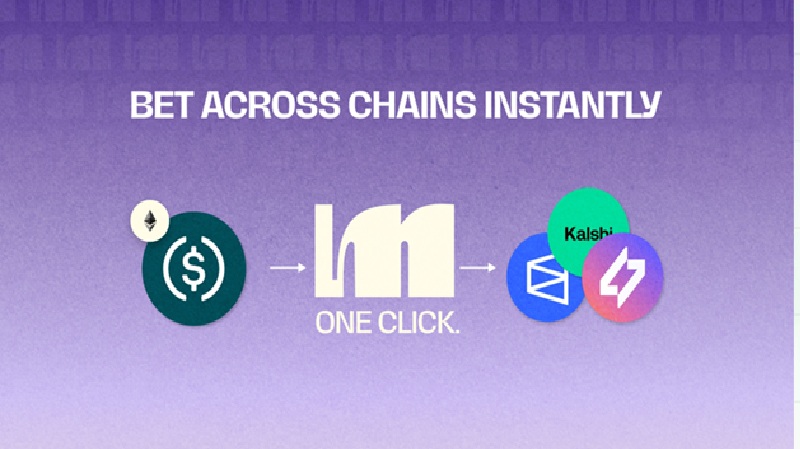
Mono Protocol remains one of the most followed entries in current cryptocurrency presales. The project is in Stage 19 with a presale coin price of $0.0550 and $3.68 million raised. Its approach focuses on unifying the user balance across supported blockchains, reducing manual switching and simplifying cross-chain activity.

The routing engine manages execution behind the scenes. It chooses the optimal path based on network conditions and handles settlement automatically. This technical direction positions Mono Protocol as a platform designed for multi-chain accessibility.

Its CertiK audit and continued updates help support visibility across crypto pre sales as infrastructure interest rises.

2. Nexchain – AI-Enhanced Layer-1 With High Throughput and Testnet Expansion

Nexchain continues appearing in web3 crypto presale discussions due to its AI-supported consensus system and high-performance architecture. The Layer-1 blockchain targets up to 400,000 transactions per second, using hybrid validation and parallel processing to maintain speed.

The presale price stands at $0.116 during Stage 29, with over $12.25 million raised toward the target. TESTNET 2.0 introduces wallet reputation scoring, contract behavior detection, and risk profiling tools. These additions support transparency and draw developer attention.

Its listed target of $0.30 creates a 259% projected margin, which keeps Nexchain present across several crypto presales lists focusing on long-term infrastructure projects.

3. WeWake – Walletless and Gasless Entry Designed for Mainstream Users

WeWake remains a top choice among pre sale cryptocurrency projects targeting new Web3 participants. The platform removes common barriers by offering login access through Google, Apple, or Telegram instead of seed phrases or wallets. This improves onboarding for users unfamiliar with blockchain tools.

Stage 17 is priced at $0.0340 with $1.49 million raised. The Layer-2 system supports gasless transactions through internal mechanisms. This allows users to complete actions without paying network fees, a design aligned with broader accessibility goals.

The model positions WeWake within discussions about user-friendly platforms and keeps it visible across active coin presale searches.

4. Maxi Doge – Meme Token With Utility and Planned Trading Integrations

Maxi Doge enters this list as a meme-focused project that incorporates planned utility features rather than relying solely on branding. Built on Ethereum as an ERC-20 token, it integrates easily with existing wallets, hardware devices, and major DeFi tools.

Twenty-five percent of the supply is allocated to the MAXI Fund. This pool supports partnerships, including potential integrations with futures trading platforms.

The token incorporates staking rewards, gamified engagement systems, and Web3 features such as “proof-of-workout” elements.

Audits from Coinsult and SolidProof show no critical vulnerabilities. With a heavy marketing allocation and broad compatibility, Maxi Doge maintains a steady presence across coin presale and crypto presales discussions.

Final Overview

Mono Protocol, Nexchain, WeWake, and Maxi Doge continue appearing across market tracking reports due to structured development, active communities, and practical use cases. These projects maintain visibility in the presale crypto market as users explore platforms offering infrastructure, accessibility, and targeted utility rather than short-term speculation.


Learn More about Mono Protocol

Website: https://www.monoprotocol.com/

X: https://x.com/mono_protocol

Telegram: https://t.me/monoprotocol_official

LinkedIn: https://www.linkedin.com/company/monoprotocol/

Top 5 Crypto Presales to Watch This Week: Why Mono Protocol, Nexchain, and WeWake Lead Early-Stage Interest

0

Early-stage markets remain active as users review infrastructure projects gaining traction during ongoing raises. Mono Protocol, Nexchain, and WeWake continue leading discussions due to their technical roadmaps and stage-based growth. These platforms attract users watching the crypto presale market for systems focused on utility rather than short-term hype cycles.

1. Mono Protocol – Unified Cross-Chain Execution Driving Strong Visibility

Mono Protocol remains the most tracked project in current cryptocurrency presales. The platform is in Stage 19 with a presale coin price of $0.0550 and $3.68 million raised. Its unified cross-chain system allows one balance per token across supported networks, removing the need for manual switching.

This model simplifies interactions for both users and developers. The routing engine selects the optimal path automatically, managing execution and settlement behind the scenes. This positions Mono Protocol as an infrastructure-focused entry in the presale crypto landscape as Web3 continues to expand across many chains.

Mono Protocol also completed a CertiK audit, which adds transparency for users evaluating pre sale cryptocurrency platforms with long-term technical plans.

2. Nexchain – AI-Driven Layer-1 With High Throughput and Active Testnet

Nexchain is another leading entry across crypto presales due to its AI-supported Layer-1 design. The project aims for up to 400,000 transactions per second using a hybrid consensus model. Stage 29 is priced at $0.116, with more than $12.25 million raised so far.

TESTNET 2.0 includes advanced tools such as wallet reputation scoring, contract behavior identification, and risk tagging. These features support transparency for developers and contribute to Nexchain’s presence in web3 crypto presale discussions.

Its 259% projected listing margin continues to draw attention from users tracking structured crypto pre sales with active development work behind them.

3. WeWake – Gasless and Walletless Onboarding for Mainstream Access

WeWake targets onboarding challenges by removing seed phrases and wallet setup. Users gain access through Google, Apple, or Telegram logins, making it suitable for newcomers entering Web3 for the first time. Stage 17 is priced at $0.0340, with $1.49 million raised.

The Layer-2 network supports gasless transactions through its internal system. This structure enables Web2-style simplicity without compromising security. As Web3 adoption expands, WeWake’s focus on friction-free use cases helps maintain its position within active coin presale discussions.

4. SUBBD Token – AI Tools for Creators and Subscription Payments

SUBBD Token connects over 2,000 creators with 250 million followers using AI-driven engagement tools. The platform offers subscription payments, voice cloning, avatar creation, and automated messaging for content creators.

It has completed audits from SolidProof and Coinsult. The model supports subscription incentives and XP multipliers for platform users, which keeps SUBBD present in several cryptocurrency presales lists.

5. Bitcoin Hyper – Layer-2 Speed for Bitcoin Through SVM Execution

Bitcoin Hyper continues to appear in coin presale searches due to its plan to bring Solana-style performance to Bitcoin. The network uses SVM execution to run smart contracts while keeping BTC secured on Layer-1.

It aims to support fast transactions, DeFi tools, and smart contract infrastructure for Bitcoin-based applications.

Final View on This Week’s Leading Early-Stage Projects

Mono Protocol, Nexchain, and WeWake remain the top three projects monitored by users studying early-stage Web3 infrastructure. Their technical models, active raises, and structured plans continue to place them ahead of many peers across the crypto presale environment. SUBBD Token and Bitcoin Hyper round out this week’s notable entries with strong utility narratives.

India’s GST Revenues Inch Up Despite Sweeping Tax Cuts, But Weakness Appears Across Key Sectors

0

India collected 1.70 trillion rupees ($18.98 billion) in gross GST revenues in November, rising just 0.7% from a year earlier, even as cess-inclusive revenues fell 4.2%.

The softer showing suggests that large parts of the economy have not fully absorbed the impact of the government’s September 22 tax cuts on hundreds of goods, particularly in categories tied to everyday consumption. Net collections stood at 1.52 trillion rupees, up only 1.3% from November 2024.

“Instead, there is a reduction in the gross domestic GST collections,” said Karthik Mani, partner – indirect tax at BDO India.

Because GST data is published with a lag, November is the first complete month showing the effect of the rate cuts. A closer reading of the numbers reveals that while certain industries enjoyed stronger sales during the festive period, the gain in volumes did not translate into commensurate revenue because many of the goods now fall into lower tax brackets.

The FMCG and household goods segment, for instance, saw clear improvements in footfall and retail activity. Items such as shampoos, soaps, and detergents sold more briskly through October, but these products already attracted relatively low GST rates before the cuts. As a result, even a substantial uptick in purchases did not generate enough tax to push collections higher in any meaningful way.

A similar pattern played out in the automobile sector. Reducing GST on small cars was intended to lift sentiment among middle-income buyers, yet the response appears uneven. November’s revenue pattern suggests that sales improved, but not dramatically. Higher interest rates and broader household budget constraints continue to limit momentum in both two-wheelers and entry-level passenger cars. The modest lift in demand was not enough to counter the lower tax rate.

Electronics and home appliances, which typically benefit strongly from festive spending, also delivered mixed results. Retailers reported strong interest in smartphones, televisions, and other appliances during October’s promotional events. But because these are relatively high-value purchases, the tax cut exerted a stronger downward pull on GST receipts than the rise in sales could offset. The segment appears to have boosted consumption without delivering a corresponding bump in revenue.

The services sector, which includes telecom, hospitality, entertainment, and professional services, did not undergo any GST rate cuts but has been moving at a slower clip. Telecom spending has stabilized but is no longer expanding rapidly. Travel and hospitality enjoyed a festive surge but remain short of a full recovery.

Professional services and consulting have been moving through irregular billing cycles. These sectors ultimately helped prevent a sharper drop in overall GST revenue, yet the pace was not enough to compensate for the weaker inflows from goods.

Manufacturing and industrial inputs reflected similar fragility. GST collections tied to intermediate goods often offer a window into the health of factories and supply chains. The November outcome suggests that companies are drawing down inventories rather than expanding output. Momentum in light manufacturing and textiles appears soft, consistent with recent activity indicators that show uneven factory-floor recovery.

Even the e-commerce and organized retail sector, which saw energetic trading during festival sales, could not fully offset the effect of lower GST rates. Much of the online basket consists of FMCG items, personal care products, electronics, and other goods affected by the tax reductions. That meant shoppers bought more, but the government collected less per item.

Taken together, the November numbers show the tension between India’s push to stimulate household consumption and the reality of short-term revenue arithmetic. The government’s expectation was that higher demand would largely neutralize the impact of rate cuts. Instead, the initial data shows that lower taxes have had a stronger influence than the rise in volumes.

The next few months will become a clearer test of whether consumption is settling onto a stronger footing or whether November marks the first evidence that the revenue gap may linger longer than expected.