DD
MM
YYYY

PAGES

DD
MM
YYYY

spot_img

PAGES

Home Blog Page 94

MegaETH Will Refund All $500M Raised through its Pre-Deposit Bridge Campaign

0

MegaETH, a real-time blockchain project, announced that it will refund all approximately $500 million raised through its Pre-Deposit Bridge campaign.

The decision stems from a chaotic launch on November 25, 2025, marred by technical failures, operational errors, and misaligned user expectations.

The team described the execution as “sloppy,” emphasizing that the campaign deviated from its core goal: preloading collateral to ensure 1:1 USDm stablecoin conversions upon the Frontier mainnet launch.

This refund represents a full reset for the project, with no funds at risk, but it has sparked discussions on trust, transparency, and execution in DeFi launches.

The Pre-Deposit Bridge was designed to allow users to deposit USDC for early access to USDm (MegaETH’s native stablecoin) at a 1:1 ratio on mainnet. However on Launch Day, the event started at 9 a.m. ET with a $250 million cap.

Within minutes, the third-party bridge provider crashed due to overwhelming traffic, causing nearly an hour of downtime. Once resolved, the cap filled in just 156 seconds.

MegaETH attempted to raise the cap to $1 billion to accommodate demand, but a misconfigured multisig transaction set to a 4-of-4 signature threshold instead of 3-of-4 allowed a community member to execute it ~34 minutes early.

This triggered an uncontrolled surge, pushing deposits past $400 million. KYC system bugs, communication breakdowns, and infrastructure misconfigurations led to accusations of mismanagement.

The team eventually froze deposits at $500 million and enabled withdrawals, but the process was widely criticized as unfair. In a detailed X thread, MegaETH admitted the flaws and committed to a full refund via a new, audited smart contract. The bridge will reopen with improved controls before mainnet.

Data from on-chain analysis shows:~4,589 unique addresses participated. Average deposit: ~$102,396; median: $3,100. Top 10 depositors contributed 29% of the total. In their official statement, the team highlighted a “blow-by-blow breakdown” of small technical failures compounded into a “chaotic, unfair sale process.”

Users anticipated a capped, orderly raise, but the event prioritized speed over stability, clashing with the goal of secure collateral preloading. To align with regulatory best practices and protect users, a reset ensures proper disclosures and avoids further erosion of confidence.

The team stressed: “No funds were ever at risk,” and depositor contributions “will not be forgotten” for future opportunities. Some users mocked the irony of a “real-time” chain fumbling a basic launch, while others praised the transparency.

Crypto media labeled it “one of the most disorderly raise attempts of the year,” but noted the short memory in crypto—expectations are that this “will blow over quickly” given no losses. Earlier presale frustrations amplified skepticism.

As mainnet nears, the project plans to relaunch the USDC-USDm bridge with fixes. This could strengthen foundations if executed well, but rebuilding trust is key. Stakeholders are advised to monitor updates and conduct due diligence.

Refunds are expected “shortly” via the audited contract, returning funds to original wallets. These incidents often stem from rushed infrastructure, bot exploitation, or misaligned incentives, leading to rapid value erosion or project abandonment.

Developers launched a token sale on Copper Launch, attracting $60 million in deposits. Minutes before the end, they drained all liquidity via a rug pull, leaving participants with worthless tokens.

Sudden liquidity freeze/extraction; users locked out during chaos, mirroring MegaETH’s cap surge and freeze. High demand overwhelmed the system, enabling insider exploitation.

Total loss for depositors; project vanished. Pre-launch audits and immutable liquidity locks are essential to prevent insider dumps. Bot swarm flooded the network during the Initial DEX Offering (IDO), causing total shutdown. Thousands of users couldn’t participate, sparking FUD over fairness.

Network congestion from bots and traffic, akin to MegaETH’s bridge crash and uncontrolled deposits. Emphasized speed over stability. Team refunded users, relaunched with anti-bot measures. Project survived but lost momentum.

Stress-test infrastructure and implement queue systems for high-demand events. Governance token launch via airdrop led to backlash when the DAO vote revealed opaque allocations (e.g., 11.6% to Offchain Labs insiders). Community accused centralization; token dropped 20%+ on day one.

DEX-only launch on Telegram’s TON chain caused network congestion; trading started an hour early, allowing insiders to sell at peaks. Users waited 3-4 hours for claims, selling 45-60% lower. Token lost 75% value in 24 hours; no CEX listings added friction.

Delayed access and insider advantages, paralleling MegaETH’s early multisig execution and cap flip-flops. Congestion hit retail hardest. Devs’ reputation damaged; $PX at ~$0.01 from $0.10 launch. Staggered claims and CEX integration reduce congestion and insider edges.

Cross-chain DeFi lender’s IDO saw 300+ simultaneous deposits overwhelm the new Aptos network, causing congestion and token-claiming failures. Team went dark post-launch.

Overwhelming traffic and infrastructure collapse, directly like MegaETH’s provider downtime and surge. Botched on a fresh chain. Platform offline; funds inaccessible. Lesson: Gradual rollouts and fallback claiming prevent total blackouts.

On Coinbase’s Base L2, a hyped token rug pulled shortly after bridging influx. Then, Aerodrome DEX, the main liquidity hub suffered an LP drain exploit, halting trading. Users couldn’t bridge out for hours.

Bridge rushes leading to rugs/exploits; trapped funds during chaos, echoing MegaETH’s withdrawal enables after freeze. Millions lost; Base TVL dipped temporarily. Lesson: Post-launch monitoring and emergency bridges mitigate secondary failures.

Like MegaETH, 80%+ of these involved traffic overloads or config errors (e.g., multisigs, queues), per industry reviews of ICO failures. Bots and insiders often amplify damage, with 81% of 2017-2018 ICOs failing within a year due to similar execution gaps.

These cases underscore DeFi’s innovation-vs-maturity tension: MegaETH’s refund pivot is rare candor, but the ecosystem’s “short memory” means scrutiny fades quickly if mainnet delivers.

Crypto Mining Stocks, Pivoting to AI Hosting, Surge on Amazon’s Massive AI Investment

0

Amazon announced plans to invest up to $50 billion in AI infrastructure and supercomputing capabilities specifically for U.S. government customers, sparking a sharp rally in cryptocurrency mining stocks.

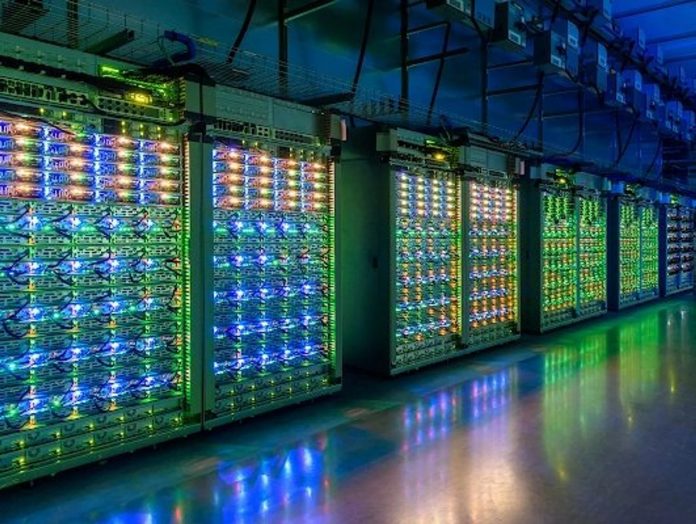
This move underscores the escalating energy demands of AI development, where tech giants like Amazon, Microsoft, and Alphabet are racing to build out massive data centers—often leveraging existing power-heavy infrastructure from the crypto mining sector.

Miners, facing post-2024 Bitcoin halving profitability squeezes, are pivoting to AI hosting, turning their grid-connected sites into valuable assets for rapid AI deployment.

Key Stock Movements

The announcement triggered immediate gains, with several mining firms seeing double-digit jumps in a single session. BMNR ~20% led the rally, benefiting from its immersion cooling tech suited for AI workloads.

Cipher Mining; 18-20% +360% fresh off a $5.5B, 15-year AWS deal for AI power supply; shares hit $22.37 in pre-market. IREN; ~13% +580% rebranded focus on AI; secured $9.7B Microsoft deal earlier this year.

CleanSpark; ~13% strong in sustainable energy mining, aligning with AI’s green push. TeraWulf; +160% emphasizes low-cost, renewable power sites.

Riot Platforms— RIOT; +100% major U.S. player with 14 GW aggregate sector capacity now eyed for AI. Hut 8; Canadian miner expanding U.S. AI partnerships. These gains pushed the broader crypto market higher, with Bitcoin briefly surpassing $87,000 amid renewed investor appetite.

Coinbase (COIN) and other ecosystem plays like Galaxy Digital rose 4-5%. AI training and inference require enormous electricity—far outpacing traditional grid growth. U.S. Bitcoin miners alone control about 14 gigawatts of ready-to-use power capacity, often in remote, energy-rich locations with direct grid access.

This “plug-and-play” setup lets hyperscalers like AWS bypass years of permitting delays. Examples include: Apple’s recent federal nod to wholesale electricity trading for AI needs.

Miners adopting 52% renewable energy mixes, contrasting AI’s reliance on new gas/nuclear plants, creating hybrid energy solutions. The rally has cooled slightly but holds gains above 10% for leaders, with analysts watching for follow-on deals.

This convergence signals a “new era” where ex-crypto infrastructure fuels the AI boom, potentially reshaping energy markets. On X, the story trended with quick hits from crypto alert accounts, amplifying the buzz.

The Amazon/Cipher deal, marks first direct partnership with a major hyperscaler and accelerates its strategic pivot from cryptocurrency mining to high-performance computing (HPC) and AI infrastructure hosting.

The agreement leverages Cipher’s expertise in power-intensive data centers, providing AWS with dedicated capacity for AI workloads amid surging demand for energy-efficient computing resources.

Cipher will deliver 300 megawatts (MW) of turnkey data center space and power, equipped with both air and liquid cooling systems to support AWS’s AI training and inference needs.

Phase 1 begins in July 2026, with initial capacity coming online. Lease rentals commence in August 2026, generating predictable, long-term revenue for Cipher over the contract’s duration.

The hosting will occur at Cipher’s Barber Lake site in Colorado City, Texas, a strategic location with access to low-cost, grid-connected power ideal for rapid AI deployment.

This deal builds on Cipher’s prior AI-focused agreements, including a 10-year, 168 MW hosting contract with Fluidstack backed by a $1.4 billion guarantee from Google announced in September 2025, which included Google acquiring a 5.4% equity stake in Cipher.

Combined, these contracts represent $8.5 billion in total AI hosting lease payments, underscoring Cipher’s growing role in the AI ecosystem. Cipher’s move aligns with broader industry trends where Bitcoin miners, post-2024 halving, are repurposing their 14+ GW of U.S. power capacity for AI hyperscalers facing grid constraints and permitting delays.

CEO Tyler Page described the quarter as “truly transformative,” noting the company’s 3.2 GW project pipeline and confidence in Texas as a hub for non-traditional AI sites. To fund expansions, Cipher completed a $1.3 billion convertible note offering in Q3 2025.

Simultaneously, Cipher unveiled a joint venture to develop the “Colchis” site—a 1 GW HPC data center in West Texas—with a fully executed Direct Connect Agreement with American Electric Power (AEP) for dual interconnection.

Energization is targeted for 2028, and Cipher will finance the majority, securing ~95% equity ownership.Q3 2025 Financial SnapshotThe AWS announcement coincided with Cipher’s Q3 earnings release, highlighting operational momentum despite a modest net loss.

CIFR shares surged 19-34% in trading on November 3, 2025, closing up ~19% at $22.24 from $18.65, with intraday highs pushing toward $24.81. Year-to-date gains exceeded 360% pre-announcement, reflecting investor enthusiasm for AI diversification.

Broader sector peers, such as Iris Energy (IREN) with its $9.7 billion Microsoft deal, saw similar rallies, signaling a “new era” for mining stocks in AI power plays. This partnership positions Cipher as a “power + compute factory” for the AI revolution.

With analysts raising price targets based on enhanced balance sheet strength and revenue visibility. CIFR trades around $22-24, with ongoing buzz about potential follow-on hyperscaler deals.

Italy Invokes ‘Golden Power’ to Vet JD.com’s $2.5bn Takeover of European Electronics Giant Ceconomy

0

Italy’s government has given its conditional approval to Chinese e-commerce behemoth JD.com’s takeover of German electronics retailer Ceconomy, utilizing its robust “golden power” legislation to safeguard national strategic interests.

This conditional clearance, issued by Rome’s cabinet on November 24, signals a pivotal juncture in European-Chinese economic relations, demonstrating the increasing use of national security tools to manage foreign direct investment (FDI), particularly in sectors linked to technology, data, and critical retail infrastructure.

The $2.5 billion German-Chinese deal is structured to grant JD.com, through its subsidiary Jingdong Holding Germany, at least a 31.74% stake in Ceconomy, the parent company of major European electronics chains MediaMarkt and Saturn. Crucially for Italy, the transaction includes the transfer of ownership of the MediaMarkt and Saturn brands operating in Italy through electronics retailer MediaWorld.

The government’s decision to impose unspecified “prescriptions” to clear the transaction speaks directly to a broader, pan-European trend of “de-risking” economic engagement with Beijing.

The Rise of EU FDI Screening

Italy’s intervention with its “golden power” is a localized manifestation of a sweeping regulatory transformation across the European Union. For the better part of the last decade, high-profile Chinese acquisitions—such as ChemChina’s takeover of Pirelli and the Chinese Midea Group’s acquisition of German robotics firm Kuka—triggered a profound debate over strategic dependencies, technology transfer, and economic sovereignty.

In response, the EU adopted the FDI Screening Regulation in 2019, creating a formal framework for member states to share information and coordinate reviews of foreign investments that could pose a threat to security or public order across multiple member states. This framework, now part of the EU’s larger economic security and “de-risking” strategy, has encouraged nations like Italy to strengthen their own defensive mechanisms.

While the overall volume of Chinese M&A in Europe has declined significantly from its 2016 peak—partially due to Chinese capital controls—the deals that do proceed are increasingly concentrated in sensitive sectors, including digital, electronics, and health, keeping regulatory scrutiny high.

Why MediaWorld Triggers the Golden Power

The Ceconomy acquisition, while ostensibly retail, carries significant strategic weight that triggers Italy’s security concerns. The “golden power” is applied because MediaWorld operates critical consumer electronics infrastructure and collects vast amounts of customer data. The conditions Rome imposed, the specific nature of which remains confidential, are almost certainly designed to mitigate risks in areas such as:

  • Cybersecurity and Data Protection: Ensuring that critical customer and commercial data remains compliant with EU standards and is not subject to extraterritorial access by a foreign state.
  • Supply Chain Resilience: Guaranteeing the security of supply for vital electronic components and consumer goods, a vulnerability exposed during the global pandemic and geopolitical shocks.
  • Technological Leakage: Preventing the transfer of sensitive operational know-how and advanced digital supply chain technologies from the German and Italian operations to China.

This regulatory caution is further fueled by geopolitical concerns that China is progressively diverting goods at lower prices to EU markets as a way of compensating for lost U.S. trade following the tariff policies adopted by President Donald Trump. JD.com, which competes globally with rivals like Alibaba and Amazon, is viewed not just as a retailer but as a sophisticated logistical and technological platform, making its entry into the European market a subject of national security, not just competition law.

The Italian cabinet’s decision, therefore, is not an isolated event but a clear signal that the era of unfettered Chinese acquisitions of European technology and strategic assets is over. The approval is conditional, reflecting a new European paradigm where investment is welcome, but control over strategic sectors must be guarded through state-level intervention to ensure “open strategic autonomy.”

Trump’s Crypto Empire Is Crashing, and His Followers Are Paying the Price

0

President Donald Trump’s family has aggressively expanded into digital assets since his 2024 reelection, dubbing him the “first crypto president.”

This push fueled a massive rally—Bitcoin surged to $126,000 in October—but a sharp market reversal has erased trillions globally, hitting Trump-linked projects hard.

While the family has still netted billions overall, the downturn has wiped out roughly $1 billion from their collective fortune and devastated retail investors, many of whom are Trump supporters who piled in on hype from his inner circle.

The Rise of the Trump Crypto Empire

Trump’s family didn’t just dip a toe—they dove headfirst into crypto, leveraging the president’s pro-industry stance. Key ventures include: The $TRUMP token launched in early 2025, quickly followed by a similar one tied to Melania Trump. These speculative assets exploded on election euphoria, with $TRUMP hitting $9.49 in November.

World Liberty Financial (WLFI): A Trump-backed DeFi platform that debuted tokens trading on exchanges. The family reportedly earned ~$400 million from initial sales, with holdings peaking at $6 billion now locked and illiquid.

American Bitcoin Corp. (ABTC): Backed by Eric and Donald Trump Jr., this mining firm went public on Nasdaq in September at a $5 billion valuation. Eric Trump has been vocal, urging buys during dips.

Trump Media & Technology Group (TMTG): Truth Social’s parent company shifted to a “crypto treasury strategy,” investing ~$2 billion in Bitcoin 11,500 BTC at ~$115,000 each. At its height, crypto made up 73% of Trump’s estimated wealth, per watchdog groups like Accountable.US—up from 37% in April 2025.

The family reportedly generated $800 million in crypto sales income in the first half of the year alone, with total holdings valued at up to $11.6 billion. The party ended abruptly in October 2025, triggered by a “flash crash” on October 10 after Trump announced renewed 100% tariffs on China via Truth Social.

This sparked a risk-off panic, Bitcoin plunged From $126,000 October peak to below $82,000 November low, a 32-35% drop. It’s since rebounded to ~$88,000 but remains volatile. The crypto market shed $1.2 trillion in value over a month, with $19 billion in liquidations on October 10 alone 1.6 million positions nuked, per CoinGlass.

Altcoins and memes fared worse—Dogecoin down 50%, many alts 50-80%. $TRUMP memecoin: down 25-35% from peaks, erasing ~$117 million from family-linked holdings. WLFI tokens fell from $6 billion to $3.15 billion valuation.

ABTC shares halved from peak, down amid mining sector woes. TMTG stock crashed 70% YTD to all-time lows, partly due to its Bitcoin bet now underwater by 25%. Bloomberg’s Billionaires Index pegs the family’s net worth drop at $1 billion since September from $7.7 billion to $6.7 billion, almost entirely crypto-driven.

A House Judiciary Democrats report calls it a “new age of corruption,” alleging self-dealing with foreign actors (e.g., North Korea/Russia-linked wallets buying tokens) and policy favors for donors.

The real sting is for everyday investors—many MAGA die-hards—who bought the hype via Eric Trump’s X promotions or Truth Social buzz. The $TRUMP coin alone inflicted $12 billion in collective losses on holders, with insiders pocketing ~$100 million in fees per on-chain analysis.

One viral X post highlighted a “Trump insider” liquidated for $45 million after a 100% win streak, but that’s dwarfed by small investors wiped out. October’s crash liquidated overleveraged positions up to 25x, with exchanges like Binance/Bybit freezing orders amid “technical issues” and oracle misfires.

Rumors swirl of coordinated shorts like a whale profiting $160-200M with insider timing on Trump’s tariff tweet. Posts rage about betrayal—”Trump hates you all” or “his cult holding the bag with a collective 12 BILLION DOLLAR LOSS.”

Some blame manipulation targeting Trump’s ecosystem— JPMorgan/MSCI pressure on MicroStrategy. Others see it as volatility: “Crypto is here to stay,” per WLFI spokespeople. Critics like economist Paul Krugman tie the crash to “unraveling Trump trade”—waning political momentum amid tariff chaos and AI bubble fears.

Supporters counter it’s a “stress test” for the bull run ahead. Crypto’s wild swings aren’t new—remember 2022’s FTX collapse? Trump’s ventures amplified the boom and bust via his platform’s reach, but they’ve also drawn scrutiny: frozen wallets, foreign influence, and emoluments clause lawsuits.

Eric Trump urges buying dips “if you can’t handle the volatility”, betting on long-term maturation. The family remains enormously richer—up billions since 2024—while followers nurse wounds. It’s a stark reminder: Crypto rewards conviction but punishes FOMO.

If you’re in it, diversify; if not, watch from afar.

Why Online Card Games Are More Popular Than Ever

0

Online card games have seen a remarkable rise in popularity. In recent years, these casino games have been enticing to players of all skill levels and backgrounds. Once a pastime enjoyed mostly at in-person tables, it has now been transformed into a global digital hobby enjoyed across devices and platforms.

Improved technology. Smarter design. More accessible gameplay. Thanks to these elements, and others, online card games now offer richer, more engaging experiences than ever before.

A World of Card Games at Your Fingertips

Variety is one of the biggest reasons for this surge in card game popularity. Players can now explore countless card games without needing a physical deck or group of friends nearby. Some of the most popular options include:

Basically, there’s something for everyone. It doesn’t matter if you enjoy strategic thinking, quick rounds, or relaxed solo play. Additionally, the digital format makes it simple to switch between games and sample different styles at your own pace.

Convenience to Fit Modern Lifestyles

Another major factor driving the rise of online card games is convenience. People have busy lives. Well, digital platforms solve many of the logistical challenges of traditional gaming. Instead of organizing a game night or visiting a casino, players can jump into a session at any time of the day, instantly.

Mobile compatibility has taken this even further. It allows for card gaming during commutes, lunch breaks, moments of downtime, and any other scenario. The convenience goes even further through the likes of quick load times and automated rule enforcement. The platform also handles all the “dirty work” like dealing and scoring.

Immersive Gameplay and Modern Features

Today’s online card games blend traditional rules with innovative digital enhancements. From smooth animations to themed tables, these additions make the experience feel more personalized and visually engaging. Plus, developers continue to experiment with unique mechanics that provide fresh twists on classic games.

Look at blackjack as an example. If you explore online blackjack with Ruby Fortune, you’ll see an assortment of titles available. These range from different themes to playstyles to suit diverse preferences. Adding to the familiar gameplay of blackjack with polished presentation and new features creates a more immersive experience overall.

Learning and Skill Development Made Easier

Online platforms also make learning easier. Built-in guides, demo modes, and strategy tools, thanks to additions such as these, have assisted players in being able to improve at their own pace. It doesn’t matter if you want to master poker odds or simply learn a new game from scratch; you gain a safe, supportive place to grow with digital environments.

Going back to blackjack, this is a card game known to have multiple strategies you can implement. Thanks to online play, it’s easier than ever to experiment or refine a blackjack strategy before going “all-in”.

Conclusion

With their blend of accessibility and innovation, online card games continue to captivate players around the world. Their popularity only continues to grow, and it shows no signs of slowing down.