
DD
MM
YYYY

PAGES

DD
MM
YYYY

spot_img

PAGES

Home Blog Page 943

Bit Digital Raises $162.9M For Ethereum Investments

0
Fund, money cash dollar

Bit Digital, Inc. (Nasdaq: BTBT) raised approximately $162.9 million in net proceeds through a public offering of 86.25 million ordinary shares, with the funds earmarked for purchasing Ethereum (ETH) to expand its corporate treasury and staking operations. The offering, which closed on July 1, 2025, included an additional $21.4 million from underwriters exercising their option to purchase 11.25 million more shares.

The company is pivoting from Bitcoin mining, which saw a 64% revenue drop in Q1 2025, to focus on Ethereum staking, holding 24,434.2 ETH (valued at ~$59.8 million as of July 2, 2025) and planning to convert its 417.6 BTC (~$28 million) into ETH over time. This move reflects a broader trend of institutional interest in Ethereum as a treasury asset due to its staking yields and role in decentralized finance.

Bit Digital’s pivot from Bitcoin mining to Ethereum staking reflects a strategic response to declining Bitcoin mining profitability (64% revenue drop in Q1 2025). Ethereum’s Proof-of-Stake (PoS) model offers predictable yields (typically 3-5% annually), making it attractive for generating passive income compared to the energy-intensive and volatile Bitcoin mining. By allocating funds to acquire ~24,434.2 ETH (~$59.8M as of July 2, 2025) and planning to convert 417.6 BTC (~$28M) into ETH, Bit Digital is positioning Ethereum as a core treasury asset. This mirrors moves by companies like MicroStrategy with Bitcoin, signaling growing institutional confidence in Ethereum’s long-term value.

The capital will fund infrastructure for Ethereum staking, potentially increasing Bit Digital’s staking rewards and market influence in Ethereum’s ecosystem. This could position the company as a significant player in decentralized finance (DeFi) and Ethereum’s validator network. A public company raising significant capital to buy ETH signals institutional adoption, potentially boosting market sentiment and ETH prices. This could encourage other firms to diversify crypto holdings beyond Bitcoin.

Large-scale ETH purchases reduce circulating supply, especially as staked ETH is locked in validator nodes, potentially creating upward price pressure if demand persists. Bit Digital’s shift may pressure other miners to explore alternative revenue streams, especially as Bitcoin’s halving cycles reduce block rewards and mining profitability. ETH’s price (~$2,448 as of July 2, 2025) is subject to market fluctuations. A bearish market could erode the value of Bit Digital’s treasury.

Institutional crypto holdings face scrutiny, particularly in the U.S., where Ethereum’s status as a security remains debated. Regulatory crackdowns could complicate staking operations. Scaling staking infrastructure requires technical expertise. Any mismanagement (e.g., slashing penalties for validator errors) could reduce yields or lead to losses.

Bitcoin is often viewed as “digital gold,” emphasizing scarcity and decentralization. Companies like MicroStrategy hold BTC for long-term value preservation. However, Bitcoin’s Proof-of-Work (PoW) mining is capital-intensive, environmentally criticized, and less flexible for generating yield. Ethereum’s PoS transition (post-Merge 2022) enables staking, offering yields and supporting DeFi applications.

Its ecosystem powers smart contracts, NFTs, and dApps, making it a functional asset for corporate treasuries seeking both growth and income. Firms like MicroStrategy and Marathon Digital prioritize Bitcoin, betting on its scarcity and market dominance. They view BTC as a hedge against inflation and fiat devaluation but face challenges from mining’s high costs and volatility.

Bit Digital’s move reflects a growing cohort favoring Ethereum for its staking yields and DeFi exposure. This strategy appeals to firms seeking active returns rather than passive holding, though it involves navigating Ethereum’s complex ecosystem and risks like smart contract vulnerabilities. Bitcoin-focused firms may attract investors seeking stability in crypto’s “blue-chip” asset, while Ethereum-focused firms like Bit Digital appeal to those betting on Web3 and DeFi growth.

Bitcoin’s simpler narrative contrasts with Ethereum’s multifaceted use cases, creating a divide in perceived risk. Ethereum’s staking and DeFi exposure carry technical and regulatory risks, while Bitcoin’s risks are tied to price volatility and mining economics. Bit Digital’s pivot may inspire other crypto firms to diversify into Ethereum or other PoS assets, reducing reliance on Bitcoin mining amid rising energy costs and regulatory pressures.

The choice between Bitcoin and Ethereum reflects differing corporate visions—Bitcoin as a safe haven vs. Ethereum as a growth engine. This divide could shape how institutions allocate capital in crypto markets, influencing liquidity and price dynamics. Bit Digital’s $163M raise to buy Ethereum marks a bold shift toward staking and DeFi, with implications for market sentiment, ETH demand, and competitive dynamics in the crypto industry.
The U.S. SEC’s Generic Listing Standard Could Transform The Crypto ETF Landscape

0

U.S. Securities and Exchange Commission (SEC) is in the early stages of developing a generic listing standard for token-based exchange-traded funds (ETFs) in collaboration with exchanges. This initiative aims to streamline the approval process for crypto ETFs by allowing issuers to bypass the complex and time-consuming 19b-4 rule-change filing process.

Instead, if a token meets predefined criteria—potentially including metrics like market capitalization, trading volume, and liquidity—issuers could file an S-1 registration statement, wait 75 days, and list the ETF directly on an exchange. This shift could significantly reduce regulatory hurdles, accelerate approval timelines, and foster innovation by making it easier for asset managers to launch diverse crypto ETFs, including those for assets like Solana, XRP, and others.

The proposed framework responds to growing demand for regulated crypto investment products and aims to provide clearer application of securities laws while maintaining investor protections. For instance, the SEC’s Division of Corporation Finance has issued guidance on disclosure expectations for crypto ETPs, covering aspects like net asset value calculation, benchmarks, and custody practices.

Recent approvals, such as Grayscale’s Digital Large Cap Fund and a Solana staked ETF, signal a more favorable regulatory stance. Bloomberg analysts estimate a 90–95% chance of approval for ETFs tied to major altcoins like Solana and XRP by year-end 2025, reflecting optimism about the initiative’s potential impact. However, specific listing criteria remain undisclosed, and the SEC’s focus on investor protection will likely ensure rigorous standards for market manipulation risks and asset eligibility.

A streamlined approval process for crypto ETFs would lower barriers for retail and institutional investors to gain exposure to cryptocurrencies without directly holding them, potentially increasing mainstream adoption. Tokens like Solana, XRP, and others could see ETFs launched, diversifying investment options beyond Bitcoin and Ethereum. This could drive capital inflows and boost the prices of eligible tokens.

By replacing the complex 19b-4 filing with a standardized S-1 process, the SEC could reduce approval times from months to as little as 75 days, encouraging innovation and competition among asset managers. Defined criteria (e.g., market cap, liquidity, trading volume) would provide issuers with predictable guidelines, reducing regulatory uncertainty. Regulated ETFs could enhance the crypto market’s legitimacy, attracting risk-averse investors and institutions hesitant to engage with unregulated platforms.

Increased ETF adoption could improve liquidity for underlying tokens, potentially reducing volatility, though risks like market manipulation remain a concern. A robust crypto ETF framework could position the U.S. as a leader in regulated crypto products, competing with jurisdictions like Canada and Europe, which already have established crypto ETP markets. The SEC’s focus on metrics like market manipulation resistance and custody standards aims to protect investors from fraud and operational risks, though overly stringent criteria could limit token eligibility.

Crypto exchanges, asset managers (e.g., Grayscale, BlackRock), and industry advocates view the standard as a game-changer, enabling faster product launches and broader market access. They argue it aligns with the crypto market’s growth, with global crypto ETP assets under management reaching $120 billion in 2025. Bloomberg analysts and industry leaders like Nate Geraci predict approvals for altcoin ETFs (e.g., Solana, XRP) by late 2025, citing the SEC’s recent approvals as evidence of a softening stance.

Some traditional financial institutions and SEC officials remain cautious, emphasizing risks like market manipulation, insufficient liquidity for smaller tokens, and custodial challenges. For example, only tokens with robust market infrastructure may qualify, potentially excluding newer or smaller assets. Critics argue that the SEC’s stringent investor protection standards could lead to narrow eligibility criteria, limiting the range of tokens available for ETFs and frustrating issuers seeking flexibility.

Retail Investors may benefit from easier access to diversified crypto exposure but could face risks if complex products (e.g., staked ETFs) are not clearly explained. Larger players may dominate the ETF market, potentially sidelining smaller issuers and creating a concentration of influence among major asset managers. Some in the crypto community oppose ETFs, arguing they undermine the decentralized ethos by funneling investment through traditional financial systems, potentially increasing regulatory oversight over tokens.

Others see ETFs as a necessary step toward mainstream adoption, even if it means greater integration with centralized finance. The SEC’s generic listing standard could transform the crypto ETF landscape by fostering innovation, improving access, and enhancing market legitimacy. However, the divide between crypto advocates pushing for rapid expansion and skeptics prioritizing investor safety highlights ongoing tensions. The success of this framework will depend on balancing regulatory rigor with flexibility to include a diverse range of tokens, while addressing concerns about market risks.

Implications of Trump’s Stance On No-Extension of July 9th Deadline on Reciprocal” Tariffs

0
USC experts talk about the importance of U.S.-China trade and how it affects the economy. (Illustration/iStock)

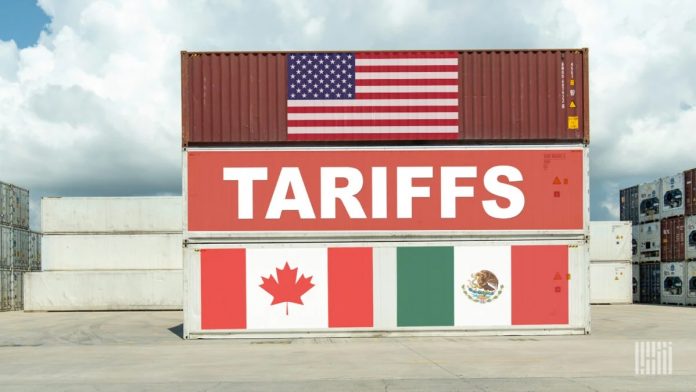
President Donald Trump has indicated he does not plan to extend the July 9, 2025, deadline for the 90-day pause on “reciprocal” tariffs, which could lead to higher tariffs on numerous countries unless trade deals are secured. In a Fox News interview on June 29, 2025, he stated, “I don’t think I’ll need to,” though he added, “I could, no big deal,” suggesting some flexibility.

He emphasized that letters would soon be sent to countries outlining tariff rates—ranging from 10% to 50%—based on their trade relations with the U.S. However, mixed signals from his administration, including comments from Treasury Secretary Scott Bessent, suggest extensions are “highly likely” for countries negotiating in good faith, such as India and the EU. Only a few trade deals, including with the UK, China, and Vietnam, have been finalized, far short of the administration’s goal of 90 deals.

If the deadline is not extended, tariffs could revert to higher rates, potentially causing economic disruption. If the 90-day pause on “reciprocal” tariffs expires without extension, tariffs ranging from 10% to 50% could be imposed on numerous countries. This could increase costs for imported goods, disrupt supply chains, and raise prices for U.S. consumers, particularly for electronics, clothing, and food.

Countries like Canada, Mexico, and the EU may retaliate with their own tariffs, as seen in past trade disputes (e.g., 2018 steel and aluminum tariffs). This could harm U.S. exporters, especially in agriculture and manufacturing. Higher tariffs could fuel inflation, with estimates suggesting a 2-3% price increase for affected goods. Stock markets may see volatility, as seen in recent X posts expressing investor concerns over tariff uncertainty.

Only a few countries (UK, China, Vietnam) have secured trade deals, far from the administration’s goal of 90. Without extensions, countries negotiating in good faith (e.g., India, EU) may face punitive tariffs, potentially stalling talks. Trump’s stance could pressure countries to concede to U.S. demands, but it risks alienating allies, complicating future diplomacy. U.S. businesses reliant on imports face planning challenges, with some already stockpiling goods, as noted in recent web reports on supply chain adjustments.

Higher tariffs could disproportionately affect lower-income households, increasing costs for everyday goods. Trump’s base and some Republicans view the tariffs as a tool to protect U.S. industries and reduce trade deficits. X posts from pro-Trump accounts praise the hardline stance, citing it as a way to “bring jobs back.” Democrats, some Republicans, and business groups (e.g., U.S. Chamber of Commerce) argue tariffs will raise costs and harm consumers. Critics on X highlight potential job losses in import-dependent sectors and warn of economic fallout.

Allies like the EU and Canada express frustration, with EU officials on X urging for extensions to continue talks. Meanwhile, strategic rivals like China, which secured a deal, may gain relative economic stability. Countries without deals, particularly in Africa and Latin America, face higher tariffs, potentially exacerbating economic challenges, as noted in web analyses of global trade impacts. Domestic manufacturers in protected industries (e.g., steel, autos) may benefit short-term from reduced foreign competition.

Retail, tech, and agriculture sectors, reliant on imports or exports, face higher costs and retaliatory tariffs. Treasury Secretary Scott Bessent’s comments about “highly likely” extensions for some countries contrast with Trump’s firm stance, creating confusion. This inconsistency, noted in recent web reports, fuels market and diplomatic uncertainty. If extensions are granted selectively, it could deepen divides between countries with deals and those without, reshaping global trade alliances.

No Shortcuts, Just Smart Growth: An Instagram Boom of 2025

0

In our day and age of social media, it seems to be a fairy tale to find the Instagram growth service that works and provides real results, disregarding the use of bots and fake followers. Nonetheless, finding a way to realize intelligent, genuine engagement is proving a success through smart and authentic engagement solutions such as Path Social, as the creators and brands struggle to keep up with the constantly changing algorithms. The future of growth on the platform is going to be realized through the emergence of services that intend to deal with real community interaction, as opposed to gimmicks.

Instagram has evolved to be a marketing space and ecosystem. Development on this platform is no longer mechanical; it needs design, tenacity, and appropriate form of external assistance. Hashtags and beautiful feeds do not matter anymore as it does not assure attention. That is the difference between curated services in which targeting tools are built into such services come into play, such as Path Social. These sites help recognize and reach the target audience without any violation of the rules of Instagram.

Ghost Followers Do Not Fund the Bills

There are many artists who are losing themselves into amassing followers who do not actually care about what they are putting out. Engagement and conversions are what marketers are after, and these targets become achievable only after new numbers are reduced or eliminated. Automatic follow or mass-follow bots or services ultimately hurt accounts instead of helping them- either by resulting in a shadowban or lead to the insurmountably poor engagement rates. A proper Instagram growth service is not lured by quick fixes and grows an account in a sustainable manner.

The interest that is created by the authentic growth services is the distinguishing feature of such services because it makes them widely popular among the users with real need of it. These are not depersonalized accounts. They are real individuals, who feel connected with the brand identity. Using the targeting technology of Path Social increases the followers who belong to niche groups, making the established relationships beyond vanity measures.

The Algorithm is Indifferent to Hope

The Instagram algorithm is not that easy to impress. Aspirational posting and passive participation do not result in sizable visibility anymore. In order to achieve range, content has to respond naturally to an audience that responds. This is why post placement strategies are more viable than ever before to expose posts to the correct people at the right time.

Today, social media growth platforms further go through behavioral patterns and interests to enable users to align content distribution to machine preferences. Users can collaborate with the algorithm as opposed to combating it. Through continued exposure to targeted viewers, creators can observe more likes, saves, and shares, which the algorithm takes into account the most.

Vanity Metrics Have Short Lives

Earlier versions of Instagram allowed one to follow likes and numbers of people followed as symbols of success. However, those are superficial figures that do not often demonstrate impact. In 2025, smart users are to stress on valuable interaction- messages, DM, and user-generated content, which really creates community.

Other services such as Path Social are familiar with this change. They assist accounts in growing towards people, who are more inclined to not only scroll past. The outcome is better engagement in each post and a higher possibility of establishing long-term supporters. Statistics such as saves and shares are more important than ever before and clever growth strategies place them as one of their priorities.

Viewers Are Hungry to be Real

Days when things looked too ideal to trust them have passed. The Instagram users of today want the true voices, the backstages, and what passes as life and not a picture of it that is edited to perfection. Services which allow reaching genuine audience behavior such as Path Social not only increase users but develop communities.

It implies that a proper Instagram growth service will not drop a number of followers on an account and disappear. It leads the story into people where actual dialogs occur. Authenticity cannot be created artificially but can be intensified by great targeting. The users desire to be heard and listened to, rather than being marketed.

How to Beat the Plateau Effect

Even the most successful Instagram accounts get stagnant. The amount of engagement declines, reach decreases as well as motivation. Such stagnation is sometimes irritating, yet it is normally an indication that the strategy needs advancement. The services of external growth would give a new impetus to the company as they would frame on the deficiencies and give a new drive to the outreach program.

The process of path social starts with assessment. They examine the behavior of the audience, content trends, as well as growth aspects in order to determine where they are losing grip. With the redirection of focus to performing sets and unexploited niche, they halt the stagnation patterns and reinitiate the account performance. Intelligent intervention results in sustainable development.

Not Every Growth Is Equal

Selecting Instagram growth services is not a light-hearted choice, but an investment in the future visibility and relevance. Short term spikes might be provided by some services but the quality of that growth makes it worth it or not. Regular communication with organic followers will always outnumber a greater number of passive users.

Path Social is among those that are always linked together with a viable growth as underpinned by the community driven model. It can get accounts to milestones that count as it concentrates on aligning audiences and being memorable in their exposure. It is no longer about mere numbers, but it is about building relationships that last- digitally.

Instagram Needs to Be Niche-Focused in the Future

In 2025, the generalist content will find it difficult to gain momentum. Algorithms lean towards particularity. This implies that creators and businesses have to invest further into their niche and make every content creation apply to the needs of the audience. Those growth services that do not factor in this change of direction, are missing the point.

The targeting strategy of Path Social will be particularly useful in this case. It is more narrowing than a wide net that one hopes will bring back some results. It gets in touch with people that are eagerly looking to consume content within particular niches and links them to the accounts that provide it. The result? The number of engagements grows. There are responses to stories. The posts go viral.

Defi Development Corp To Offer $112.5M Convertible Notes For More Acquisition of Solana

0

DeFi Development Corp (Nasdaq: DFDV) announced a $100 million private offering of convertible senior notes due in 2030, with an option to increase by $25 million, to bolster its Solana (SOL)-focused treasury strategy. The offering was upsized to $112.5 million, with $75.6 million allocated for a prepaid forward stock purchase transaction to repurchase shares and the remainder for general corporate purposes, including acquiring more SOL tokens. As of May 2025, the company held over 600,000 SOL.

The notes, offered to qualified institutional buyers under Rule 144A, carry a 5.5% annual interest rate, payable semi-annually, and can be converted into cash, stock, or a combination under specific conditions before 2030, and freely thereafter. This move aligns with growing institutional interest in Solana, boosted by the recent launch of the REX-Osprey Solana + Staking ETF and the SEC’s approval of Grayscale’s Digital Large Cap Fund as an ETF with SOL exposure.

However, DFDV’s stock fell 8.6–10% in after-hours trading following the announcement, reflecting market concerns about dilution and Solana’s price volatility. The announcement by DeFi Development Corp (DFDV) of a $100 million (upsized to $112.5 million) private convertible notes offering to acquire more Solana (SOL) has significant implications for the company, its investors, and the broader decentralized finance (DeFi) and cryptocurrency markets.

DFDV’s decision to allocate a significant portion of the funds to acquire more SOL tokens (adding to its existing 600,000 SOL) signals strong confidence in Solana’s long-term potential as a leading blockchain for DeFi and Web3 applications. This aligns with growing institutional interest, evidenced by the REX-Osprey Solana + Staking ETF and Grayscale’s Digital Large Cap Fund ETF approval, which includes SOL exposure.

By increasing its SOL holdings, DFDV is doubling down on a crypto-centric treasury strategy, potentially positioning itself to benefit from Solana’s price appreciation and staking yields. However, this also increases exposure to SOL’s price volatility, which could impact financial stability if the market turns bearish. The 5.5% convertible senior notes, due in 2030, provide DFDV with relatively low-cost debt financing (compared to equity issuance) and flexibility for investors, who can convert notes into stock or cash under certain conditions.

This structure minimizes immediate dilution but introduces future dilution risk if conversions occur. The 8.6–10% drop in DFDV’s stock price in after-hours trading reflects investor concerns about potential dilution from note conversions and the speculative nature of increasing SOL exposure. This suggests a mixed market reception, with some viewing the move as risky given Solana’s volatility. Allocating $75.6 million to a prepaid forward stock purchase transaction to repurchase shares may mitigate dilution concerns and signal confidence in the stock’s value, but it reduces the funds available for other corporate purposes.

DFDV’s move reinforces the trend of public companies integrating cryptocurrencies into their balance sheets, following the likes of MicroStrategy with Bitcoin. This could encourage other firms to explore similar strategies, boosting Solana’s credibility and adoption. The announcement may fuel bullish sentiment for Solana, potentially driving short-term price increases, especially given the ETF-related tailwinds. However, it also highlights the speculative nature of crypto investments, which could amplify volatility if market conditions deteriorate.

The SEC’s approval of Solana-related ETFs suggests a more favorable regulatory environment, but increasing corporate exposure to crypto could attract scrutiny, especially if DFDV’s financial health becomes tied to SOL’s performance. Solana’s price fluctuations could pose risks to DFDV’s balance sheet, particularly if the company over-leverages its SOL holdings without adequate hedging strategies.

Existing shareholders may be concerned about potential dilution if noteholders convert their notes into stock, especially if Solana underperforms. The stock price drop reflects this unease, as investors weigh the benefits of SOL exposure against the risks of increased leverage and crypto volatility. Qualified institutional buyers purchasing the convertible notes benefit from a 5.5% yield and the option to convert into stock if DFDV’s share price rises significantly, potentially driven by SOL’s performance. This creates an asymmetric risk-reward profile favoring noteholders over common shareholders.

Supporters of Solana and DeFi may view DFDV’s move as a bold step toward integrating crypto into corporate finance, potentially driving SOL demand and adoption. They may see it as validation of Solana’s scalability and ecosystem growth. Investors with a conservative outlook may perceive the heavy allocation to SOL as speculative and risky, preferring diversified or less volatile assets. The after-hours stock drop suggests skepticism among this group about tying corporate performance to a single cryptocurrency.

The immediate stock price decline indicates market fears of dilution and crypto market uncertainty. Investors focused on short-term performance may sell off shares, creating downward pressure. Those bullish on Solana’s role in DeFi and Web3 may see DFDV’s strategy as forward-thinking, positioning the company to capitalize on crypto’s growth over the next decade. If SOL appreciates significantly, the strategy could yield substantial returns.

The DeFi ecosystem may celebrate DFDV’s move as a step toward mainstream adoption, potentially attracting more institutional capital to Solana-based projects. Increased corporate exposure to crypto could prompt regulators to impose stricter oversight, especially if DFDV’s financial stability becomes a concern, creating tension between innovation and compliance.

DFDV’s $112.5 million convertible notes offering to acquire more Solana reflects a high-conviction bet on the blockchain’s future but introduces risks that divide stakeholders. Shareholders face dilution and volatility risks, while noteholders gain a favorable risk-reward profile. Crypto enthusiasts may cheer the move, but traditional investors remain cautious. The strategy could strengthen DFDV’s position in DeFi if Solana thrives, but it also exposes the company to significant financial and regulatory uncertainties.