DD
MM
YYYY

PAGES

DD
MM
YYYY

spot_img

PAGES

Home Blog Page 946

Trump–Vietnam Trade Deal, a Strategic Strike on China

0

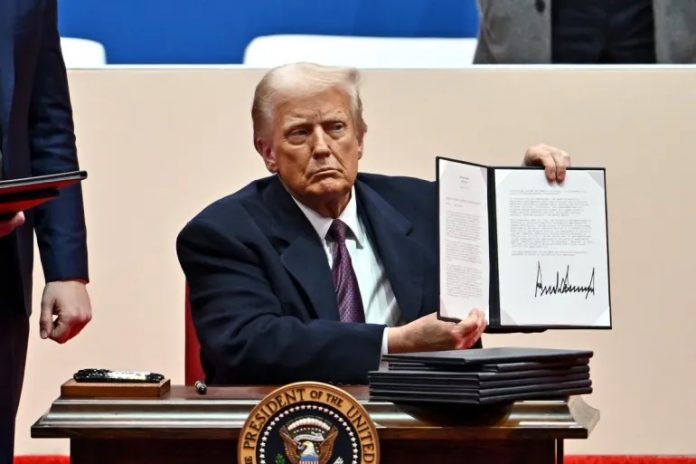
U.S. President Donald Trump on Wednesday announced a new trade agreement with Vietnam, cutting his earlier proposed 46% tariff on Vietnamese imports down to 20% and securing a commitment from Hanoi to allow American goods into the country duty-free.

Trump also revealed that a 40% tariff would be imposed on any goods suspected of being transshipped through Vietnam—an apparent warning to Chinese exporters seeking to bypass U.S. tariffs.

The development marks another sharp turn in Trump’s aggressive trade strategy, with analysts interpreting the deal as less about bilateral trade with Vietnam and more about tightening controls on China’s access to U.S. markets via Southeast Asia.

“It is my Great Honor to announce that I have just made a Trade Deal with the Socialist Republic of Vietnam,” Trump said on Truth Social.

“It is my opinion that the SUV or, as it is sometimes referred to, Large Engine Vehicle, which does so well in the United States, will be a wonderful addition to the various product lines within Vietnam,” he added.

Aimed at China, Not Just Vietnam

The tariff compromise, which reduces steep penalties originally floated in April, comes just as Vietnam’s economy continues to thrive as a global manufacturing hub—largely benefiting from multinationals fleeing China during Trump’s first trade war. But the most significant clause may be the newly imposed 40% penalty on “transshipped” goods, a direct effort to block Chinese supply chains from exploiting loopholes through third countries.

“The ‘China quotient’ in U.S. negotiations with other Asian economies is arguably evident in the deal with Vietnam,” said Vishnu Varathan, head of Asia macro research at Mizuho Bank. “The U.S.’s intent is quite obviously to not disincentivize Vietnam’s role as a substitute for China at a lower 20% tariff.”

Vietnam has become a favored destination for multinationals rerouting production lines away from China, a shift that accelerated during Trump’s first administration. In 2023, the U.S. trade deficit with Vietnam surged to $123.5 billion—its third-largest globally, after China and Mexico.

But Washington has grown increasingly wary that some of Vietnam’s rising exports are in fact Chinese goods repackaged or rerouted to dodge U.S. duties. The U.S., thus, is signaling that such practices will face steep consequences under the new deal, by including a transshipment clause with sharply higher tariffs.

The agreement appears to be part of a larger shift in Trump’s trade strategy—favoring smaller, issue-specific frameworks over comprehensive multilateral pacts. Eli Clemens, a policy analyst at the Information Technology and Innovation Foundation, said the Vietnam deal may serve as a model.

“A tariff framework that targets transshipment while preserving the potential benefits of efficient cross-border commerce is a smart move—if enforced transparently and paired with clear rules of origin,” Clemens noted. “Future trade negotiations should also include targeted transshipment deterrents that level the playing field for U.S. manufacturers and retailers.”

The structure reflects lessons from previous U.S.–China trade battles, where supply chains merely shifted locations rather than altering core dependencies.

China’s Warning

Beijing responded to the development with a warning. Speaking at a press conference Thursday, He Yongqian, a spokeswoman for China’s Ministry of Commerce, said China was closely reviewing the U.S.–Vietnam deal for possible harm to its commercial interests.

“We are happy to see all parties resolve trade conflicts with the U.S. through equal negotiations but firmly oppose any party striking a deal at the expense of China’s interests,” she said, warning of retaliation if Beijing’s concerns were validated.

“If the agreement is found to harm China, we will firmly strike back to protect our own legitimate rights and interests.”

Chinese officials have long suspected that the U.S. is working to reshape Indo-Pacific trade networks to isolate China, particularly in the technology, semiconductors, and clean energy sectors. The Vietnam agreement is only the latest in a series of U.S. efforts to shift supply chains elsewhere.

Washington’s firm stance on transshipment enforcement and its willingness to reward partners like Vietnam puts other Asian economies on notice. Countries such as Thailand, Malaysia, and the Philippines may find themselves under pressure to either align with U.S. trade rules or face steep penalties.

“It would be remiss to ignore this critical pillar of U.S. trade deals with the rest of Asia, which is trained on undermining China’s economic reach and influence,” Mizuho’s Varathan said.

He also warned that this approach could increase Beijing’s suspicion and lead to further instability.

“Other Asian economies will be particularly vulnerable to a two-sided geoeconomic squeeze given that their reliance on both China and the U.S. are significant,” he added.

Impact on Energy and Autos

Trump has spotlighted U.S.-made SUVs and liquefied natural gas (LNG) as potential winners under the deal, projecting that Vietnam’s growing middle class and energy needs will drive up American exports. But economic fundamentals in Vietnam tell a more complex story.

Despite the trade opening, Vietnam’s domestic transportation remains dominated by motorcycles, which account for more than 90% of all registered vehicles. The car ownership rate is a modest 22 per 1,000 people, compared to over 500 per 1,000 in more developed economies.

Meanwhile, LNG exporters may face headwinds. Coal remains the dominant source of electricity in Vietnam, generating over 50% of power, while natural gas use has declined to under 10% due to shrinking domestic reserves and limited infrastructure. With no gas power plants currently under construction and over 50 GW of wind and solar projects in pre-construction, Vietnam’s energy future is leaning green—not gas-powered.

Markets Cheer Deal

Despite long-term uncertainties, the deal immediately boosted market confidence. The S&P 500 and Nasdaq hit fresh record highs on Wednesday, and U.S. stock futures extended those gains on Thursday. Vietnam’s VN-Index also rose to its highest level since April 2022.

However, the geopolitical fallout may be only beginning. China sees the Vietnam deal as a direct attempt to sideline its trade influence, and further retaliation from Beijing—either economically or diplomatically—cannot be ruled out.

For Trump, the deal represents another piece to his reshaped trade puzzle: a framework that blends economic leverage with geopolitical pressure, aims to restrict China’s backchannels, and courts new allies in America’s quest to rewire global commerce.


Top Ethereum and Cardano Wallets Spotted Buying Little Pepe (LILPEPE) Under $0.0015, Should You Too?

0

Many believe there will be a massive bull run, and large wallet activity is becoming one of the most reliable signals for savvy investors. Recently, blockchain data revealed that some of the most prominent Ethereum and Cardano wallets have started accumulating a curious meme token under $0.0015—Little Pepe (LILPEPE). That’s right. While retail investors debate whether Ethereum (ETH) will surpass $5,000 or if Cardano (ADA) will finally surpass XRP, the whales have moved. And their sights are now set on a meme coin doing much more than telling jokes. Should you follow the money? Let’s examine why Little Pepe commands major wallets’ attention, what sets it apart, and whether buying before the price breaks out is a good move.

Whales Are Circling: What Wallet Data Tells Us

On-chain analytics have confirmed significant buys of LILPEPE from high-value Ethereum and Cardano wallets. Several of these addresses previously participated in presales of other blue-chip tokens and have historically exited with 10x to 100x profits. In this case, the purchases appear strategic, timed during Stage 4 of the LILPEPE presale at $0.0013, ahead of the next stage price hike to $0.0014. With over 2.39 billion tokens sold and $2.7 million already raised, institutional wallets seem confident that this token isn’t just another flash-in-the-pan meme play. While wallet activity alone isn’t a guarantee of price appreciation, it does provide a compelling signal. The smart money often enters early and quietly, capitalizing on asymmetric risk. With interest in LILPEPE among whales rising, it’s worth asking what these buyers see that the rest of the market might be missing.

Not Just Another Meme: LILPEPE’s Real Tech Advantage

What’s setting LILPEPE apart from the thousands of meme tokens that launch and fail each year? In short, utility. Little Pepe isn’t just a meme coin; it’s launching its own Layer-2 blockchain built entirely for the meme economy. This chain is designed to be fast, inexpensive, and highly efficient, allowing for frictionless meme coin launches without the congestion and high fees associated with the Ethereum mainnet. And here’s the game-changer: LILPEPE will be the only meme chain with sniper bot protection at the protocol level. That means fair launches, no front-running, and an ecosystem built on real community engagement. This kind of technology is a breath of fresh air for whales and serious traders alike. Add to that a dedicated meme coin launchpad, which provides new tokens with infrastructure and exposure, and you’re looking at the beginning of an entire meme economy, not just a standalone token.

Tokenomics, Presale Performance, and the $777K Giveaway

Tokenomics is another reason institutional wallets pay attention. Here’s the breakdown:

  • 5% – Presale
  • 30% – Chain Reserves
  • 5% – Staking
  • 10% – Liquidity
  • 10% – Marketing
  • 10% – DEX Listings
  • 0% – Tax

With zero buy/sell tax and over three-quarters of the presale tokens already sold, Little Pepe appears to be structurally designed to pump and sustain that growth. That’s crucial for large buyers who want to ride momentum but also need a clear exit strategy. Another major hook is the $777,000 LILPEPE giveaway, which remains live during the presale. It’s offering 10 winners a jaw-dropping $77,000 each, with bonus entries for sharing, referrals, and completing tasks. To qualify, you only need to contribute a minimum of $100 to the presale. This marketing push is creating a viral loop, attracting thousands of new participants and rapidly expanding LILPEPE’s reach.

Should You Buy Like the Whales Are?

Following whale activity isn’t about copying blindly but understanding their motives. These large Ethereum and Cardano wallets aren’t chasing hype. They’re hunting undervalued projects with massive upside and solid fundamentals. Little Pepe (LILPEPE) ticks all the boxes: real infrastructure, presale momentum, and a growing cult-like community. With Stage 4 still active at $0.0013, entry is affordable for retail investors, and the runway ahead appears to be long. The upcoming price stage increases—and eventual CEX listings—mean early buyers could potentially see explosive returns. So, should you buy like the whales? If you believe in tech, fair launches, and the evolution of meme coins into functional ecosystems, then the answer might be yes. Remember, the best time to buy is often before the rest of the market catches on.

Conclusion

Ethereum and Cardano whales are positioning themselves for the next breakout opportunity, and all signs suggest that Little Pepe (LILPEPE) is their latest bet. With its own Layer-2 chain, bot-proof launches, a meme launchpad, and a massive giveaway fueling presale momentum, LILPEPE is more than a meme—it’s a movement. At $0.0013, the window for early adoption is closing fast. The smart money is already here. The question is—will you join them before the next leg up?


For more information about Little Pepe (LILPEPE) visit the links below:

Website: https://littlepepe.com

Whitepaper: https://littlepepe.com/whitepaper.pdf

Telegram: https://t.me/littlepepetoken

Twitter/X: https://x.com/littlepepetoke

U.S. Rescinds Chip Design Software Export Controls to China in Major Step Toward Easing Tech Tensions

0

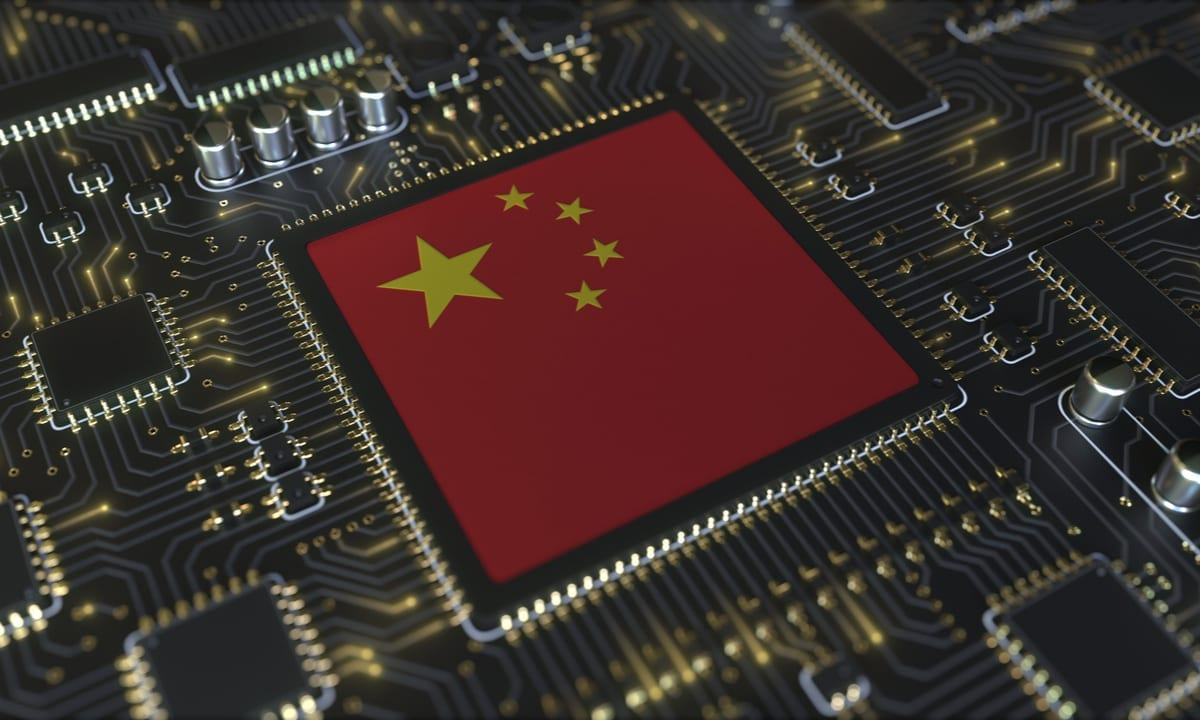
In a shift that signals a thaw in escalating tech tensions between Washington and Beijing, the U.S. government has rescinded its export restrictions on advanced chip design software to China. The decision, confirmed by three of the largest players in the electronic design automation (EDA) industry—Siemens EDA, Synopsys, and Cadence—marks a potentially significant de-escalation in the ongoing U.S.-China technology trade conflict.

The companies said Thursday that they each received formal notification letters from the U.S. Department of Commerce stating that the previous licensing requirements imposed on exports to China had been reversed. The letters were issued just weeks after the Department informed these firms, on May 23, that they must obtain licenses before selling chip design software and related technologies to Chinese clients.

With the restrictions now lifted, Germany’s Siemens AG, whose U.S.-based semiconductor software unit Siemens EDA is headquartered in Oregon, confirmed it had already restored full access to its restricted technologies. Sales and customer support services to Chinese firms have resumed, the company said. U.S.-based Synopsys and Cadence also confirmed receipt of the reversal order and indicated they are in the process of restoring services to their Chinese clients.

Background and Market Impact

The electronic design automation (EDA) software provided by these firms is critical to the design and manufacturing of semiconductors, including those powering artificial intelligence, 5G networks, and advanced computing systems. The global EDA market is overwhelmingly dominated by the U.S., with Synopsys holding 31% market share, Cadence 30%, and Siemens EDA 13%, according to 2024 figures from TrendForce.

The recent rollback of restrictions comes amid signs of a broader trade détente between the U.S. and China. Last week, Beijing signaled it had reached conditional agreements with Washington to resume some technology exchanges, including limited exports of rare earth materials and joint research frameworks. The lifting of chip software controls appears to be a reciprocal gesture from the U.S., reflecting cautious optimism in repairing fractured trade ties.

Shares of both Synopsys and Cadence surged by about 5% following the announcement, reflecting investor relief over the regained access to China—one of the world’s largest semiconductor markets. Synopsys CEO Sassine Ghazi had earlier flagged a noticeable revenue slowdown from Chinese customers during the company’s second fiscal quarter ending April 30, with China accounting for roughly 10% of its $1.6 billion revenue during the period.

Industry analysts see the move as not just a business reprieve, but a strategic recalibration. For over a year, EDA companies had been caught in the crosshairs of U.S. efforts to choke off China’s access to advanced semiconductor capabilities. The licensing requirement introduced in May came on the heels of broader bans targeting hardware—such as Nvidia and AMD’s AI chips—on national security grounds.

With the rollback now in effect, the Trump administration appears to be balancing its national security concerns with the economic interests of U.S. tech firms, many of which depend heavily on overseas markets. The reversal also acknowledges China’s progress in localizing its chip ecosystem and designing homegrown alternatives. Synopsys had noted in prior earnings calls that Beijing had accelerated policies to build its own EDA industry, heightening the urgency for U.S. firms to stay competitive through continued market access.

The EDA policy shift also underscores a broader recalibration in U.S.-China relations, particularly in the technology sphere. As both powers edge toward a new phase of strategic competition, there is growing recognition that mutual interdependence—especially in foundational technologies like semiconductors—cannot be severed overnight without global economic fallout.

Restoring software export rights is seen as one of several confidence-building steps. It comes amid tentative discussions around a new U.S.-China trade framework that could involve limited cooperation in AI safety standards, rare earth mining, and green technology development.

While neither side has confirmed the details of any formal tech truce, the Commerce Department’s quiet reversal—without a formal public announcement—underlines that Washington is moving cautiously, perhaps testing the waters for more pragmatic engagement.

The Roadmap For Stablechain Powered By USDT and EURAU’s Integration of Stablecoins Into Traditional Finance

0

Stablechain, a Layer 1 blockchain powered by Tether’s USDT, has outlined a three-phase roadmap to enhance its infrastructure for stablecoin transactions, focusing on speed, cost-efficiency, and scalability. Launched in June 2025, Stablechain uses USDT as its native gas and settlement token, offering sub-second transaction finality, fees under one cent, and full EVM compatibility.

It also supports gas-free peer-to-peer transfers via USDT0, a LayerZero-enabled token, and is backed by Bitfinex and the USDT0 development team. Implements core features like USDT as the native token for fees and settlements, eliminating volatile token requirements. Introduces gas-free USDT0 transfers and institutional tools such as guaranteed blockspace, batch transactions, and confidential transfers for compliance.

Features a user-friendly Stable Wallet with social login, debit/credit card integration, and human-readable aliases. Supports high-throughput transactions with sub-second finality, targeting retail and institutional use for cross-border payments and DeFi applications. Plans to introduce optimistic parallel execution to boost transaction throughput. Will deploy enterprise tools and developer SDKs to expand ecosystem growth, enhancing support for fintech platforms and businesses integrating stablecoin payments.

Stablechain aims to transition to a Directed Acyclic Graph (DAG)-based consensus mechanism to further improve processing speed, network resilience, and resource efficiency. Focuses on optimizing developer tools and refining the consensus model to support mass adoption of USDT for global payments.

The roadmap aligns with Stablechain’s goal to simplify stablecoin transactions, leveraging USDT’s $157.7 billion market cap and $100 billion daily settlement volume to drive adoption in emerging markets and institutional finance. The project coincides with regulatory developments like the U.S. GENIUS Act, which may support its compliance-oriented design.

Stablechain’s use of USDT as the native gas and settlement token eliminates reliance on volatile cryptocurrencies, making it attractive for retail and institutional users seeking predictable transaction costs. Sub-second finality and sub-cent fees could disrupt traditional payment systems, particularly for cross-border transactions, by offering faster and cheaper alternatives to SWIFT or card networks. The gas-free USDT0 transfers via LayerZero may drive adoption in peer-to-peer payments, competing with services like PayPal or Venmo in emerging markets where USDT is widely used (e.g., Africa, Latin America).

Enterprise tools and SDKs could integrate USDT-based payments into fintech platforms, e-commerce, and remittance services, potentially capturing a share of the $7 trillion global cross-border payment market. Higher transaction throughput via optimistic parallel execution may position Stablechain as a backbone for DeFi protocols, increasing USDT’s utility in lending, staking, and yield farming.

A DAG-based consensus could make Stablechain one of the fastest and most scalable blockchains, potentially handling millions of transactions per second. This could challenge existing high-throughput networks like Solana or Visa, positioning USDT as a dominant settlement layer for global finance, especially in regions with limited banking infrastructure.

Full EVM compatibility ensures developers can easily port Ethereum-based dApps to Stablechain, fostering a robust DeFi and NFT ecosystem. The Stable Wallet’s social login and card integration lowers barriers for non-crypto users, potentially driving mass adoption. Institutional tools like confidential transfers and batch processing address privacy and scalability needs, appealing to businesses and regulated entities.

Optimistic parallel execution could push Stablechain’s throughput beyond current Layer 1 blockchains, reducing bottlenecks during peak usage. Developer SDKs will likely accelerate dApp creation, expanding use cases like tokenized assets or supply chain tracking. A DAG-based consensus shift could redefine blockchain scalability, offering near-infinite transaction capacity with minimal resource use. This could make Stablechain a preferred platform for high-frequency trading, IoT microtransactions, or real-time payment systems, but it may require significant testing to ensure security and decentralization.

Stablechain’s roadmap aligns with regulatory trends, particularly the U.S. GENIUS Act (2025), which proposes a framework for stablecoin oversight. Features like confidential transfers and compliance tools could position Stablechain favorably under stricter regulations, appealing to institutions wary of regulatory risks. However, Tether’s historical scrutiny over reserve transparency may invite regulatory pressure, especially in jurisdictions like the EU under MiCA, potentially affecting adoption if compliance costs rise.

The focus on institutional tools and emerging markets could navigate regulatory fragmentation by offering compliant solutions for banks and fintechs, but global adoption hinges on Tether addressing concerns about USDT’s backing and auditability. Stablechain’s low-cost, high-speed infrastructure challenges existing stablecoin ecosystems like Circle’s USDC on Ethereum or Solana, potentially shifting market share toward USDT (already at $157.7 billion market cap).

Its institutional focus could attract partnerships with major players like Bitfinex, but competition from centralized payment giants (e.g., Stripe, Ripple) or other Layer 1s (e.g., Aptos, Sui) remains a hurdle. The roadmap’s emphasis on emerging markets leverages USDT’s dominance in regions with currency volatility (e.g., Argentina, Nigeria), but success depends on Stablechain’s ability to maintain low fees and reliable infrastructure amidst growing network demand.

Transitioning to a DAG-based consensus in Phase 3 is untested at scale and could introduce vulnerabilities or centralization risks if not carefully implemented. Tether’s opaque reserve history could undermine trust, especially if regulators demand stricter audits or impose sanctions. While Stable Wallet lowers entry barriers, competing with established payment apps requires significant marketing and user education, particularly for non-crypto audiences.

High-throughput systems and institutional tools may attract cyberattacks, requiring robust security measures to maintain trust. Stablechain could redefine stablecoin utility by bridging crypto and traditional finance, particularly in underserved regions. Its roadmap positions it as a scalable, compliant, and user-friendly platform, but success depends on execution, regulatory navigation, and maintaining USDT’s market dominance.

EURAU’s Launch Marks A Pivotal Step Toward Integrating Stablecoins Into Traditional Finance

AllUnity, a joint venture involving Deutsche Bank’s asset management arm DWS, Flow Traders, and Galaxy Digital, received an e-money institution (EMI) license from Germany’s Federal Financial Supervisory Authority (BaFin) on July 1, 2025. This license allows AllUnity to issue EURAU, Germany’s first regulated euro-denominated stablecoin, compliant with the EU’s Markets in Crypto-Assets (MiCA) framework.

EURAU is fully collateralized, offering institutional-grade transparency through proof-of-reserves and regulatory reporting. It aims to facilitate 24/7 cross-border settlements and seamless integration for financial institutions, fintechs, and enterprise clients across Europe and beyond. The launch of EURAU, Germany’s first regulated euro-denominated stablecoin by AllUnity (a joint venture including Deutsche Bank’s DWS, Flow Traders, and Galaxy Digital), has significant implications for the financial ecosystem.

The e-money license from BaFin, under the EU’s MiCA framework, signals regulatory approval, boosting confidence among institutional investors and traditional financial entities. This could accelerate stablecoin adoption in mainstream finance. EURAU’s design for 24/7 settlements can streamline cross-border transactions, reducing costs and delays associated with traditional banking systems, particularly for European markets.

With Deutsche Bank’s involvement, EURAU is positioned to bridge traditional finance (TradFi) and decentralized finance (DeFi), enabling banks, fintechs, and enterprises to integrate stablecoins into their operations. A regulated stablecoin could lower barriers for unbanked or underbanked populations in Europe by enabling digital payments without traditional bank accounts, assuming accessible platforms emerge.

EURAU could facilitate smart contracts, tokenized asset trading, and other blockchain-based applications, fostering innovation in financial services. It may push other financial institutions to explore or adopt blockchain-based solutions to remain competitive, potentially leading to a wave of tokenized financial products. EURAU’s compliance with MiCA sets a benchmark for stablecoin regulation in the EU, potentially influencing global standards. This could encourage other jurisdictions to develop clear regulatory frameworks, reducing uncertainty for crypto businesses.

Regulated stablecoins like EURAU, backed by proof-of-reserves, aim to mitigate risks seen in unregulated stablecoins (e.g., TerraUSD’s collapse), enhancing market stability. A euro-backed stablecoin strengthens the euro’s role in digital finance, potentially countering the dominance of USD-denominated stablecoins like USDT and USDC. EURAU could challenge existing stablecoins and spur competition, especially as other regions (e.g., the U.S. or Asia) develop their own regulated digital currencies.

EURAU targets institutional and enterprise clients, offering seamless integration into existing financial systems. This could drive large-scale adoption in corporate treasury management, trade finance, and cross-border payments. Retail users may see limited immediate benefits, as EURAU’s institutional focus might not prioritize consumer-facing applications like peer-to-peer payments or microtransactions. Accessibility for smaller users depends on third-party platforms adopting EURAU.

Backed by Deutsche Bank and regulated by BaFin, EURAU bridges centralized finance with blockchain technology, appealing to risk-averse institutions seeking compliance and transparency. Its centralized backing and regulatory oversight may alienate DeFi purists who favor fully decentralized stablecoins (e.g., DAI). This could limit EURAU’s adoption in certain crypto-native ecosystems. MiCA compliance provides a clear legal framework, reducing risks for businesses and investors. This could attract more traditional financial players to the crypto space.

Strict regulation may stifle innovation for smaller crypto projects unable to meet compliance costs, creating a divide between well-funded ventures like AllUnity and smaller startups. Additionally, global regulatory fragmentation could limit EURAU’s reach outside the EU. EURAU strengthens Europe’s position in the global digital asset market, potentially reducing reliance on USD-based stablecoins and enhancing the euro’s digital presence.

Competition with established stablecoins like USDT and USDC, which dominate global markets, may be fierce. EURAU’s success depends on its ability to scale beyond Europe and gain acceptance in markets dominated by dollar-based systems. EURAU could lower transaction costs and improve financial efficiency, benefiting businesses and consumers in the Eurozone. Wealthier institutions and regions with robust infrastructure are likely to benefit first, potentially exacerbating economic disparities if smaller economies or underserved communities lack access to EURAU-compatible platforms.

EURAU’s launch marks a pivotal step toward integrating stablecoins into traditional finance, with implications for efficiency, innovation, and the euro’s global role. However, it also underscores divides between institutional and retail users, centralized and decentralized systems, and global and regional markets. Its success will depend on balancing regulatory compliance with accessibility, fostering interoperability with DeFi ecosystems, and navigating competitive and geopolitical challenges.


Moove Set to Raise $1.2 Billion Debt Round to Fund US Expansion

0

Moove, an African-born global mobility fintech, is poised to transform the transportation sector with a landmark $1.2 billion debt financing round.

The funds will primarily drive the deployment of an autonomous-driving fleet in collaboration with Alphabet’s Waymo, marking a pivotal moment for the company and African tech innovation.

The capital will also fuel Moove’s expansion into the United States, solidifying its role as a pioneer in innovative mobility solutions. While final details are expected to be concluded in the coming weeks, the deal marks a significant milestone for the mobility company as it ramps up its global ambitions.

Commenting on the funding round, Moove CEO Ladi Delano said,

“Moove has built strong relationships with some of the world’s leading lenders. We have also fully repaid our first-ever debt facilities, which signals our maturity and marks a key milestone that demonstrates the strength of our platform as we enter the next phase of global autonomous-vehicle infrastructure deployment”.

Founded in 2020 by Ladi Delano and Jide Odunsi, Moove provides revenue-based vehicle financing to mobility entrepreneurs in ride-hailing, logistics, mass transit, and instant delivery sectors. By using alternative credit-scoring technology, Moove enables drivers to own vehicles (cars, bikes, buses, or trucks) over 12-60 months by meeting performance KPIs, with payments tied to weekly revenues.

Moove’s model supports local economies by enabling drivers to serve growing urban populations, particularly in Africa’s megacities, where reliable transport is critical. Through partnerships like the one with Waymo, Moove is deploying electric and autonomous vehicle fleets, contributing to lower carbon emissions in mobility. Its focus on electric vehicles (EVs) aligns with sustainable transport goals.

While expanding into autonomous vehicles, Moove remains deeply committed to serving its existing customers in emerging markets. The company will continue to provide its flagship Drive-to-Own (DTO) product, which democratises access to vehicle ownership for underserved mobility entrepreneurs, enabling them to thrive.

The company currently operates in over a dozen countries, including Mexico, India, and the United Arab Emirates, and boasts a fleet of 38,000 vehicles. Its revenue has also seen strong growth, hitting nearly $400 million so far in 2025, up from $275 million in 2024, according to sources.

In January this year, Moove announced the acquisition of kovi, an urban mobility provider headquartered in São Paulo. This strategic acquisition aligns with the company’s commitment to advancing mobility and expanding its footprint in the rapidly growing Latin American market.

The acquisition increased Moove’s total global fleet to 36,000 vehicles and operations to 19 cities across 6 continents. It not only strengthened the company’s position as one of the world’s largest rideshare fleet operators but incorporates Kovi’s proprietary IoT software and advanced driver behavior algorithm, which complement Moove’s existing focus on safety and efficiency.

In 2025 alone, Moove reportedly repaid approximately $100 million in loans, demonstrating its financial discipline and operational strength. This track record has attracted high-profile backers, including Uber, which invested in its $100 million Series B round in 2024, valuing the startup at $750 million.

Also, this year, Moove has facilitated over 25 million trips and created thousands of indirect jobs through its financing model. It targets underserved communities, helping drivers transition from renting to owning vehicles, which boosts their financial independence.

Other investors, such as Mubadala and BlackRock, have also supported its growth, recognising its potential to disrupt traditional ride-hailing models.