DD
MM
YYYY

PAGES

DD
MM
YYYY

spot_img

PAGES

Home Blog Page 948

JPMorgan Chase Is Piloting A Tokenized Program For Carbon Credits

0

JPMorgan Chase, through its blockchain unit Kinexys, is piloting a program to tokenize carbon credits in collaboration with S&P Global Commodity Insights, EcoRegistry, and the International Carbon Registry. The initiative aims to convert carbon credits—each representing one ton of CO2 removed or not emitted—into digital tokens on a blockchain to enhance transparency, traceability, and efficiency in the voluntary carbon market.

This market has faced challenges like fragmentation, lack of standardization, and credibility issues due to concerns over double-counting and greenwashing. By leveraging blockchain, JPMorgan seeks to create a unified, tradable ecosystem for carbon credits, potentially improving liquidity and trust. The pilot focuses on tracking credits from issuance to retirement, addressing past tokenization pitfalls. Alastair Northway, head of natural resource advisory at JPMorgan Payments, noted the market’s potential for innovation, with the bank aiming to become a leader in climate finance. The voluntary carbon market could reach $2 trillion by 2030 if infrastructure improves, though risks like regulatory divergence remain.

Tokenizing carbon credits on a blockchain ensures immutable records of issuance, trading, and retirement, reducing risks of double-counting and fraud. This could rebuild confidence in the voluntary carbon market, which has been criticized for greenwashing and lack of credibility. Digital tokens can standardize and streamline trading, making carbon credits more liquid and accessible to a broader range of investors and companies. This could drive market growth, potentially reaching the projected $2 trillion valuation by 2030.

Blockchain-based systems automate processes like verification and settlement, cutting costs and time compared to traditional carbon credit trading, which often involves fragmented registries and manual processes. Success in this pilot could position JPMorgan as a leader in climate finance, encouraging other financial institutions to adopt similar technologies. This could accelerate investment in carbon reduction projects globally.

While tokenization addresses some market issues, divergent global regulations and lack of universal standards for carbon credits could hinder scalability. Harmonization will be critical for a cohesive global market. By making carbon credits more tradable and trustworthy, the initiative could incentivize more companies to offset emissions, supporting global decarbonization efforts. However, the effectiveness depends on the quality and verification of the underlying credits.

Blockchain enhances transparency but doesn’t inherently solve issues like the environmental integrity of credits. Poorly designed projects could still undermine the system’s impact if not rigorously vetted. Established players in the carbon market, like traditional registries or brokers, may face competition from blockchain-based platforms, potentially reshaping market dynamics and business models. This move could catalyze innovation in climate finance but requires careful navigation of regulatory, technical, and environmental challenges to realize its full potential.

JPMorgan’s carbon credit tokenization initiative could transform the VCM by enhancing transparency, efficiency, and liquidity, potentially unlocking significant climate finance. However, its success depends on overcoming technical, regulatory, and credibility challenges. While blockchain offers promising tools, it cannot address underlying issues like project quality or greenwashing without complementary reforms.

The initiative signals a convergence of climate finance and blockchain innovation, but its real-world impact will hinge on rigorous execution and alignment with global climate goals. Stakeholders should monitor the pilot’s outcomes, particularly its ability to deliver verifiable environmental benefits alongside financial gains


 

FXHASH Launches $FXH On Base Network

0

fxhash, a generative art platform, launched its $FXH token on Base, an Ethereum Layer 2 blockchain, on July 2, 2025, introducing the FXH Protocol. This protocol enables artists to create and link art coins (ERC-20 tokens with a 1M supply) to their collections via a bonding curve on Base. Once sufficient activity is achieved, these coins can graduate and be paired with $FXH in a liquidity pool, owned by the artist and locked for two years.

The system aims to create a new on-chain art economy, offering artists multiple revenue streams beyond royalties and new interaction models for collectors. The $FXH claimdrop opened on May 21, 2025, with trading and art coin launches (e.g., $CIPHRD, $P1XEL, $EBOY, $SLIPS) starting July 2–3, 2025. The launch of fxhash’s $FXH token and the FXH Protocol on Base has significant implications for the generative art ecosystem, artists, collectors, and the broader Web3 space.

The FXH Protocol allows artists to create art coins tied to their collections, offering a novel way to monetize their work beyond traditional royalties or NFT sales. By linking art coins to a bonding curve and eventually pairing them with $FXH in liquidity pools, artists can potentially earn from trading activity and pool ownership. This could democratize revenue opportunities, enabling artists to benefit from the speculative and cultural value of their work in a decentralized market.

Collectors can interact with art coins, which represent a stake in an artist’s collection, fostering deeper engagement with the art and its creator. This gamifies collecting, as collectors may speculate on art coins’ value while supporting artists. The protocol’s structure incentivizes early participation, as bonding curves typically reward early buyers with lower prices, potentially attracting a new wave of collectors.

The FXH Protocol aims to establish a self-sustaining art economy on Base, leveraging Ethereum’s Layer 2 scalability for lower transaction costs and faster interactions. This could make generative art more accessible and scalable compared to Ethereum mainnet. By locking liquidity pools for two years, the protocol encourages long-term commitment, potentially stabilizing the market for art coins and reducing pump-and-dump schemes.

Launching on Base, known for its low fees and Coinbase integration, could drive more artists and collectors to the platform, boosting its adoption in the Web3 art space. This aligns with Base’s growing ecosystem, potentially positioning fxhash as a key player in its DeFi and NFT communities. The $FXH token may evolve to include governance features, giving token holders a say in the platform’s future (though specifics on governance are not yet detailed).

Base’s low fees and the claimdrop model make $FXH and art coins more accessible to a broader audience compared to high-cost Ethereum mainnet projects. This could attract new artists and collectors, especially from underrepresented regions or those priced out of traditional NFT markets. The bonding curve and liquidity pool mechanics may favor early adopters or those with significant capital to invest in art coins or $FXH.

The FXH Protocol’s reliance on bonding curves, liquidity pools, and DeFi concepts may alienate less tech-savvy artists and collectors. Understanding and navigating these systems requires familiarity with Web3 tools, wallets, and decentralized exchanges, creating a divide between crypto-native users and newcomers. Artists without coding or blockchain expertise may struggle to fully leverage the protocol, potentially favoring those with technical skills or resources to hire support.

The introduction of art coins tied to bonding curves could fuel speculative trading, where prices rise rapidly based on hype rather than artistic value. This risks creating a divide between artists who prioritize creative integrity and those chasing market trends for profit. Volatility in $FXH or art coin prices could disproportionately affect smaller artists or collectors who lack the financial cushion to weather market swings.

While fxhash operates on decentralized infrastructure, the platform’s control over the claimdrop, art coin launches, and protocol rules may raise concerns about centralized decision-making. This could create a divide between fxhash’s core team and the community, especially if governance isn’t fully decentralized. The claimdrop and art coin launches may not be equally accessible globally due to regulatory restrictions or lack of crypto infrastructure in certain regions. This could widen the divide between artists and collectors in crypto-friendly regions (e.g., North America, Europe) and those in less developed markets.

The FXH Protocol is a bold step toward redefining the generative art market, offering artists new revenue models and collectors innovative ways to engage with art. However, it also risks creating divides based on technical knowledge, financial capacity, and market access. To mitigate these, fxhash could prioritize user education, transparent governance, and inclusive onboarding to ensure the protocol benefits a diverse range of participants.

Addentax’s $1.3B Bitcoin Acquisition Plan Is A High-Stakes Move

0

Addentax Group Corp. (Nasdaq: ATXG), a Chinese textile and logistics company with a market cap of approximately $6.83 million, announced on July 2, 2025, a non-binding term sheet to acquire up to 12,000 Bitcoins, valued at roughly $1.3 billion, through the issuance of new common stock. This expands on their May 2025 plan to acquire 8,000 Bitcoins and other cryptocurrencies for $800 million.

The transaction, still subject to due diligence, definitive agreements, and regulatory approvals, aims to bolster Addentax’s balance sheet and align with its blockchain strategy, leveraging Bitcoin’s liquidity and institutional interest. However, the company’s small market cap and stock trading below $1 for over a year have raised concerns about share dilution and volatility. Analysts note skepticism, citing past unmaterialized crypto deals and the 2017 Long Island Iced Tea rebranding as cautionary examples.

The deal’s completion remains uncertain, with potential to position Addentax as a significant Bitcoin holder if finalized. The announcement by Addentax Group Corp. (Nasdaq: ATXG) to raise $1.3 billion through issuing new common stock to purchase 12,000 Bitcoins has significant implications and highlights a divide in perspectives within financial and crypto communities. By acquiring a substantial amount of Bitcoin, Addentax aims to diversify its assets, moving away from its core textile and logistics operations.

This positions the company to benefit from Bitcoin’s potential as a store of value and hedge against inflation, especially given its growing institutional adoption. The move aligns with Addentax’s stated blockchain strategy, potentially signaling further ventures into crypto-related technologies or services, which could attract investors interested in blockchain innovation. Issuing new stock to fund the purchase could significantly dilute existing shareholders’ equity, especially for a company with a market cap of only $6.83 million. This could depress the stock price further, given its already low trading value (below $1 for over a year).

The announcement has already driven a 25% pre-market surge in ATXG’s stock price on July 3, 2025, reflecting speculative interest. However, such moves often lead to volatility, as seen in similar cases like MicroStrategy’s Bitcoin pivot or the 2017 Long Island Iced Tea rebranding. The feasibility of raising $1.3 billion for a company of Addentax’s size is questionable. The non-binding nature of the term sheet, combined with the need for regulatory approvals and due diligence, introduces significant execution risk.

The announcement has sparked skepticism due to Addentax’s small scale and past unfulfilled crypto-related plans (e.g., the May 2025 $800 million crypto acquisition plan). Critics draw parallels to speculative rebranding efforts that failed to deliver, which could undermine investor confidence if the deal falters. If successful, Addentax could emerge as a notable Bitcoin holder, potentially attracting crypto-focused investors and boosting its market profile. This could mirror the success of companies like MicroStrategy, which gained prominence through large Bitcoin investments.

A successful acquisition could reinforce Bitcoin’s legitimacy as an asset class, encouraging other small-cap companies to follow suit. This aligns with increasing institutional interest, as seen with firms like BlackRock and Fidelity entering the crypto space. The announcement could fuel speculative trading in both ATXG stock and Bitcoin.

Many crypto supporters on X view this as a bold move, praising Addentax for embracing Bitcoin as a treasury asset. They argue it could position the company as a leader in the small-cap crypto space, potentially driving stock and Bitcoin price appreciation. Retail investors see the announcement as a catalyst for short-term gains, as evidenced by the 25% pre-market stock surge. Some believe the deal could attract institutional investors, boosting Addentax’s credibility.

Proponents of Bitcoin’s long-term value see this as a strategic bet on cryptocurrency’s future, especially if Addentax leverages its holdings for blockchain-related ventures. Financial analysts and some X users express caution, citing Addentax’s small market cap, low stock price, and history of unfulfilled crypto plans. They question the company’s ability to raise $1.3 billion without massive dilution or financial strain.

Critics highlight the non-binding nature of the term sheet and historical examples of failed crypto pivots (e.g., Long Island Iced Tea’s 2017 rebranding to Long Blockchain). They warn of potential “pump-and-dump” schemes or speculative hype without substance. Some X posts note the challenges of securing regulatory approval and completing due diligence for such a large transaction, especially for a company with limited financial resources.

Addentax’s $1.3 billion Bitcoin acquisition plan is a high-stakes move with transformative potential but significant risks. It could elevate the company’s profile and align it with the growing crypto economy, or it could lead to financial strain and shareholder losses if the deal fails or dilutes value excessively. The divide in sentiment reflects broader tensions in the market: enthusiasm for Bitcoin’s potential versus skepticism about speculative corporate pivots.

EU Race to Close A Deal as Trump Refuses to Extend July 9 Tariff Deadline

0

The United States and the European Union are locked in frantic negotiations over a high-level “framework” trade deal aimed at averting sweeping 50% tariffs that President Donald Trump has vowed to impose on all EU exports starting July 9.

The rush to secure a last-minute accord comes as Trump ruled out granting any deadline extensions, signaling a hardline approach similar to what Japan now faces.

The talks, which are taking place in Washington, have intensified as both sides scramble to avoid a transatlantic economic standoff that could severely impact key industries such as automotive, steel, agriculture, and pharmaceuticals. Diplomats say the EU is prepared to accept a 10% blanket tariff on exports to the US as a compromise—provided Washington suspends the harsher duties and offers leeway on sector-specific items like the 25% car tariff that has already hit German manufacturers hard.

High-Level But Shallow: The Shape of the Deal

According to sources close to the negotiations, the framework being discussed would be modeled on recent “agreement in principle” pacts Trump signed with the UK and Vietnam. It would not be a comprehensive trade deal, but rather a political understanding that freezes further tariff escalation while opening room for deeper discussions over several months.

European Commission President Ursula von der Leyen, speaking in Brussels on Thursday, acknowledged the limits of what could be achieved before next week’s deadline.

“Indeed, what we are aiming at is an agreement in principle, because with such a volume, in 90 days, an agreement in detail is impossible… That is also what the UK did.”

Negotiators on the US side include Treasury Secretary Scott Bessent, Commerce Secretary Howard Lutnick, and US Trade Representative Jamieson Greer. Greer is expected to continue working through the weekend in a last-ditch effort to finalize the deal. The EU’s delegation is led by Trade Commissioner Maroš Šef?ovi?.

Sources familiar with the meetings say the EU has pushed for a “standstill clause” that would block any new tariffs during an extended negotiation window—something seen as crucial for German carmakers and other sectors vulnerable to the threatened 50% levies.

Trump Not Backing Down from Deadline

The urgency comes against a backdrop of Trump’s “Liberation Day” tariffs imposed on April 2, which targeted more than 60 countries. The move was part of a dramatic reshaping of US trade policy, with Trump declaring the need to “rebalance trade fairness” through hardline measures. Although he granted a 90-day pause for some countries, that reprieve ends Tuesday—and he has made clear there will be no more extensions.

Asked directly whether Japan or the EU would get extra time, Trump said flatly, “No. I’m not thinking about the pause. I’ll write letters to a lot of countries.” Tokyo, which has been unable to reach a deal, is now bracing for the re-imposition of 30–35% tariffs on cars and rice exports. EU negotiators are determined to avoid the same fate.

“This is not about a minutely detailed trade deal,” said German Chancellor Friedrich Merz in Berlin. “It’s about the quick resolution of a tariff dispute.” Merz has reportedly played a key role in persuading von der Leyen and others within the Commission to pivot toward the more flexible UK-style framework.

The “Massive Tome” and the Four-Point Wish List

One EU source revealed that during talks in April, the bloc was handed what they described as a “massive tome” listing US trade grievances country by country—over 30 pages dedicated to the EU alone. In a recent briefing to EU ambassadors, von der Leyen’s chief of staff and the Commission’s trade director outlined four US priorities: tariff policy, economic purchases (like oil and gas), regulation of strategic sectors (such as pharma and semiconductors), and non-trade barriers including tech, food, and car standards—all of which remain red lines for Brussels.

Crucially, the latest US proposal, sent to EU leaders last Wednesday, contained no reciprocal concessions. That has frustrated EU diplomats, but many acknowledge that even a symbolic agreement would be preferable to a tariff shock next week.

A failure to reach a deal would see all EU goods subjected to a 50% blanket tariff—up from the current 10%, which already includes special levies like the 25% car tax and 50% duties on steel and aluminum. Such a move could devastate German auto exports and deepen global economic uncertainty, particularly as similar threats hang over other key US trade partners including Canada, Mexico, and South Korea.

Despite the EU’s resistance to US demands for deeper regulatory alignment in areas such as food safety and car emissions, negotiators hope to carve out enough progress for Trump to claim victory—possibly in time for a symbolic announcement on July 4, Independence Day.

Trump’s aggressive tariff policy has sparked trade tensions not just with the EU but across the globe. While he claims to have struck deals with China and Vietnam, only the UK has so far signed a formal pact. Talks with Canada, India, and South Korea remain in flux.

Yet Trump’s refusal to extend the July 9 deadline is being interpreted as a show of strength—and a signal that even traditional allies won’t be spared without concrete concessions.

What It Could Mean

The US and EU are on the brink of a major tariff escalation that could trigger a full-blown trade conflict if no deal is reached by July 9. With no extension in sight, and talks stretching through the weekend, the next 96 hours may determine the trajectory of transatlantic trade for years to come.

If a framework is secured, it will serve not just as a ceasefire, but as a face-saving mechanism for both sides—especially Trump, who may use it as a patriotic showpiece during Independence Day celebrations. But if negotiations falter, businesses on both sides of the Atlantic could soon find themselves on the frontline of a trade war neither economy can afford.

Trump’s $3tn Domestic Megabill Clears Congress in Razor-Thin House Vote, Heads to His Desk

0

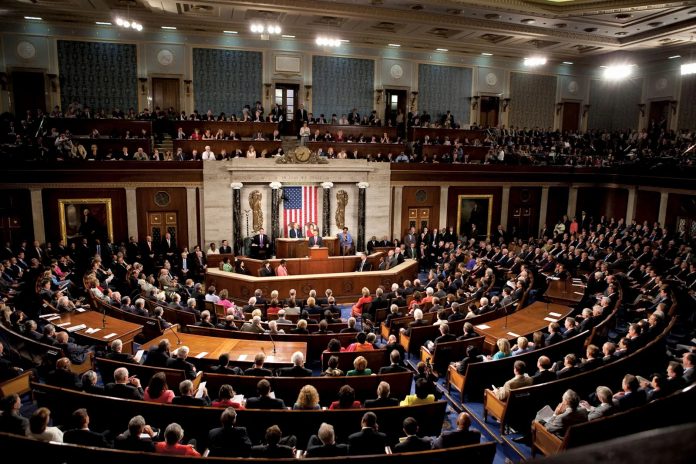
President Donald Trump is on the verge of achieving one of his most consequential legislative victories yet, after the House of Representatives on Thursday narrowly passed his sweeping tax-and-spending package—dubbed the “One Big, Beautiful Bill”—marking a historic advance for his domestic agenda.

The bill passed by a vote of 218-214, with two Republicans—Reps. Thomas Massie of Kentucky and Brian Fitzpatrick of Pennsylvania—joining every Democrat in voting against it. The narrow approval came after intense, last-minute pressure from Trump and House Speaker Mike Johnson, R-La., who spent days trying to wrangle skeptical GOP lawmakers amid growing concerns over the bill’s deficit implications.

The legislation, which includes trillions of dollars in tax cuts, heightened immigration enforcement spending, and large-scale Medicaid cuts, passed the Senate earlier this week by a single vote—51-50—requiring Vice President JD Vance to break the tie. Republicans hold only slim majorities in both chambers.

A Late-Night Push to Flip Dissenters

The House vote followed a dramatic overnight push to flip a handful of GOP holdouts who had initially blocked a procedural vote on Wednesday night. The impasse delayed floor action for several hours until four of the five Republican defectors ultimately reversed course by 3:30 a.m. ET Thursday, allowing the final vote to proceed later in the day.

According to White House aides, Trump had been personally involved in lobbying members, making calls, and issuing public warnings that failure to pass the bill would be a “betrayal” of the conservative base. The president had long set a July 4 deadline for final passage, tying the bill’s success to national pride and political momentum ahead of the election season.

Sweeping Overhaul and Deep Cuts

The legislation enshrines large tax cuts aimed at both individuals and corporations, expands border security spending, and imposes strict new work requirements on Medicaid eligibility. But it has drawn sharp rebukes from Democrats, who argue it will deepen inequality and leave millions of low-income Americans without access to healthcare and basic support services.

House Minority Leader Hakeem Jeffries, D-N.Y., led the opposition with a marathon eight-hour, 44-minute floor speech that broke the chamber’s record for the longest in history. Jeffries accused Republicans of waging a “chainsaw” campaign against core safety-net programs, warning that the legislation would devastate the most vulnerable Americans.

Deficit Concerns and Political Calculations

The Congressional Budget Office (CBO) projects that the bill will add $3.4 trillion to the federal deficit over the next decade—an alarming figure that has drawn concern even from some fiscal hawks within the Republican Party. The national debt currently sits at over $36 trillion. The White House has dismissed the CBO’s projections, claiming the agency’s analysis was politically motivated.

House Republicans maintain that the package will drive long-term economic growth by reducing what they label as “waste, fraud, and abuse” in entitlement programs and by encouraging work and private investment.

More than 71 million Americans are currently enrolled in Medicaid. The proposed changes could see millions dropped from coverage in the coming years. Republicans argue that the new work requirements and tighter eligibility criteria are aimed at making the system more efficient and sustainable.

Tariffs Looming, Economic Uncertainty Grows

The bill’s passage also comes amid growing global uncertainty about Trump’s economic strategy. The president is set to reintroduce a sweeping series of “reciprocal” tariffs on major trading partners by July 9—a move economists warn could further strain U.S. trade relationships and global supply chains.

Investors and foreign governments are closely watching how Trump’s legislative and trade ambitions will collide in the weeks ahead, especially with major changes to healthcare, tax law, and border policy now poised to be signed into law.

Trump is expected to sign the bill in a major White House ceremony before July 4, positioning it as a centerpiece of his reelection campaign and a defining contrast to what he has called “years of bureaucratic failure in Washington.”

If signed into law, the “One Big, Beautiful Bill” would mark the most comprehensive overhaul of domestic policy in a generation, reshaping the role of government in everything from health care and immigration to taxes and trade.