
DD
MM
YYYY

PAGES

DD
MM
YYYY

spot_img

PAGES

Home Blog Page 951

Microsoft Says Its AI Diagnosed Medical Cases Four Times Better Than Doctors in Major New Study

0

Microsoft has unveiled results from a major internal study claiming its medical AI system, dubbed the AI Diagnostic Orchestrator, outperformed experienced human doctors by a wide margin in diagnosing complex medical cases.

In a blog post released Monday, the company said the AI system correctly diagnosed nearly 86% of clinical cases tested—four times more accurately than human physicians working under the same constraints.

The tech giant’s announcement comes as artificial intelligence continues to push deeper into healthcare, raising both hopes for innovation and urgent questions about the future role of doctors in an AI-driven medical environment.

Inside the Study: AI vs. Doctors

The Microsoft-led study involved 304 real-world clinical case studies taken from the New England Journal of Medicine, a source widely respected for its complexity and diagnostic rigor. In the trial, the AI and 21 practicing physicians from the U.S. and U.K. were asked to diagnose the cases in stages—mirroring real-life practice—by ordering tests, asking follow-up questions, and narrowing down differential diagnoses.

Physicians participating in the study had between five and 20 years of clinical experience but were restricted from using tools they would typically rely on—like reference books, second opinions, or digital assistants.

While the doctors achieved an average diagnostic accuracy of just 20%, Microsoft’s AI system, when paired with OpenAI’s new o3 large language model, correctly diagnosed 85.5% of the cases. Microsoft tested the AI with other models too, including those from Meta, Anthropic, and Google, but found the strongest results in the OpenAI collaboration.

Cost, Accuracy, and Efficiency

Beyond accuracy, Microsoft also claimed that its AI solved cases more cost-effectively, raising the possibility of reducing waste in healthcare—a key concern in the U.S., where nearly 20% of GDP is spent on health, and up to 25% of that is believed to be unnecessary or wasteful.

In Microsoft’s view, AI could address both cost and diagnostic quality simultaneously.

“Our findings also suggest that AI can reduce unnecessary healthcare costs,” the company wrote, pointing to misdiagnosis, redundant testing, and administrative delays as areas ripe for disruption.

Mustafa Suleyman, head of Microsoft AI and cofounder of DeepMind, called the study a “big step toward medical superintelligence,” adding that the cases used were “some of the toughest and most diagnostically complex” challenges that doctors face.

Does This Mean AI Will Replace Doctors?

Despite the eye-catching headline numbers, Microsoft was careful to say that the goal is not to replace doctors, but to augment them.

“This technology represents a complement to doctors and other health professionals,” the company stated.

“While this technology is advancing rapidly, clinical roles are much broader than simply making a diagnosis. They need to navigate ambiguity and build trust with patients and their families in a way that AI isn’t set up to do,” Microsoft added.

Healthcare professionals appear to agree. Dr. Shravan Verma, CEO of a Singapore-based health tech startup, told Business Insider last month that AI tools may be well suited for handling the “first mile” of healthcare—triage, information gathering, or simple diagnosis—but emphasized that “AI can’t replicate physicians’ presence, empathy, and nuanced judgment in uncertain or complex conditions.”

However, others in tech are more bullish. Microsoft co-founder Bill Gates previously said on the People by WTF podcast in April that AI could eventually help solve the global shortage of doctors, arguing that AI systems could deliver “medical IQ” at scale.

A Broader Trend in AI and Healthcare

Microsoft is the latest in a growing list of tech giants racing to make inroads in the health sector. Google has developed its own medical AI tools and partnered with the Mayo Clinic. Amazon has expanded into telehealth. OpenAI, whose language model powers Microsoft’s system, has also acknowledged the medical space as a key future target.

The trend has not gone unnoticed by regulators and ethicists. With such powerful tools emerging, calls for guardrails around algorithmic bias, patient data privacy, medical liability, and the ethics of automation are also intensifying.

While Microsoft’s AI Diagnostic Orchestrator may mark a breakthrough in accuracy, the question remains how such tools will be integrated into real-world clinics, where human judgment, trust, and complexity still define much of the patient-doctor interaction.

Microsoft, for now, is signaling that it sees a future in which AI is not a replacement but a co-pilot for physicians—one capable of drastically improving diagnostic speed and quality if used responsibly.
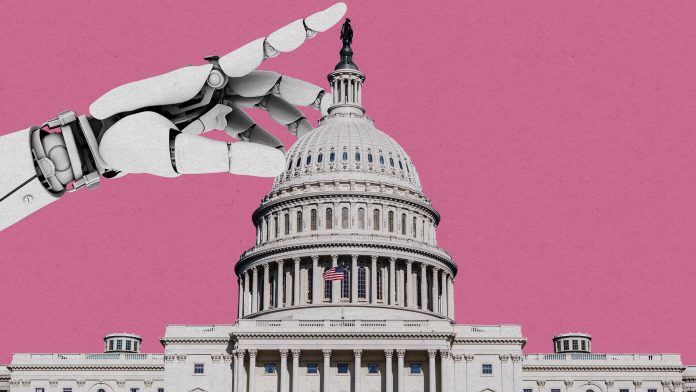

U.S. Senate Rejects Bill to Ban States’ AI Regulation 99-1

0

Senator Ted Cruz’s plan to impose a sweeping ban on state-level regulation of artificial intelligence collapsed on Tuesday, as the U.S. Senate voted 99-1 to strike the controversial measure from President Donald Trump’s sweeping domestic policy bill.

Cruz himself was forced to vote in favor of removing the provision, after it became clear that the opposition—both within and outside his party—had reached insurmountable levels.

The Texas Republican’s proposal would have blocked states from receiving billions in broadband funding if they passed laws governing AI technologies, such as rules targeting deepfakes, robocalls, algorithmic bias, or the use of AI in surveillance and autonomous vehicles. It had been quietly inserted into the broader GOP-backed budget legislation under the guise of a regulatory “pause,” but quickly drew backlash from both Democrats and Republicans.

Initially, the plan would have disqualified states from accessing a $42 billion federal broadband deployment fund if they enacted AI-related laws. After mounting criticism, Cruz attempted to dial it back by limiting the moratorium to five years and shrinking the financial penalty to just $500 million in AI grants. But the core of the proposal remained the same: tie state access to federal dollars to a prohibition on AI regulation.

Republican leadership tried to market the scaled-down version as a “temporary” freeze on regulation to allow the federal government to craft unified standards. Yet the revised provision still alarmed many lawmakers who saw it as a backdoor move to restrict state autonomy and provide legal cover for tech firms.

“Wolf in Sheep’s Clothing”

Democratic Senator Ed Markey of Massachusetts slammed the revised version as “a wolf in sheep’s clothing,” warning that it still gave the Trump administration too much power to punish states for attempting to protect consumers.

“Despite Republican efforts to hide the true impact of the AI moratorium,” he said, “the language still allows the administration to use federal broadband funding as a weapon against the states.”

Senator Maria Cantwell (D-Washington), who co-authored the amendment to strike the clause, said the GOP’s attempts to dress up the provision as a five-year pause did not change its core danger.

“This was another giveaway to tech companies,” she said, accusing Cruz of misleading assurances. “It gives AI and social media a brand-new shield against litigation and state regulation.”

Senator Marsha Blackburn (R-Tennessee), a conservative Republican who initially explored a compromise with Cruz, ultimately joined Cantwell to kill the measure. Blackburn argued that the bill, even in its updated form, would leave states unable to respond to urgent consumer protection needs, especially when it comes to children and data privacy.

“This provision could allow Big Tech to continue to exploit kids, creators, and conservatives,” Blackburn said. “Until Congress passes real, federally preemptive laws like the Kids Online Safety Act and an online privacy framework, we can’t tie the hands of our state legislatures.”

Cruz Retreats Under Pressure

Faced with bipartisan opposition, Cruz eventually withdrew support for his own measure. In a floor statement, he blamed “outside interests” for torpedoing the deal, insisting that the five-year moratorium had backing from President Trump and was intended to “protect kids and creative artists.” But critics said it was less about children and more about shielding Silicon Valley from oversight.

The failure marked a significant political blow to Cruz, who had been one of the most vocal champions of preempting state regulation of emerging technologies. Ironically, his plan lost steam just as his home state of Texas enacted its own AI legislation—undermining his case that states were unfit to legislate on the topic.

The final vote to remove the AI moratorium—99 in favor, 1 opposed—left Senator Thom Tillis (R-North Carolina) as the only lawmaker supporting it. Cruz’s decision to join the majority was seen as a reluctant concession to political reality.

Broad Coalition Rejected the Proposal

The resistance to the AI provision extended beyond Capitol Hill. Cantwell’s office cited unified opposition from 17 Republican governors, 40 state attorneys general, and policy organizations ranging from the Heritage Foundation to the Center for American Progress. The rare cross-ideological alliance highlighted just how deeply unpopular the provision had become.

“Despite several revisions by its author and misleading assurances about its true impact, this proposal would have opened the door to unchecked AI deployment while stripping states of their right to act,” Cantwell said after the vote.

Lawmakers also emphasized that the federal government has yet to pass comprehensive AI legislation, meaning states remain the only line of defense for consumer protection in this rapidly advancing sector. In 2023 alone, at least 24 states introduced or passed some form of AI-related laws and regulations that could have been invalidated or chilled under Cruz’s plan.

What’s Next for AI Regulation?

The Senate’s overwhelming rejection of the moratorium leaves the door open for states to continue setting their own standards while Congress continues to work on a federal framework. The episode also served as a warning shot to federal lawmakers attempting to sneak sweeping tech policy changes into must-pass legislation.

“The Senate came together tonight to say that we can’t just run over good state consumer protection laws,” Cantwell said.

Even as the broader budget bill advances—now cleared of the Cruz amendment—many lawmakers are calling for a standalone debate on AI legislation, not backdoor policy crafted in closed-door budget negotiations.

Connecticut’s House Bill 7082 Prohibits State And Local Government From Crypto

0

Connecticut Governor Ned Lamont signed House Bill 7082 into law, prohibiting state and local government entities from accepting, holding, or investing in cryptocurrencies, including Bitcoin. The legislation, effective October 1, 2025, also bans the state from establishing a crypto asset reserve, making Connecticut one of the few U.S. states to explicitly reject such initiatives.

The bill, which passed unanimously in both the House and Senate, aims to protect public funds from the volatility and regulatory uncertainties of digital assets. It also imposes strict regulations on crypto businesses, requiring licensing, consumer risk disclosures, and protections for minors, such as parental consent for users under 18. However, it does not ban residents from owning, trading, or investing in Bitcoin or other cryptocurrencies, contrary to some misleading reports. The legislation focuses solely on public funds and state-level activities, aiming to shield taxpayer money from the volatility and regulatory uncertainties of digital assets.

Matt Hougan of Bitwise, view it as a shortsighted move that could hinder Connecticut’s ability to innovate in the digital economy. By barring state investment in digital assets, Connecticut may miss out on potential long-term financial benefits seen in states like Texas, which allocated $10 million to a Bitcoin reserve. This move contrasts with states like Texas, Arizona, and New Hampshire, which are pursuing Bitcoin reserves.

Critics argue the ban may stifle blockchain innovation, while supporters, including State Representative Jason Doucette, emphasize consumer and taxpayer protection. The law reflects Connecticut’s cautious approach amid a national debate, with 48 state-level crypto reserve proposals under consideration across the U.S. By prohibiting state and local entities from investing in or holding cryptocurrencies, Connecticut prioritizes fiscal stability, shielding public funds from the volatility of digital assets like Bitcoin, which have seen price swings of over 50% in recent years.

This could set a precedent for other states wary of crypto’s risks. The law’s licensing requirements and consumer protections, including mandatory risk disclosures and parental consent for minors, aim to curb fraud and enhance transparency in crypto businesses. This could strengthen consumer confidence but may deter smaller crypto firms due to compliance costs. Critics argue the ban could hinder blockchain and fintech innovation, potentially driving startups to crypto-friendly states like Texas or Wyoming.

Connecticut risks missing out on economic growth in a sector projected to reach a global market size of $13.2 billion by 2027. The unanimous bipartisan support for the bill reflects a rare consensus on crypto skepticism, potentially influencing other states to adopt similar restrictions, especially those prioritizing fiscal conservatism.

States like Texas, Arizona, and New Hampshire are embracing crypto, with initiatives to establish Bitcoin reserves or tax incentives for blockchain businesses. For example, Texas has passed laws allowing state-chartered banks to custody crypto, aiming to become a digital asset hub. These states view crypto as a hedge against inflation and a driver of economic innovation.

Connecticut joins states like New York, which has stringent crypto regulations (e.g., the BitLicense), in prioritizing consumer protection and financial stability over innovation. These states cite risks like market volatility, fraud, and environmental concerns from crypto mining. State-level crypto reserve proposals pending, the divide reflects competing visions: economic opportunity versus risk management. Connecticut’s ban aligns with the latter, potentially isolating it from the pro-crypto momentum in states betting on digital assets as a future economic driver.

American Bitcoin’s $220M Raise And FTX’s Payouts Reflect A Crypto Market At Crossroads

0

American Bitcoin, backed by Eric Trump, raised $220 million to purchase Bitcoin and mining equipment, with $10 million of the equity sold in Bitcoin, as part of its strategy to build a significant Bitcoin reserve and scale mining operations through a merger with Gryphon Digital Mining, expected to close in Q3 2025. Regarding FTX, creditors with claims under $50,000, classified as “Convenience Class,” began receiving 120% payouts in February 2025, with a second distribution starting May 30, 2025, through platforms like Bitgo or Kraken, based on November 2022 crypto valuations.

These payouts reflect FTX’s bankruptcy plan to distribute recovered assets, though some creditors are dissatisfied due to the significant rise in Bitcoin prices since 2022. The developments involving American Bitcoin and FTX payouts highlight significant trends and tensions in the crypto ecosystem, with implications for market dynamics, investor sentiment, and economic divides.

American Bitcoin, backed by Eric Trump, raising $220 million to buy Bitcoin and mining equipment signals strong institutional interest in Bitcoin as a store of value and investment asset. This move, especially with $10 million of equity sold in Bitcoin, reinforces the narrative of Bitcoin as a legitimate financial instrument, potentially boosting market confidence. The merger with Gryphon Digital Mining, aiming for a public listing, further integrates crypto into traditional financial systems, likely attracting more institutional capital.

By building a significant Bitcoin reserve, American Bitcoin could reduce the circulating supply, potentially driving up Bitcoin prices if demand remains steady or grows. This aligns with the strategy of firms like MicroStrategy, which have similarly accumulated large Bitcoin holdings, contributing to price volatility and upward pressure. The investment in mining equipment could enhance American Bitcoin’s hashing power, but it also raises concerns about mining centralization. If large players dominate mining, it could undermine Bitcoin’s decentralized ethos, increasing vulnerability to regulatory scrutiny or network control by a few entities.

Eric Trump’s involvement introduces a political dimension, potentially polarizing perceptions of Bitcoin. It may attract supporters aligned with the Trump brand while alienating others, influencing adoption and regulatory attitudes depending on political climates. The 120% payouts to FTX creditors with claims under $50,000, starting in February and May 2025, demonstrate progress in the bankruptcy process, providing relief to smaller retail investors.

However, the payouts are based on November 2022 crypto prices, when Bitcoin was around $16,000-$20,000, compared to its 2025 highs (potentially $80,000-$100,000 based on market trends). This discrepancy fuels discontent among creditors who feel shortchanged, potentially dampening trust in crypto platforms. The structured payout process, using platforms like Bitgo and Kraken, sets a precedent for handling crypto bankruptcies. It highlights the challenges of valuing volatile assets in insolvency cases and may push regulators to develop clearer frameworks for crypto asset recovery, impacting future platform operations.

The payouts prioritize smaller claims, leaving larger creditors (e.g., institutional investors) waiting longer, which could reshape perceptions of fairness in crypto insolvencies. This may influence how retail versus institutional investors approach risk in crypto markets. The firm’s raise and strategy cater to institutional players, with high-profile backing and large-scale Bitcoin accumulation. Retail investors may feel priced out or marginalized as large entities dominate Bitcoin holdings and mining, potentially concentrating wealth and influence.

Smaller retail creditors benefit from early payouts, but the 120% recovery based on outdated valuations means they miss out on Bitcoin’s price appreciation. Institutional creditors with larger claims face delays, creating friction between retail and institutional recovery timelines. American Bitcoin’s corporate approach, backed by a politically charged figure, contrasts with Bitcoin’s original decentralized, anti-establishment ethos. This could deepen the divide between crypto purists and those embracing institutional adoption.

FTX’s payouts highlight the tension between crypto’s promise of financial freedom and the reality of centralized platform failures, where legal systems dictate outcomes, frustrating those who expected crypto to bypass traditional financial gatekeepers. The ability of firms like American Bitcoin to raise $220 million underscores the capital-intensive nature of crypto’s evolution, favoring well-funded entities. Meanwhile, FTX creditors, particularly retail investors, are locked into recoveries that don’t reflect current market gains.

The political branding of American Bitcoin may also alienate segments of the crypto community, creating a cultural divide that could influence adoption and market participation. Institutional moves like American Bitcoin’s could drive Bitcoin prices higher, benefiting early investors and large holders while making entry cost-prohibitive for retail investors. FTX’s payout structure further highlights how retail investors often bear the brunt of market volatility and platform failures.

The FTX saga erodes trust in centralized crypto platforms, pushing some toward decentralized alternatives, while American Bitcoin’s institutionalization may attract those comfortable with traditional finance. This creates a split in how different groups perceive crypto’s future. The political ties of American Bitcoin and the FTX bankruptcy could intensify regulatory scrutiny, with differing impacts on retail (more protection) versus institutional players (more compliance costs), potentially widening operational gaps.

American Bitcoin’s raise and FTX’s payouts reflect a crypto market at a crossroads: institutionalization versus decentralization, retail versus institutional priorities, and ideological purity versus pragmatic adoption. These dynamics could deepen economic and social divides, shaping the trajectory of crypto’s integration into global finance.

Trump’s Megabill Passes Senate After 24-Hour Vote Marathon, Faces Rocky Road in House

0

President Donald Trump’s massive domestic policy bill, dubbed the “One Big, Beautiful Bill” (OBBB), cleared the U.S. Senate in dramatic fashion Tuesday, with Vice President JD Vance casting the decisive tie-breaking vote in a 51-50 split.

The bill’s passage marks a significant milestone for Trump’s legislative agenda—but not the end of the fight.

The final tally revealed fractures within the Republican Party. Senators Thom Tillis (R-N.C.), Rand Paul (R-Ky.), and Susan Collins (R-Maine) broke ranks, citing concerns over spending, government overreach, and the bill’s long-term fiscal impact. Still, Senate Majority Leader John Thune managed to hold the line through days of tense negotiations, culminating in a record-breaking, 24-hour vote-a-rama that saw dozens of amendments proposed and defeated.

A Knife-Edge Vote in the House

While Senate Republicans celebrated the win, the bill now heads to the House of Representatives, where its future is far from certain. The lower chamber must now reconcile its own version of the bill with the Senate-passed draft, which includes deeper cuts to Medicaid and several other contentious changes that were introduced to appease fiscal conservatives.

The House originally passed a narrower version of the bill in May after fierce intra-party negotiations. But with the Senate’s amendments now added—some of which House Republicans view as politically and economically toxic—resistance has hardened.

Speaker Mike Johnson, navigating one of the narrowest majorities in modern history, can afford to lose just three GOP votes if he hopes to push the Senate version through without Democratic support. That challenge is compounded by the fact that several House Republicans only voted for the initial bill reluctantly, and have since voiced discomfort with the Senate’s changes.

Among the most vocal opponents is Rep. Chip Roy (R-Texas), who took to social media to blast what he called the Senate’s attempt to “jam the House” with a rushed vote ahead of Trump’s self-imposed July 4 deadline.

“Rumor is Senate plans to jam the House with its weaker, unacceptable OBBB before 7/4,” Roy posted on X. “This is not a surprise but it would be a mistake… I would not vote for it as it is.”

Roy’s comments reflect a broader sentiment among House hardliners who remain uneasy about the bill’s projected $3 trillion impact on the federal deficit over the next decade, according to the Congressional Budget Office. Many also object to the perceived use of artificial deadlines to pressure lawmakers into swallowing politically risky measures.

A Contentious Senate Process

The path to Tuesday’s Senate passage was anything but smooth. The vote-a-rama—an exhausting, round-the-clock amendment process—saw Democrats force votes on issues like Medicaid cuts, green energy subsidies, and tax policy in an attempt to draw GOP senators into controversial stances. Though none of the amendments succeeded in fundamentally changing the bill, they gave Democrats ammunition to use in future campaign ads and public messaging.

Republican leadership, meanwhile, scrambled behind closed doors to keep wavering members from defecting. Their success in doing so—albeit by the narrowest of margins—gave Trump a much-needed legislative victory after weeks of criticism from conservatives and centrists alike.

Trump Increases Pressure

Trump has been lobbying aggressively for the bill’s passage, making it clear that he expects results before the July 4 holiday.

“To my friends in the Senate, lock yourself in a room if you must, don’t go home, and GET THE DEAL DONE THIS WEEK,” Trump posted last week on Truth Social, signaling that failure to pass the bill could cost lawmakers political capital—and possibly re-election.

Now, with the bill through the Senate, Trump is expected to double down on pressuring the House. The question is whether Speaker Johnson can hold his fragile coalition together long enough to deliver a win.

The legislation is the most sweeping domestic policy package proposed under Trump’s second term and seeks to cement his economic and social legacy. It includes an extension of Trump’s 2017 tax cuts, new infrastructure spending, cuts to Medicaid, and scaled-back funding for green energy programs. The bill also envisions a simplified tax filing system and new deductions for families and businesses.

Its size—estimated at more than $3.5 trillion over a decade—makes it one of the largest peacetime spending packages in U.S. history. It has drawn criticism from across the political spectrum, with warnings that it will significantly worsen the national debt, especially as interest payments on existing obligations continue to climb.

Tesla CEO Elon Musk, who briefly headed the Department of Government Efficiency (DOGE), tasked with curtailing government waste and excess spending, is currently feuding with Trump because of the bill.

In a scathing post on Monday afternoon, Musk wrote on X: “Every member of Congress who campaigned on reducing government spending and then immediately voted for the biggest debt increase in history should hang their head in shame. And they will lose their primary next year if it is the last thing I do on this Earth.”

The House is expected to take up the bill as early as Wednesday, but with the GOP split and opposition mounting, a smooth passage is far from guaranteed. Trump’s allies are already threatening primary challenges against dissenting Republicans, while Democrats are preparing to use the bill’s provisions—and its cost—to frame the GOP as fiscally reckless ahead of the 2026 midterms.