DD
MM
YYYY

PAGES

DD
MM
YYYY

spot_img

PAGES

Home Blog Page 952

Tekedia Capital Congratulates Portfolio Company, Rocketable, for Raising $6.5M

0
Tekedia Capital congratulates our portfolio company, Rocketable, and its leader, Alan Wells, for raising $6.5 million, to build companies of machines. Yes, a portfolio of fully automated SaaS enterprises. Now, you have an easy way to exit your SaaS company. Go here and apply to be acquired https://www.rocketable.com/submit-product .
Rocketable raised $6.5 million in seed funding to build an AI-powered software holding company that fully automates SaaS products.

After 10+ years building automated products at Cruise, Uber, and other startups, Alan Wells acquired a small SaaS app with his own capital. When million-token context models arrived, he fed in 100,000 lines of spaghetti code and watched AI do in 90 seconds what took him hours daily.

That’s when he became AGI-pilled — and realized most companies wouldn’t navigate the transition from AI-assisted operations to full automation.
Rocketable’s vision: acquire profitable SaaS companies and transform them into autonomous, self-improving systems. The goal is full automation: software that understands itself, solves its own problems, and runs without humans in the loop.

The $6.5M will fund 3+ SaaS acquisitions, each becoming a real-world laboratory for building the platform that autonomously operates an entire portfolio. Rocketable is also hiring a small team in San Francisco to build the AI systems that make this possible.

Rocketable believes the future of software isn’t more headcount — it’s AI agents replacing org charts, and software companies that improve themselves with every customer interaction.


Tesla Shares Slide 7% as Musk-Trump Feud Escalates, Stirring Investor Backlash Over Renewed Political Distractions

0

Tesla stock plummeted over 7% on Tuesday after President Donald Trump reignited his feud with CEO Elon Musk, threatening to strip away federal subsidies and contracts from Musk-led companies in retaliation for the tech billionaire’s vocal criticism of his administration’s fiscal policies.

The renewed political crossfire is unnerving Tesla investors, who only recently began to regain confidence in the company’s direction after Musk had announced a pause from overt political activity and his departure from Trump’s controversial Department of Government Efficiency, DOGE.

The spark for this latest escalation came after Musk, in a scathing post on X, slammed Trump’s new spending bill—dubbed the “One Big, Beautiful Bill”—which includes sweeping tax reforms and record federal expenditures.

Musk wrote: “It is obvious with the insane spending of this bill, which increases the debt ceiling by a record FIVE TRILLION DOLLARS, that we live in a one-party country — the PORKY PIG PARTY!! Time for a new political party that actually cares about the people.”

Just hours later, Trump fired back on Truth Social, describing Musk as the “biggest subsidy recipient in history” and threatening to eliminate federal aid to Tesla, SpaceX, and other Musk ventures. He suggested Musk “would have to close up shop and head back home to South Africa” without government support.

“Perhaps we should have DOGE take a good, hard look at this? BIG MONEY TO BE SAVED!!!” Trump added.

Investors Lose Patience

The public clash reignited long-held concerns among shareholders about Musk’s increasingly political posture—concerns that had briefly faded earlier this year when Musk declared he was leaving DOGE and refocusing on Tesla and his AI startup, xAI. That announcement led to a temporary rebound in Tesla stock, offering investors a glimmer of stability. But the relief has now vanished.

Several Tesla shareholders took to social media to vent their frustration, making it clear that Musk’s return to political combat could have long-term implications for Tesla’s valuation.

Vincent, a shareholder who disclosed owning a significant number of Tesla shares, wrote, “As an investor, I really don’t like that Elon Musk is constantly involved in political discussions. This is my opinion—you don’t have to agree with it, but I don’t care.”

Another, who said they owned 1,850 Tesla shares and multiple Tesla vehicles, expressed his frustration over Musk’s return to a political feud.

“I may ditch my 1,850 $TSLA shares. I can’t handle the CEO starting wars with the administration as the head of a company. I still love the product (Own 4 Teslas and Tesla Solar), but I need the investments in something more stable. Talk me out of it,” he said.

Phil Trubey, another longtime Tesla investor, voiced deeper concerns about governance and the inherent conflict between Musk’s political ambitions and his role as CEO.

“As a Tesla shareholder, this is the last thing I want in a CEO. Someone who proclaims that jumping deep into political campaigns is his #1 priority. I don’t begrudge Elon from getting involved in politics, knock yourself out man. But you can’t do it and also be an effective CEO since the conflicts are too great. The very people Elon is targeting have the power to massively disrupt Tesla,” he said.

Tesla’s exposure to federal subsidies is substantial. The EV giant benefits from a range of U.S. tax credits, particularly the federal electric vehicle tax credit that could provide up to $7,500 per car. With an estimated $1.2 billion in annual subsidies on the line, Trump’s threat to end all forms of government support is far from symbolic. The risk also extends to SpaceX, which has secured over $21 billion in federal contracts for satellite launches, defense programs, and NASA operations.

Musk’s latest criticism of Trump’s bill also comes amid reports that SpaceX has been under informal review by some federal agencies over compliance and labor concerns—raising speculation that Musk’s feud with the administration could attract deeper scrutiny of his companies.

Market Consequences

Tesla’s share decline on Tuesday follows months of volatility. With the political narrative now dominating headlines once again, analysts warn that the “Musk premium” built into Tesla’s stock price may continue to decline.

Dan Ives, a well-known Tesla bull and analyst at Wedbush, wrote in a note Tuesday: “The jabs between Musk and Trump will continue as the budget rolls through Congress, but Tesla investors want Musk to focus on driving Tesla and stop this political angle … which has turned into a life of its own in a rollercoaster ride since the November elections.”

Tesla’s latest delivery report is due this week, with analysts expecting an 11% drop in global deliveries year-over-year. Sales in key European markets like Sweden and Denmark have already slipped for six straight months, while price cuts in China have failed to fully revive demand.

Musk’s return to open political warfare with Washington has injected new uncertainty at a time when Tesla is navigating growing competition from Chinese EV manufacturers and facing investor skepticism about long-term profitability in a maturing market.

The feud may still escalate. Trump has reportedly asked aides to explore the scope of federal exposure to Musk’s businesses, while Musk has hinted at further political interventions—possibly even funding primary challenges against Republicans who vote for Trump’s spending bill.

Against the possibility of further escalation, Tesla shareholders seem to be sending a message that enough is enough.

U.S. Stock Market Hits ATH Surpassing February’s Record

0

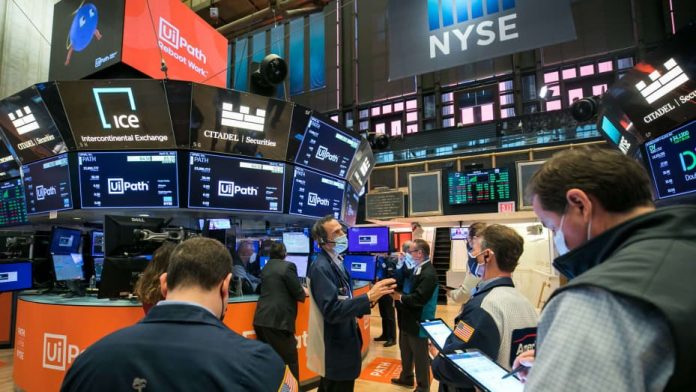
The U.S. stock market recently hit a new all-time high close, with the S&P 500 reaching 6,173.07, surpassing its previous record from February 19, 2025. The Nasdaq Composite also closed at a record high of 20,273 on the same day. This marked a significant recovery from a near-bear market low in early April, driven by optimism over a U.S.-China trade framework and expectations of potential Federal Reserve rate cuts.

The Dow Jones Industrial Average, while up 432 points or 1% that day, remained 2.7% below its record high from December 2024. However, posts on X and some reports suggest the S&P 500 continued its momentum, with the SPY ETF closing at 616.506 USD on July 1, 2025, slightly down 0.12% from the previous session. Despite the milestone, concerns linger about high valuations, with the S&P 500’s forward P/E ratio near 22, historically signaling muted future returns.

Trade tensions, particularly with Canada, and inflation above the Fed’s 2% target add uncertainty. The U.S. stock market hitting a new all-time high close, with the S&P 500 at 6,173.07 and Nasdaq at 20,273 on June 27, 2025, carries significant implications for investors, the economy, and society, while highlighting a growing economic divide.

The record highs reflect investor confidence, fueled by a U.S.-China trade framework and hopes for Federal Reserve rate cuts. This can boost consumer spending as wealthier households, holding significant stock assets, feel richer. However, high valuations (S&P 500 forward P/E near 22) suggest potential overbought conditions, historically linked to below-average future returns (e.g., 5-6% annualized over a decade versus 10% long-term averages).

The rally indicates resilience despite inflation above the Fed’s 2% target and trade tensions, particularly with Canada. Lower interest rates, if realized, could further stimulate growth but risk rekindling inflation. Sector performance diverges: tech-heavy Nasdaq’s strength points to AI and innovation driving gains, while the Dow’s lag (2.7% below its December 2024 peak) reflects caution in traditional industries.

Trade policies, like potential 25% tariffs on Canadian goods, could disrupt supply chains and raise costs, potentially offsetting market gains. Geopolitical uncertainties and domestic political polarization, as seen in X posts, may temper long-term optimism, with some investors bracing for volatility. Stock ownership is concentrated among the top 10% of households, who own about 90% of corporate stock. Market highs disproportionately benefit the wealthy, widening the wealth gap.

Lower-income households, reliant on wages rather than investments, see little direct gain, especially as inflation erodes purchasing power (real wages have stagnated for many). High valuations and market complexity favor institutional investors and those with access to sophisticated financial tools. Retail investors, particularly younger or less experienced ones active on platforms like X, face higher risks from potential corrections.

The digital divide limits access to real-time market insights, with wealthier investors leveraging advanced platforms while others rely on fragmented, often speculative X posts. Tech-driven gains benefit coastal hubs (e.g., Silicon Valley), while industrial and rural areas tied to the Dow’s underperforming sectors lag. Trade tensions, like those with Canada, could hit manufacturing and energy sectors harder, affecting blue-collar workers more than tech employees.

The market’s new highs signal economic strength but mask vulnerabilities—overvaluation, inflation, and trade risks. The benefits skew toward the wealthy, deepening inequality. X posts reflect mixed sentiment: some celebrate the bull run, others warn of a bubble or lament being priced out.

CAC Launches AI-Driven Company Registration Portal to Boost Nigeria’s Ease of Business

0
CAC

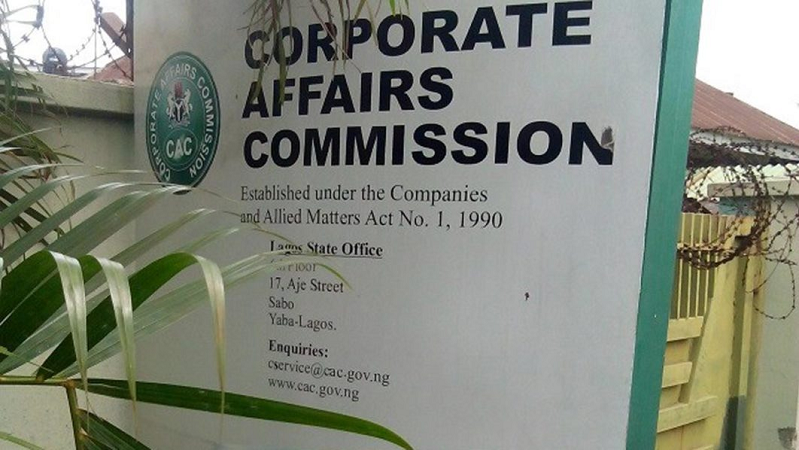
The Corporate Affairs Commission (CAC) has formally launched Nigeria’s first Artificial Intelligence (AI)-powered company registration portal, a landmark move designed to accelerate business registration, improve data integrity, and remove bureaucratic bottlenecks in the country’s corporate regulatory landscape.

The announcement was made by the Registrar-General and CEO of the CAC, Hussaini Ishaq Magaji (SAN), during the Commission’s 2025 Stakeholders Forum held in Port Harcourt. The new system, already in its pilot phase, is part of a broader reform strategy to enhance the ease of doing business in Nigeria by making company registration more seamless, transparent, and efficient.

The new portal marks a complete overhaul of the existing Company Registration Portal (CRP). It incorporates AI functionalities that allow for instant business name reservations, eliminating delays traditionally associated with manual reviews and approvals. The system uses intelligent algorithms to assess availability and, when necessary, automatically generate alternative name suggestions.

Magaji compared the experience to setting up an email account, stating that entrepreneurs and business owners will now be able to reserve a business name and proceed with registration in a matter of minutes. The platform also significantly reduces the amount of information required to begin the process. Registration can now commence with just the National Identification Number (NIN) of a director or proprietor.

Once the NIN is verified—through real-time connection to the National Identity Management Commission (NIMC)—the system is designed to generate the certificate of incorporation and automatically send it to the applicant’s email address within 30 minutes.

Overcoming NIN Verification Bottlenecks

Despite the automation, Magaji acknowledged that some delays may still occur due to reliance on third-party verifications from NIMC. To mitigate this, the CAC has deployed AI-based facial recognition and photo ID-matching technology that acts as a fallback option when the NIN database is unresponsive. This ensures that the applicant can continue the registration process without being unduly hindered by infrastructure or connectivity failures on external platforms.

To protect company data and prevent unauthorized changes to corporate records, the CAC is rolling out Two-Factor Authentication (2FA) and One-Time Password (OTP) verification for all changes initiated on the portal. This means no alteration to a company’s records—such as changes in shareholding, directorship, or address—can be made without full consent from registered directors, thereby increasing accountability and transparency.

CAC Mobile App Launch Coming in Q4 2025

Looking ahead, the Commission is finalizing plans to release the CAC Mobile App in the final quarter of 2025. This application will allow users to carry out company registration, monitor application status, initiate filings, and retrieve certificates and other documents from mobile devices.

The mobile app is also expected to integrate with other federal government digital services, giving users a unified interface for cross-agency processes, including tax registration with the Federal Inland Revenue Service (FIRS) and enrollment in national business incentives schemes.

As part of the reform, the CAC has announced a revision of its service fee structure, which will come into effect on August 1, 2025. While no specifics were given on whether fees would rise or fall, Magaji noted that the adjustment is necessary to maintain service delivery quality, expand digital infrastructure, and ensure the financial sustainability of the Commission’s tech-driven transformation.

Industry Applauds Innovation

The AI-powered registration platform and associated reforms were welcomed by legal, financial, and business stakeholders present at the Port Harcourt event. Representatives from the Nigerian Bar Association, Institute of Chartered Secretaries and Administrators (ICSAN), Institute of Chartered Accountants of Nigeria (ICAN), and the Nigerian Association of Small and Medium Enterprises (NASME) praised the initiative.

Cordelia U. Eke of the NBA Port Harcourt Branch said the AI portal would drastically reduce the time and cost of starting a business. Sir Sebastian Essien of ICSAN noted that the move aligns with international corporate governance standards. Elder Dogala Sakpege of NASME said the ease of registration would incentivize more micro and small businesses to formalize, thereby gaining access to credit and government support.

Dr. Mechi Brown, Director of Industry at the Rivers State Ministry of Commerce and Industry, urged state governments to complement CAC’s efforts by improving local registration processes for business premises and trade licenses.

The CAC’s reforms are in line with Nigeria’s National Digital Economy Policy and the Presidential Enabling Business Environment Council (PEBEC) roadmap, which aims to position Nigeria among the top-performing economies in the World Bank’s Doing Business Index. Since the 2017 reform drive, Nigeria has introduced several initiatives to streamline business procedures, but the integration of AI into regulatory operations marks a significant leap forward.

This new platform also comes at a time when Nigeria is battling sluggish formal sector growth and a large informal economy. According to the National Bureau of Statistics (NBS), over 60% of Nigerian enterprises operate informally, missing out on credit, tax incentives, and trade opportunities. By making registration faster and simpler, the CAC hopes to change that dynamic.

Trump Threatens to Cut Off Elon Musk’s Subsidies Amid Explosive Feud Over “Big, Beautiful Bill”

0

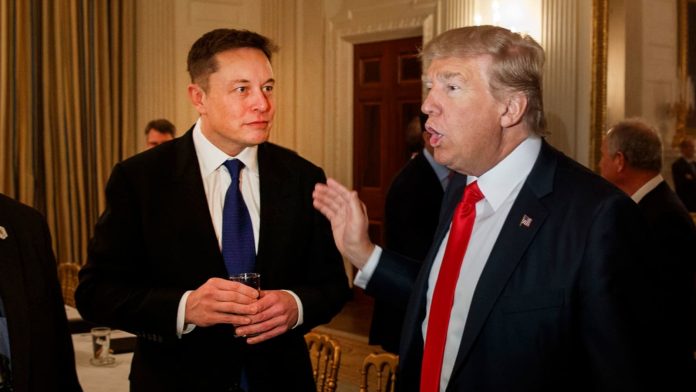
President Donald Trump has intensified his feud with Tesla and SpaceX CEO Elon Musk, threatening to strip his companies of government subsidies as Musk escalates his opposition to the president’s tax and spending bill—dubbed by Trump as the “One Big Beautiful Bill.”

The dispute has now grown into one of the most dramatic public fallouts between a sitting U.S. president and a tech executive who was once among his biggest backers.

In a fiery post on Truth Social, Trump declared that Musk “may get more subsidy than any human being in history, by far,” and without U.S. government support, “Elon would probably have to close up shop and head back home to South Africa.” He also suggested that the Department of Government Efficiency (DOGE)—an agency originally proposed by Musk during Trump’s campaign—could now be tasked with scrutinizing federal funding to Musk’s businesses.

“BIG MONEY TO BE SAVED!!!” Trump wrote, targeting subsidies for electric vehicles, rockets, and satellites, much of which flow to Tesla and SpaceX through tax credits, government contracts, and emissions trading schemes.

Fallout Over the “Big, Beautiful Bill”

The relationship between Trump and Musk took a sharp turn earlier this month when the president’s tax package, pitched as a cornerstone of his second-term economic agenda, included provisions to roll back the $7,500 EV consumer tax credit and unwind other climate-related subsidies. The bill was projected to shoot up the U.S.’s debt load by an additional $3.3 billion, stirring the ire of Musk who headed DOGE to cut the government’s excess spending and trim the debt load to the barest minimum.

While the initial feud was subdued, Musk’s response erupted over the weekend into an all-out assault on the bill—and on Republican lawmakers who support it.

In a scathing post on Monday afternoon, Musk wrote on X: “Every member of Congress who campaigned on reducing government spending and then immediately voted for the biggest debt increase in history should hang their head in shame. And they will lose their primary next year if it is the last thing I do on this Earth.”

The post came just hours before the Senate was expected to vote on the final version of the legislation, signaling Musk’s most direct threat yet: to use his influence and resources to target Republican incumbents in primary races if they back Trump’s fiscal agenda.

The billionaire’s comments mark a sharp reversal from his earlier stance. After pledging to cut back on political donations, Musk now appears poised to unleash his considerable personal fortune to reshape the Republican Party’s ranks—potentially funding challengers against lawmakers who side with Trump on the spending bill.

Tesla’s Stock Takes A Hit

Tesla’s stock tumbled as much as 5.7% in early trading Tuesday, continuing a volatile stretch for the EV maker. The company already fell 14% on June 5, the day of Musk and Trump’s first public spat over the tax bill. Analysts at JPMorgan Chase have warned that Trump’s proposed regulatory rollbacks and cuts to green energy incentives could jeopardize as much as 40% of Tesla’s profits, which rely heavily on consumer subsidies and the sale of regulatory credits.

Tesla and Panasonic Holdings Corp., its battery partner, are also top beneficiaries of the Inflation Reduction Act’s manufacturing tax credits, another element potentially under threat from the Trump-aligned bill.

SpaceX, too, stands at risk. The company holds billions in government contracts with NASA, the Pentagon, and federal agencies for rocket launches and satellite services. If DOGE is activated to audit government spending, it could create a direct channel to rein in or reassess funding for Musk’s ventures.

Trump, stung by Musk’s mounting attacks, has reminded the public that he has long opposed federal EV mandates and green energy targets, regardless of his earlier camaraderie with Musk.

“Elon Musk knew, long before he so strongly Endorsed me for President, that I was strongly against the EV Mandate,” Trump wrote. “Electric cars are fine, but not everyone should be forced to own one.”

The tone is a far cry from 2022 and early 2023, when Musk and Trump exchanged praise and Musk supported the GOP’s economic direction. Their rift now highlights deeper ideological divides on industrial policy, government spending, and climate strategy—even among allies.

Amid this backdrop, Tesla is preparing to release its second-quarter delivery numbers later this week. Analysts expect around 390,600 vehicle sales globally, which would reflect a 12% year-over-year drop and follow a 13% fall in Q1—a troubling trend as the EV market cools under subsidy uncertainty.

This downturn, combined with regulatory pressure and a cooling relationship with Washington, places Musk in a uniquely vulnerable position—one he appears ready to counter with political force.

Musk’s attack on the “Big, Beautiful Bill” has now evolved into a broader campaign against what he calls fiscal hypocrisy inside the GOP. While Trump’s base remains firm, the “Big Beautiful Bill” feud is expected to ripple across the Republican primary season and disrupt the clean energy agenda.