DD
MM
YYYY

PAGES

DD
MM
YYYY

spot_img

PAGES

Home Blog Page 954

CAC Launches AI-Driven Company Registration Portal to Boost Nigeria’s Ease of Business

0
CAC

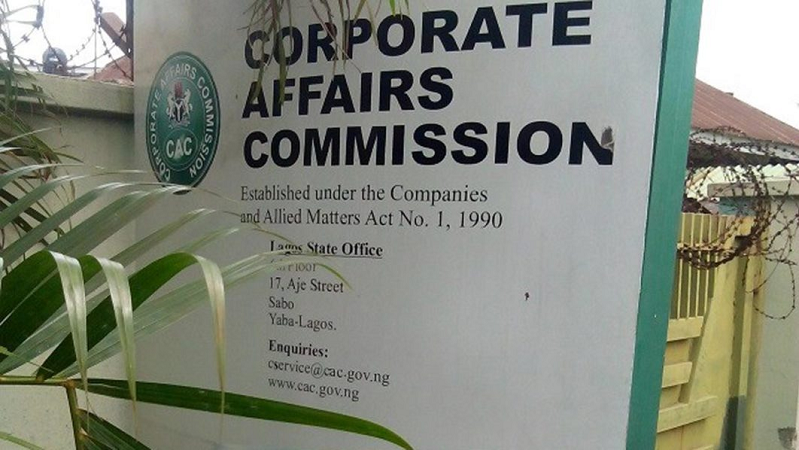
The Corporate Affairs Commission (CAC) has formally launched Nigeria’s first Artificial Intelligence (AI)-powered company registration portal, a landmark move designed to accelerate business registration, improve data integrity, and remove bureaucratic bottlenecks in the country’s corporate regulatory landscape.

The announcement was made by the Registrar-General and CEO of the CAC, Hussaini Ishaq Magaji (SAN), during the Commission’s 2025 Stakeholders Forum held in Port Harcourt. The new system, already in its pilot phase, is part of a broader reform strategy to enhance the ease of doing business in Nigeria by making company registration more seamless, transparent, and efficient.

The new portal marks a complete overhaul of the existing Company Registration Portal (CRP). It incorporates AI functionalities that allow for instant business name reservations, eliminating delays traditionally associated with manual reviews and approvals. The system uses intelligent algorithms to assess availability and, when necessary, automatically generate alternative name suggestions.

Magaji compared the experience to setting up an email account, stating that entrepreneurs and business owners will now be able to reserve a business name and proceed with registration in a matter of minutes. The platform also significantly reduces the amount of information required to begin the process. Registration can now commence with just the National Identification Number (NIN) of a director or proprietor.

Once the NIN is verified—through real-time connection to the National Identity Management Commission (NIMC)—the system is designed to generate the certificate of incorporation and automatically send it to the applicant’s email address within 30 minutes.

Overcoming NIN Verification Bottlenecks

Despite the automation, Magaji acknowledged that some delays may still occur due to reliance on third-party verifications from NIMC. To mitigate this, the CAC has deployed AI-based facial recognition and photo ID-matching technology that acts as a fallback option when the NIN database is unresponsive. This ensures that the applicant can continue the registration process without being unduly hindered by infrastructure or connectivity failures on external platforms.

To protect company data and prevent unauthorized changes to corporate records, the CAC is rolling out Two-Factor Authentication (2FA) and One-Time Password (OTP) verification for all changes initiated on the portal. This means no alteration to a company’s records—such as changes in shareholding, directorship, or address—can be made without full consent from registered directors, thereby increasing accountability and transparency.

CAC Mobile App Launch Coming in Q4 2025

Looking ahead, the Commission is finalizing plans to release the CAC Mobile App in the final quarter of 2025. This application will allow users to carry out company registration, monitor application status, initiate filings, and retrieve certificates and other documents from mobile devices.

The mobile app is also expected to integrate with other federal government digital services, giving users a unified interface for cross-agency processes, including tax registration with the Federal Inland Revenue Service (FIRS) and enrollment in national business incentives schemes.

As part of the reform, the CAC has announced a revision of its service fee structure, which will come into effect on August 1, 2025. While no specifics were given on whether fees would rise or fall, Magaji noted that the adjustment is necessary to maintain service delivery quality, expand digital infrastructure, and ensure the financial sustainability of the Commission’s tech-driven transformation.

Industry Applauds Innovation

The AI-powered registration platform and associated reforms were welcomed by legal, financial, and business stakeholders present at the Port Harcourt event. Representatives from the Nigerian Bar Association, Institute of Chartered Secretaries and Administrators (ICSAN), Institute of Chartered Accountants of Nigeria (ICAN), and the Nigerian Association of Small and Medium Enterprises (NASME) praised the initiative.

Cordelia U. Eke of the NBA Port Harcourt Branch said the AI portal would drastically reduce the time and cost of starting a business. Sir Sebastian Essien of ICSAN noted that the move aligns with international corporate governance standards. Elder Dogala Sakpege of NASME said the ease of registration would incentivize more micro and small businesses to formalize, thereby gaining access to credit and government support.

Dr. Mechi Brown, Director of Industry at the Rivers State Ministry of Commerce and Industry, urged state governments to complement CAC’s efforts by improving local registration processes for business premises and trade licenses.

The CAC’s reforms are in line with Nigeria’s National Digital Economy Policy and the Presidential Enabling Business Environment Council (PEBEC) roadmap, which aims to position Nigeria among the top-performing economies in the World Bank’s Doing Business Index. Since the 2017 reform drive, Nigeria has introduced several initiatives to streamline business procedures, but the integration of AI into regulatory operations marks a significant leap forward.

This new platform also comes at a time when Nigeria is battling sluggish formal sector growth and a large informal economy. According to the National Bureau of Statistics (NBS), over 60% of Nigerian enterprises operate informally, missing out on credit, tax incentives, and trade opportunities. By making registration faster and simpler, the CAC hopes to change that dynamic.

Trump Threatens to Cut Off Elon Musk’s Subsidies Amid Explosive Feud Over “Big, Beautiful Bill”

0

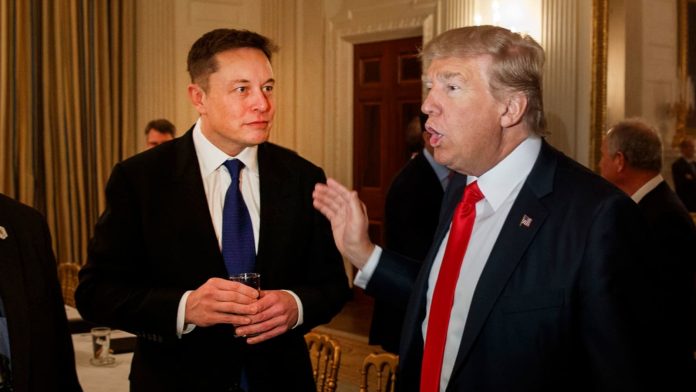
President Donald Trump has intensified his feud with Tesla and SpaceX CEO Elon Musk, threatening to strip his companies of government subsidies as Musk escalates his opposition to the president’s tax and spending bill—dubbed by Trump as the “One Big Beautiful Bill.”

The dispute has now grown into one of the most dramatic public fallouts between a sitting U.S. president and a tech executive who was once among his biggest backers.

In a fiery post on Truth Social, Trump declared that Musk “may get more subsidy than any human being in history, by far,” and without U.S. government support, “Elon would probably have to close up shop and head back home to South Africa.” He also suggested that the Department of Government Efficiency (DOGE)—an agency originally proposed by Musk during Trump’s campaign—could now be tasked with scrutinizing federal funding to Musk’s businesses.

“BIG MONEY TO BE SAVED!!!” Trump wrote, targeting subsidies for electric vehicles, rockets, and satellites, much of which flow to Tesla and SpaceX through tax credits, government contracts, and emissions trading schemes.

Fallout Over the “Big, Beautiful Bill”

The relationship between Trump and Musk took a sharp turn earlier this month when the president’s tax package, pitched as a cornerstone of his second-term economic agenda, included provisions to roll back the $7,500 EV consumer tax credit and unwind other climate-related subsidies. The bill was projected to shoot up the U.S.’s debt load by an additional $3.3 billion, stirring the ire of Musk who headed DOGE to cut the government’s excess spending and trim the debt load to the barest minimum.

While the initial feud was subdued, Musk’s response erupted over the weekend into an all-out assault on the bill—and on Republican lawmakers who support it.

In a scathing post on Monday afternoon, Musk wrote on X: “Every member of Congress who campaigned on reducing government spending and then immediately voted for the biggest debt increase in history should hang their head in shame. And they will lose their primary next year if it is the last thing I do on this Earth.”

The post came just hours before the Senate was expected to vote on the final version of the legislation, signaling Musk’s most direct threat yet: to use his influence and resources to target Republican incumbents in primary races if they back Trump’s fiscal agenda.

The billionaire’s comments mark a sharp reversal from his earlier stance. After pledging to cut back on political donations, Musk now appears poised to unleash his considerable personal fortune to reshape the Republican Party’s ranks—potentially funding challengers against lawmakers who side with Trump on the spending bill.

Tesla’s Stock Takes A Hit

Tesla’s stock tumbled as much as 5.7% in early trading Tuesday, continuing a volatile stretch for the EV maker. The company already fell 14% on June 5, the day of Musk and Trump’s first public spat over the tax bill. Analysts at JPMorgan Chase have warned that Trump’s proposed regulatory rollbacks and cuts to green energy incentives could jeopardize as much as 40% of Tesla’s profits, which rely heavily on consumer subsidies and the sale of regulatory credits.

Tesla and Panasonic Holdings Corp., its battery partner, are also top beneficiaries of the Inflation Reduction Act’s manufacturing tax credits, another element potentially under threat from the Trump-aligned bill.

SpaceX, too, stands at risk. The company holds billions in government contracts with NASA, the Pentagon, and federal agencies for rocket launches and satellite services. If DOGE is activated to audit government spending, it could create a direct channel to rein in or reassess funding for Musk’s ventures.

Trump, stung by Musk’s mounting attacks, has reminded the public that he has long opposed federal EV mandates and green energy targets, regardless of his earlier camaraderie with Musk.

“Elon Musk knew, long before he so strongly Endorsed me for President, that I was strongly against the EV Mandate,” Trump wrote. “Electric cars are fine, but not everyone should be forced to own one.”

The tone is a far cry from 2022 and early 2023, when Musk and Trump exchanged praise and Musk supported the GOP’s economic direction. Their rift now highlights deeper ideological divides on industrial policy, government spending, and climate strategy—even among allies.

Amid this backdrop, Tesla is preparing to release its second-quarter delivery numbers later this week. Analysts expect around 390,600 vehicle sales globally, which would reflect a 12% year-over-year drop and follow a 13% fall in Q1—a troubling trend as the EV market cools under subsidy uncertainty.

This downturn, combined with regulatory pressure and a cooling relationship with Washington, places Musk in a uniquely vulnerable position—one he appears ready to counter with political force.

Musk’s attack on the “Big, Beautiful Bill” has now evolved into a broader campaign against what he calls fiscal hypocrisy inside the GOP. While Trump’s base remains firm, the “Big Beautiful Bill” feud is expected to ripple across the Republican primary season and disrupt the clean energy agenda.

Kazakhstan Announced State-Wide Crypto Reserve

0

Kazakhstan’s National Bank Chairman, Timur Suleimenov, announced plans to establish a state-managed cryptocurrency reserve, a significant step toward integrating digital assets into the country’s financial system. The reserve, potentially managed by a National Bank affiliate, will be funded using confiscated crypto assets and cryptocurrencies mined through state-backed operations. This initiative aims to enhance macroeconomic stability, diversify financial holdings, and position Kazakhstan as a leader in the global crypto landscape.

The National Bank is developing a legal framework to regulate the reserve’s formation, management, and transparency, following international best practices for sovereign funds. Additionally, Kazakhstan is implementing stricter regulations on crypto advertisements to combat misinformation and protect consumers, alongside an AI framework to detect illicit crypto activities. This move aligns with Kazakhstan’s broader crypto strategy, including its significant Bitcoin mining sector, which accounts for 13% of the global hashrate.

By incorporating cryptocurrencies into its national reserves, Kazakhstan aims to diversify its financial assets beyond traditional holdings like gold and foreign currencies. This could hedge against inflation and currency volatility, given crypto’s potential for high returns, though it introduces significant risk due to market volatility. The reserve could stabilize Kazakhstan’s economy by providing an alternative asset class to counterbalance fluctuations in commodity-driven revenues (e.g., oil). However, crypto’s speculative nature may undermine this goal if not managed prudently.

Kazakhstan’s move signals its ambition to be a leader in the global crypto economy, leveraging its 13% share of Bitcoin’s global hashrate. This could attract foreign investment and foster innovation in blockchain technology but risks overexposure to a volatile market. The development of a legal framework for the reserve, alongside stricter crypto advertising regulations and AI-driven monitoring, could enhance transparency and curb illicit activities. However, overly stringent regulations might stifle innovation or drive crypto businesses to less regulated jurisdictions.

As one of the first countries to establish a state crypto reserve, Kazakhstan could set a precedent in Central Asia, potentially influencing neighbors like Uzbekistan or Kyrgyzstan to adopt similar strategies. This could reshape regional financial dynamics. The move may prompt other nations to explore state-backed crypto reserves, especially those with significant crypto mining or blockchain industries. It could also intensify competition among countries to dominate the crypto space, potentially leading to a “crypto arms race.”

Holding crypto reserves could provide Kazakhstan with a tool to navigate geopolitical tensions or sanctions, as cryptocurrencies operate outside traditional financial systems. However, reliance on crypto could expose the country to regulatory scrutiny from global powers. A state-backed crypto reserve could legitimize cryptocurrencies in Kazakhstan, boosting public adoption. However, consumer protection measures (e.g., ad regulations) will be critical to prevent scams and maintain trust.

The initiative may spur investment in blockchain infrastructure and AI-driven financial oversight, positioning Kazakhstan as a tech hub. Yet, it requires significant investment in cybersecurity to protect the reserve from hacks or fraud. Widespread crypto adoption could exacerbate wealth divides if access to crypto markets or education is uneven, as seen in other crypto-heavy economies.

Countries like Kazakhstan, El Salvador (which adopted Bitcoin as legal tender), and the UAE are embracing crypto to drive innovation and economic growth. Kazakhstan’s reserve aligns with this trend, leveraging its mining prowess. Nations like China (which banned crypto trading and mining) and India (with restrictive policies) view cryptocurrencies as threats to financial stability or tools for illicit activity. Kazakhstan’s move may widen this ideological gap, as it doubles down on crypto integration.

Emerging economies like Kazakhstan see crypto as a way to leapfrog traditional financial systems, attract investment, and gain global relevance. Developed nations (e.g., the U.S., EU) are more cautious, prioritizing regulation and consumer protection over rapid adoption. Kazakhstan’s reserve could inspire other emerging markets but may face skepticism from developed economies concerned about crypto’s volatility and lack of centralized control.

Kazakhstan’s state-managed reserve contrasts with the decentralized ethos of cryptocurrencies. This centralized approach may alienate crypto purists who value autonomy but appeal to governments seeking control over digital assets. The divide between state-controlled crypto initiatives and decentralized communities could lead to tensions, particularly if Kazakhstan imposes strict regulations on private crypto activities.

Within Kazakhstan, the reserve could widen the divide between crypto-savvy elites and the general population lacking access to or understanding of digital assets. If mismanaged, the reserve’s benefits may concentrate among a small group, exacerbating inequality. Globally, wealthier nations with robust financial systems may view Kazakhstan’s move as risky, while poorer nations may see it as a model for economic empowerment, deepening the global economic divide.

Kazakhstan’s state crypto reserve is a bold step that could enhance its economic resilience and global standing but carries risks of volatility, regulatory challenges, and social inequality. It underscores a broader global divide between crypto adopters and skeptics, centralized and decentralized systems, and developed and emerging economies. The success of this initiative will depend on robust governance, public education, and balancing innovation with stability.

A Look Into Republic Crypto’s rSpaceX Token on the Solana Blockchain

0

Republic Crypto has launched the rSpaceX token on the Solana blockchain, offering retail investors exposure to SpaceX’s valuation without granting equity or ownership. The token, part of Republic’s Mirror Tokens series, is a debt instrument issued by RepublicX LLC under Regulation Crowdfunding (JOBS Act 2012). It mirrors SpaceX share performance, with payouts tied to events like an IPO or acquisition.

Investments start at $50, capped at $5,000, and can be made via Apple Pay or USDC stablecoin. The tokens are priced at $1 each, reflecting SpaceX’s secondary market valuation of $225–$275 per share, based on a $350 billion company valuation. After a one-year lock-up, tokens are expected to be tradable on the INX exchange, pending Republic’s acquisition of INX.

Solana was chosen for its high-speed, low-cost infrastructure, ideal for tokenizing real-world assets. Republic plans to expand Mirror Tokens to other private companies like xAI, OpenAI, and Anthropic. Note that rSpaceX is not affiliated with SpaceX, and investors bear risks tied to RepublicX’s credit profile and liquidity events.

The rSpaceX token lowers the entry barrier for retail investors, allowing investments as low as $50 to gain exposure to SpaceX’s valuation, a company typically accessible only to institutional or high-net-worth investors. This aligns with Republic’s mission to democratize private market investments. The token is a debt instrument, not equity, meaning investors don’t own SpaceX shares or have voting rights. Payouts depend on specific liquidity events (e.g., IPO, acquisition), which introduces uncertainty and risk tied to RepublicX LLC’s credit profile.

By leveraging Solana’s high-speed, low-cost blockchain, Republic demonstrates the potential of tokenizing real-world assets (RWAs) like private company valuations. This could set a precedent for other high-profile private firms (e.g., xAI, OpenAI) to follow suit, expanding the scope of tokenized assets. Post-lock-up (one year), rSpaceX tokens are expected to trade on the INX exchange (pending acquisition), potentially increasing liquidity compared to traditional private investments. However, secondary market liquidity is not guaranteed and depends on market adoption.

The token operates under the JOBS Act, allowing non-accredited investors to participate but capping individual investments at $5,000. This regulatory compliance balances accessibility with investor protection but limits high-net-worth participation. Investors face risks tied to RepublicX’s ability to fulfill debt obligations and the absence of direct SpaceX affiliation. Regulatory scrutiny could increase as tokenized assets grow, potentially affecting future offerings.

Solana’s choice reflects its technical advantages (high throughput, low fees), positioning it as a preferred blockchain for RWAs. This could drive further adoption of Solana for similar financial products. Republic’s plans to tokenize exposure to other private companies signal a shift toward blockchain-based financial instruments, potentially disrupting traditional venture capital and private equity models.

The rSpaceX token highlights the growing divide between traditional finance (TradFi) and decentralized finance (DeFi), as well as the convergence of the two: Private market investments like SpaceX shares are typically restricted to accredited investors or institutions, creating an exclusivity barrier. High minimum investments and illiquidity deter retail participation.

The token bridges this gap by enabling retail investors to gain exposure through a blockchain-based instrument. However, it’s not fully decentralized, as RepublicX LLC, a centralized entity, issues and manages the token, blending TradFi oversight with DeFi infrastructure. TradFi operates under strict securities laws, with private investments subject to SEC regulations and limited retail access. Compliance is rigid but ensures investor proprotections.

Tokenized assets like rSpaceX operate in a hybrid space, using Reg CF to comply with securities laws while leveraging blockchain’s flexibility. This creates tension, as regulators may struggle to keep pace with DeFi innovations, potentially leading to stricter rules or enforcement. Private company shares are illiquid, often locked until an IPO or acquisition. Secondary markets exist but are limited to accredited investors.

The promise of post-lock-up trading on INX introduces potential liquidity, a hallmark of DeFi markets. However, reliance on a centralized exchange and regulatory uncertainties could limit this advantage, highlighting the divide between DeFi’s open-market ideals and TradFi’s controlled systems. Investors rely on established institutions and legal frameworks, with risks tied to company performance and market conditions.

rSpaceX introduces additional risks, such as RepublicX’s creditworthiness and blockchain-specific vulnerabilities (e.g., smart contract risks). Trust shifts from traditional institutions to a hybrid model combining Republic’s reputation and Solana’s technical reliability. Solana’s blockchain enables low-cost, high-speed transactions, making it feasible to tokenize and distribute assets like rSpaceX. This technological edge widens the divide, as TradFi struggles to adopt similar efficiencies without disrupting existing structures.

The rSpaceX token bridges TradFi and DeFi by offering a regulated, blockchain-based product that mimics private equity exposure. However, it also underscores the divide. RepublicX’s role as issuer and the reliance on INX for trading retain centralized elements, limiting true DeFi decentralization. Retail investors may not fully grasp the risks (e.g., no direct SpaceX ownership, dependence on liquidity events), highlighting a knowledge gap in DeFi adoption.

As more platforms tokenize private assets, competition between TradFi (e.g., private equity funds) and DeFi (e.g., tokenized assets on Solana, Ethereum) will intensify, potentially fragmenting markets. The rSpaceX token is a pioneering step toward democratizing private market exposure, leveraging Solana’s blockchain to offer retail investors a novel financial product.

It narrows the accessibility gap but introduces new risks and regulatory complexities. The divide between TradFi and DeFi persists, as centralized oversight (RepublicX, Reg CF) clashes with DeFi’s decentralized ethos. This hybrid model may pave the way for future convergence, but for now, it highlights both the potential and the challenges of integrating blockchain into traditional finance

Google Pushes Gemini AI Deeper into Classrooms with Over 30 New Tools, Amid Rising AI Disruption in Education

0

Google on Monday announced a sweeping expansion of its artificial intelligence tools for schools, unveiling over 30 new AI-powered features designed to bring its Gemini AI more deeply into classrooms.

The announcement, made at the annual ISTE education technology conference in Denver, marks one of Google’s most aggressive moves yet into the edtech sector.

At the heart of the update is a dedicated education version of the Gemini app, now available for free to all Google Workspace for Education accounts. This version of Gemini is tailored for educators and students, offering tools that help teachers generate lesson plans, create study guides, write rubrics, and personalize learning materials. It also allows educators to build customized Gemini-based assistants called “Gems,” AI agents trained on specific class content that can help students understand topics more deeply or offer extra academic support.

The push comes as AI continues to disrupt traditional learning models. Across primary, secondary, and higher education, teachers are increasingly facing challenges from AI tools like ChatGPT, which students use to answer questions, draft essays, or even complete assignments undetected. Meanwhile, universities are still struggling with how to identify AI-written content and maintain academic integrity. In this context, Google’s latest move aims to empower educators to regain control of the narrative—and to harness AI as a constructive tool rather than a disruptive force.

A Shift from Reaction to Integration

Google’s approach marks a turning point in how technology companies are framing AI in education. Rather than trying to curb student use of external AI tools, the company is offering school-sanctioned alternatives that integrate AI into the classroom workflow.

One such offering is Notebook LM, Google’s AI research assistant, which will now allow teachers to build interactive study guides using their existing classroom materials—notes, slides, PDFs, and more. The AI will then help students navigate this material in an exploratory, conversational format, making self-guided learning more intuitive and personalized.

Teachers will also gain access to a real-time AI reading companion through Read Along in Classroom, a tool that helps young students with pronunciation, fluency, and comprehension. The tool uses speech recognition to listen as students read and offers immediate support, transforming silent reading into an interactive experience.

To complement these tools, Google Vids, the AI-powered video creation platform, is now being made available to all education users. Vids lets teachers create instructional videos and allows students to complete video-based assignments—useful for creative reports, science explainers, or multimedia storytelling.

New Classroom Controls and Analytics

Google is also beefing up the administrative and classroom management side of its education suite.

A new “Class tools” teaching mode allows educators to share articles, videos, slides, and quizzes directly to students’ Chromebook screens via Google Classroom. The tools let teachers lock student focus to specific tabs, restrict browsing, and adapt content into students’ preferred languages—supporting inclusive learning for multilingual classrooms.

Educators will also be able to track student progress against curriculum standards, assess skill development, and access advanced analytics showing engagement levels and performance trends.

This data-driven approach is designed to support more personalized instruction and early intervention for students who may be struggling. At the same time, Google says it is enhancing security and privacy protections, particularly around Gemini and Gmail integration. Administrators will now have better control over how AI tools are deployed and who gets access to them.

AI in the Classroom: Opportunity or Threat?

While Google is emphasizing the benefits of “responsible AI,” its edtech expansion comes amid growing concern that AI tools are outpacing classroom norms and policies.

Students today are far more likely to consult ChatGPT than to ask a teacher to re-explain a topic. The proliferation of AI-generated content has also eroded confidence in traditional homework and assessment formats. Platforms that promise to help students “cheat on everything” are also gaining traction, deepening the challenge for educators.

At the same time, colleges and schools remain divided over whether existing plagiarism detection tools can reliably identify AI-written work, or if the very nature of student learning is being fundamentally altered by this technology.

For its part, Google says it wants to support human-led, AI-assisted instruction—a vision in which teachers use AI to streamline tasks, tailor lessons, and offer real-time support, while still maintaining authority over the learning process.

The company has stopped short of pushing AI into grading or evaluating students, instead positioning its tools as support systems that can automate prep work and administrative tasks while keeping educators at the center of decision-making.

The updates to Gemini AI are also part of a larger infrastructure and ecosystem overhaul for schools. Google introduced a series of updates for managed Chromebooks, which remain the dominant hardware in U.S. K–12 education. These include better controls for remote device management, as well as streamlined support for AI apps, ensuring that tools like Notebook LM and Vids run smoothly in school environments.

Additionally, the new tools are built to align with educational frameworks and privacy laws in various jurisdictions, especially in the U.S. and European Union, where regulations around student data and AI use are rapidly evolving.

Google has not disclosed whether these tools will eventually be monetized, but for now, access remains free for institutions using Workspace for Education—a move likely aimed at encouraging widespread adoption and building long-term loyalty.