DD
MM
YYYY

PAGES

DD
MM
YYYY

spot_img

PAGES

Home Blog Page 966

What Type of Position Do Nigerian Influencers Hold on FALIT Platforms?

0

Nigerian influencers across business, social, and political spheres frequently use Facebook, LinkedIn and Twitter to comment on a range of issues affecting the nation. But what kind of positions do they actually hold? Are they supportive, critical, or neutral about the socio-economic and political issues they raise?

Analysis of influencer-generated content by Infoprations’ team offers valuable insight. By examining posts  made by business, social, and political influencers across the FALIT platforms, the data reveals a striking trend. The overwhelming majority of influencers, regardless of their domain, adopt a position of criticism. A far smaller percentage offer support, while a notable segment, particularly in the business sector, opt for neutrality or refrain from expressing a clear opinion.

The Critical Majority

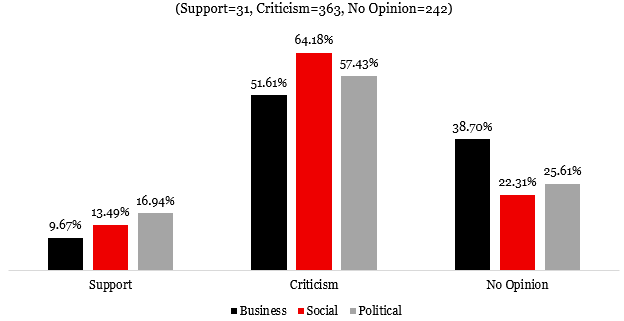
The most dominant disposition across all influencer categories is criticism. Social influencers lead the charge with 64.18% of their posts expressing disapproval or concern about social, economic, or governance-related issues. Political influencers follow with 57.43%, and business influencers contribute 51.61% of critical content.

Exhibit 1: Variety of position

Source: Social media handles, 2025; Infoprations Analysis, 2025

This trend reflects a broader pattern of dissatisfaction and distrust in public institutions, policies, and leadership. Social influencers often serve as cultural commentators and watchdogs, amplifying public frustration and societal grievances. Their high level of criticism underscores their role in holding leaders accountable and pushing for social change. Political influencers, too, use these platforms to critique opposing ideologies, challenge government inefficiencies, and advance alternative political narratives.

Even in the business category, which is typically more reserved, over half of the posts lean critical. This suggests that business voices are not insulated from the country’s challenges and are increasingly speaking out on matters such as economic instability, regulatory uncertainty, and corruption.

Support is Scarce

Supportive content is surprisingly low across all sectors. Only 9.67 percent of business influencers expressed support for the topics they raised, while social influencers followed with 13.49 percent. Political influencers were the most supportive, yet still only 16.94 percent of their posts took a positive stance.

This limited support may reflect the general sentiment within the country. When policy decisions or social developments are viewed as ineffective or misaligned with public needs, influencers are unlikely to offer endorsement. For political influencers, the relatively higher level of support may stem from partisan affiliations or loyalty to political figures. However, even among them, support is clearly the minority position.

The lack of supportive discourse also signals a missed opportunity for government agencies, policymakers, and institutions. When even influential voices hesitate to offer commendation, it raises questions about the visibility, credibility, and impact of positive initiatives. It suggests a gap in public engagement strategies and the need for more inclusive, transparent governance.

Neutrality and Strategic Silence

A significant number of influencers also refrain from taking a clear stance, opting instead for neutral or observational posts. Business influencers are the most reserved in this regard, with 38.70% of their posts reflecting no opinion. Political influencers posted neutrally 25.61% of the time, while social influencers did so in only 22.31% of cases.

This pattern is particularly telling in the business sphere. Business influencers often navigate complex relationships with clients, regulators, and the broader public. Remaining neutral or silent allows them to maintain professional credibility without alienating stakeholders. It also reflects the strategic positioning of business leaders who prefer not to engage directly in politically sensitive debates.

Neutrality among political influencers may suggest cautious political messaging, especially in an environment where statements can be easily misinterpreted or weaponized. Social influencers, whose brand often thrives on emotional and ethical engagement, are least likely to remain silent.

What This Means for the Future of Public Discourse

The FALIT platforms have evolved into important venues for civic engagement in Nigeria. Influencers play a crucial role in shaping narratives, spotlighting issues, and mobilizing public sentiment. The predominance of criticism across all sectors is not merely reactive. It reflects a maturing digital public sphere where expectations are high, and tolerance for failure is low.

However, this critical mass also calls for introspection. While criticism drives accountability, the near absence of supportive voices might lead to a one-sided discourse that overlooks progress or underrepresents nuance. The growing neutrality in the business community raises questions about whether certain sectors are disengaging from important national conversations to protect interests.

As Nigeria continues to navigate complex social and economic challenges, understanding these attitudinal dispositions is vital. Policymakers, activists, and communicators must learn to interpret digital signals from influencers not just as commentary, but as indicators of where trust lies, where engagement is needed, and where new narratives must be built.

Editor’s Note: This article is a product of Infoprations’ Communicative Strategies of Nigerian Influencers Project, 2025. The team includes Abdulazeez Sikiru Zikirullah, Moshood Sodiq Opeyemi, Bello Opeyemi Zakariyha, and Oni Oluwaseun.

Essential Financial Practices Every Small Business Should Adopt

0

Running a small business is no small feat. Whether you’re just starting out or have been in the game for a while, there’s one thing that remains constant: managing your finances properly is crucial for survival and growth. Without a solid grip on your money, you could be headed for trouble, and that’s the last thing any small business owner wants, right?

But here’s the good news: the financial practices that keep businesses afloat aren’t as complicated as they might seem. With a few essential habits in place, you’ll be on track to not just survive but thrive. So, let’s dive into the key financial practices every small business should adopt to keep things running smoothly and ensure you’re in the best possible shape for the future.

1. Create and Stick to a Budget

The first step in any solid financial strategy is creating a budget. Sounds simple, right? But it’s incredible how many small business owners skip this crucial step, thinking they can get by without one. Here’s the thing: without a budget, you’re essentially driving blindfolded. Sure, you might get lucky for a while, but it’s only a matter of time before you’re hit with unexpected expenses or running low on cash.

A budget helps you plan where your money goes, which is exactly what you need to stay in control. It’s not about restricting your spending but about knowing exactly where every dollar is coming from and going. Whether it’s rent, payroll, marketing, or office supplies, budgeting ensures you’re not overspending on one area and neglecting another.

Tip: When creating your budget, don’t forget to factor in both fixed and variable expenses. Fixed costs are things like rent and salaries, expenses that stay the same each month. Variable costs, like utilities or marketing, can change. Account for both to get a realistic picture of your financial situation.

And if you’re still unsure where to start, try using free budgeting tools like Wave. It helps track expenses and can help you create a solid budget that’s easy to stick to.

2. Adopt an Accounting System

We know what you’re thinking: “Accounting sounds complicated and boring.” But hear us out, having a reliable accounting system is a game-changer for your business. You don’t need to be an accounting expert, but you do need a system that helps you track income, expenses, profits, and losses.

Using accounting software is an excellent way to streamline this process. If you’re not sure which tool is right for you, this Wave vs QuickBooks comparison can help you weigh the pros and cons based on your business needs. Wave is especially appealing for small businesses looking for a free, user-friendly option without sacrificing essential features. Having everything in one place makes it easier to generate financial reports, prepare for taxes, and keep an eye on your bottom line.

Tip: If you’re just starting, consider using free or low-cost software like Wave. It’s a great way to keep things simple without a big financial commitment.

3. Keep Track of Cash Flow

You’ve probably heard this before, but cash flow is king. Without positive cash flow, you’re going to run into problems sooner rather than later. Cash flow is the movement of money into and out of your business. It’s not just about having money in the bank; it’s about ensuring your business has enough cash to pay bills, buy inventory, and cover expenses.

Think about it: what happens if a large invoice isn’t paid on time? Or if your expenses suddenly spike? Having cash on hand to cover unexpected costs is what keeps the lights on, literally.

So, how do you stay on top of it? Start by monitoring your incoming and outgoing cash regularly. Set up a system that allows you to keep track of all transactions. And don’t just check it when things get tight. Regular monitoring helps you spot potential problems before they get out of hand.

Tip: Consider using accounting software that tracks your cash flow automatically. Most of these tools can give you real-time updates on your current cash balance, so you’ll always know where you stand.

4. Separate Business and Personal Finances

Here’s a big one: always keep your personal and business finances separate. It might feel tempting to mix the two, especially in the early days when your business and personal expenses are intertwined, but trust us, it will save you a lot of headaches in the long run.

When you keep your finances separate, it’s easier to track business expenses, manage taxes, and understand your company’s true financial picture. Plus, having a separate account means you’re less likely to mix up business and personal spending, which can be a disaster at tax time.

Tip: Open a business checking account and get a business credit card. These small steps help set a clear boundary between personal and business funds.

5. Track Expenses and Identify Savings

Let’s face it: expenses can pile up quickly. From office supplies to software subscriptions, it’s easy to overlook small costs that add up. That’s why tracking your expenses is so important. By regularly reviewing your spending, you can identify areas where you might be overspending or paying for things you no longer need.

For example, are you still paying for that expensive software you no longer use? Or maybe there’s a cheaper option for your marketing tools that gets the job done just as well. Regular expense tracking gives you the insight you need to make smart decisions about where to cut back.

Tip: Keep all receipts and invoices organized, either digitally or physically. Use apps like Expensify or Shoeboxed to digitize your receipts and make tracking easier.

6. Pay Taxes on Time

Ah, taxes, the one thing every business owner dreads. But ignoring them won’t make them go away. In fact, it’ll only make matters worse. It’s essential to stay on top of your taxes and pay them on time to avoid penalties and interest fees that can add up fast.

One of the best ways to avoid tax issues is to set aside money throughout the year for your tax bill. Don’t wait until tax season to panic. Take a small percentage of your earnings each month and put it into a tax savings account. This way, when tax time rolls around, you’re ready to pay without scrambling for funds.

Tip: Work with a tax professional who understands small business taxes. They can help you maximize deductions and avoid costly mistakes.

7. Maintain Emergency Funds

Every business should have an emergency fund, plain and simple. Unexpected expenses happen. Whether it’s an equipment breakdown, a sudden dip in sales, or any other surprise, having an emergency fund gives you the financial cushion you need to ride out tough times.

How much should you save? It depends on your business size, industry, and expenses, but aiming for three to six months’ worth of operating expenses is a good starting point. Keep this money in a separate, easily accessible account to avoid dipping into it for non-emergencies.

Tip: Make regular contributions to your emergency fund. Even small amounts add up over time.

8. Monitor and Review Financial Performance Regularly

It’s easy to get caught up in day-to-day tasks and forget about the bigger picture. But reviewing your business’s financial performance regularly is a must. By keeping an eye on key metrics, like revenue, profit margins, and debt levels, you’ll be able to identify trends and make adjustments before things get out of hand. Plus, having this data readily available is crucial when it comes to engaging with potential investors; they’ll want to see that your business is on solid financial footing.

Tip: Schedule a monthly financial check-in to review your business’s performance. Look at your financial reports, identify any red flags, and make adjustments as needed.

Conclusion

There you have it, the essential financial practices every small business owner should adopt. These are the cornerstones for maintaining the financial stability and expansion readiness of your company.  Getting things in order may require some time and work, but we assure you that it will be worthwhile.  You’ll be in a lot better position to make wiser choices and overcome any obstacles if you have your finances under control.

Take things slowly at first, and before you realize it, these habits will come naturally to you.. Your future self will thank you. And remember, if you’re still not sure about which financial tools to use, consider doing some research. Keep your financial foundation strong, and your small business will be on the path to success.


How Sharp Bettors Exploit Soft Prop Lines in Secondary Markets

0

Sports betting has become a favorite pastime among sports fans in recent years. While it took so long for sports betting to be legalized in some countries, it has finally gained mainstream acceptance and popularity. This popularity has led to the sports betting industry expanding rapidly with numerous platforms being developed to cater to the demand. 

Although some sports bettors only play for fun, there are those that do it as a professional pursuit or a serious endeavour. They analyze statistics and carefully observe trends to make informed decisions when it comes to placing bets in their favorite betting markets. 

Below, let us get to know sharp bettors and explore how they exploit opportunities in secondary betting markets. 

What Is Sharp Betting and Who Are Sharp Bettors?

Sharp betting is a strategic and informed approach to wagering characterized by the use of data-driven methods to carefully analyze odds to create betting decisions. This type of betting is usually done by the sharp bettors or famously known as the ‘sharps’, considered to be the pros in the betting industry. 

Unlike casual bettors who merely rely on their intuition or simple information they get on social media to place bets on betway or other similar platforms, these sharps use sophisticated tools and resources to create bets. When they place bets on Betway or some other platform, they often garner attention as they are considered to always make good bets. As such, casual bettors who make sports bets often look up to the sharps because if a sharp bettor makes a bet, they are usually right. 

For most bettors, sharps are characterized to be disciplined as they often maintain a bankroll management strategy to always make sure that every bet they place counts. Additionally, they are also seen as research-oriented making them adaptable to new information or changes in the betting environment. 

Exploiting Soft Prop Lines In Secondary Betting Markets

Secondary betting markets may offer lucrative betting opportunities that do not necessarily exist elsewhere. Accordingly, this betting market is often credited as the one that spurs the engagement in the primary market. Considering that secondary markets often make people more daring and confident, it is not surprising at all that bettors are drawn further to it.

Within the secondary market, there lies proposition bets which are bets that people make based on specific occurrences or non-occurrences within a sports match.  

What Are Soft Proposition Lines In Betting?

A prop bet is a specific wager made on a sports team or athlete that is not necessarily related to the sports match’s outcome. The soft prop line allows people to make wagers on various aspects of the game other than its overall result. 

Accordingly, these soft proposition lines can be seen on Betway and similar platforms that add an extra layer of excitement to the game. These lines often allow bettors to diversify their options without having to sweat over the final score of their favorite team. As such, these lines are often seen to provide a lot of betting opportunities which sharp bettors often exploit.

How Do Sharp Bettors Exploit Soft Prop Lines?

Sharp bettors often use certain methods to exploit these soft prop lines: 

First, most sharp bettors often compare lines across different sportsbooks. They often observe and conduct research to accurately identify discrepancies from opportunities. Once they have gathered enough information, they then start placing bets on certain soft prop lines where their odds are most favourable. 

Next, sharp bettors often stay informed about team news, player conditions, and other relevant factors. From there, they analyze the information they receive and accurately predict outcomes which most point out that are more accurate than the ones bookmakers provide. 

If you ever want to exploit a soft prop line in a secondary betting market, make sure that you embody the ways and methods of the sharps. Make sure that you do the proper research, observe markets to pick out bets you think would be successful, and most importantly, pick the right timing to place your bets.

Study their strategies, understand how sharps analyze player performance, and observe game dynamics. By doing so, you get to develop your informed betting approach and may end up maximizing your potential returns.   

UX and Trust: Designing African Apps That Actually Retain Users

0

In Africa, app install rates are high, but unfortunately, retention is low. Most African apps lose users within the first few sessions or even the first few seconds of using an app. It’s not because the product isn’t relevant. It’s because the experience doesn’t feel reliable.

Pattern Set by Betting Apps

Sports betting apps are not only beautiful, but they work both on slow connections and low-end devices, they load quickly, respond immediately, and let users cash in, place a bet, and withdraw with minimal friction. That’s the entire point.

According to reviews by esportsinsider.com, sports betting operators have been deliberate about infrastructure, such as optimizing for mobile networks, focusing on local payment methods, and cutting every delay that might signal doubt. These user-friendly sites focus on catering to punters’ needs, whether it’s providing flexible payment options like cryptocurrencies or offering competitive odds on various betting markets. Users don’t care about design systems. Betting platforms understand this better than most. The experience doesn’t have to impress only but it has to function without breaking trust.

No One Waits to See if It Works Next Time

If a screen freezes, or a button doesn’t respond, users assume the platform isn’t safe. They don’t wait to see if it’s a glitch. They close the app, uninstall it, and move on. In regions where digital tools have failed before, hesitation is read as a failure.

You don’t need to crash to lose a user, you just need to hesitate and If there’s no feedback, no confirmation, or no visible result, the platform is assumed unreliable. That’s all it takes. Fast-loading screens and visible responses aren’t nice to have; they’re how you prove the app can be trusted at all.

Onboarding Isn’t a Branding Moment

A user downloads your app. They open it. What do they see? Too often, it’s a splash screen, a loading animation, and then a registration form with no explanation of what the app does or why the information is needed.

Users don’t sign up for products they don’t understand. They won’t give their number unless they know what they’re getting. If there’s no walkthrough, no preview, no visible value, they bounce. The session ends there.

The best onboarding doesn’t introduce the brand. It introduces the outcome. What does this app do for me right now? That’s the only question that matters.

If the Dashboard Isn’t Clear, Retention Is Already Over

Most dashboards try to show everything like banners, promos, icons, pop-ups, announcements, and feature carousels, but none of it helps. A clean dashboard shows one thing, and that’s the core action. Whether that’s sending money, requesting a ride, checking airtime, or topping up a wallet, it should be obvious. If the user has to read or scroll, you’ve already lost them.

Nobody is going to explore the app to find value. The value needs to be in front of them the moment they land. Otherwise, they won’t open it again.

You Don’t Need Perfect Functionality

Payments fail, connections drop, and SMS codes don’t arrive. Everyone knows this which is why what matters is how the app handles it. If something goes wrong, users need to know why. They don’t want error codes, but instead, they want a sentence that says what’s happening and what to do next. A visible retry button, a resend code option, or a short note that says when to expect resolution.

The experience doesn’t break when things go wrong. It breaks when the platform doesn’t explain what went wrong. Silence is what gets you uninstalled.

No One Accepts Permission Requests Without a Reason Anymore

Asking for contacts, SMS, or location without saying why just makes the app look suspicious. People aren’t guessing anymore, they’ve seen apps take access and misuse it.

If you need SMS to autofill codes, say so. If you need a location to show local delivery options, say so. But it has to happen at the moment, not buried in a terms page or delayed until after rejection. Users expect the app to over-explain and if you don’t, they assume the worst.

Design for Phones People Actually Use

The average user isn’t on a new Android phone in most cases they might be on entry-level hardware, often running outdated OS versions, with limited RAM and poor storage. If your app takes more than a few seconds to open or crashes in the background, the user assumes it’s faulty.

That’s not a usability issue. That’s a trust issue. Most people aren’t interested in closing other apps or troubleshooting. They assume the app should work like everything else they use daily such as Facebook Lite, WhatsApp, and mobile money platforms. If your app doesn’t load fast, hold state, or handle poor connections, it doesn’t matter what it offers, no one will wait for it.

The Words You Use Matter More Than the Layout You Designed

Good UX writing blends in whereas bad UX writing creates friction. For example “Submit” doesn’t mean anything when compared with wording like “Withdraw ?1,000”. On the other hand, “Success” is too vague but “Airtime sent, confirmation in 30 seconds” is better.

If someone is uncertain, they might stop using the platform. The point is that task-based copy keeps them going because no one reads tutorials, but everyone reads button labels and confirmation messages. That’s your only space to be useful.

Global UI Patterns Don’t Always Translate

The hamburger menu isn’t obvious to every user. The floating action button doesn’t explain itself. Swipe gestures look good in prototypes but fall apart on low-latency screens. Most design patterns don’t break because they’re bad but they break because they weren’t made for this context.

The best apps in the region aren’t trying to be modern, rather they focus on trying to be familiar. Elements like one-tap flows, clear user flow steps, mobile money logic, and descriptive confirmations are what work. Users don’t want to be impressed, they want to feel in control.

Conclusion

People don’t stop using apps because of pricing, competition, or product fit. They stop because the app doesn’t feel reliable. The moment it looks broken, even if it isn’t, they delete it.

Retention has nothing to do with marketing. It has everything to do with how the app behaves in the first 30 seconds of use. Does it load? Does it make sense? Does it respond? Does it recover from errors? That’s it. If the app answers yes to all four, users stay. If it answers no to one, they go.

How to Choose Your First Game at Coolzino Casino

0

Welcome to Coolzino Casino: Your First-Timer’s Guide to Gaming Fun

Step into the thrilling world of CoolZino, where excitement and entertainment await at every corner! If you’re new to the online casino scene, the sheer variety of games might seem a little overwhelming. Don’t worry, you’re not alone!

This guide is designed specifically for beginners like you, aiming to navigate you through Coolzino vast selection with confidence. We’ll help you discover games that not only match your interests but also provide a fantastic introduction to the world of online gaming. Get ready to explore, learn, and most importantly, have fun as you embark on your Coolzino adventure! Finding the perfect first game is about to get a whole lot easier.

Understanding the Basics

What is RTP and Why Does it Matter?

RTP, or Return to Player, is the percentage of all wagered money that a casino game is expected to pay back to players over time. Think of it as the inverse of the house edge. A game with a 96% RTP, for example, theoretically returns $96 for every $100 wagered. It’s crucial to understand that this is an average calculated over thousands, even millions, of game rounds. It’s not a guarantee that you’ll win exactly $96 every time you bet $100. Generally, an RTP of 95% or higher is considered good, while anything below 94% might be less favorable for the player.

House Edge: The Casino’s Advantage

The house edge represents the casino’s profit margin on a game. It is mathematically the advantage the casino has over the player. It’s directly related to the RTP: House Edge = 100% – RTP. So, if a slot game has a 96% RTP, the house edge is 4%. Different games have different house edges. For example, slots typically have a higher house edge than games like blackjack or baccarat, where skillful play can lower the house edge.

Volatility: Understanding Risk and Reward

Volatility, also sometimes referred to as variance, describes the level of risk associated with a casino game. It indicates how often a game pays out and the size of those payouts. High volatility games are characterized by infrequent but potentially large payouts. This means longer dry spells are possible, but when you do win, it can be significant. Low volatility games, on the other hand, offer more frequent but smaller payouts. These games provide a more steady stream of wins, but the payouts are generally less substantial. High volatility is best for players who can handle risk, while low volatility suits those who prefer a more consistent experience.

Know Yourself: What Kind of Player Are You?

Before diving into the thrilling world of casino games, take a moment to understand yourself. Knowing your gaming preferences, risk tolerance, and budget is crucial for a fun and responsible experience. This self-awareness will guide you in choosing the right games and managing your bankroll effectively.

What is Your Risk Appetite?

Risk tolerance is a key factor in determining your ideal casino games. Are you a low-risk player who prefers small, frequent wins? Or are you a high-risk taker seeking the thrill of a large, but less probable, payout? Perhaps you fall somewhere in the middle, with a moderate risk appetite. Generally, people with a more conservative lifestyle, who appreciate stability and predictability, tend to be low-risk players. Those who lean towards more liberal social views, enjoy novelty, and are comfortable with uncertainty might be drawn to high-risk games. Understanding your risk appetite will help you select games that align with your comfort level and prevent unnecessary stress.

Budgeting for Casino Games

Setting a realistic budget is paramount for responsible gaming. Determine an amount you are comfortable losing and strictly adhere to it. Think of this as your entertainment budget, similar to what you’d spend on a movie or a concert. Avoid the temptation to chase losses or exceed your predetermined limit. Responsible money management is essential to prevent over-gambling. Casino games are designed to be entertaining, and it’s crucial to maintain control and avoid impulsive decisions. If you find yourself struggling to stick to your budget, take a break or seek help from responsible gambling resources.

Game Categories and Recommendations

Slots: A World of Themes and Features

Slots are a mainstay in any casino, and Coolzino offers a dizzying array of options. Forget complicated rules – slots are all about spinning those reels and hoping for a winning combination. You will find that the variety makes them exciting The main types you’ll encounter are: Classic Slots, Video Slots and Progressive Slots.

Classic Slots: These are your traditional, no-frills slots, often resembling the old mechanical machines. Think of fruit symbols, bars, and sevens. They’re incredibly easy to understand, making them perfect for beginners. A good starting point is a slot with a clear paytable – that’s the chart that shows you exactly what each combination pays out.

Video Slots: This is where things get visually interesting. Video slots boast elaborate themes, bonus rounds, and special features like free spins and wild symbols. While they might seem intimidating at first, many video slots are still beginner-friendly. Look for games with straightforward mechanics and intuitive interfaces.

Progressive Slots: For the thrill-seekers, progressive slots offer the chance to win a life-changing jackpot. A small portion of each wager is added to the jackpot pool, which grows until someone hits the lucky combination. While the potential payout is huge, progressive slots often have lower odds than classic or video slots.

Table Games: Classic Casino Excitement

Table games offer a different kind of thrill, based on strategy and a bit of luck. If you enjoy a mental challenge, table games might be a great fit. The most popular choices include Blackjack, Roulette, Baccarat, and Poker (various forms). While some table games involve intricate rules, others are surprisingly simple to pick up. These games are suitable for users that want to test their abilities and strategies.

Blackjack: The goal is to get a hand as close to 21 as possible without going over, while also beating the dealer’s hand. Basic strategy charts can significantly improve your odds.

Roulette: A spinning wheel and a small ball determine the outcome. You can bet on a single number, a color (red or black), or a range of numbers. Roulette is largely a game of chance, but understanding the different betting options is key.

Baccarat: Often perceived as a high-roller game, Baccarat is surprisingly simple. You bet on either the “player” or the “banker” hand to win. The rules for drawing cards are predetermined, so you don’t need to make complex decisions.

Live Casino: Real-Time Gaming Action

For those seeking a more immersive experience, live casino games bring the thrill of a real casino to your screen. Here, you interact with live dealers via video stream, placing bets and enjoying the social atmosphere.

This experience blurs the line between the virtual and real worlds, and many players will prefer it over the regular digital experience. Live casino games are conducted in real-time, often from dedicated studios or even land-based casinos.

Popular live casino games include live versions of Blackjack, Roulette, Baccarat, and Poker. Some providers also offer unique game show-style games with interactive elements.

The social aspect is a huge draw for many players. You can chat with the dealer and other players, creating a sense of community. If you’re new to a game, the live dealer can often provide guidance and answer your questions.

Leveraging Demo Modes

Demo modes are a fantastic way to dive into the world of online gaming without any financial risk. It’s like test driving a car before you buy it – you get to experience all the features and learn the ropes without spending a dime. For anyone looking to explore new games or hone their skills, demo modes are an invaluable tool. Use these free play options to familiarize yourself with different games, understand their mechanics, and develop your own winning strategies.

With Coolzino, accessing demo modes is easy. Simply navigate to the game you’re interested in and look for the “demo” or “free play” option. You’ll then be able to play the game with virtual credits, allowing you to explore all its features without risking real money. This is the perfect opportunity to experiment with different betting patterns and strategies, so you can confidently play when you’re ready to bet for real.

Practicing Without Risk

Protecting your budget is paramount in online gaming. The thrill of the game can sometimes lead to overspending, making it easy to exceed your intended budget. That’s where demo modes come in. By practicing in a risk-free environment, you can develop a better understanding of your betting habits and learn to manage your virtual budget effectively. Think of a demo as an opportunity to train your mind and learn to resist the temptation of over-budgeting.

Understanding the Game

One of the biggest advantages of using demo mode is the fact that it gives the user time to understand the basic rules and all different features the game has without feeling pressured. When you play for real, the presence of other players and the need to manage your funds can be stressful. In demo mode, you can take your time to learn the game mechanics, explore different options, and gain a solid understanding without feeling rushed.

Responsible Gaming

At Coolzino, a primary concern is ensuring that everyone enjoys their gaming experience responsibly. Gambling should always be viewed as a form of entertainment, and never as a reliable source of income. Approaching it with this mindset is the first step toward safe gaming.

One of the most effective ways to gamble responsibly is by setting personal limits. Before you start playing, decide on a specific amount of time and money you’re comfortable spending. Then, stick to those limits, regardless of whether you’re winning or losing. Coolzino offers tools to help you manage your play, including options for setting deposit limits and time reminders, allowing you to stay in control of your gaming habits.

If you find that gambling is no longer entertaining, or if it’s causing you stress or financial difficulties, it’s crucial to take action. Coolzino provides self-exclusion options, allowing you to temporarily or permanently restrict access to your account. This can be a valuable tool in regaining control. Remember, there are also numerous resources available to help with problem gambling. Prioritize safe gaming and remember, when the fun stops, stop.

Conclusion

Embarking on your Coolzino Casino adventure can be exhilarating! Remember the essential steps: master the registration, explore those diverse game options, and start with games that match your comfort level. This beginner’s guide has equipped you with the knowledge to confidently navigate your first steps.

Coolzino Casino offers a thrilling world of entertainment, but always keep responsible gaming at the forefront of your mind. Set limits, understand the risks, and enjoy the experience. With a bit of luck and a lot of smarts, may your Coolzino journey be filled with excitement and rewarding experiences. Good luck, and happy gaming!