DD
MM
YYYY

PAGES

DD
MM
YYYY

spot_img

PAGES

Home Blog Page 970

Depreciation of the Naira, Dangote Refinery Drive Nigeria’s $3.73bn Balance of Payments Surplus in Q1 2025

0

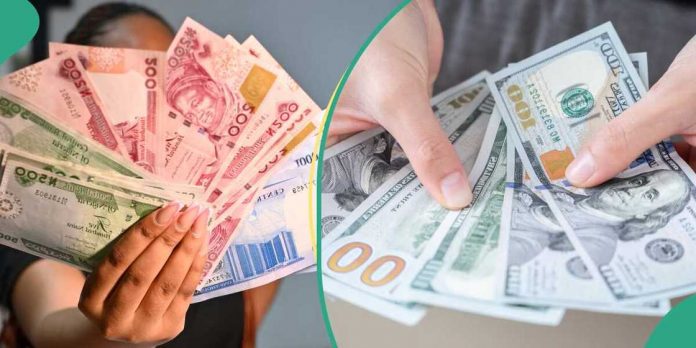
Nigeria recorded a balance of payments (BoP) surplus of $3.73 billion in the first quarter of 2025, a development economic experts have linked to the weakening of the naira and the increase in domestic fuel production from the Dangote Refinery.

This is the second consecutive quarter of surplus, underscoring a notable shift in Nigeria’s external position despite lingering structural challenges.

The data, released by the Central Bank of Nigeria (CBN), showed that the Q1 2025 surplus was only slightly lower than the $3.80 billion recorded in the final quarter of 2024 and marginally higher than the $3.69 billion recorded in the same period last year. This comes months after Nigeria posted a significant $6.83 billion surplus at some point in 2024.

According to the CBN, the goods account surplus rose significantly to $4.16 billion, up from $2.62 billion in Q4 2024. The improvement was driven by a 30.39% increase in non-oil exports to $2.66 billion and a rebound in gas exports, which also rose to $2.66 billion. Simultaneously, non-oil imports declined from $7.37 billion to $6.77 billion, reflecting the combined effects of naira depreciation and a shift toward local sourcing.

Total exports for the quarter climbed to $13.91 billion, marking a 9.79% increase from the previous quarter. Imports, on the other hand, dropped to $9.75 billion from $10.05 billion, largely due to reduced imports of petroleum products—a trend directly linked to output from the Dangote Refinery. The secondary income account also remained strong, maintaining a surplus of $5.29 billion.

Analysts’ View: Depreciation and Domestic Output Key to Gains

Dr. Muda Yusuf, CEO of the Centre for the Promotion of Private Enterprise (CPPE), noted that the naira’s continued depreciation is making it harder for businesses to import non-oil goods.

“Our largest imports in recent times have been the non-oil. Import is dropping because of exchange rate depreciation,” he said.

He added that the increased output from Dangote Refinery is discouraging reliance on foreign petroleum products: “With the full commencement of the Dangote Refinery, a lot of fuel importers are beginning to look inwards.”

Though there was a slight dip in the BoP surplus compared to the previous quarter, Yusuf dismissed it as marginal.

“For me, the decrease between the last quarter and this in the balance of payment surplus is quite marginal,” he said.

Another expert, Dr. Adam Abudu of the Society for Peacebuilding and Economic Advancement, emphasized the need for policy consistency to support domestic production.

“If you have a policy to encourage domestic investors, you should be consistent with it,” he said.

He praised Dangote’s refinery as a model for import substitution, suggesting that similar large-scale industrial ventures are key to sustaining BoP surpluses.

“Government needs more Dangote Refineries to have a continuous balance of payment surplus,” he stated.

Dr. Abudu also credited the Tinubu administration’s economic reforms for laying the foundation for back-to-back BoP surpluses.

“The ongoing reforms are also showing results,” he said. “We have to sustain the momentum for the next few quarters too.”

Financial Account and External Pressures

Despite the headline surplus, Nigeria’s financial account balance slightly declined to $7.58 billion, down from $7.82 billion in Q4 2024. The drop was attributed to significant divestments, the reversal of non-residents’ investments in CBN instruments, and a fall in loan liabilities from other depository corporations. In addition, the country continued servicing high external debt, which also weighed on the financial account.

Another concern is the sharp drop in external reserves, which fell to $37.82 billion at the end of March 2025, down from $40.19 billion in December 2024. The decline suggests ongoing currency support operations and external obligations are drawing heavily on reserves despite trade surpluses.

Meanwhile, net errors and omissions—used to track unrecorded financial flows—stood at $3.85 billion, a slight improvement from $4.02 billion in the previous quarter, but still indicative of unaccounted transactions.

Trade Surplus and Crude Oil Production

Data from the National Bureau of Statistics (NBS) reinforced the CBN’s findings, showing a trade surplus of N5.17 trillion in Q1 2025—up 51.07% from N3.42 trillion in Q4 2024. Total trade climbed to N36.02 trillion, a 6.19% increase year-on-year.

A key contributor was the sharp decline in petrol import bills, which dropped to N1.76 trillion from N3.81 trillion in Q1 2024, reflecting the ongoing ramp-up in local supply by the Dangote Refinery.

However, the Nigerian Upstream Petroleum Regulatory Commission (NUPRC) reported that crude oil production fell to 1.45 million barrels per day in May 2025, indicating the country is still grappling with production challenges and possibly pipeline issues, oil theft, or underinvestment in the upstream sector.

While Nigeria’s back-to-back BoP surpluses are encouraging, they are being propped up by a mix of naira depreciation, lower imports, and an unusually strong surge in non-oil and gas exports. Analysts say the current trajectory is promising, but sustaining it will require more strategic investments in local manufacturing, aggressive support for non-oil exports, and steady policy execution.
Nvidia Executives Offload Over $1bn in Stock as Shares Soar to Record Highs Amid AI Boom

0

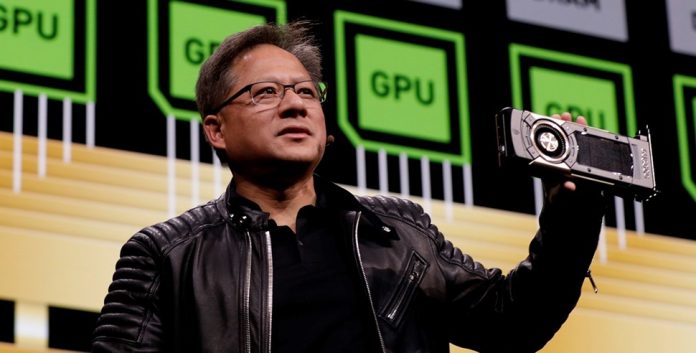
Nvidia executives have sold more than $1 billion worth of stock over the past year, including a staggering $500 million in the last month alone, according to a Financial Times report citing data from VerityData.

The bulk of the sales occurred as Nvidia’s share price crossed $150, triggering pre-arranged sales by top insiders—including CEO Jensen Huang—who are cashing in on the company’s record-breaking valuation driven by unrelenting demand for AI chips.

The sales come as Nvidia briefly reclaimed its spot as the world’s most valuable publicly traded company, eclipsing both Microsoft and Apple with a market capitalization nearing $3.77 trillion.

CEO Jensen Huang Leads the Sales

Jensen Huang, the public face of Nvidia’s AI ascendancy, has accounted for the lion’s share of the insider activity. In March 2024, Huang implemented a 10b5-1 trading plan to sell up to 6 million shares of Nvidia stock, potentially netting $900 million by the end of the year. Securities filings show that Huang recently executed sales worth roughly $15 million under this arrangement.

The CEO’s net worth now stands at approximately $138 billion, placing him 11th on the Bloomberg Billionaires Index. In 2023 alone, he sold over $700 million in Nvidia stock—also through pre-planned transactions—marking one of the largest insider cash-outs in the S&P 500.

Huang is not alone. Other top insiders, including board members Mark Stevens, Tench Coxe, Brooke Seawell, and executive Jay Puri, have also sold tens of millions of dollars in stock, collectively bringing the 12-month total above the $1 billion mark.

Stock Surge Fuels Sell-Off

The insider sales occurred against a backdrop of explosive gains in Nvidia’s stock, which is up more than 17% year-to-date and over 44% in the past three months alone. The surge is largely credited to the company’s dominance in AI hardware, particularly its data center GPUs, which have become foundational to generative AI models from companies like OpenAI, Meta, Google, and Amazon.

Despite geopolitical tensions and export restrictions imposed by the Biden administration on advanced AI chip shipments to China, Nvidia’s momentum has barely slowed. The company recently introduced its next-generation Blackwell AI chips, further solidifying its lead in the sector and dampening hopes from rivals like AMD, Intel, and custom chip projects by Microsoft and Google.

Nvidia Eyes Robotics as Next Trillion-Dollar Frontier

At its annual shareholder meeting in June, Huang pointed beyond AI, declaring robotics as Nvidia’s next “multitrillion-dollar opportunity.” The company reported $567 million in revenue from its automotive and robotics segment in the last quarter, up 72% year-over-year.

“Robotics is going to be the next AI-level disruption,” Huang said, noting that Nvidia’s chips are increasingly being adopted in autonomous driving, factory automation, and medical robotics applications.

Why Insider Sales Don’t Necessarily Spell Trouble

While $1 billion in insider selling may seem alarming, analysts note that these transactions are primarily governed by SEC Rule 10b5-1, which allows insiders to schedule stock sales in advance to avoid accusations of market manipulation. VerityData confirmed that most of the recent sales aligned with these legally established plans.

However, the timing of the sales—coinciding with Nvidia’s rally to historic highs—has not gone unnoticed. Some market watchers view it as a prudent financial move by executives aware of peak valuations, while others raise questions about future growth sustainability in a rapidly evolving AI race.

Market Remains Bullish

Despite the insider activity, Wall Street remains overwhelmingly bullish on Nvidia. Analysts continue to upgrade price targets, citing strong earnings, unparalleled dominance in AI infrastructure, and a growing software ecosystem including its CUDA platform and Omniverse simulation tools.

Investor confidence is also bolstered by Nvidia’s strategic role in shaping the future of AI development. The company is already a key supplier for frontier AI systems being developed by OpenAI’s GPT-5, Meta’s Llama 5, and Google’s Gemini series, with demand expected to stay red-hot for the foreseeable future.

Nvidia’s insider sales mark a financial windfall for its top brass, but they do not appear to dent investor enthusiasm for what many consider to be the most pivotal technology company of the AI era. As Nvidia expands beyond data centers into robotics, automotive, and next-gen computing, its position atop the tech world seems—at least for now—secure.

OpenAI Scrambles to Retain Talent as Meta Poaches Top Researchers in Aggressive AI Hiring War

0

OpenAI is in damage control mode after losing a string of top researchers to rival Meta, in what is fast becoming one of the fiercest talent wars in the artificial intelligence industry.

Over the past week, Meta has hired at least eight researchers from OpenAI—including some deeply involved in its foundational AI reasoning models—prompting an unusually emotional internal response from OpenAI leadership and triggering a comprehensive review of compensation and retention strategies.

“Like Someone Broke Into Our Home”: Internal Memo Reveals Alarm

In a Slack memo obtained by Wired, OpenAI’s Chief Research Officer Mark Chen did not mince words describing what the situation feels like.

“I feel a visceral feeling right now, as if someone has broken into our home and stolen something,” Chen wrote.

The memo acknowledged the wave of high-profile exits and reassured employees that the leadership team—including CEO Sam Altman—has been working “around the clock” to stop the bleed. Chen said they were “recalibrating compensation,” and exploring “creative ways to recognize and reward top talent.”

The response came after reports that Meta had hired eight researchers from OpenAI in recent weeks, with recruitment efforts reportedly involving personal outreach from Mark Zuckerberg and offers reaching as high as $100 million—though Meta executives later said the figure had been exaggerated and mischaracterized as a simple signing bonus.

The departures are substantial in both number and profile. They include:

  • Trapit Bansal, a central figure in OpenAI’s reinforcement learning and AI reasoning efforts
  • Lucas Beyer, Alexander Kolesnikov, and Xiaohua Zhai, known for their work in computer vision and multimodal AI
  • Four additional researchers—Shengjia Zhao, Jiahui Yu, Shuchao Bi, and Hongyu Ren—whose expertise spans foundational model training and alignment

According to The Information and WSJ, the new hires are now part of Meta’s AI Superintelligence division, an ambitious unit set up to build general-purpose reasoning models that can rival OpenAI’s own GPT line and Google’s DeepMind efforts.

Meta has made no secret of its desire to dominate the next wave of AI innovation. Since launching its Llama 4 model in April—which reportedly fell short of internal expectations—Zuckerberg has doubled down, aggressively poaching talent and even attempting to acquire startups like Safe Superintelligence, Thinking Machines, and Perplexity AI.

Meta’s goal is to match and potentially surpass OpenAI and Google by developing cutting-edge reasoning models that can power enterprise tools, consumer products, and AI agents. The newly assembled team also includes former Scale AI CEO Alexandr Wang and former GitHub CEO Nat Friedman. Zuckerberg is said to be personally involved in some of these recruitment conversations, reportedly offering multimillion-dollar packages that include equity, long-term performance incentives, and high autonomy.

OpenAI’s Counteroffensive: Pay, Purpose, and Retention

In the face of these high-profile losses, OpenAI is revamping its internal compensation structure. Mark Chen’s memo acknowledged that staff felt demoralized, especially during the company’s designated “recharge week.” Still, he urged employees not to let “out-of-band offers” pressure their decisions, promising fairness and transparency in forthcoming changes.

The company’s leadership team is now engaging with employees who have received external offers, while also reviewing how to retain those who remain.

Chen said: “We’re recalibrating comp, and we’re scoping out creative ways to recognize and reward top talent… But I won’t do so at the price of fairness to others.”

A Deeper Power Struggle in the AI World

This talent war is not simply about salaries—it reflects a deeper rivalry between companies vying for supremacy in what is now the world’s most important and competitive technology race.

OpenAI, known for pioneering generative AI with ChatGPT, is under pressure to maintain its lead, especially as Google, Anthropic, and now Meta all move aggressively into the same space. Meta’s hiring spree comes at a time when AI expertise is in short supply and those who can build, align, and reason with frontier models are commanding extraordinary influence—and pay.

Meanwhile, Sam Altman has accused Meta of exploiting the open-source ethos while quietly attempting to gut rival teams. In a recent podcast, he lamented: “They’re trying to poach our people with crazy offers… but none of our best people have taken them up.”

However, with eight confirmed departures and morale shaken, that claim is now under scrutiny.

Trump Says Buyer Secured for TikTok: “Very Wealthy Group” to Take Over App

0

President Donald Trump on Sunday said a deal has been struck to sell TikTok’s U.S. operations to a group of “very wealthy people,” a declaration that, if true, marks a pivotal moment in the long-running battle over the app’s future in the United States.

In an interview aired on Fox News, Trump claimed the buyer would be revealed in “about two weeks,” adding that Chinese approval would “probably” be necessary, but he expressed confidence that Chinese President Xi Jinping would greenlight the transaction.

A Reprieve in a High-Stakes Standoff

The announcement follows months of rising pressure on TikTok’s Chinese parent company, ByteDance, to divest its U.S. operations or face a total ban. Trump has already extended the government’s deadline three times — most recently on June 19 — pushing the cut-off to September 17, 2025.

A White House spokesperson, Karoline Leavitt, said the extension aims to give the administration enough time to “ensure this deal is closed so that the American people can continue to use TikTok with the assurance that their data is safe and secure.”

A failure to complete the sale would likely result in TikTok being forced off U.S. app stores and disabled for American users, a move that would affect over 170 million Americans who currently use the app.

Temporary Outage Revealed the Stakes

The urgency of the matter was laid bare earlier this year when TikTok briefly went offline for millions of U.S. users on January 19, the original deadline for ByteDance to divest. Many users were met with a stark message:

“Sorry, TikTok isn’t available right now. A law banning TikTok has been enacted in the U.S. Unfortunately, that means you can’t use TikTok for now.”

Access was later restored after Trump intervened, but the temporary blackout served as a preview of what could happen if the September deadline is missed.

Who Are the Buyers?

While Trump declined to name names, he assured that the group behind the proposed acquisition comprises “very wealthy people.” Previous expressions of interest in acquiring TikTok have come from:

  • Former Treasury Secretary Steven Mnuchin, who earlier this year revealed he was forming a consortium to buy the app.
  • “Shark Tank” star Kevin O’Leary, who has previously stated that TikTok’s value could surge if American-owned.
  • YouTube star MrBeast, who hinted at interest, although more as a public gesture than a formal bid.
  • Frank McCourt, the real estate billionaire and former LA Dodgers owner, who launched “Project Liberty,” a movement focused on “rebuilding the internet” and expressed interest in acquiring TikTok to shift control to users.

Despite the buzz, no buyer has been publicly confirmed, and it remains unclear whether Trump’s “wealthy group” overlaps with any of these known parties.

Chinese Approval Remains a Critical Hurdle

Perhaps the most uncertain variable in the process is Beijing’s role. Under China’s export control laws, any sale of TikTok’s algorithm, widely considered the app’s most valuable asset, would need approval from the Chinese government.

Trump acknowledged that caveat during his interview when he said “I would probably need China’s approval.”

China has previously shown reluctance to allow the transfer of the algorithm behind TikTok, especially to a U.S.-based buyer. In 2020, when a similar divestiture was floated under Trump’s first term, China imposed new export restrictions on artificial intelligence technologies — a move widely seen as an attempt to prevent ByteDance from offloading its recommendation engine.

If completed, the sale would represent a rare Chinese-U.S. technology decoupling, one that carries both diplomatic and financial consequences. ByteDance is one of the most valuable startups in the world, and TikTok is estimated to be worth anywhere between $30 billion and $300 billion, depending on how the sale is structured and whether the algorithm is included.

Moreover, the sale could have wider ramifications for how the U.S. treats other Chinese tech companies. It also comes at a time when President Trump is escalating trade tensions with China and other countries — including Canada, which he called off negotiations with after Ottawa moved ahead with a digital services tax targeting U.S. tech giants.

The TikTok situation also speaks to a broader push by the Trump administration to regain control over digital infrastructure and data sovereignty. TikTok’s vast user data and its influence among young Americans have made it a persistent concern for U.S. national security officials.

What’s Next for TikTok: Deal or Ban?

With less than three months to go before the September 17 deadline, all eyes are now on whether Trump’s mystery buyers can finalize the deal — and if China will allow it to proceed. Failing that, the U.S. may once again move to forcibly remove TikTok from its digital ecosystem, though Trump had signaled intention to extend the deadline once again.

“President Trump does not want TikTok to go dark,” Leavitt reiterated in a June statement, “but he is committed to securing Americans’ data from foreign adversaries.”

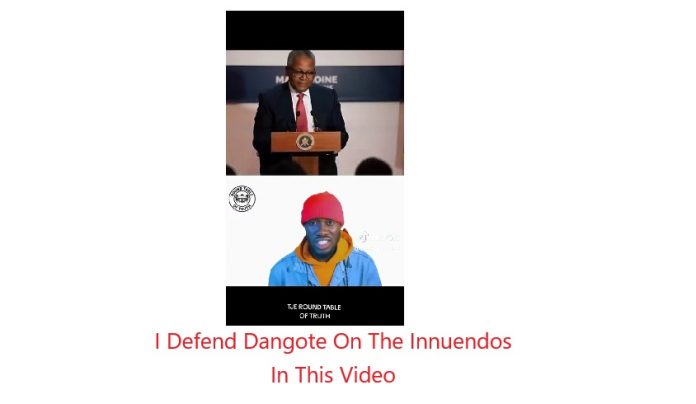
I Defend Dangote On The Innuendos In This Video

0

This cut is from a trending video on Aliko Dangote where one guy said many terrible things about the businessman.

My Comment: Let me defend Aliko Dangote as a Nigerian. We should not feed our young people with innuendos like the one pushed by the vblogger. This is an absolute lack of understanding of the market system. First, this guy does not know why things are expensive in Nigeria: power. In Ethiopia, Tanzania, etc, Dangote Cement gets subsidized electricity. As a result, Dangote’s products are cheaper when benchmarked with Nigeria where Dangote generates his own electricity. This is the same reason why your DStv may be more expensive in Nigeria than in Tanzania or Uganda as they run generators in MultiChoice Nigeria.

I have written extensively on the global Conglomerate Tax which is a construct that industrialized conglomerates “tax” nations to help them solve big problems. It is a global phenomenon. The problem in Nigeria is that only about 2-3 people are bold to dream and participate. And for those $billions, they demand concessions from the governments, to help governments solve governments’ problems.

Cities in America were shipping $billions just for Amazon to locate its second headquarters. Dangote would be a bad businessman to invest $10 billion without asking for things. If you have $10b to invest, I volunteer to meet Tinubu to get you some concessions. And do not invest $10b in Nigeria without asking for concessions from the government!

Dangote should be commended. Everyone is now talking about how he received the “refinery” from cronies because Nigerians have short memories. Suddenly, Dangote is a “monopoly” despite close to 50 years of Nigeria’s national failure in this business. What is wrong with Nigerians? The problem is not Dangote. The problem is us. There are opportunities in healthcare, steel, education, mining, agrro, etc in Nigeria. People can raise $billions and ask governments what they want. Again, I will help you get Mr. President to offer goodies!

That is how they do it in America: Elon Must received support via Tesla via EV credits; Amazon got US tax re-written waiving collection of sales tax which made the products cheaper; etc. Carnegie/Vanderbilt/etc supervised the enactment of eminent domains which made it possible to take private land for public good like railtracks!

Dangote does not have a perfect hit. His Lead Merchant Bank went bankrupt because Ovia, Elumelu were better. Dangote Noodles failed and Indomie Noodles acquired it because Indomie was better. Dangote Capital lost money and failed. But in the domains he understands, he defends them.

A man risks his empire to build a refinery. And people cannot commend him. If he puts that in a fixed deposit in Switzerland, he will get at least $1 billion on interest yearly. But unlike others, he builds in Nigeria. We need more Dangotes. My problem with Aliko Dangote is that he has nothing tangible in Abia State and that is one area he must be criticized! Lol