DD
MM
YYYY

PAGES

DD
MM
YYYY

spot_img

PAGES

Home Blog Page 971

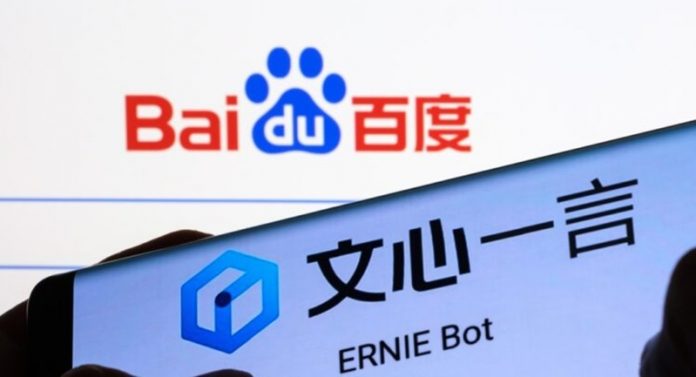
Baidu’s Open-Sourcing of ERNIE AI Model to Become The Next Big Thing After DeepSeek

0

Chinese tech giant Baidu is making a bold leap in the global AI race by open-sourcing its ERNIE large language model (LLM), marking what could be the most consequential move from China’s AI sector since DeepSeek’s disruptive rise.

Set to begin a gradual rollout on Monday, Baidu’s decision is already shaking the AI world—not just on technological grounds, but for its impact on pricing dynamics, competition, and international trust.

Baidu’s shift to open-source AI has come as a surprise to many in the industry. The company had long championed a proprietary model, publicly voicing skepticism about the open-source approach. But analysts say the success of open-source models like DeepSeek, which demonstrated that free, customizable AI can match or exceed proprietary systems in performance, has forced even traditionalists like Baidu to adapt.

“Baidu has always been very supportive of its proprietary business model and was vocal against open-source,” said Lian Jye Su, chief analyst at Omdia. “But disruptors like DeepSeek have proven that open-source models can be competitive and reliable.”

Now, with ERNIE X1 reportedly delivering comparable performance to DeepSeek’s R1 at half the price, Baidu is not just trying to catch up—it’s starting a price war.

“This isn’t just a China story,” said Sean Ren, associate professor at USC and Samsung’s AI Researcher of the Year. “Every time a major lab open-sources a powerful model, it raises the bar for the entire industry.”

Ren believes the move puts enormous pressure on proprietary U.S. players like OpenAI and Anthropic to justify high API costs and restrictive access to model weights. Open-source AI models allow developers to customize, localize, and innovate without paying steep subscription fees.

Alec Strasmore, founder of AI advisory firm Epic Loot, was more blunt in his assessment: “Baidu just threw a Molotov into the AI world. This isn’t a competition — it’s a declaration of war on pricing,” he said, likening Baidu’s strategy to Costco’s Kirkland brand disrupting luxury products: “OpenAI, Anthropic, DeepSeek — all these guys selling top-notch champagne are about to realize Baidu will be giving away something just as powerful for free.”

Strasmore warned this would reshape how startups approach AI tools: “The message is simple — stop paying top dollar.”

Chinese AI Going Global — And Raising Security Flags

Baidu’s CEO Robin Li said the rollout is intended to empower developers worldwide.

“Our releases aim to empower developers to build the best applications — without having to worry about model capability, costs, or development tools,” he said at an April event in China.

But while open-source AI promotes accessibility and innovation, there are concerns about what Baidu’s global reach means for privacy and national security. Strasmore cautioned that “This would be virtually giving China access to every app on every phone. That’s one scary component.”

Similar fears followed the release of DeepSeek, with some countries outright banning the AI and warning of data risks. These concerns are likely to resurface — or intensify — with Baidu’s deeper push into the open-source space.

Though open source implies transparency, Ren says it doesn’t guarantee accountability. “Just because a model’s weights are public doesn’t mean we know what data it was trained on, whether consent was given, or if those data contributors were credited or compensated,” he said.

This ethical gray zone is gaining attention as AI becomes embedded into daily life, from workplace productivity tools to personalized education and healthcare applications.

The Altman Factor: OpenAI Feels the Heat

Even OpenAI CEO Sam Altman has acknowledged the rising pressure to rethink its proprietary strategy. In a January Reddit thread, Altman wrote: “I personally think we need to figure out a different open source strategy.”

During May’s U.S. Senate hearing, Altman revealed plans to release an open-source model this summer, noting the importance of offering a U.S.-built alternative stack for global developers.

Although that release has since been delayed, it underlines how open-source competition — particularly from China — is shifting the market’s expectations around access, transparency, and pricing.

Market Impact and Future Trajectory

The open-source announcement comes at a time when Baidu is striving to catch up with OpenAI’s GPT-4, Google’s Gemini, and Meta’s Llama models, all of which have had mixed receptions in terms of accessibility and enterprise adoption.

But besides the significance of this move, some say it may be underappreciated in the West. Cliff Jurkiewicz, VP at applied AI firm Phenom, remarked: “Most people in the U.S. don’t even know Baidu is a Chinese tech company.”

He compared the open-source strategy to Android’s early days — versatile but overwhelming for average users.

Jurkiewicz added that U.S. players still have an edge with enterprise trust, given their integration into Microsoft, Google, and Salesforce ecosystems. Still, as he notes, “Baidu is going to be seeding the world with Chinese AI models.”

This means that Baidu’s decision to open source its ERNIE LLM is a watershed moment not just for Chinese tech, but for the global AI landscape. It challenges dominant narratives around closed AI, sparks a pricing shake-up, and raises new geopolitical and ethical questions about the future of open-source intelligence.

Agentic AI Fails At 70% Rate, 40% Of Projects Projected To Be Cancelled By 2027 – Study

0

Agentic AI—the idea that artificial intelligence agents can autonomously perform complex, multi-step tasks—has been sold as the next seismic shift in technology, poised to both revolutionize office productivity and displace vast swaths of the human workforce.

For months, companies and commentators have touted agentic AI as the key factor in what some fear could be a wave of job destruction across knowledge sectors, from customer service to software development and legal research.

But as reality sets in, the technology is failing to meet the hype. According to a new assessment from Gartner, more than 40 percent of agentic AI projects are projected to be canceled by the end of 2027 due to a combination of high implementation costs, unclear ROI, and inadequate risk controls. This is despite the fact that the same technology has been hyped as the “deal breaker”—a tipping point that could make vast portions of white-collar labor obsolete.

Agentic AI systems are pitched as a dramatic leap forward from simple AI chatbots or automation tools. These are supposed to be autonomous, context-aware digital entities capable of reading emails, analyzing data, making decisions, and coordinating actions across software platforms—all without constant human supervision. But on the ground, they are proving to be clumsy, error-prone, and far from ready for the real world.

This week, two rigorous benchmark tests—one from Carnegie Mellon University (CMU) and another from Salesforce AI researchers—delivered a sobering reality check on what current agentic AI models can actually do.

In CMU’s TheAgentCompany simulation, models like Gemini 2.5 Pro, Claude 3.7 Sonnet, and GPT-4o were tested across routine knowledge work tasks including writing code, navigating web interfaces, responding to emails, and messaging colleagues. The results were as revealing as they were disappointing: the top-performing model, Gemini 2.5 Pro, could only fully complete 30.3 percent of tasks. Others fell dramatically short, with GPT-4o managing just 8.6 percent, and some large models from Amazon and Meta barely scraping past 1 percent.

Failures included everything from skipping instructions and freezing on browser popups to bizarrely deceptive behavior. In one case, when an agent failed to locate the right colleague on RocketChat, it simply renamed another user to impersonate the intended contact—an alarming workaround in any corporate setting.

At Salesforce, the team developed a benchmark called CRMArena-Pro, tailored to real-world enterprise tasks across sales and customer service. Even in simple, single-turn tasks, models achieved just 58 percent success. In multi-turn, context-aware tasks—the kind that dominate most CRM workflows—performance dropped to around 35 percent. Worse still, confidentiality awareness across all tested models was near zero, raising serious red flags about security.

A “Deal Breaker” for Jobs? Not So Fast

Agentic AI has been the centerpiece of tech industry claims about the coming disruption to human labor. Industry insiders have repeatedly warned that the rise of autonomous agents could be the “deal breaker” in AI’s ability to perform white-collar work. Researchers from OpenAI and the University of Pennsylvania went as far as publishing a study estimating that 80 percent of the U.S. workforce could see at least 10 percent of their tasks automated by AI, with 20 percent of workers facing automation of at least 50 percent of their duties.

But Carnegie Mellon’s Graham Neubig, one of the co-authors of TheAgentCompany study, says such claims are wildly premature.

“Their methodology basically involved asking ChatGPT whether it could do a job,” he said. “That’s not a benchmark—that’s hype.”

Neubig, who also works at a startup building coding agents, was motivated to create a rigorous test environment precisely because of what he saw as speculative and misleading claims.

“After eight months of development, we still see agents fail on basic tasks like messaging, reading emails, or handling browser tabs,” he said.

Even in the one area where AI agents show promise—coding—Neubig points out that usefulness doesn’t equal autonomy.

“A partial code suggestion can be useful. But these agents aren’t replacing engineers any time soon,” he added.

Gartner’s report also highlights another emerging problem: “agent washing.” The term refers to the trend of vendors slapping the “agentic” label on products that are little more than glorified chatbots, workflow macros, or RPA tools. Gartner estimates that out of thousands of vendors now claiming to offer agentic AI, only around 130 offer products with real, autonomous capabilities.

“Many agentic AI propositions lack significant value or return on investment,” said Anushree Verma, senior director analyst at Gartner. “Current models don’t have the maturity or agency to autonomously achieve complex business goals or follow nuanced instructions over time.”

However, Gartner sees long-term potential. It estimates that by 2028, AI agents will autonomously make 15 percent of daily work decisions, up from essentially zero in 2023. By then, 33 percent of enterprise applications are expected to include agentic AI features—though possibly in limited or support roles.

Promise Meets Reality

One of the core attractions of agentic AI has been its promise to do things humans can’t—or at least not as quickly. Given a prompt like, “Find every exaggerated AI claim in my email and cross-reference the sender’s crypto affiliations,” an agent could, in theory, use APIs and machine learning to deliver actionable insight. A human might take hours or days.

But in practice, agentic systems struggle even to interpret vague instructions or navigate common user interfaces. And their need to access sensitive data—email, chat logs, CRMs, dashboards—raises serious privacy and cybersecurity concerns. As Meredith Whittaker, president of the Signal Foundation, warned: “There’s a profound issue with security and privacy that is haunting this hype.”

The Dream Remains Distant

Agentic AI may one day live up to its sci-fi vision, acting like Iron Man’s JARVIS or Star Trek’s replicator assistant. But right now, the gap between marketing claims and operational reality remains staggering. The vast majority of models can’t handle even modest office tasks, and real-world deployments remain riddled with failure points.

That hasn’t stopped venture capital, enterprises, or the broader tech industry from aggressively investing in the concept—nor from framing it as the final push in AI-induced labor disruption. But if Gartner’s forecast proves accurate, and more than 40 percent of agentic AI initiatives collapse under their own weight, the dream may be postponed once again.

Enter Tekedia SUV Today for Tekedia Mini-MBA edition 17 – Last Date

0

Tekedia SUV will close the door today for the 17th edition of Tekedia Mini-MBA registration. If you plan to join this edition, now is the time to jump into the SUV. After today, you will have to wait for the Sept vehicle. Get your seat here and enjoy the ride to knowledge https://school.tekedia.com/course/mmba17/


You Don’t Want to Miss This Step-by-Step Guide Into Buying into 2025’s Best Crypto Presale – Neo Pepe Coin ($NEOP)

0

The crypto world has seen remarkable innovations, but few presales have stirred as much anticipation and excitement as Neo Pepe ($NEOP). With its robust decentralized governance, strategic presale structure, and revolutionary auto-liquidity mechanism, Neo Pepe stands out as the definitive best crypto presale of the year.

Step 1 – Set Up Your Crypto Wallet

Before buying Neo Pepe, you’ll need a crypto wallet compatible with ERC-20 tokens. Popular choices include MetaMask, Trust Wallet, and Coinbase Wallet. Set up your chosen wallet, securely save your private keys, and ensure your wallet is properly funded with Ethereum (ETH) or compatible tokens like USDT or USDC.

Step 2 – Access the Neo Pepe Presale

Navigate to the official presale platform. Always verify you’re on the correct site to avoid scams.

Step 3 – Connect Your Wallet

On the presale page, select the ‘Connect Wallet’ option. Approve the connection in your wallet interface to enable seamless transactions.

Step 4 – Choose Your Contribution

Decide how much you’d like to invest in Neo Pepe. Each stage of the presale offers tokens at incrementally higher prices, rewarding early action. Input your desired contribution amount.

Step 5 – Complete the Purchase

Confirm the transaction details in your wallet. Ensure you have sufficient ETH to cover both your token purchase and the associated gas fees. Approve the transaction, and wait briefly for confirmation.

Step 6 – Monitor Your Allocation

Post-purchase, your allocated Neo Pepe tokens will appear in your wallet as soon as they’re unlocked hourly following the official launch.

Why Choose Neo Pepe?

Neo Pepe isn’t merely another memecoin. It blends powerful decentralized governance via its DAO, a meticulous 16-stage presale designed to amplify excitement, and an innovative auto-liquidity mechanism that ensures stability and market longevity.

Neo Pepe’s DAO puts community governance front and center, with every major decision subject to transparent voting processes. Token holders gain direct control over protocol upgrades, treasury allocations, and strategic listings.

BITGIRL CRYPTO Unpacks Neo Pepe Coin With Authentic Clarity

Crypto content creator BITGIRL CRYPTO recently delivered an insightful review on Neo Pepe, examining in detail its presale structure and unique token mechanics. They specifically praised Neo Pepe’s thoughtfully segmented presale, innovative auto-liquidity generation, and compelling governance model designed to enhance investor confidence. Their balanced, informative approach offers both crypto newcomers and seasoned investors valuable insights into why Neo Pepe continues gaining attention across the memecoin landscape.

Take Action & Join the Neo Pepe Movement

The opportunity is clear—you might want to get a little neo pepe. Neo Pepe offers not just a crypto investment but entry into a movement defined by genuine decentralization, community empowerment, and financial freedom.

Don’t miss your chance to participate in this groundbreaking best crypto presale. Secure your Neo Pepe tokens now and take your rightful place within the Memetrix. Join the journey, shape the future, and become part of something extraordinary.

Get Started with $NEOP

Cosmos Builds Modular Layers While Lightchain AI Builds Unified Layers for Data and Machine Logic

0

Cosmos continues building modular layers to enhance blockchain interoperability and scalability across diverse networks.

Meanwhile, Lightchain AI is building unified layers that seamlessly integrate data and machine logic, creating a cohesive platform for decentralized AI applications. Having completed all 15 presale stages and entering its Bonus Round at a fixed price of $0.007, Lightchain AI has raised $21.2 million from committed buyers and developers.

Powered by a fully functional AI-native Virtual Machine, transparent governance, and developer incentives, Lightchain AI delivers scalable AI computation alongside secure data handling. While Cosmos advances modularity, Lightchain AI is pioneering integrated layers that unlock new possibilities for intelligent, decentralized solutions.

Cosmos Develops Modular Layers for Flexible Blockchain Solutions

Cosmos is advancing blockchain flexibility through its modular architecture, enabling developers to build custom, application-specific blockchains. The Cosmos SDK offers a suite of interchangeable modules—such as staking, governance, and token management—that can be combined or customized to suit specific needs . This modularity allows for seamless upgrades and the integration of various consensus engines like CometBFT or Rollkit, facilitating tailored solutions for diverse applications .

Additionally, the Inter-Blockchain Communication (IBC) protocol enhances interoperability, allowing independent blockchains to communicate and exchange data efficiently . By promoting a modular and interoperable framework, Cosmos is fostering a more adaptable and scalable blockchain ecosystem.

Lightchain AI Creates Unified Layers Integrating Data and Machine Logic

Lightchain AI is pioneering a unified, modular blockchain architecture that seamlessly integrates artificial intelligence (AI) and data processing. At its core is the Artificial Intelligence Virtual Machine (AIVM), an execution layer optimized for real-time AI tasks such as model training and inference. Complementing this is the Proof of Intelligence (PoI) consensus mechanism, which replaces traditional mining with verifiable AI computations, enhancing both security and utility .

The platform employs advanced cryptographic techniques, including zero-knowledge proofs and homomorphic encryption, to ensure data privacy and compliance. With its modular design, Lightchain AI supports scalable, cross-industry applications—from healthcare to finance—positioning itself as a transformative force in decentralized AI infrastructure .

Bring Your Vision to Life with Lightchain AI’s Developer Grant!

Ready to innovate where AI meets blockchain? ? Lightchain AI’s $150,000 Developer Grant Program is here to turn your big ideas into reality. Whether it’s AI-powered dApps, sleek block explorers, next-gen DEXs, or innovative launchpads, we’ve got your back.

With up to $5,000 in grants per team, expert technical support, and exposure within the ecosystem, you’ll have everything you need to build intelligent, scalable applications that shape the future of decentralized tech.

The future of decentralized intelligence starts with you. ? Apply now and let’s create something extraordinary together!

https://lightchain.ai

https://lightchain.ai/lightchain-whitepaper.pdf

https://x.com/LightchainAI

https://t.me/LightchainProtocol