DD
MM
YYYY

PAGES

DD
MM
YYYY

spot_img

PAGES

Home Blog Page 974

Why Crypto Investors are Shifting from Ethereum & Bitcoin to Neo Pepe ($NEOP) in 2025

0

Bitcoin & Ethereum – Strengthening Institutional Trust & Market Momentum

Bitcoin’s recent milestone, surpassing the significant threshold of $108,000, symbolizes not just price appreciation but also a consolidation of institutional trust and global market enthusiasm. Influential economic events such as Circle’s highly successful IPO of the USDC stablecoin, combined with legislative clarity through the recent Senate approval of stablecoin regulations, have significantly bolstered investor confidence. Further supporting this rally, the easing of geopolitical tensions has provided a favorable macroeconomic backdrop, encouraging substantial institutional capital flows into Bitcoin. Crypto advocates like Anthony Pompliano have notably amplified Bitcoin’s mainstream visibility, using influential media platforms and dedicated financial vehicles to strengthen its position as a leading digital asset.

Ethereum, meanwhile, presents a complex yet promising scenario. Despite facing challenges such as network congestion—with gas fees consistently exceeding 32 Gwei—the Ethereum blockchain has demonstrated remarkable resilience and adaptability. Recent network upgrades, notably the Pectra implementation, significantly enhance Ethereum’s capability to manage decentralized finance (DeFi) applications and asset tokenization effectively. These advancements solidify Ethereum’s appeal among institutional investors, who increasingly view it as an essential part of the future financial infrastructure. Nevertheless, market analysts emphasize caution, predicting price fluctuations ranging from $1,800 to $2,500, reflecting ongoing volatility and the complexities inherent in the altcoin market.

Institutional Expansion – ETF Developments & Advanced Exchange Dynamics

Institutional engagement within the cryptocurrency space continues to thrive, notably marked by asset management giant BlackRock’s ongoing exploration into broader cryptocurrency ETF offerings beyond just Bitcoin and Ethereum. Such institutional explorations signify a decisive shift towards mainstream financial recognition of crypto assets, underscoring long-term confidence and sustainable growth.

Coinbase continues to solidify its critical position within the Ethereum staking landscape, recently amplifying its market presence through strategic acquisitions, including the notable acquisition of the derivatives platform Deribit. This robust expansion further enhances Coinbase’s comprehensive crypto ecosystem capabilities. Concurrently, decentralized exchanges (DEXs), with Uniswap at the forefront, persistently reshape financial paradigms, seamlessly merging traditional centralized infrastructures with innovative blockchain technologies, thereby promoting greater market fluidity and investor accessibility.

Neo Pepe Coin ($NEOP) – Accelerating Momentum in Crypto Coin Market

As Bitcoin and Ethereum anchor institutional attention, meme coins are swiftly gaining momentum among both retail and experienced investors, creating dynamic opportunities within the cryptocurrency market. Neo Pepe Coin ($NEOP), presently priced at approximately $0.07 and swiftly approaching Stage 4 of its presale (set to rise to $0.08), has quickly distinguished itself as one of the best pepe coin options available in 2025.

This distinctive appeal derives largely from Neo Pepe’s structured presale model, strategically segmented to encourage early and active participation. The crypto community consistently highlights Neo Pepe’s transparent and clearly defined presale stages as a compelling investment opportunity, fostering significant interest across various online platforms. The widespread sentiment among retail investors and cryptocurrency enthusiasts emphasizes urgency, advising that “you might want to get a little Neo Pepe” before the imminent price increase.

Crypto Selin Explores Neo Pepe’s Distinct Path

Delivering a concise breakdown, Crypto Selin discusses Neo Pepe’s clear differentiation from other meme-based crypto coins. She focuses on its progressive presale design, pioneering liquidity practices, and user-driven governance framework, effectively setting Neo Pepe apart from its competitors.

Key Reasons Investors Choose Neo Pepe:

  • Structured & Transparent Presale: Neo Pepe’s clear roadmap and incremental pricing strategy position it as a leading best crypto presale option, offering early investors significant potential upside.
  • Strong Cultural Resonance: Successfully merges meme-culture appeal with a robust, ideologically driven narrative, earning its reputation as a top pepe coin focused on decentralization and financial empowerment.
  • Strategic Exchange Listings: Intentions for early listings on prominent centralized and decentralized exchanges enhance liquidity, market exposure, and investor accessibility.
  • Influencer Endorsements: Actively engaging prominent crypto influencers to amplify market visibility and credibility, effectively harnessing social proof to drive organic community growth.
  • Innovative Memetrix Concept: Embodies a visionary narrative of decentralization and liberation, distinctly positioning Neo Pepe as both an investment and an ideological statement.

Embrace the Memetrix – Join Neo Pepe’s Revolutionary Financial Movement

Neo Pepe Coin boldly transcends conventional meme coin frameworks by intricately weaving substantial ideological meaning into its narrative, fundamentally rooted in decentralization and financial freedom—the essence of the Memetrix concept. This powerful symbolism resonates deeply with an expanding community of crypto investors seeking not merely speculative returns but participation in a meaningful, transformative financial movement.

As Neo Pepe Coin approaches its critical Stage 4 presale milestone, the urgency to engage and participate intensifies. Investors now have a unique opportunity to decisively enter this revolutionary narrative, breaking traditional financial constraints and actively contributing to the evolution of decentralized finance (DeFi). Neo Pepe Coin stands distinctively as more than a premier meme coin—it represents an ambitious, community-driven vision for financial sovereignty and innovation, effectively bridging profitability with ideological purpose.

Get Started with $NEOP

France Bets Big on Eutelsat to Build Europe’s Starlink Rival, but Scaling Up Remains a Steep Climb

0

For years, France’s Eutelsat has tried to position itself as Europe’s answer to Elon Musk’s Starlink—a satellite internet constellation operated by SpaceX that has rapidly become the global leader in low-Earth orbit (LEO) broadband coverage.

With Starlink’s more than 7,600 satellites already blanketing much of the globe, Europe has struggled to mount a competitive alternative. Now, with a €1.35 billion ($1.58 billion) investment led by the French government, Eutelsat is getting a fresh push, one that reflects not just commercial ambition but also geopolitical urgency.

CNBC reports that the capital injection, which makes France the largest shareholder with about a 30% stake, marks a strategic shift in how Paris views Eutelsat—not merely as a commercial operator, but as a critical infrastructure provider vital to European technological sovereignty.

“This is no longer just about telecoms,” said Luke Kehoe, an analyst at Ookla. “France is treating Eutelsat like a strategic asset—part of a broader European push to reduce dependency on U.S. platforms.”

The merger with British LEO operator OneWeb in 2023 was already a key part of this vision. Eutelsat aimed to pool resources and scale up faster by consolidating Europe’s satellite capabilities under one roof. But even with these efforts, the company faces a brutal uphill battle.

A Matter of Scale—and Time

With only 650 LEO satellites in orbit through OneWeb, Eutelsat’s constellation is barely a tenth the size of Starlink’s. Many of these satellites are already nearing the end of their operational lifespan, forcing the company to prioritize replacement before it can even consider scaling up meaningfully.

“To offer greater capacity and coverage, [Eutelsat] needs to increase the number of satellites in space,” Joe Gardiner, an analyst at CCS Insight told CNBC. “But replacing aging satellites while expanding the network is a massive challenge.”

Even with the French state’s backing, the infrastructure gap remains daunting. Starlink, supported by SpaceX’s powerful in-house manufacturing and launch capabilities, is able to produce and deploy satellites at a scale and pace that Europe cannot currently match. Eutelsat still relies on external launch providers, many of them American, in a market dominated by SpaceX itself.

Starlink’s aggressive expansion has also driven up its market value. While Eutelsat’s market cap hovers around €1.6 billion, SpaceX has been valued at around $350 billion, with analysts projecting that Starlink alone could be worth over $80 billion in the coming years.

A Different Kind of Battle

Still, Eutelsat isn’t trying to beat Starlink at its own game—at least not entirely. While Starlink is focused on consumer broadband and high-speed global connectivity, Eutelsat’s architecture leans toward enterprise and government sectors. It combines geostationary orbit (GEO) satellites with its growing LEO fleet to serve specialized use cases like Arctic connectivity and secure communications for governments and militaries.

According to Cisco’s Joe Vaccaro, “Eutelsat’s GEO satellites are leveraged for specialized use cases, such as polar coverage for companies and research facilities in remote regions like Greenland and Alaska.”

Starlink uses a regenerative architecture, meaning it processes and routes signals on the satellite itself, enabling faster and more autonomous operation. In contrast, OneWeb’s satellites currently use a bent-pipe architecture, which requires ground stations to relay data. This limits performance and flexibility, although second-generation satellites could close the gap.

Ookla’s Kehoe noted that, despite the capital boost, Eutelsat remains behind Starlink in “capital, manufacturing throughput, launch access, spectrum, and user terminals.” However, he pointed out that Eutelsat is “well positioned to succeed in European-sovereign, security-sensitive and enterprise segments that prioritize jurisdictional control.”

The stakes go beyond market share. French President Emmanuel Macron recently framed the push into space as a litmus test of global power, declaring, “space has in some way become a gauge of international power.” With growing concern over Europe’s dependence on U.S. firms like SpaceX, Eutelsat is being recast as a symbol of European autonomy.

When the French-led investment was announced last week, Eutelsat highlighted its role as “the only European operator with a fully operational LEO network” and stressed its importance in France’s model for sovereign defense and communications.

The company was even rumored as a potential replacement for Starlink in Ukraine, where Musk’s system has played a critical role in supporting military and civilian communications amid Russia’s invasion. Tensions between Ukraine and the U.S., particularly after Donald Trump returned to the presidency, had raised fears that Starlink’s support could be scaled back. In April, Germany deployed 1,000 Eutelsat terminals in Ukraine, offering an alternative—though not a replacement—for Starlink’s 50,000 terminals in the war-torn country.

Still, Eutelsat’s own leadership is clear-eyed about the gap. In April, then-CEO Eva Berneke admitted, “If we were to take over the entire connectivity capacity for Ukraine and all the citizens — we wouldn’t be able to do that. Let’s just be very honest.”

Berneke was replaced in May by Jean-Francois Fallacher, formerly of Orange, signaling a new phase focused on operational execution and market expansion.

Looking Into Eutelsat’s Future

Eutelsat’s strategy now hinges on building what it calls a “differentiated go-to-market model” rooted in European needs, enterprise customers, and secure communications. The company hinted that the U.K. government could follow France’s lead with a larger stake in the near future.

But the question remains whether financial support and political backing will be enough. Experts say that catching up to Starlink—even within Europe—will require not just billions more in capital, but also industrial alignment across the continent to build launch, satellite manufacturing, and ground station capacity at scale.

Depreciation of the Naira, Dangote Refinery Drive Nigeria’s $3.73bn Balance of Payments Surplus in Q1 2025

0

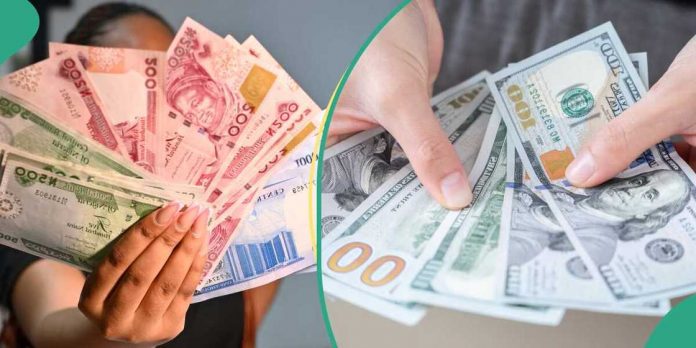
Nigeria recorded a balance of payments (BoP) surplus of $3.73 billion in the first quarter of 2025, a development economic experts have linked to the weakening of the naira and the increase in domestic fuel production from the Dangote Refinery.

This is the second consecutive quarter of surplus, underscoring a notable shift in Nigeria’s external position despite lingering structural challenges.

The data, released by the Central Bank of Nigeria (CBN), showed that the Q1 2025 surplus was only slightly lower than the $3.80 billion recorded in the final quarter of 2024 and marginally higher than the $3.69 billion recorded in the same period last year. This comes months after Nigeria posted a significant $6.83 billion surplus at some point in 2024.

According to the CBN, the goods account surplus rose significantly to $4.16 billion, up from $2.62 billion in Q4 2024. The improvement was driven by a 30.39% increase in non-oil exports to $2.66 billion and a rebound in gas exports, which also rose to $2.66 billion. Simultaneously, non-oil imports declined from $7.37 billion to $6.77 billion, reflecting the combined effects of naira depreciation and a shift toward local sourcing.

Total exports for the quarter climbed to $13.91 billion, marking a 9.79% increase from the previous quarter. Imports, on the other hand, dropped to $9.75 billion from $10.05 billion, largely due to reduced imports of petroleum products—a trend directly linked to output from the Dangote Refinery. The secondary income account also remained strong, maintaining a surplus of $5.29 billion.

Analysts’ View: Depreciation and Domestic Output Key to Gains

Dr. Muda Yusuf, CEO of the Centre for the Promotion of Private Enterprise (CPPE), noted that the naira’s continued depreciation is making it harder for businesses to import non-oil goods.

“Our largest imports in recent times have been the non-oil. Import is dropping because of exchange rate depreciation,” he said.

He added that the increased output from Dangote Refinery is discouraging reliance on foreign petroleum products: “With the full commencement of the Dangote Refinery, a lot of fuel importers are beginning to look inwards.”

Though there was a slight dip in the BoP surplus compared to the previous quarter, Yusuf dismissed it as marginal.

“For me, the decrease between the last quarter and this in the balance of payment surplus is quite marginal,” he said.

Another expert, Dr. Adam Abudu of the Society for Peacebuilding and Economic Advancement, emphasized the need for policy consistency to support domestic production.

“If you have a policy to encourage domestic investors, you should be consistent with it,” he said.

He praised Dangote’s refinery as a model for import substitution, suggesting that similar large-scale industrial ventures are key to sustaining BoP surpluses.

“Government needs more Dangote Refineries to have a continuous balance of payment surplus,” he stated.

Dr. Abudu also credited the Tinubu administration’s economic reforms for laying the foundation for back-to-back BoP surpluses.

“The ongoing reforms are also showing results,” he said. “We have to sustain the momentum for the next few quarters too.”

Financial Account and External Pressures

Despite the headline surplus, Nigeria’s financial account balance slightly declined to $7.58 billion, down from $7.82 billion in Q4 2024. The drop was attributed to significant divestments, the reversal of non-residents’ investments in CBN instruments, and a fall in loan liabilities from other depository corporations. In addition, the country continued servicing high external debt, which also weighed on the financial account.

Another concern is the sharp drop in external reserves, which fell to $37.82 billion at the end of March 2025, down from $40.19 billion in December 2024. The decline suggests ongoing currency support operations and external obligations are drawing heavily on reserves despite trade surpluses.

Meanwhile, net errors and omissions—used to track unrecorded financial flows—stood at $3.85 billion, a slight improvement from $4.02 billion in the previous quarter, but still indicative of unaccounted transactions.

Trade Surplus and Crude Oil Production

Data from the National Bureau of Statistics (NBS) reinforced the CBN’s findings, showing a trade surplus of N5.17 trillion in Q1 2025—up 51.07% from N3.42 trillion in Q4 2024. Total trade climbed to N36.02 trillion, a 6.19% increase year-on-year.

A key contributor was the sharp decline in petrol import bills, which dropped to N1.76 trillion from N3.81 trillion in Q1 2024, reflecting the ongoing ramp-up in local supply by the Dangote Refinery.

However, the Nigerian Upstream Petroleum Regulatory Commission (NUPRC) reported that crude oil production fell to 1.45 million barrels per day in May 2025, indicating the country is still grappling with production challenges and possibly pipeline issues, oil theft, or underinvestment in the upstream sector.

While Nigeria’s back-to-back BoP surpluses are encouraging, they are being propped up by a mix of naira depreciation, lower imports, and an unusually strong surge in non-oil and gas exports. Analysts say the current trajectory is promising, but sustaining it will require more strategic investments in local manufacturing, aggressive support for non-oil exports, and steady policy execution.

Nvidia Executives Offload Over $1bn in Stock as Shares Soar to Record Highs Amid AI Boom

0

Nvidia executives have sold more than $1 billion worth of stock over the past year, including a staggering $500 million in the last month alone, according to a Financial Times report citing data from VerityData.

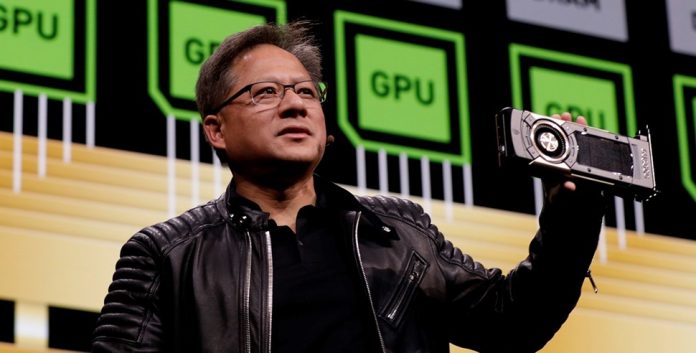
The bulk of the sales occurred as Nvidia’s share price crossed $150, triggering pre-arranged sales by top insiders—including CEO Jensen Huang—who are cashing in on the company’s record-breaking valuation driven by unrelenting demand for AI chips.

The sales come as Nvidia briefly reclaimed its spot as the world’s most valuable publicly traded company, eclipsing both Microsoft and Apple with a market capitalization nearing $3.77 trillion.

CEO Jensen Huang Leads the Sales

Jensen Huang, the public face of Nvidia’s AI ascendancy, has accounted for the lion’s share of the insider activity. In March 2024, Huang implemented a 10b5-1 trading plan to sell up to 6 million shares of Nvidia stock, potentially netting $900 million by the end of the year. Securities filings show that Huang recently executed sales worth roughly $15 million under this arrangement.

The CEO’s net worth now stands at approximately $138 billion, placing him 11th on the Bloomberg Billionaires Index. In 2023 alone, he sold over $700 million in Nvidia stock—also through pre-planned transactions—marking one of the largest insider cash-outs in the S&P 500.

Huang is not alone. Other top insiders, including board members Mark Stevens, Tench Coxe, Brooke Seawell, and executive Jay Puri, have also sold tens of millions of dollars in stock, collectively bringing the 12-month total above the $1 billion mark.

Stock Surge Fuels Sell-Off

The insider sales occurred against a backdrop of explosive gains in Nvidia’s stock, which is up more than 17% year-to-date and over 44% in the past three months alone. The surge is largely credited to the company’s dominance in AI hardware, particularly its data center GPUs, which have become foundational to generative AI models from companies like OpenAI, Meta, Google, and Amazon.

Despite geopolitical tensions and export restrictions imposed by the Biden administration on advanced AI chip shipments to China, Nvidia’s momentum has barely slowed. The company recently introduced its next-generation Blackwell AI chips, further solidifying its lead in the sector and dampening hopes from rivals like AMD, Intel, and custom chip projects by Microsoft and Google.

Nvidia Eyes Robotics as Next Trillion-Dollar Frontier

At its annual shareholder meeting in June, Huang pointed beyond AI, declaring robotics as Nvidia’s next “multitrillion-dollar opportunity.” The company reported $567 million in revenue from its automotive and robotics segment in the last quarter, up 72% year-over-year.

“Robotics is going to be the next AI-level disruption,” Huang said, noting that Nvidia’s chips are increasingly being adopted in autonomous driving, factory automation, and medical robotics applications.

Why Insider Sales Don’t Necessarily Spell Trouble

While $1 billion in insider selling may seem alarming, analysts note that these transactions are primarily governed by SEC Rule 10b5-1, which allows insiders to schedule stock sales in advance to avoid accusations of market manipulation. VerityData confirmed that most of the recent sales aligned with these legally established plans.

However, the timing of the sales—coinciding with Nvidia’s rally to historic highs—has not gone unnoticed. Some market watchers view it as a prudent financial move by executives aware of peak valuations, while others raise questions about future growth sustainability in a rapidly evolving AI race.

Market Remains Bullish

Despite the insider activity, Wall Street remains overwhelmingly bullish on Nvidia. Analysts continue to upgrade price targets, citing strong earnings, unparalleled dominance in AI infrastructure, and a growing software ecosystem including its CUDA platform and Omniverse simulation tools.

Investor confidence is also bolstered by Nvidia’s strategic role in shaping the future of AI development. The company is already a key supplier for frontier AI systems being developed by OpenAI’s GPT-5, Meta’s Llama 5, and Google’s Gemini series, with demand expected to stay red-hot for the foreseeable future.

Nvidia’s insider sales mark a financial windfall for its top brass, but they do not appear to dent investor enthusiasm for what many consider to be the most pivotal technology company of the AI era. As Nvidia expands beyond data centers into robotics, automotive, and next-gen computing, its position atop the tech world seems—at least for now—secure.