DD
MM
YYYY

PAGES

DD
MM
YYYY

spot_img

PAGES

Home Blog Page 986

Lightchain AI Kicks Off Bonus Round While Solana Loses Steam After Its Latest Ecosystem Push

0

Solana’s latest ecosystem push is losing steam, with momentum fading after initial excitement and technical hurdles emerging. In contrast, Lightchain AI is kicking off its Bonus Round, offering investors a new chance to participate in a project gaining strong traction. Having raised $20.9 million in its presale at a fixed token price of $0.007, Lightchain AI is attracting increasing interest from builders, traders, and whales alike.

Its intelligent blockchain infrastructure and focused roadmap provide a compelling alternative for those seeking growth beyond Solana’s cooling enthusiasm. As Solana slows, Lightchain AI’s Bonus Round marks the beginning of a fresh wave of momentum and opportunity.

Solana’s Ecosystem Growth Faces a Slowdown After Recent Gains

The Solana ecosystem, with?strong long-term growth prospects, is currently trending downward after recent gains. The total value locked (TVL) in Solana’s decentralized finance (DeFi) protocols was $10.9 billion in May 2025, which is more than on Ethereum?Layer 2 solutions. This jump was spurred on by activity in decentralized?exchanges and volumes in stablecoins.

But the analyst also warned that the use case of riding meme coin trading, a big part of the recent action, may have topped out, leading to a fall in engagement on?the platform and in the capital coming in.

In addition, there have been some concerns regarding the scalability of network and security weaknesses in smart contracts, which?can affect future growth prospects. Although institutional interest still exists, the future success of the ecosystem will be reinforced by more diverse use cases and the resolution?of these issues.

Lightchain AI Launches Bonus Round to Accelerate Presale Momentum

Lightchain AI has launched its Bonus Round to accelerate presale momentum, offering tokens at a fixed price of $0.007. This phase is attracting increased attention as DeFi partnership onboarding progresses, expanding the protocol’s reach and utility.

Core infrastructure includes decentralized validator and contributor nodes, enabling scalable AI-driven transactions and computations. Anticipation grows for the public repository release, which will provide full transparency and access to the codebase. Additionally, the Meme Launchpad and ecosystem tools are set to go live, supporting the launch of the first meme coin projects with native tooling, grant programs, and liquidity incentives.

Complementing this is a comprehensive Developer Portal featuring technical documentation, APIs, and SDKs—empowering builders to innovate confidently within Lightchain’s AI-powered ecosystem.

Momentum Shifts—Lightchain AI on Rise as Solana Stumbles

With Solana grappling with congestion and latency issues, Lightchain AI is stepping into the spotlight as a game-changing alternative built for speed, scalability, and efficiency.

What sets Lightchain AI apart? Its dynamic gas optimization adjusts transaction fees based on complexity, keeping operations cost-effective. The low-latency design powers real-time AI processing, perfect for decentralized apps that demand fast data handling. Plus, its cross-chain infrastructure ensures seamless interoperability, making it a versatile choice for developers and traders alike.

As other networks struggle with limitations, Lightchain AI is proving to be a standout contender, offering high-performance solutions and reliable decentralized AI technology. Ready to bet on the future? Lightchain AI is making bold moves you don’t want to miss.

https://lightchain.ai

https://lightchain.ai/lightchain-whitepaper.pdf

https://x.com/LightchainAI

https://t.me/LightchainProtocol

Judge Blocks Trump Administration’s Freeze on $5bn EV Charger Funds, Citing Illegal Policy Shift

0

A federal judge in Seattle has temporarily blocked President Donald Trump’s administration from halting billions in electric vehicle (EV) infrastructure funding allocated to 14 states under a program established during the Biden presidency.

In a ruling issued Tuesday, U.S. District Judge Tana Lin sided with the states, stating they are likely to succeed in their lawsuit against the Department of Transportation (DOT), which abruptly froze disbursement from the $5 billion National Electric Vehicle Infrastructure (NEVI) program earlier this year. The program, a key part of former President Joe Biden’s Inflation Reduction Act, was designed to fund the nationwide buildout of EV charging stations.

The legal challenge was brought by a coalition of Democratic-led states, including California, New York, Illinois, and Washington, who accused the Trump administration of illegally suspending the program and rescinding previously approved state-level EV infrastructure plans without lawful justification.

“This ruling reaffirms that the federal government cannot abruptly derail legally established programs and betray commitments made to states and the public,” said California Attorney General Rob Bonta, one of the lead plaintiffs. “The administration cannot dismiss programs illegally, like the bipartisan Electric Vehicle Infrastructure Formula Program, just so that the President’s Big Oil friends can continue basking in record-breaking profits.”

Judge Lin’s injunction gives the administration seven days before it takes effect, giving the government a window to appeal the decision to a higher court and potentially seek a stay on the order.

The ruling applies to 14 plaintiff states, but excludes three others—District of Columbia, Minnesota, and Vermont—which also joined the suit but did not present sufficient evidence of imminent harm resulting from the funding freeze.

Judge Lin found that the states had relied on federal commitments to plan, launch, and co-finance their EV charging infrastructure, investing their own resources in anticipation of federal cost-sharing. She ruled that revoking those funds midstream caused irreparable harm, disrupting state-level projects aimed at improving EV access, reducing carbon emissions, and fostering clean energy economies.

Trump’s Policy Shift Reignites Climate Funding Tensions

The lawsuit follows a broader push by the Trump administration and Republican-led Congress to roll back federal support for electric vehicles and repeal climate-focused provisions enacted under Biden.

In February, the Department of Transportation under Trump rescinded approvals for state EV charger deployment plans and effectively paused the NEVI program, arguing that the administration was “reassessing” all federally funded EV-related initiatives.

The administration has since taken further steps to dismantle climate-focused transportation policies. In March, the General Services Administration instructed agencies to deactivate EV chargers at federal buildings unless deemed “mission critical” and barred the installation of new charging infrastructure. In May, the House passed a bill seeking to eliminate the $7,500 tax credit for new EVs and repeal federal vehicle emissions rules designed to spur EV manufacturing.

Most recently, California and 10 other states filed a separate lawsuit challenging Congress’s repeal of the state’s 2035 zero-emission vehicle mandate and strict emissions rules for heavy-duty trucks, a repeal viewed as a win for fossil fuel interests and a blow to states’ environmental autonomy.

The plaintiff states argued that freezing the EV infrastructure funds could undermine U.S. climate goals, disrupt state green economies, and slow down the transition to zero-emission transportation at a time when global investment in EVs and renewables is rapidly accelerating.

In their complaint, they indicated that the Trump administration’s withholding of the funds will devastate the ability of states to build the charging infrastructure necessary for making EVs accessible to more consumers, combating climate change, reducing other harmful pollution, and supporting the states’ green economies.

With Judge Lin’s ruling, the Biden-era funding plans remain alive—at least for now—but the broader legal and political battle over America’s clean energy future appears far from over.

The White House and Department of Transportation have not yet issued formal responses to the ruling.

Sequans’ $384 Million Bitcoin Treasury Raise Is A High-Stake Transformative Potential

0

Sequans Communications S.A. (NYSE: SQNS), a Paris-based developer of 5G/4G IoT semiconductors, announced on June 23, 2025, plans to raise $384 million to establish a Bitcoin treasury. The funding will come through private placements, including $195 million in equity securities (139,285,714 American Depositary Shares at $1.40 per ADS, plus warrants) and $189 million in convertible secured debentures. The initiative, pending shareholder approval by June 30, 2025, aims to close around July 1, 2025. Sequans partnered with Swan Bitcoin for treasury management, citing Bitcoin’s potential as a long-term investment to enhance financial resilience.

This move coincides with Sequans addressing NYSE non-compliance issues, as its market cap and stockholders’ equity fell below the $50 million threshold. The company remains committed to its core IoT semiconductor business. Shares surged 14%-19% in premarket trading following the announcement. The announcement by Sequans Communications (NYSE: SQNS) to raise $384 million for a Bitcoin treasury has significant implications for the company, its investors, and the broader market.

By allocating funds to Bitcoin, Sequans aims to hedge against inflation and currency devaluation, leveraging Bitcoin’s reputation as a store of value. This could strengthen the company’s balance sheet if Bitcoin appreciates long-term, providing a financial buffer for its capital-intensive IoT semiconductor business. Bitcoin’s volatility introduces significant risk. A sharp decline in Bitcoin’s value could impair Sequans’ financial position, especially given its already strained market cap (below NYSE’s $50 million threshold). This move could exacerbate liquidity concerns if the core business underperforms.

Market Perception and Stock Performance

The announcement triggered a 14%-19% premarket stock surge on June 23, 2025, signaling investor enthusiasm for Bitcoin exposure. This aligns with trends where companies like MicroStrategy have seen stock price boosts from Bitcoin treasury strategies. The stock’s low price (around $1.40 per ADS) and NYSE non-compliance issues suggest fragility. If the Bitcoin bet fails or shareholder dilution from the $195 million equity raise (139 million new ADS) outweighs gains, investor confidence could erode, further pressuring the stock.

Sequans emphasizes maintaining its core 5G/4G IoT semiconductor business, suggesting the Bitcoin treasury is a parallel strategy to enhance financial resilience without diverting operational resources. Management distraction or misallocation of resources to manage the Bitcoin treasury could undermine the core business, especially in a competitive IoT market requiring sustained R&D investment.

Sequans’ move could inspire other small-cap tech firms to adopt Bitcoin as a treasury asset, reinforcing the narrative of corporate Bitcoin adoption. This may bolster Bitcoin’s legitimacy and price stability if more companies follow suit. Critics may view this as a speculative gamble, particularly for a company facing NYSE delisting risks. It could fuel skepticism about Bitcoin’s role in corporate treasuries, especially if Sequans’ strategy falters.

The plan requires shareholder approval by June 30, 2025, indicating governance checks. However, the $189 million in convertible secured debentures introduces debt-like obligations, which could complicate finances if Bitcoin underperforms or conversion terms are unfavorable. Regulatory scrutiny may increase, as Bitcoin’s classification and tax implications vary globally. Sequans, based in Paris with U.S.-listed ADS, must navigate cross-border regulations.

Enthusiastic about the move, they see Sequans as a way to gain indirect Bitcoin exposure through a public equity. The stock’s premarket surge reflects this group’s optimism, viewing Bitcoin as a hedge against macroeconomic uncertainties (e.g., inflation, geopolitical tensions). Skeptical of Bitcoin’s volatility and unproven corporate utility, they may worry about dilution from the equity raise and the risk of tying 90% of the company’s cash to a speculative asset. These investors prioritize stability and growth in Sequans’ core IoT business.

Management led by CEO Georges Karam views the Bitcoin treasury as a bold, forward-thinking strategy to enhance financial resilience while addressing NYSE compliance issues. Partnering with Swan Bitcoin signals confidence in professional treasury management. Shareholders may support the vision, but others could oppose the plan at the June 30 vote, fearing excessive risk or dilution. Small-cap shareholders often prioritize near-term stability over speculative bets, creating potential tension.

Bitcoin Community likely to celebrate Sequans’ move as validation of Bitcoin’s corporate adoption, amplifying the news on platforms like X. This could drive short-term Bitcoin price momentum and Sequans’ stock visibility. Analysts and institutional investors may criticize the move as a distraction from Sequans’ core competencies, especially given its precarious financial position. They may argue that cash reserves should fund R&D or debt reduction instead.

Retail Investors active on platforms like X, they may drive volatility in SQNS stock, fueled by Bitcoin hype. Retail enthusiasm could amplify short-term gains but also lead to sharp sell-offs if sentiment shifts. Institutional Investors likely more cautious, they may avoid Sequans due to its small market cap, NYSE non-compliance risk, and unconventional strategy. The $189 million debenture placement suggests targeted institutional interest, but broad institutional adoption remains uncertain.

Sequans’ $384 million Bitcoin treasury raise is a high-stakes move with transformative potential but significant risks. It could position the company as a pioneer in small-cap Bitcoin adoption, boosting its stock and financial flexibility if Bitcoin performs well. However, the strategy risks alienating traditional investors, exacerbating financial strain, and distracting from its IoT business. The divide among stakeholders—pro-Bitcoin vs. traditional, management vs. shareholders, retail vs. institutional—will shape the outcome, with the June 30 shareholder vote being a critical inflection point.

Kick It Multiplayer: a crash game with a football drive from Origins Playtech

0

A football stadium comes to life in a virtual world where the emotion of the crowd merges with the tension of excitement. Kick It Multiplayer, a crash game created by Playtech Origins and released in June 2024, takes participants into the atmosphere of crowded stands. Rising multipliers are accompanied by roaring fans, and players feel like strikers before the decisive strike. The combination of sports aesthetics and multiplayer dynamics gives birth to a unique gaming experience.

Today you can play actual crash games through Bangladesh casino online real money. A no-deposit bonus awaits every new player here.

Football fever on the screen

The energy of the stadium comes alive in Kick It Multiplayer from the very first seconds. Vibrant colours, dynamic animations and the sounds of cheering crowds create the feeling of being at a match. Playtech Origins uses football themes to heighten the emotional intensity. Each round is like the climax of the game, where the multiplier grows like a ball flying towards the goal. Keeping from making a hasty decision becomes a real challenge.

The interface remains simple and straightforward. The bet and cashout buttons are conveniently located, and the multiplier graph in the centre of the screen attracts the eye. The sounds of whistles and applause add to the rhythm, pushing you into action. This atmosphere is not just a backdrop but a key element that sets the pace of the game. Visual and sound harmony makes the process exciting.

Secrets of multiplayer excitement

Multiplayer mechanics set Kick It Multiplayer apart from other crash games. Participants see their rivals cashing out their bets in real time, which generates competitive tension. Who will last longer? Who will collect their winnings sooner? The lack of direct communication, such as chat, doesn’t prevent you from feeling the presence of other players. Comparing strategies adds psychological depth.

The ability to place two bets in the same round opens up tactical horizons. The first bet can be cautious, with a cashout on a low multiplier, while the second bet can be bold, chasing a win of up to 5000x. This flexibility turns the game into a field of experimentation, where intuition competes with calculation. Players note that the double bets make each round unpredictable and exciting.

The game’s technical pass

Kick It Multiplayer’s performance is impressive. The return rate to the player is 97%, which ensures generosity when playing for long periods of time. The maximum multiplier of 5000x promises big wins but requires determination. Thanks to HTML5 and JavaScript technologies, the game loads quickly even on smartphones.

The auto-cashout feature helps to avoid impulsive decisions. Players set a target multiplier, and the system locks in the winnings automatically. However, the lack of bonus elements such as leaderboards slightly limits the multiplayer potential. In the future, adding interactive features could increase engagement.

Who will score a goal in the casino?

Kick It Multiplayer is available at casinos that have partnered with Playtech, such as Betfair Casino. Demos on platforms like Respinix help you learn the mechanics without risk. This appeals to newcomers who want to understand the game before placing real bets. The football theme and the excitement of the crash mechanics make the game a magnet for sports fans and casinos.

The game is growing in popularity, although its availability is still limited in some regions, such as New Jersey. Nevertheless, the combination of sports drive and multiplayer dynamics strengthens Kick It Multiplayer’s position in the market. This game promises to hold attention for a long time to come.

Cardano, XRP, and Ethereum Whales Rotate Out of Stablecoins for this Meme Coin —Best Crypto Entry Signal Yet?

0

As the crypto market dynamics continue to change, the latest move is seeing Cardano, XRP, and Ethereum whales pulling their position in stablecoin for this high-utility meme coin. The Angry Pepe Fork ($APORK) has continued to attract investors with its GambleFi mechanics, multi-chain dominance, and a 10,000% APY Staking reward. With the current growth rate of the Angry Pepe Fork, it is gradually becoming the top presale project this June, raising investors’ interest in the $APORK’s next direction.

On-chain data shows over $50M in USDC and USDT moved from whale wallets previously holding ADA, XRP, and ETH into APORK presale addresses.

However, before we get too carried away with the $APORK token swell, here is an analysis that shows why whales are shifting capital and why it could be the best entry signal before the next meme coin rally.

Earn Over 10,000% APY, The earlier you get in the higher the APY – Buy $APORK

Why Is Cardano Struggling in Q2 2025?

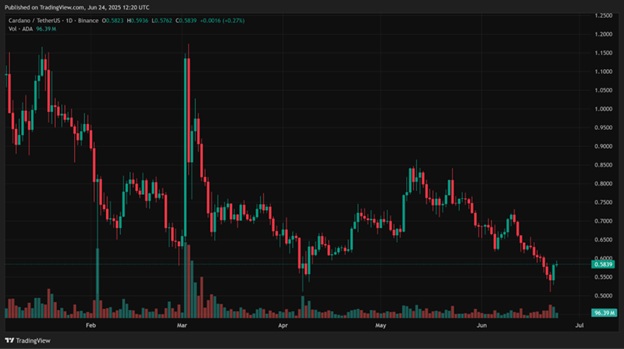
The Cardano price has experienced a pullback from its earlier bullish momentum, falling over 40% over the last 3 months, struggling below the $0.65 price range. This is a significant fall, especially with the high bullish potential that the ADA coin shows on the chart following its breakout above $1 earlier in the year. The price fall suggests a strong whale sell-off, which raises concern as the project moves towards the upcoming Chang Hard Fork upgrade, showing a lack of confidence.

The sentiment on the ADA price chart has turned bearish as rising competition, especially from Solana, continues to show Cardano’s lagging DeFi adoption.

Why Is XRP Price Slowing Despite ETF Hype?

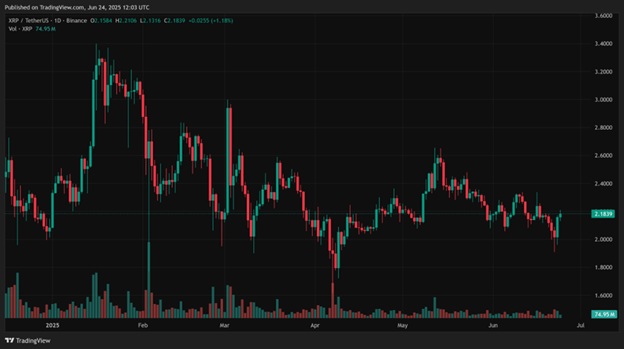
XRP ETF hype has been one of the loudest and most anticipated announcements this year, but the price has not progressed much while the hype continues. With XRP trading between $2.20 and $2.72 in the last few weeks, analysts believe the buying pressure from the project might be gradually fading. However, several factors add to the coin’s price lag, such as a growing concern in global politics and the fear of recession.

This slowing price growth is a significant factor driving many XRP investors towards new projects with potential for fast growth and high reward.

Why Are Ethereum Investors Taking Profits?

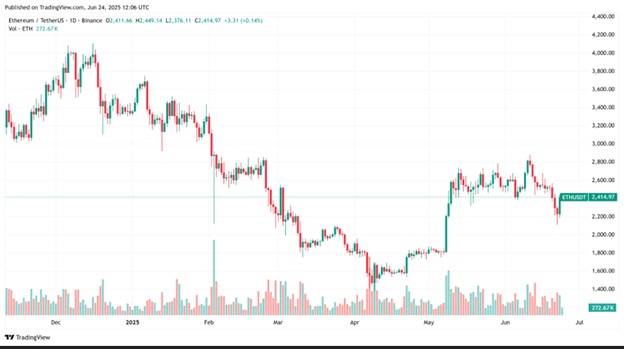
While Ethereum has retained its position as the biggest altcoin and number 2 largest cryptocurrency by market cap, its price growth in the last few months has not been impressive. Even while other coins such as Solana, Bitcoin, and others have seen a dramatic surge in price this year, the Ethereum price has continued struggling below $3,000.

The price drop in April even dropped around $1,300, raising concerns from investors about exiting the coin, prompting withdrawal from exchange in a massive Ethereum cashout.

What Makes APORK Attractive to Whales?

As the $APORK token nears its final point in the first stage of its presale at $0.0269, the price is set to take a new hike targeted towards a new high. This continuous price growth has been a significant catalyst driving investors’ interest in the Angry Pepe Fork project. But beyond the potential for the $APORK token to keep rising at the end of every stage, its utility-driven focus has had a bigger influence on why investors keep choosing the $APORK token.

With factors such as Multi-Chain expansion, CommunityFi mechanism, GambleFi approach, and up to 10,000% APY Staking reward program, the Angry Pepe Fork is breaking all barriers. The $APORK’s fixed supply and presale momentum are set to boost its price faster while setting the coin up for quick listing on major exchanges soon. But, as the window for maximum gains narrows, the whale rotation could be the most important move in 2025.  Check out more at: https://angrypepefork.com/