
DD
MM
YYYY

PAGES

DD
MM
YYYY

spot_img

PAGES

Home Blog Page 999

Cardano, XRP, and Ethereum Whales Rotate Out of Stablecoins for this Meme Coin —Best Crypto Entry Signal Yet?

0

As the crypto market dynamics continue to change, the latest move is seeing Cardano, XRP, and Ethereum whales pulling their position in stablecoin for this high-utility meme coin. The Angry Pepe Fork ($APORK) has continued to attract investors with its GambleFi mechanics, multi-chain dominance, and a 10,000% APY Staking reward. With the current growth rate of the Angry Pepe Fork, it is gradually becoming the top presale project this June, raising investors’ interest in the $APORK’s next direction.

On-chain data shows over $50M in USDC and USDT moved from whale wallets previously holding ADA, XRP, and ETH into APORK presale addresses.

However, before we get too carried away with the $APORK token swell, here is an analysis that shows why whales are shifting capital and why it could be the best entry signal before the next meme coin rally.

Earn Over 10,000% APY, The earlier you get in the higher the APY – Buy $APORK

Why Is Cardano Struggling in Q2 2025?
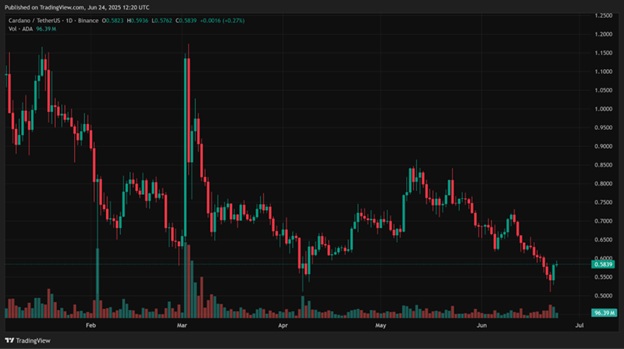
The Cardano price has experienced a pullback from its earlier bullish momentum, falling over 40% over the last 3 months, struggling below the $0.65 price range. This is a significant fall, especially with the high bullish potential that the ADA coin shows on the chart following its breakout above $1 earlier in the year. The price fall suggests a strong whale sell-off, which raises concern as the project moves towards the upcoming Chang Hard Fork upgrade, showing a lack of confidence.

The sentiment on the ADA price chart has turned bearish as rising competition, especially from Solana, continues to show Cardano’s lagging DeFi adoption.

Why Is XRP Price Slowing Despite ETF Hype?
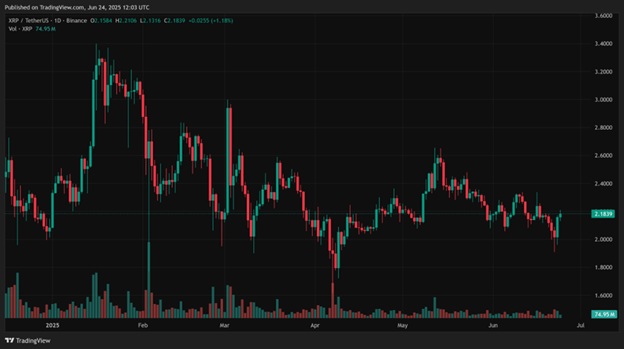
XRP ETF hype has been one of the loudest and most anticipated announcements this year, but the price has not progressed much while the hype continues. With XRP trading between $2.20 and $2.72 in the last few weeks, analysts believe the buying pressure from the project might be gradually fading. However, several factors add to the coin’s price lag, such as a growing concern in global politics and the fear of recession.

This slowing price growth is a significant factor driving many XRP investors towards new projects with potential for fast growth and high reward.

Why Are Ethereum Investors Taking Profits?
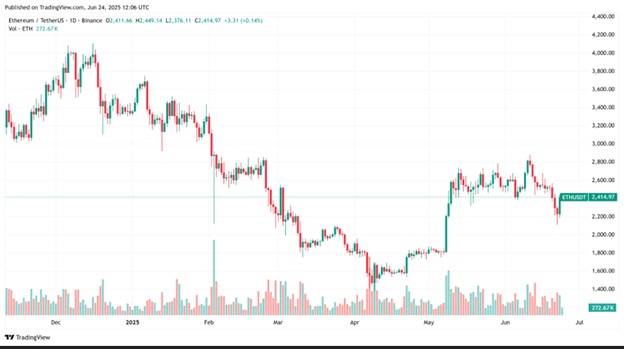
While Ethereum has retained its position as the biggest altcoin and number 2 largest cryptocurrency by market cap, its price growth in the last few months has not been impressive. Even while other coins such as Solana, Bitcoin, and others have seen a dramatic surge in price this year, the Ethereum price has continued struggling below $3,000.

The price drop in April even dropped around $1,300, raising concerns from investors about exiting the coin, prompting withdrawal from exchange in a massive Ethereum cashout.
What Makes APORK Attractive to Whales?

As the $APORK token nears its final point in the first stage of its presale at $0.0269, the price is set to take a new hike targeted towards a new high. This continuous price growth has been a significant catalyst driving investors’ interest in the Angry Pepe Fork project. But beyond the potential for the $APORK token to keep rising at the end of every stage, its utility-driven focus has had a bigger influence on why investors keep choosing the $APORK token.

With factors such as Multi-Chain expansion, CommunityFi mechanism, GambleFi approach, and up to 10,000% APY Staking reward program, the Angry Pepe Fork is breaking all barriers. The $APORK’s fixed supply and presale momentum are set to boost its price faster while setting the coin up for quick listing on major exchanges soon. But, as the window for maximum gains narrows, the whale rotation could be the most important move in 2025.  Check out more at: https://angrypepefork.com/
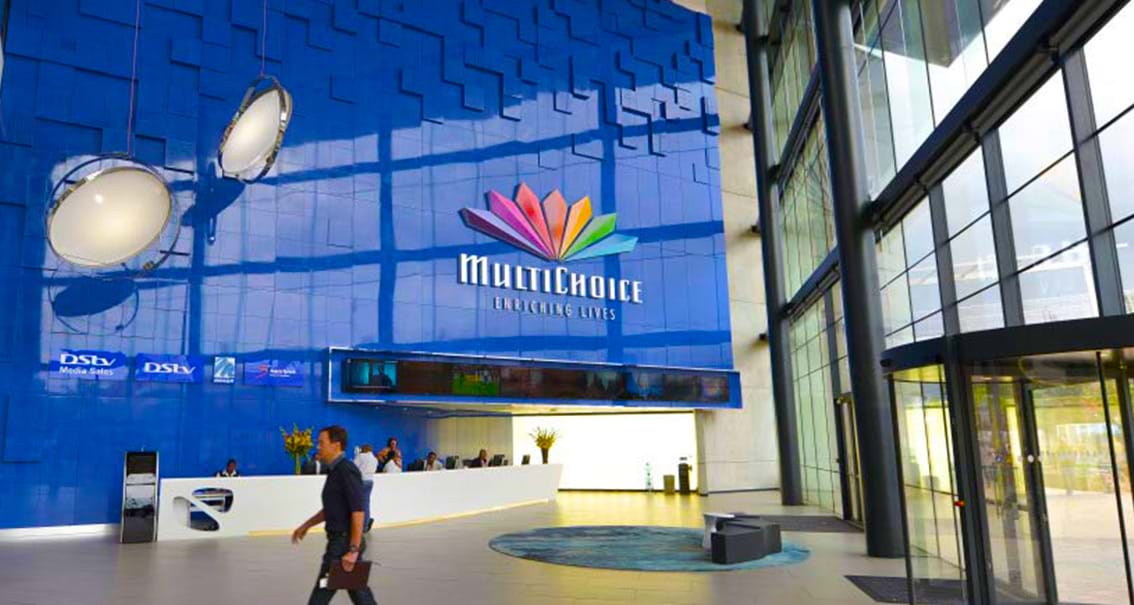
The MultiChoice Evolution in Nigeria with Weekly Plan, Cheaper Decoders, etc

0

Poor MultiChoice on what a court cannot do, market is doing: “Multichoice Nigeria has slashed the price of its DStv decoder by 50%, from N20,000 to N10,000, in a renewed bid to boost its subscriber base. The aggressive pricing strategy comes as part of the company’s broader effort to address plummeting subscriptions in Africa’s largest PayTV market.”

Simply, I hope the Nigerian court is reading. The best way to make markets fair and balanced is by providing choices. In Nigeria now, even though people do not have direct substitutes for European football, there is an indirect choice now: forget the games*. Many are picking the “forget the games option” as the economy cracks!

When the company recorded a loss of 1.4 million users, MultiChoice got the message: unless the Nigerian economy recovers quickly, your product is imperiled. Indeed, even a deaf person knows when a war has broken. The recent MultiChoice weekly plan will move over time to daily plan, and one day people will get pay per view. These changes are not driven by any court ruling but by the market! That explains everything.

(*not something to celebrate though)

Mastercard and Chainlink Partnership To Unlock 3 Billion Mastercard Crypto Users

0

Mastercard and Chainlink announced a partnership to enable over 3 billion Mastercard cardholders to purchase cryptocurrency directly on blockchain networks through a secure fiat-to-crypto conversion service. This collaboration integrates Mastercard’s global payments network with Chainlink’s interoperability infrastructure, leveraging zerohash for compliance and liquidity, Shift4 Payments for card processing, and Swapper Finance and XSwap for a user-friendly experience powered by the Uniswap protocol.

The Swapper Finance platform, which facilitates these transactions, is live at swapper.finance. This move bridges traditional finance and decentralized finance (DeFi), aiming to simplify crypto access and drive mainstream adoption. The Mastercard-Chainlink partnership to enable billions of cardholders to buy crypto directly onchain has significant implications for the financial ecosystem and highlights a growing divide between traditional finance (TradFi) and decentralized finance (DeFi).

Allowing over 3 billion Mastercard users to purchase crypto seamlessly bridges a major gap between fiat and blockchain economies, lowering entry barriers for non-crypto-native users. Increased accessibility could drive higher crypto trading volumes, potentially boosting market liquidity and asset prices, particularly for supported tokens like those on Uniswap-integrated platforms. Simplified crypto purchases may normalize digital assets as a payment or investment, accelerating their integration into everyday financial activities.

TradFi-DeFi Convergence

The use of Chainlink’s interoperability, Zerohash for compliance, and Uniswap’s protocol demonstrates how DeFi protocols can integrate with TradFi’s payment rails, creating hybrid financial systems. Mastercard’s involvement lends credibility to blockchain technology, encouraging other financial giants to explore similar partnerships.

This collaboration could spur further development of DeFi applications that leverage traditional payment networks, fostering new financial products. The inclusion of Zerohash for regulatory adherence suggests a model for scaling crypto services within regulatory frameworks, potentially reducing risks of future regulatory friction. Operating across jurisdictions with varied crypto regulations may require nuanced compliance strategies, influencing how similar services are rolled out regionally.

Increased crypto access could prompt regulators to update or clarify regulations around on-chain transactions and fiat gateways. Mastercard gains a competitive edge over rivals like Visa by pioneering this crypto on-ramp, potentially capturing market share in the crypto payments space. Direct on-chain purchases via wallets like Swapper Finance could challenge centralized exchanges by offering lower fees or faster transactions.

Partnerships with Shift4, Zerohash, and Uniswap may elevate these players’ profiles, fostering further DeFi ecosystem growth. Chainlink’s decentralized oracles and Mastercard’s secure payment infrastructure aim to ensure safe transactions, but any vulnerabilities could undermine consumer trust. New crypto users may lack knowledge of wallet security or DeFi risks, necessitating robust education to prevent scams or losses.

The service’s reliance on user-friendly platforms raises questions about whether it will favor custodial solutions, potentially limiting true decentralization. TradFi purists may criticize the partnership for relying on centralized entities like Mastercard and Shift4, which could conflict with DeFi’s ethos of trustlessness.

TradFi prioritizes user-friendly, regulated systems, often custodial, while DeFi emphasizes user sovereignty, creating tension over how crypto is accessed and stored. While TradFi aims to make crypto accessible, DeFi’s permissionless nature appeals to those valuing financial autonomy over institutional oversight.

TradFi brings scale and compliance but may impose limits (e.g., KYC/AML checks), while DeFi offers flexibility but struggles with scalability and regulatory alignment. TradFi systems are polished and familiar, whereas DeFi platforms often have steeper learning curves, affecting adoption rates. DeFi transactions can be faster and cheaper, but TradFi’s payment processing may introduce fees or delays, impacting user preference.

TradFi’s entry could concentrate crypto activity among large players, potentially marginalizing smaller DeFi projects unable to compete with Mastercard’s reach. Easier crypto access may benefit wealthier users in developed markets, while unbanked populations may remain underserved due to regulatory or infrastructural barriers. TradFi’s cautious approach may slow DeFi’s rapid experimentation, creating a lag between institutional and grassroots innovation.

TradFi relies on brand trust (e.g., Mastercard), while DeFi appeals to trust in code, appealing to different user mindsets. DeFi’s community-driven ethos contrasts with TradFi’s corporate-driven model, potentially alienating crypto-native users wary of institutional co-option. TradFi frames crypto as an investment, while DeFi sees it as a tool for systemic change, shaping divergent visions for blockchain’s role.

The partnership is a pragmatic step toward bridging TradFi and DeFi by combining their strengths—Mastercard’s global reach and compliance with Chainlink’s interoperability and Uniswap’s decentralized liquidity. However, it also highlights trade-offs. Future systems may blend centralized and decentralized elements, but striking a balance that satisfies both camps remains challenging. Bridging the divide requires educating TradFi users about DeFi principles and ensuring underserved regions benefit from crypto access.

Collaborative frameworks between regulators, TradFi, and DeFi could harmonize innovation and compliance, reducing friction. The Mastercard-Chainlink partnership is a pivotal step toward crypto mainstreaming, with the potential to reshape financial systems. Yet, it amplifies the TradFi-DeFi divide, requiring careful navigation to align their divergent goals and values.

Cardone Capital’s 1000 Bitcoin Acquisition Is A Pioneering Step That Could Redefine Real Estate

0

Cardone Capital, a U.S.-based real estate firm managing over $5.1 billion in assets, acquired 1,000 Bitcoin (BTC) valued at approximately $102 million, as announced by CEO Grant Cardone on June 21, 2025. This move marks the firm as the first real estate company to fully integrate a Bitcoin strategy, combining its portfolio of 14,200 rental units and 500,000 square feet of office space with cryptocurrency. The firm plans to purchase an additional 3,000 BTC by year-end, potentially exceeding $400 million in holdings, using rental income through hybrid funds like the 10X Miami River Bitcoin Fund.

This strategy blends real estate’s stable cash flow with Bitcoin’s growth potential, positioning Cardone Capital alongside institutional Bitcoin adopters like MicroStrategy and Metaplanet. Cardone Capital’s acquisition of 1,000 BTC, with plans for 3,000 more, signals a bold shift in real estate investment strategy, merging traditional assets with cryptocurrency.

Cardone’s move legitimizes Bitcoin as a corporate treasury asset beyond tech firms like MicroStrategy. Real estate, a traditionally conservative sector, adopting BTC could encourage other firms to diversify into crypto, accelerating institutional adoption. The use of rental income to fund Bitcoin purchases via hybrid funds like the 10X Miami River Bitcoin Fund creates a new model for blending stable cash flows with high-growth assets, potentially attracting more investors to crypto-backed real estate funds.

Portfolio Diversification

Bitcoin’s high volatility (30-day annualized volatility ~40% as of June 2025) contrasts with real estate’s stability, offering Cardone Capital a hedge against inflation and fiat currency devaluation. BTC’s historical 10-year annualized return of ~60% could boost fund performance if the bull market continues. However, Bitcoin’s price swings pose risks. A sharp correction (e.g., 2022’s ~65% drop) could strain fund liquidity or investor confidence, especially if rental income is heavily allocated to BTC.

Cardone’s $102 million purchase (1,000 BTC) and planned $400 million+ investment (3,000 BTC) represent a small but notable fraction of Bitcoin’s $1.9 trillion market cap (as of June 2025). Large buys like this could contribute to price momentum, especially in a supply-constrained market post-2024 halving. Increased demand from institutional players may tighten Bitcoin’s circulating supply (current total supply ~19.7 million BTC, with ~15% illiquid), potentially driving prices higher but also amplifying volatility.

Integrating Bitcoin into real estate funds may attract scrutiny from U.S. regulators (e.g., SEC, IRS). Unclear crypto regulations could complicate fund structures or tax treatments, especially if BTC is treated as property rather than currency. Cardone’s high-profile move might push regulators to clarify crypto’s role in traditional finance, impacting future adopters.

Cardone’s strategy targets accredited investors seeking exposure to both real estate and crypto. This could expand its investor base, particularly among younger, crypto-savvy demographics. However, combining Bitcoin’s risk profile with real estate’s illiquidity could deter conservative investors, requiring clear communication of risks and returns.

Many real estate investors prioritize predictable cash flows and tangible assets, viewing Bitcoin as speculative. They may avoid firms like Cardone that embrace crypto, fearing volatility or regulatory risks. Younger or risk-tolerant investors see Bitcoin as a store of value or growth engine. Cardone’s model appeals to this group, bridging old and new asset classes. This divide could reshape investor demographics in real estate.

Most real estate companies stick to conventional assets (property, REITs). Cardone’s BTC move sets it apart, but competitors may hesitate to follow due to crypto’s complexity and risks. Firms adopting Bitcoin (e.g., Cardone, MicroStrategy) position themselves as forward-thinking, potentially gaining a first-mover advantage if crypto adoption accelerates. This creates a strategic split between risk-averse and risk-embracing corporations.

Bitcoin’s high entry barriers (current price ~$102,000/BTC) and Cardone’s focus on accredited investors limit access to this hybrid strategy. Wealthier investors can capitalize on potential BTC gains, while retail investors are sidelined, deepening the wealth gap. Conversely, Cardone’s funds could democratize crypto exposure for some accredited investors, but the divide persists between those with access to such opportunities and those without.

In developed markets (e.g., U.S.), Bitcoin adoption by firms like Cardone is feasible due to mature financial systems and crypto infrastructure. In emerging markets, regulatory hostility or economic instability may hinder similar strategies, widening the gap between global investment landscapes. Countries with pro-crypto policies (e.g., El Salvador, UAE) may see local firms emulate Cardone, while others lag, creating a geopolitical divide in crypto integration.

Cardone Capital’s Bitcoin acquisition is a pioneering step that could redefine real estate investment, blending stability with crypto’s growth potential. It strengthens Bitcoin’s institutional credibility but introduces risks tied to volatility and regulation. The move deepens divides between traditional and hybrid investors, conservative and innovative firms, and those with or without access to such strategies. As Cardone plans to scale its BTC holdings, its success or failure will likely influence whether other firms bridge this divide or remain on the sidelines.

Multichoice Slashes Decoder Price by 50% Amid Massive Subscriber Loss in Nigeria

0

Multichoice Nigeria has slashed the price of its DStv decoder by 50%, from N20,000 to N10,000, in a renewed bid to boost its subscriber base. The aggressive pricing strategy comes as part of the company’s broader effort to address plummeting subscriptions in Africa’s largest PayTV market.

As part of the offer, Multichoice also launched a free tier upgrade campaign for both active and returning subscribers. From June 16 to July 31, 2025, customers who pay for their current DStv subscription package in full will be upgraded automatically to the next higher tier, granting access to more channels and content at no additional cost.

“By repositioning itself as a platform for daily value, DStv aims to encourage content discovery across a wider array of genres, including movies, drama, kids’ programming, and news,” the company stated.

Multichoice Nigeria’s CEO, John Ugbe, described the promotion—branded the “We Got You” campaign—as a way of rewarding loyalty and making premium content more accessible, especially for non-sports viewers.

“We want to ensure our customers feel appreciated and have access to the best entertainment every day. The ‘We Got You’ campaign is about making premium content more accessible and showing that DStv offers something for everyone, not just football fans,” Ugbe said.

Subscriber Loss and Public Backlash

The announcement follows Multichoice’s stunning loss of 1.4 million subscribers in Nigeria between March 2023 and March 2025, according to financial disclosures from its parent company, Multichoice Group. The Nigerian market alone accounted for 77% of the total 1.8 million subscriber losses across its “Rest of Africa” (RoA) business segment during the period.

The group blamed a combination of economic headwinds for the mass exit, including soaring inflation, repeated power grid collapses, fuel scarcity, and a sharp fall in disposable income that left many unable to afford television subscriptions.

But industry analysts point to repeated price hikes as a key driver of customer dissatisfaction. Between April 2023 and May 2024, Multichoice Nigeria implemented three separate price increases on its DStv and GOtv bouquets—twice in 2023 and once in 2024—stirring public anger and sparking calls for regulation.

Inflation and the Case for Flexible Subscription Plans

At the heart of the issue is Nigeria’s unrelenting inflation, which in May 2025 stood at 22.97%, making consistent PayTV subscriptions increasingly unaffordable for a large portion of the population. As household incomes shrink and purchasing power erodes, many Nigerians are choosing to forgo traditional entertainment packages in favor of mobile streaming options that offer cheaper, on-demand content.

In response to this, Multichoice recently began trialing weekly subscription packages in Uganda, offering users the flexibility to pay in smaller amounts instead of committing to a full month. The company is reportedly considering expanding the initiative to Nigeria—a move analysts say could provide a much-needed cushion for low-income subscribers and reduce churn.

Some consumers believe that if the weekly payment option is extended to Nigeria, it could boost retention and slow subscriber loss, as It’s a model that better aligns with the income cycles of many African households.

Multichoice’s challenges come amid rising competition from low-cost streaming platforms and a general shift in consumer behavior, especially among younger viewers who prefer on-demand content over traditional linear TV. Platforms like Netflix, Showmax (also owned by Multichoice), and YouTube are attracting growing audiences, especially in urban centers, due to their flexibility and data-friendly features.

To compete, Multichoice says it is broadening its content offering beyond sports to include more movies, kids’ programming, documentaries, and local drama series. The decoder price slash and free tier upgrade are part of that repositioning effort.

However, observers caution that unless Multichoice significantly revises its pricing model and payment flexibility, particularly in Nigeria, any gains from promos or hardware discounts may be short-lived.

While Multichoice works to stabilize its subscriber base, all eyes will be on whether it can roll out weekly packages quickly enough and balance profitability with affordability in an increasingly strained economy.