

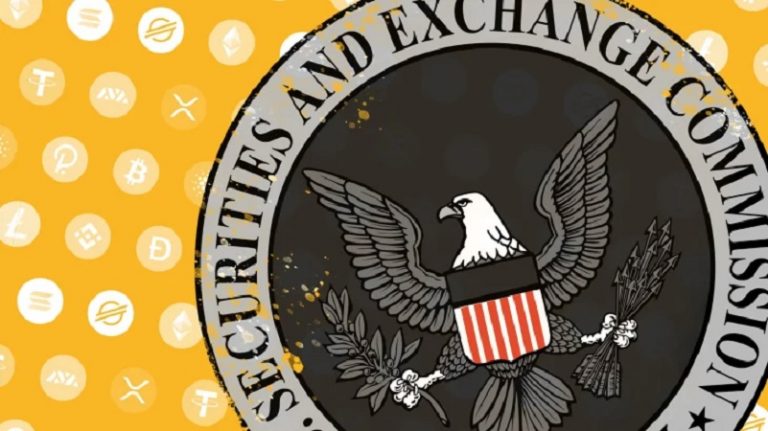
SEC Chairman Paul Atkins has consistently emphasized that establishing a clear regulatory framework for cryptocurrencies is a top priority.
Speaking at various events, including the Crypto Task Force Roundtable on Tokenization in May 2025 and the America First Policy Institute in July 2025, Atkins outlined his vision to modernize securities rules to accommodate blockchain technology and digital assets. His initiative, dubbed “Project Crypto,” aims to provide clear guidelines for the issuance, custody, and trading of crypto assets, aligning with President Trump’s goal of making the U.S. the “crypto capital of the planet.”
Atkins has advocated for moving away from regulation-by-enforcement, favoring notice-and-comment rulemaking to set “fit-for-purpose” standards that foster innovation while protecting investors from fraud.
Key focuses include clarifying which crypto assets are securities, modernizing custody rules, and enabling “super-apps” that allow trading of both securities and non-securities under a single license.
Register for Tekedia Mini-MBA edition 20 (June 8 – Sept 5, 2026).
Register for Tekedia AI in Business Masterclass.
Join Tekedia Capital Syndicate and co-invest in great global startups.
Register for Tekedia AI Lab.
Clear rules would reduce uncertainty, encouraging institutional investors, banks, and financial firms to engage with crypto assets. Defined guidelines on which assets are securities, custody requirements, and trading rules would lower compliance risks, making it easier for institutions to integrate crypto into their portfolios or services.
A structured framework would protect retail investors from fraud, scams, and market manipulation, which have plagued the crypto space. Clear standards for disclosures, custody, and trading would increase trust and participation.
Atkins’ focus on moving away from enforcement-driven regulation to transparent rulemaking could prevent arbitrary penalties, fostering a fairer environment. By modernizing securities laws to accommodate blockchain technology, as Atkins proposes with initiatives like “Project Crypto,” startups and developers could innovate without fear of regulatory overreach.

This includes tokenization of assets (e.g., real estate, art) and the development of “super-apps” for seamless trading of securities and non-securities. A supportive regulatory environment could position the U.S. as a global leader in crypto innovation, aligning with the stated goal of becoming the “crypto capital of the planet.”
A clear U.S. framework could attract crypto businesses currently operating in jurisdictions with lighter regulations (e.g., Singapore, Dubai). This would boost domestic investment, job creation, and tax revenue. Conversely, lack of clarity could drive firms offshore, as seen with some exchanges and startups relocating due to past SEC enforcement actions.
Defined custody and trading rules would enable more secure and efficient markets, reducing risks like exchange collapses. This could increase liquidity as more participants, including traditional financial firms, enter the market. Clear classification of crypto assets would reduce legal disputes and market confusion, stabilizing prices and trading volumes.
A framework addressing stablecoins and decentralized finance (DeFi) could legitimize these sectors, enabling integration with traditional finance. For instance, clear rules on stablecoin issuance and reserves could make them viable for payments and settlements.

A framework that clearly distinguishes between securities and non-securities (e.g., using updated Howey Test interpretations) would help issuers and exchanges comply with regulations. This reduces legal risks and costs for projects, encouraging more token launches and listings.
Modernized custody rules, as Atkins suggests, would allow crypto custodians to operate under clear standards, reducing the cost and complexity of compliance. This would enable more firms to offer secure storage solutions.
Transparent disclosure requirements would ensure investors have access to critical information about crypto projects, reducing the risk of scams and pump-and-dump schemes. A regulated environment would attract risk-averse investors, increasing capital inflows and market participation.
Support for Tokenization and Real-World Assets
Atkins’ focus on tokenization could unlock the potential of blockchain to represent real-world assets (e.g., real estate, equities) on-chain. Clear rules would enable secure, compliant token issuance, expanding use cases and market size.
Moving from regulation-by-enforcement to notice-and-comment rulemaking, as Atkins advocates, would provide businesses with predictable guidelines. This reduces the risk of sudden SEC actions, which have historically caused market disruptions (e.g., lawsuits against Ripple, Coinbase).
Clear rules for DeFi protocols and stablecoins would enable developers to build compliant platforms, integrating crypto with traditional finance. This could accelerate the adoption of crypto for payments, remittances, and cross-border transactions.
Overly strict regulations could stifle innovation, while overly lax rules might fail to protect investors. Atkins’ approach will need to strike a delicate balance. Implementing a comprehensive framework requires coordination with Congress, other agencies (e.g., CFTC), and industry stakeholders. Political gridlock could delay progress.
A clear regulatory framework, as prioritized by SEC Chairman Paul Atkins, would boost the crypto industry by fostering institutional adoption, enhancing investor protection, and encouraging innovation. By clarifying asset classifications, modernizing custody and trading rules, and supporting tokenization, the SEC could position the U.S. as a global crypto hub.
This would drive market growth, increase liquidity, and attract talent and capital, while ensuring investor safety and market stability. However, the success of these efforts depends on balanced rulemaking and effective coordination with stakeholders.