

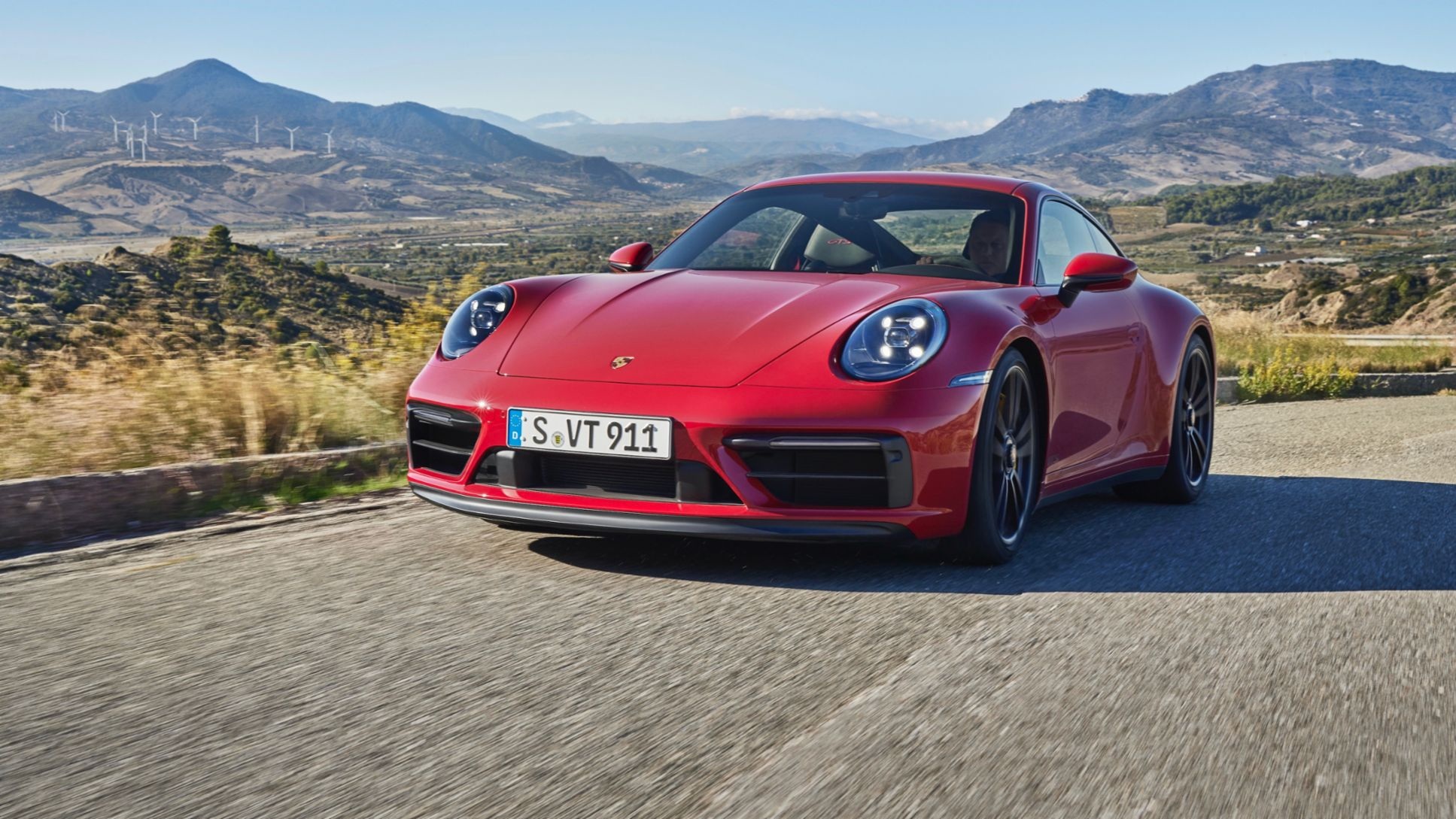
German luxury sports car manufacturer Porsche has announced another significant round of job cuts, revealing plans to eliminate an additional 5,000 positions in the Stuttgart region as the company grapples with mounting economic and industry pressures.
The latest reduction comes as Europe’s automotive sector faces slowing demand, rising production costs, and the rapid transition toward electric vehicles, forcing even premium brands to rethink their long-term strategies.
Porsche has long been regarded as one of Germany’s most successful automakers, renowned for producing high-performance sports cars and luxury SUVs that command strong global demand.
However, the company has not been immune to the challenges reshaping the global automotive industry.
Register for the next Tekedia Mini-MBA.
Register for Tekedia AI in Business Masterclass.
Join Tekedia Capital Syndicate and co-invest in great global startups.
Weak consumer spending in key markets, increased competition from Chinese electric vehicle manufacturers, and uncertainty surrounding international trade have all placed pressure on profitability.
The additional 5,000 job cuts are expected to affect employees primarily in the Stuttgart region, where Porsche’s headquarters and major production facilities are located.
While the company has emphasized that it remains committed to Germany as its manufacturing base, executives argue that restructuring has become necessary to ensure long-term competitiveness. The workforce reduction follows earlier cost-cutting measures and reflects a broader effort to streamline operations while investing heavily in future technologies.

One of the key drivers behind Porsche’s restructuring is the costly transition to electrification. Governments across Europe continue to tighten emissions regulations, requiring automakers to accelerate investments in battery-powered vehicles.
Developing new electric platforms, battery technology, and advanced software requires billions of dollars in research and development. Sales of electric vehicles have softened in several markets, creating a difficult balance between investment and profitability.
China, once Porsche’s fastest-growing market, has also become a major source of concern.
Sales have weakened as domestic Chinese brands introduce increasingly competitive premium electric vehicles at lower prices. Companies such as BYD, NIO, and Xiaomi have rapidly gained market share by offering advanced technology, attractive pricing, and strong local brand recognition.

This shift has reduced demand for imported luxury vehicles, including Porsche models The job reductions also reflect wider challenges facing Germany’s industrial sector.
Rising energy prices, inflation, and persistent supply chain disruptions have increased manufacturing costs across the country. Many German manufacturers have responded by reducing production, delaying investment, or cutting jobs to preserve financial stability.
Industry analysts warn that the country’s automotive sector is undergoing one of its most significant transformations in decades.
Despite the layoffs, Porsche continues to invest in innovation.
The company remains committed to expanding its electric vehicle lineup while improving battery efficiency, digital services, and autonomous driving capabilities.
It also plans to maintain its reputation for premium engineering by balancing traditional combustion-engine models with next-generation electric performance vehicles. Executives believe these investments will strengthen Porsche’s competitive position over the long term despite the short-term financial strain.
For employees and the Stuttgart community, however, the announcement represents another difficult chapter. Thousands of families will be directly affected, while suppliers and local businesses could also experience reduced economic activity.
Labor unions are expected to push for negotiations aimed at minimizing compulsory redundancies through voluntary retirement programs, retraining opportunities, and internal transfers where possible.
Porsche’s decision underscores the profound transformation taking place across the global automotive industry. As manufacturers race toward electrification while navigating economic uncertainty and intensifying competition, even iconic luxury brands are being forced to make difficult choices.
The latest job cuts highlight that maintaining long-term competitiveness increasingly requires painful restructuring, significant technological investment, and a willingness to adapt to an industry undergoing historic change.
Audi Cuts Annual Outlook as Global Headwinds Pressure Performance
Audi has lowered its financial outlook for the year, citing weakening demand in China and rising geopolitical uncertainty in the Middle East.
The announcement underscores the growing challenges facing global car manufacturers as they navigate economic slowdowns, changing consumer preferences, supply chain risks, and intensifying international tensions.
Audi now expects lower annual revenue and reduced profit margins than previously forecast.
The company attributed the downgrade primarily to a more difficult business environment in China, the world’s largest automotive market, where demand for premium vehicles has weakened considerably.
Chinese consumers have become more cautious with spending due to a slowing economy, ongoing concerns in the property sector, and increased competition from domestic electric vehicle manufacturers that are rapidly gaining market share.
For Audi, China has long been one of its most important markets, contributing significantly to global sales and profitability. However, local brands such as BYD, NIO, XPeng, and Li Auto have transformed the competitive landscape by offering technologically advanced electric vehicles at competitive prices.
These companies have captured growing consumer interest through innovation, software integration, and aggressive pricing strategies, making it increasingly difficult for traditional European manufacturers to maintain their dominance.
Beyond China, Audi also highlighted escalating tensions in the Middle East as another source of uncertainty. Geopolitical conflicts often have widespread economic consequences, particularly through their impact on global energy markets.
Rising oil prices can increase manufacturing and transportation costs while also weakening consumer confidence.
For an industry that relies on complex international supply chains, regional instability introduces additional risks, including shipping delays, higher logistics expenses, and uncertainty in sourcing critical components.
The revised outlook reflects broader pressures affecting the global automotive industry. Automakers are simultaneously investing billions of dollars in the transition to electric mobility while managing slower-than-expected adoption rates in several markets.
Although demand for electric vehicles continues to grow over the long term, the pace has become uneven as consumers weigh affordability, charging infrastructure, and economic uncertainty before making purchasing decisions.
Audi is also competing in an environment where technological innovation has become just as important as traditional engineering excellence. Consumers increasingly evaluate vehicles based on software capabilities, connectivity features, autonomous driving technologies, and digital ecosystems.
This shift requires continuous investment in research and development, placing additional pressure on profitability during periods of slowing sales. Despite these challenges, Audi remains committed to its long-term transformation strategy.
The company continues to expand its electric vehicle portfolio and strengthen its digital capabilities while seeking operational efficiencies to improve competitiveness. Executives believe that sustained investment in innovation will position the brand for future growth once market conditions stabilize.
Industry analysts note that Audi’s revised forecast is not an isolated case. Several global automakers have recently adjusted expectations amid weakening economic growth, persistent inflationary pressures, and changing consumer demand patterns.
Premium manufacturers are particularly exposed because luxury purchases are often among the first expenditures consumers postpone during uncertain economic periods.
Audi’s performance will depend largely on developments in China, the evolution of geopolitical risks, and the recovery of consumer confidence across key markets.
While short-term headwinds remain significant, the company’s strong global brand, engineering heritage, and commitment to electrification provide a foundation for long-term resilience.
The revised outlook serves as a reminder that even established automotive leaders must continually adapt to an increasingly volatile and competitive global marketplace.