

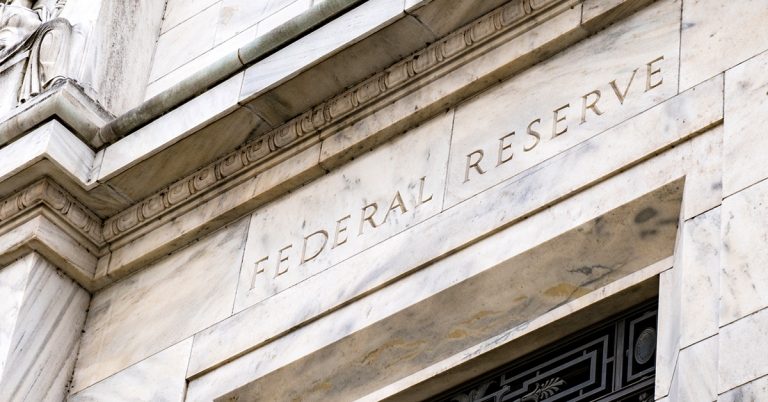
President Donald Trump told reporters he plans to announce his nominee to succeed Federal Reserve Chair Jerome Powell “over the next couple of weeks,” though he added it might not happen before the end of the year but “pretty soon.”
He also mentioned interviewing three or four candidates and indicated the pick could spill into early 2026. This aligns with his earlier comments in early December suggesting an announcement in early 2026, but the timeline appears to have shifted slightly forward.
Powell’s term as Fed Chair ends on May 15, 2026. Leading Candidates include: Kevin Hassett (National Economic Council Director and longtime Trump adviser). Kevin Warsh (former Fed Governor). Christopher Waller (current Fed Governor, whom Trump recently praised as “great” after a strong interview). Michelle Bowman (current Fed Governor). Possibly Rick Rieder (BlackRock executive, scheduled for an interview soon).
Trump has emphasized the nominee will support significantly lower interest rates.No official nomination has been made as of December 20, 2025, so the announcement is still pending in the coming weeks. Markets are watching closely due to implications for monetary policy and Fed independence.
Register for Tekedia Mini-MBA edition 20 (June 8 – Sept 5, 2026).
Register for Tekedia AI in Business Masterclass.
Join Tekedia Capital Syndicate and co-invest in great global startups.
Register for Tekedia AI Lab.
Trump has explicitly stated that his pick will be someone who “believes in lower interest rates by a lot,” making support for aggressive rate cuts a key criterion. This signals a potential shift toward more dovish (rate-cutting) monetary policy compared to the current cautious approach under Powell.
The Federal Reserve has cut its benchmark rate three times in late 2025, bringing it to 3.50%-3.75%. The latest December projections indicate only one additional cut in 2026, reflecting concerns over persistent inflation around 2.7%-3% and potential upward pressure from tariffs.
Officials emphasize a “wait-and-see” stance, with no rush for deeper cuts unless the labor market weakens significantly. A Trump-aligned chair could push for: Faster and deeper rate cuts in 2026-2027 to stimulate growth, lower borrowing costs like mortgages, car loans, and support Trump’s economic agenda.

Greater emphasis on maximum employment over strict inflation control, potentially accepting slightly higher inflation for lower unemployment. The chair shapes consensus, appoints vice chairs, and sets the agenda—though decisions require majority support from the 12 voting members.
However, limitations exist:The chair cannot unilaterally set rates; dissent from other governors or regional presidents could block aggressive easing. Economic data (inflation, jobs) ultimately drives decisions—Trump’s tariffs could keep inflation elevated, making deep cuts riskier.
Fed independence remains a core principle, though Trump’s pressure raises concerns about political influence. Recently supports lower rates; proposes balance sheet reduction to enable cuts. Historically hawkish on inflation. Moderate dovish shift; cuts possible but tied to reforms; less aggressive than Trump wants.
Kevin Hassett, strong dove: Favors aggressive cuts, accommodative policy to boost growth. Most aligned with Trump; likely pushes for multiple/deep cuts, risking inflation rebound.

Christopher Waller supports steady cuts 50-100 bps more to neutral ~3%; concerned about softening jobs market. Gradual easing; data-dependent, balanced approach—not as aggressive as Trump demands.
Bowman: More cautious on cuts. Rieder: Market-oriented, potentially dovish. Varied; less clear alignment with rapid cuts. Markets have reacted positively to dovish signals e.g., rallies in stocks/crypto on Trump’s “lower by a lot” comments, pricing in more cuts post-nomination.
However, if cuts are too aggressive, it could reignite inflation or erode Fed credibility. The nomination raises the probability of lower rates longer-term than the current Fed path suggests, but outcomes depend on the pick, Senate confirmation, and evolving economic data. No announcement yet, so uncertainty persists.