

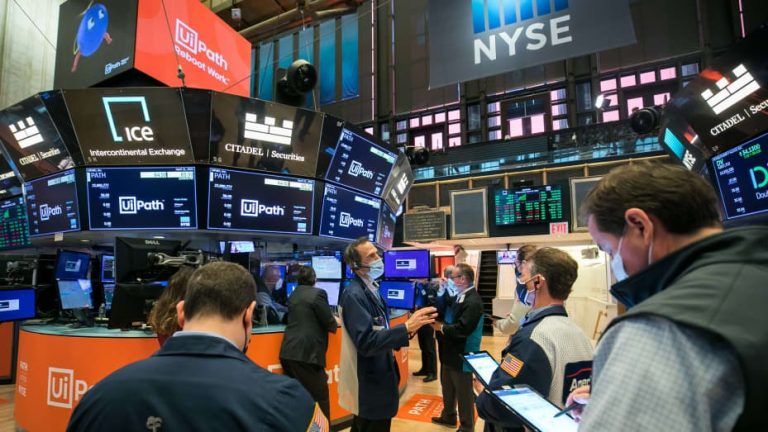
Premarket trading data indicates that major U.S. stock indices are experiencing declines exceeding 1%. Specifically, the S&P 500 is down 1.00%, the Nasdaq 100 is down 1.18%, the Dow Jones Industrial Average is down 0.90%, and the Russell 2000 is down 1.81%.
These declines align with broader market concerns, including uncertainty surrounding U.S. trade policies and tariffs, which have been a significant driver of volatility in 2025. The recent announcement of potential tariff implementations effective August 1, 2025, particularly ranging from 25% to 40% on key trading partners, may be contributing to the bearish sentiment.
Additionally, disappointing guidance from the Federal Reserve regarding interest rate cuts and mixed economic signals, such as sticky U.S. inflation and a contractionary China manufacturing PMI, could be weighing on investor confidence.
However, premarket movements are not always indicative of regular trading session outcomes, as sentiment can shift with new developments or economic data releases, such as the upcoming July jobs report. Investors may be reacting cautiously to these macroeconomic factors, but the situation remains fluid.
Register for Tekedia Mini-MBA edition 20 (June 8 – Sept 5, 2026).
Register for Tekedia AI in Business Masterclass.
Join Tekedia Capital Syndicate and co-invest in great global startups.
Register for Tekedia AI Lab.
The announcement of sweeping tariffs, including a 10% baseline tariff on most trading partners and higher rates (25%-50%) for countries like Canada, Mexico, and China, triggered sharp market sell-offs. For instance, the S&P 500 dropped 4.88% and the Nasdaq Composite fell 5.97% on April 9, 2025, marking significant single-day losses.
A subsequent 90-day pause on higher tariffs led to a dramatic S&P 500 rebound of 9.5% on April 9, but volatility persists as markets react to ongoing trade negotiations and policy uncertainty. Tariffs increase input costs, squeezing corporate profit margins. Goldman Sachs estimates that every 5% increase in U.S. tariff rates could reduce S&P 500 earnings per share by 1-2%, with sustained tariffs potentially cutting earnings by 2-3%.
Companies like General Motors reported a $1.1 billion hit from tariffs, impacting full-year guidance, though some firms, like Johnson & Johnson, mitigated impacts through cost controls and reduced tariff exposure. Tariffs are projected to raise consumer prices by 2.3% in the short term, equating to a $3,800 loss in household purchasing power (2024 dollars). Lower-income households face disproportionate burdens, with apparel prices rising significantly (e.g., 17% for clothing).

Higher inflation expectations, with surveys indicating a jump to 6.7% for the next 12 months, complicate Federal Reserve policy, reducing the likelihood of near-term rate cuts and potentially increasing bond yields, which could further pressure equity valuations. Sectors reliant on imports, such as retail, automotive, and technology, face significant challenges due to higher costs.
For example, Japanese automakers saw a 20% drop in export profitability despite maintaining sales volumes. Conversely, domestic producers in industries like defense and infrastructure may benefit from increased fiscal spending and protectionist policies. The tariffs have disrupted global supply chains, with U.S. imports from China projected to collapse by 90% under high-tariff scenarios, while indirect exports via other countries remain more resilient.
Retaliatory tariffs from China (up to 125%), Canada, Mexico, and the EU exacerbate trade tensions, potentially reducing U.S. export competitiveness and impacting multinational corporations. The Penn Wharton Budget Model projects a long-run GDP reduction of 6-8% and a 5-7% drop in wages due to tariffs, with a middle-income household facing a $22,000-$58,000 lifetime loss.

BlackRock and Morningstar estimate a 40%-50% chance of a shallow recession in 2025, driven by reduced consumer spending, delayed corporate investments, and heightened economic uncertainty. Policy uncertainty, evidenced by the Economic Policy Uncertainty Index reaching its highest level since the COVID-19 pandemic, has led to reduced investment and foreign equity portfolio rebalancing away from U.S. markets, contributing to a weaker dollar.
Investors are advised to diversify portfolios, focusing on value sectors, investment-grade bonds, and low-volatility strategies to mitigate downside risks. The premarket decline of over 1% in U.S. equities reflects ongoing concerns about the tariff regime’s escalation, with new rates (25%-50%) set to take effect today for key trading partners.
The Bank of Japan’s report highlights global market unease, with Asia-Pacific indices like South Korea’s Kospi down 3.88%, signaling broader trade war fears. The fluid tariff landscape, coupled with retaliatory measures and negotiations (e.g., EU’s 15% tariff cap deal), continues to drive uncertainty.
While corporate resilience and potential trade deals (e.g., with Japan and the EU) offer some optimism, the tariffs’ inflationary pressure and growth drag pose significant headwinds. Investors should monitor upcoming economic data, such as the July jobs report, and trade policy developments for clarity on market direction. Staying diversified and focusing on quality investments can help navigate this volatile environment.