

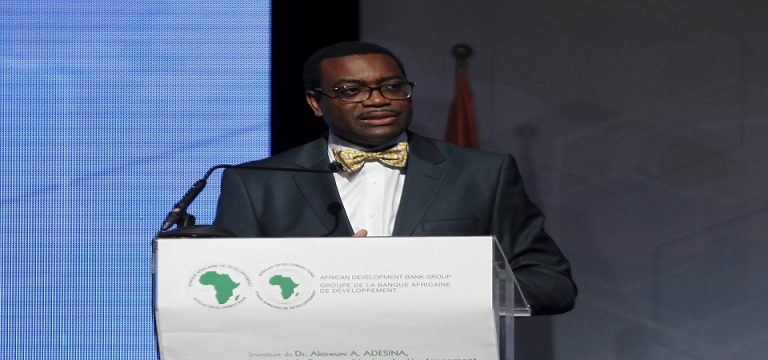
The Nigerian Presidency has pushed back forcefully against a statement by the President of the African Development Bank (AfDB), Dr. Akinwumi Adesina, who warned last week that Nigerians today are worse off than they were in 1960.
In a rebuttal issued by presidential spokesperson Bayo Onanuga, the government rejected both the figures and the conclusion of Adesina’s remarks, calling them misleading and inaccurate.
Adesina had told guests at the 20th-anniversary dinner of investment firm Chapel Hill Denham in Lagos that Nigeria’s GDP per capita had fallen from $1,847 in 1960 to just $824 today, suggesting that economic hardship had deepened despite the country’s population and economy growing over the decades.
Register for Tekedia Mini-MBA edition 20 (June 8 – Sept 5, 2026).
Register for Tekedia AI in Business Masterclass.
Join Tekedia Capital Syndicate and co-invest in great global startups.
Register for Tekedia AI Lab.
But Onanuga argued that historical data do not support Adesina’s claims. He stated that in 1960, Nigeria’s GDP stood at $4.2 billion and, with a population of 44.9 million, per capita income was no more than $93. That figure, he said, only rose significantly during the oil boom years of the 1970s and peaked at $3,200 in 2014 after a GDP rebasing exercise.
The rebuttal noted that while Nigeria’s current per capita GDP hovers around $824, the metric itself does not offer a full picture of national development. Onanuga argued that GDP per capita fails to account for inequality, wealth distribution, and informal economic activities—factors that weigh heavily in a country like Nigeria, where a large share of commerce and labor exists outside official statistics.
However, Adesina is not alone in sounding the alarm. Alongside him are other voices—most notably that of Peter Obi, former Anambra State governor and 2023 presidential candidate, who has repeatedly warned that Nigeria is edging dangerously close to collapse due to poor economic management, rising debt, and unchecked poverty. Obi has also criticized what he describes as a lack of urgency and seriousness in governance, warning that leadership appears disconnected from the realities ordinary Nigerians face.

Beyond individuals, international institutions like the World Bank and the International Monetary Fund (IMF) have raised similar concerns in recent months, painting an increasingly grim picture of Nigeria’s poverty situation. Just last week, the World Bank revealed that 75.5 percent of Nigeria’s rural population now lives below the poverty line, with rural dwellers bearing the brunt of inflation, food scarcity, and declining purchasing power. In total, more than 104 million Nigerians are now believed to live in multidimensional poverty, with many unable to afford basic necessities like food, shelter, healthcare, and education.
The IMF, in its own assessment, has called on Nigeria to urgently reform its fiscal system, curb wasteful subsidies, and expand the tax net to address the country’s developmental gaps. But such advice, often regarded as tone-deaf by local critics, has sparked debate, especially at a time when citizens are already overwhelmed by high fuel prices, rising food costs, and collapsing public services.
Meanwhile, growing public sentiment reflects frustration—not just at the worsening living conditions, but also at what many see as a government more preoccupied with defending itself than with tackling poverty. That belief is underlined by the Presidency’s swift dismissal of Adesina’s comments, which is regarded as a display of a broader culture of unwillingness to confront hard truths or accept criticism from experts and institutions.

Even as Onanuga pointed to gains in infrastructure, mobile phone access, and road networks, experts note that the benefits of such development have been unevenly distributed and remain inaccessible to many rural and urban poor. The explosion of mobile telecoms, while revolutionary, has done little to shield people from the crushing weight of inflation and unemployment.
The World Bank itself has warned that unless urgent steps are taken to stimulate inclusive growth, invest in human capital, and revamp agricultural productivity, Nigeria may not meet its poverty reduction goals for decades to come.
Dr. Adesina warned that Nigeria must radically transform its economic structure if it wants to become globally competitive and industrialized by 2050. That transformation, he stressed, must include significant investment in energy, transport, education, and industry—far beyond what per capita GDP can measure.
However, the Presidency remains adamant that progress has been made. Onanuga insisted that Nigeria’s GDP today is 50 to 100 times higher than it was in 1960 and that the country has made giant strides in many sectors, even if not all are captured by a single metric. For millions of Nigerians grappling with daily hardship, the debate over numbers may seem increasingly irrelevant unless it translates into visible improvement in their standard of living.