

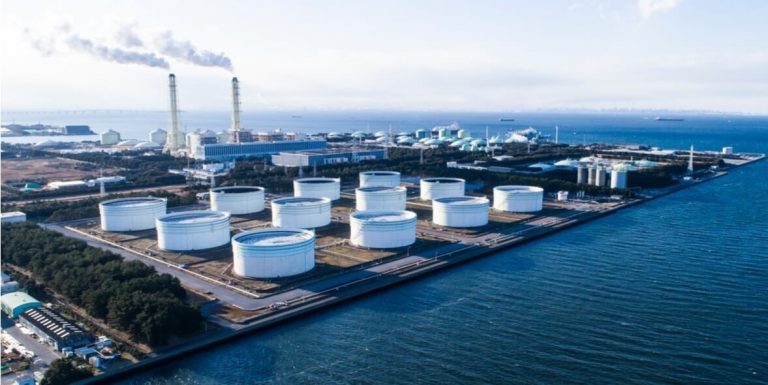
The situation in Qatar has escalated dramatically amid the ongoing U.S.-Israeli conflict with Iran that began in late February 2026. What started as a shipping disruption has become a severe energy and industrial crisis for the country and global markets.
Iranian drone attacks struck QatarEnergy facilities in Ras Laffan Industrial City (the world’s largest LNG export hub) and Mesaieed Industrial City. QatarEnergy immediately halted all LNG production and associated products (including helium, LPG, polymers, methanol, and aluminum) for safety reasons and to assess damage.
Strait of Hormuz effectively closed: Iran has blocked or heavily restricted commercial shipping through the strait via threats, attacks, and warnings to vessels linked to the U.S./Israel or allies. Nearly all of Qatar’s LNG exports must pass through this chokepoint, which normally carries about 20% of global oil and a major share of LNG.
This trapped cargoes and prevented operations from continuing. Additional Iranian missile strikes caused “extensive damage” to Ras Laffan, hitting specific liquefaction trains. QatarEnergy’s leadership has stated that roughly 17% of Qatar’s LNG export capacity is now offline for an estimated 3–5 years due to the complexity of repairing cryogenic equipment and infrastructure.
Register for Tekedia Mini-MBA edition 20 (June 8 – Sept 5, 2026).
Register for Tekedia AI in Business Masterclass.
Join Tekedia Capital Syndicate and co-invest in great global startups.
Register for Tekedia AI Lab.
Qatar has declared force majeure on affected long-term LNG contracts, including to buyers in Europe (Italy, Belgium) and Asia (South Korea, China). Production remains largely ceased, shifting the issue from a temporary “supply concern” to a prolonged outage.
The country is the world’s second-largest LNG exporter after the U.S., supplying ~20% of global LNG. Ras Laffan is essentially the heart of its energy economy. Helium production; Qatar supplies ~30–33% of the global market has also stopped, threatening supply chains for semiconductors, MRI machines, fiber optics, and research.
European and Asian benchmarks spiked 30–50%+ initially; ongoing tightness persists as U.S. and Australian producers have limited spare capacity to fill the gap quickly. Combined with Hormuz disruptions, Brent crude has seen significant volatility and upward pressure recently above $100–108/barrel in spikes.
Helium shortages: Already emerging, with risks to healthcare and tech industries. Asia (heavy Qatar LNG importer) faces tighter supplies; Europe, still recovering from prior shifts away from Russian gas, feels amplified inflation risks. Some reports note downstream effects like airline fuel concerns and industrial slowdowns.

Restarting full operations is technically challenging even if shipping resumes—LNG plants require careful, gradual ramp-up to avoid damage, and physical destruction adds years to recovery timelines. The Strait remains largely closed to normal traffic, with only sporadic approved passages. Diplomatic efforts including U.S. statements from President Trump involving deadlines and talks continue, but no full reopening has occurred.
QatarEnergy has suspended or curtailed additional downstream operations. GDP contraction estimates for Qatar in 2026 run as high as 9% if the outage drags on. Markets are watching for any de-escalation; U.S. LNG exporters have seen temporary boosts, but a prolonged crisis could reshape global energy flows.
This is a fast-moving geopolitical story tied to the wider Iran conflict. The combination of physical damage, blocked exports, and force majeure has indeed turned a supply worry into something far more serious—both for Qatar’s economy and for energy-dependent regions worldwide.
