

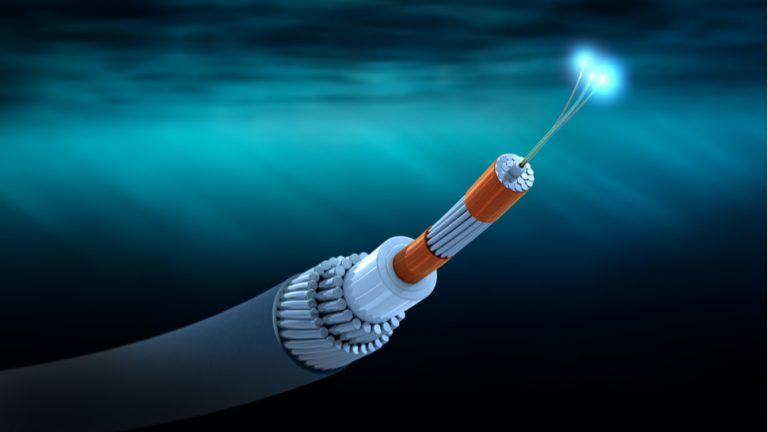
Undersea cable cuts in the Red Sea, reported on September 7, 2025, disrupted internet connectivity across parts of Asia and the Middle East, affecting countries like India, Pakistan, Saudi Arabia, Kuwait, and the UAE.
The outages impacted major subsea systems, including the South East Asia–Middle East–Western Europe 4 (SMW4) and India-Middle East-Western Europe (IMEWE) cables near Jeddah, Saudi Arabia, as well as the FALCON GCX cable. Microsoft noted increased latency for its Azure cloud services in the region but rerouted traffic to minimize impact, with non-Middle East traffic unaffected. NetBlocks confirmed degraded connectivity, with UAE networks like Etisalat and Du experiencing slower speeds.
The cause of the cuts remains unclear, though speculation points to accidental damage from ship anchors or deliberate sabotage amid regional tensions.
Yemen’s Houthi rebels, linked to attacks on maritime traffic due to the Israel-Hamas conflict, were suspected, especially after Yemen’s government-in-exile alleged in early 2024 that the Houthis planned to target cables. The Houthis denied involvement, and their al-Masirah news channel acknowledged the cuts without claiming responsibility.
Register for Tekedia Mini-MBA edition 20 (June 8 – Sept 5, 2026).
Register for Tekedia AI in Business Masterclass.
Join Tekedia Capital Syndicate and co-invest in great global startups.
Register for Tekedia AI Lab.
A similar incident in February 2024, potentially caused by a ship’s anchor dragging after a Houthi attack, affected cables like AAE-1, SEACOM, and EIG, disrupting 25% of Asia-Europe traffic. Undersea cables carry over 90% of Europe-Asia internet traffic through the Red Sea, a critical hub for global data.
Repairs are complex, often taking weeks due to the need for specialized vessels and permits, especially in conflict zones. While providers reroute traffic to maintain service, such disruptions highlight the vulnerability of global internet infrastructure.
The Red Sea is a critical corridor for over 90% of internet traffic between Europe and Asia, with cables like SMW4, IMEWE, and FALCON GCX handling massive data volumes. Cuts disrupt connectivity in regions like the Middle East, South Asia, and parts of Africa, causing slower internet speeds, increased latency, and potential service outages.

Businesses relying on cloud services (e.g., Microsoft Azure) face degraded performance, impacting sectors like finance, e-commerce, and remote work. For example, the September 2025 cuts caused noticeable latency in the UAE and Saudi Arabia.
Prolonged outages could disrupt global supply chains, financial transactions, and communication, especially in conflict-prone regions where alternative routes are limited.
Economic Impact

Affected countries (e.g., India, Pakistan, Saudi Arabia) may face economic losses due to slowed digital operations. For instance, India’s tech-heavy economy and the UAE’s role as a financial hub are particularly vulnerable.
Repair costs are significant, often reaching millions, with additional expenses for rerouting traffic and lost productivity. Suspected sabotage, potentially linked to groups like Yemen’s Houthi rebels amid the Israel-Hamas conflict, raises concerns about the security of critical infrastructure.
The Red Sea’s strategic location makes it a target for deliberate disruptions. Even accidental damage (e.g., from ship anchors) highlights vulnerabilities in global internet infrastructure, prompting calls for diversified cable routes and enhanced protection.
Repeated incidents, like those in 2024 and 2025, underscore the fragility of undersea cables in high-traffic, conflict-prone areas. This may push governments and companies to invest in alternative routes or satellite-based solutions, though these are costlier and less efficient for high-volume data.
Cable Repair Process
Operators use monitoring systems to detect signal loss or latency spikes, pinpointing the fault’s location via techniques like optical time-domain reflectometry (OTDR). Satellite and AIS (Automatic Identification System) data help identify nearby vessels or activities (e.g., fishing, anchoring) that may have caused the damage.
Specialized cable repair ships, equipped with remotely operated vehicles (ROVs) and grappling tools, are dispatched. These vessels are stationed globally but may take days to reach the Red Sea due to its remote location and geopolitical complexities.
Securing permits to operate in territorial waters, especially in conflict zones like Yemen, can delay the process. ROVs scan the seabed to locate the damaged section, often at depths of 1-2 km in the Red Sea. Grappling hooks drag the ocean floor to retrieve the cable, a delicate task to avoid further damage.
Precise navigation is critical, as cables are typically 17-20 mm thick (about the width of a garden hose) and buried in shallow waters. The damaged section is brought aboard the repair vessel, where technicians splice new cable segments to restore connectivity. This involves fusing optical fibers with precision to ensure minimal signal loss.
The repaired cable is tested for signal integrity before being redeployed to the seabed, often reburied in shallow areas to protect against future damage. Repairs typically take 2-8 weeks, depending on the damage’s extent, weather conditions, and regional security. In the Red Sea, ongoing conflicts (e.g., Houthi activities) may complicate access and extend timelines.
Harsh underwater environments, like strong currents or rocky seabeds, add technical difficulties. Spare cable must be carried onboard, and multiple cuts require repeated operations. Once repaired, traffic is rerouted back to the restored cable, and operators monitor performance to ensure stability.
Investigations into the cause (e.g., anchor damage, sabotage) may lead to enhanced security measures, such as rerouting cables or increasing surveillance in high-risk areas. Providers like Microsoft reroute traffic through unaffected cables (e.g., via the Pacific or terrestrial routes), but capacity constraints can still cause slowdowns.